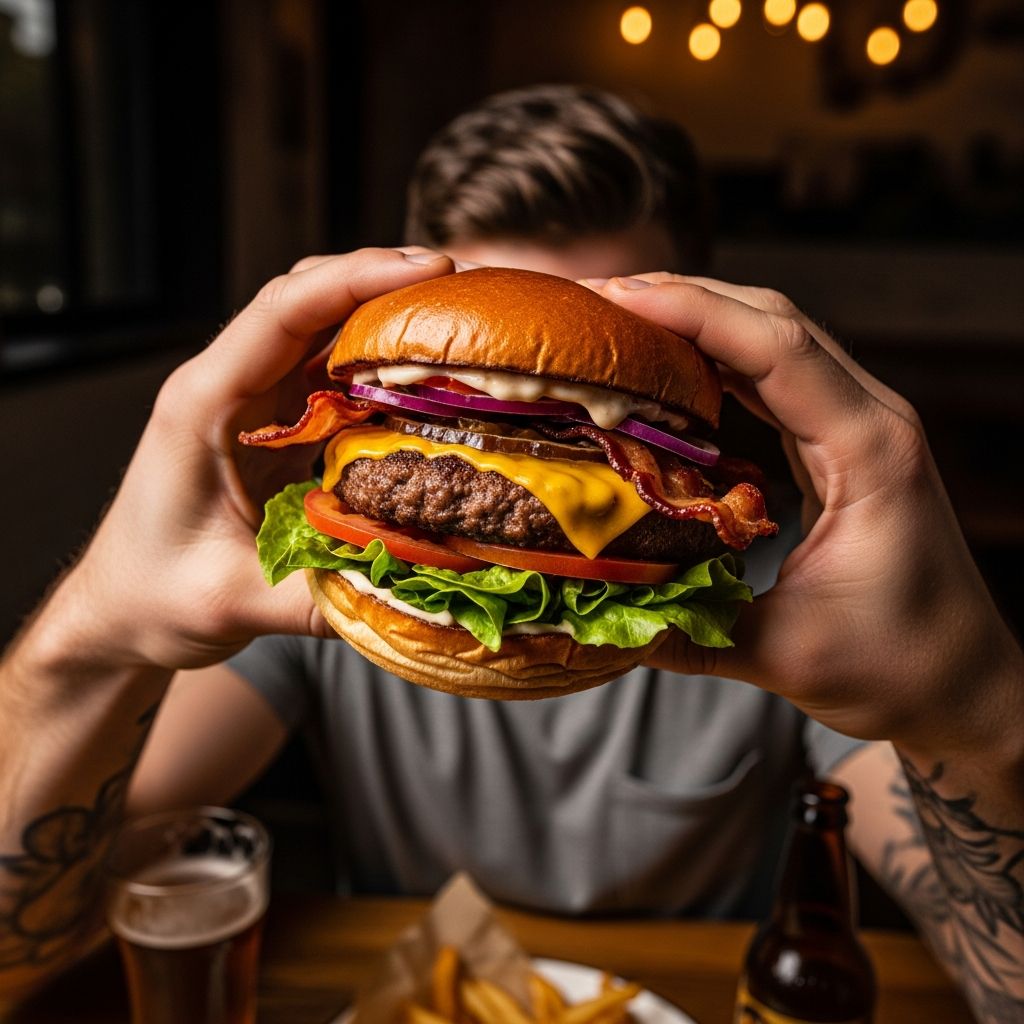
‘Dude food’ — the massive burgers, bacon-wrapped everything, and ultra-spicy wings — isn’t just about taste or indulgence. It’s a cultural script that ties certain foods to a very specific kind of masculinity: loud, messy, excessive, and often defiant of health or moderation. This idea didn’t emerge from nowhere; it was shaped by decades of food marketing, TV shows, and social norms that equate meat, size, and heat with being a ‘real man.’
While enjoying a big, indulgent meal with friends is perfectly fine in moderation, problems arise when this style of eating becomes the default for men and fathers, while women and children are expected to eat ‘lighter’ or ‘healthier’ meals. This article explores how ‘dude food’ became a cultural phenomenon, how it reinforces narrow ideas of masculinity, and what families can do to build more balanced, inclusive food cultures at home.
What Exactly Is ‘Dude Food’?
The term ‘dude food’ doesn’t refer to a single cuisine, but to a style of eating that’s marketed and perceived as especially masculine. It’s food that’s:
- Over-the-top in size (giant burgers, triple-stacked sandwiches, massive platters)
- Heavy on meat, especially red meat and processed meats like bacon
- Loaded with fat, salt, and sugar (think cheese, fried items, creamy sauces)
- Often extremely spicy or ‘challenging’ (hot wings, ghost pepper sauces)
- Presented as a spectacle — messy, indulgent, and sometimes even dangerous for the digestive system
Examples include burgers as big as your head, nachos piled high with meat and cheese, deep-fried everything, and meals that are more about the experience (‘Can you finish this?’) than nutrition. These foods are rarely framed as everyday meals; instead, they’re sold as special treats, ‘manly’ challenges, or rewards for hard work.
How Food Marketing Built the ‘Dude’ Persona
‘Dude food’ didn’t just appear because men naturally prefer big, greasy meals. It was carefully constructed by food marketers, especially in the 2000s and 2010s, as a way to sell products to men without threatening their sense of masculinity.
After the Great Recession, many men struggled with traditional roles as breadwinners, and industries like food and beverage saw an opportunity. They created a new male consumer identity: the ‘dude’ — laid-back, not overly concerned with health or perfection, but still privileged and masculine. This ‘dude’ could buy diet sodas, join weight-loss programs, or even cook at home, as long as it was done in a way that felt ‘cool’ and ‘not girly.’
Food brands and TV shows leaned into this by:
- Using rugged, casual male hosts (like Guy Fieri) who celebrate excess and flavor over nutrition
- Marketing ‘manly’ versions of traditionally ‘feminine’ products (e.g., yogurt in ‘six-pack’ containers, diet drinks with ‘tough’ branding)
- Positioning grilling, smoking, and frying as ‘real man’ cooking, while everyday family meals are still often seen as women’s work
This marketing didn’t just sell food; it sold a version of masculinity where indulgence, size, and heat are proof of being a ‘real man,’ while restraint, health-conscious choices, or lighter meals are subtly coded as less masculine.
The Hidden Messages in ‘Dude Food’ Culture
Beyond the marketing, ‘dude food’ carries deeper cultural messages about gender, power, and family roles. These messages shape how men, women, and children think about food and their place in the kitchen.
Meat as a Symbol of Power
Meat, especially red meat, has long been framed as a ‘masculine’ food. Think of the caveman, the hunter, the cowboy, or the soldier — all male figures whose strength and survival are tied to meat. In modern culture, this translates into the idea that real men eat big steaks, racks of ribs, and bacon-wrapped everything, while women and children are often encouraged to eat salads, yogurt, or lighter dishes.
This isn’t just about taste; it’s about status. When meat is positioned as the centerpiece of a ‘manly’ meal, it reinforces the idea that men deserve the most substantial, calorie-dense food, while others should be satisfied with smaller, ‘lighter’ portions. This can quietly justify unequal food distribution in families and normalize the idea that men’s appetites are bigger and more important.
Grilling as ‘Real Man’ Cooking
Grilling is a classic example of how certain cooking styles become gendered. In many households, grilling is seen as the man’s domain — the ‘fun’ part of cooking that’s about fire, smoke, and big cuts of meat. Meanwhile, everyday cooking (planning meals, making sides, desserts, and healthy dishes) is still largely seen as women’s work.
This division sends a message that men’s cooking is about spectacle and indulgence, while women’s cooking is about nutrition, care, and family needs. It also makes it harder for men to engage in the full range of home cooking, especially the less glamorous but essential tasks like meal planning, grocery shopping, and preparing balanced meals.
Spice and Challenge as Masculine Tests
Another common theme in ‘dude food’ is extreme spice. Shows like Hot Ones turn eating ultra-spicy wings into a test of endurance, where men (and almost always men) are expected to power through pain and discomfort to prove their toughness.
This turns food into a performance of masculinity: the ability to handle heat, pain, and excess becomes a way to demonstrate strength and resilience. For kids watching, this can normalize the idea that real men don’t complain, don’t show weakness, and always push through discomfort — even when it comes to something as basic as eating.
How ‘Dude Food’ Affects Families
When ‘dude food’ becomes the default for men and fathers, it has real consequences for family meals, children’s health, and gender roles at home.
Reinforcing Gender Stereotypes
When kids see dad always eating the biggest, meatiest, spiciest meal while mom and the kids eat lighter dishes, they learn that:
- Men’s appetites are bigger and more important
- ‘Real men’ eat meat and avoid ‘light’ or ‘healthy’ foods
- Cooking is divided by gender: men grill and make ‘fun’ food, women handle everyday meals
These lessons can shape children’s own food preferences and self-image. Boys may feel pressure to eat big, meat-heavy meals to be seen as strong or masculine, while girls may internalize the idea that they should eat less and avoid ‘manly’ foods.
Impact on Health and Eating Habits
‘Dude food’ is typically high in calories, saturated fat, sodium, and sugar, and low in fiber, vitamins, and other nutrients. When this style of eating becomes the norm for men, it can contribute to:
- Higher rates of obesity, heart disease, and type 2 diabetes in men
- Difficulty adopting healthier eating patterns, because healthy food is framed as ‘not manly’
- Family meals that are unbalanced, with too much meat and processed foods and not enough vegetables, whole grains, or plant-based options
At the same time, women and children may be pressured to eat ‘healthier’ or ‘lighter’ meals, which can lead to restrictive eating patterns, body image issues, and a sense that their food choices are more scrutinized than men’s.
Limiting Fathers’ Role in the Kitchen
When cooking is split into ‘dude’ cooking (grilling, frying, big indulgent meals) and ‘everyday’ cooking (meal planning, sides, healthy dishes), it can limit how involved fathers are in feeding the family.
Fathers may feel comfortable with the ‘fun’ parts of cooking but less confident or interested in the daily work of planning balanced meals, preparing vegetables, or cooking for health. This can reinforce the idea that feeding the family is primarily a woman’s responsibility, even when both parents work outside the home.
Building a Healthier, More Inclusive Food Culture
Challenging ‘dude food’ culture doesn’t mean giving up big, indulgent meals altogether. It means expanding what counts as ‘manly’ food and creating more balanced, inclusive food cultures at home.
Expand the Definition of ‘Manly’ Food
- Normalize men eating salads, vegetables, plant-based meals, and lighter dishes without framing them as ‘diet’ or ‘boring’ food.
- Celebrate cooking skills beyond grilling and frying — baking, meal planning, and preparing healthy, balanced meals can be just as ‘manly’ as a big steak.
- Highlight male role models (chefs, athletes, public figures) who enjoy a wide range of foods, including vegetables, whole grains, and plant-based options.
Share Cooking and Food Responsibilities Equally
- Encourage both parents to take part in all aspects of cooking: planning, shopping, preparing, and cleaning up.
- Make mealtime a shared family activity, where everyone helps and everyone’s preferences are valued.
- Challenge the idea that certain foods or cooking styles belong to one gender; instead, frame cooking as a skill and a way to care for the family, not a gender performance.
Teach Kids a Broader View of Food and Gender
- Expose children to a wide variety of foods, including vegetables, whole grains, and plant-based options, and avoid labeling foods as ‘for boys’ or ‘for girls.’
- Discuss media messages about food and gender: talk about how ads and TV shows portray men and women eating, and question stereotypes like ‘real men eat meat’ or ‘girls eat salads.’
- Model balanced eating for all family members, so kids see that everyone — regardless of gender — can enjoy both indulgent meals and healthy, everyday foods.
FAQs
Is ‘dude food’ actually bad for you?
Occasional ‘dude food’ meals (like a big burger or spicy wings with friends) are fine for most people. The problem arises when this style of eating becomes the default for men, leading to diets high in saturated fat, sodium, and calories, and low in nutrients. Over time, this can increase the risk of heart disease, obesity, and other health issues.
Can men enjoy ‘dude food’ without reinforcing harmful stereotypes?
Yes, but it helps to be aware of the cultural messages behind it. Men can enjoy big, indulgent meals while also embracing a wider range of foods and cooking styles. The key is not to let ‘dude food’ become the only way men are allowed to eat or cook.
How can families move away from ‘dude food’ culture?
- Plan balanced meals that include plenty of vegetables, whole grains, and lean proteins for everyone.
- Involve all family members in cooking and meal planning, so no one gender is seen as ‘in charge’ of food.
- Limit ultra-processed, high-fat, high-sodium foods to occasional treats, not everyday meals.
- Talk openly about food, gender, and health, so kids learn to think critically about media messages and stereotypes.
Does this mean men should stop grilling or eating meat?
No. Grilling and meat can be part of a healthy, balanced diet. The goal is to avoid making them the only or most important part of men’s diets. Men can enjoy grilled foods and meat while also eating plenty of vegetables, whole grains, and plant-based meals, and while sharing all types of cooking with their partners and children.