Understanding the Seuss Family’s Divided Stance on Publishing Decisions
The literary world experienced significant upheaval when Dr. Seuss Enterprises announced the discontinuation of six children’s books from the beloved author’s catalog. This decision, which came on what would have been the author’s birthday, sparked widespread debate about censorship, cultural sensitivity, and artistic legacy. What many observers failed to recognize, however, was that the controversy extended beyond public discourse and into the very family that knew Theodor Seuss Geisel most intimately. The stepdaughters of this iconic figure—individuals who lived with him, learned from him, and understood his character—found themselves on opposite sides of a deeply personal argument about how his work should be remembered and preserved.
The Family’s Contrasting Perspectives on Historical Context
Within the Geisel household, a profound disagreement emerged regarding how society should treat art created in different historical periods. Some family members believed that books containing problematic imagery should be completely removed from circulation, viewing this as a necessary step toward eliminating harmful stereotypes from children’s literature. Others advocated for a more nuanced approach, arguing that the author’s body of work should be evaluated holistically rather than through the lens of contemporary sensibilities alone.
This internal family division mirrors broader societal conversations about cultural accountability and artistic redemption. The stepdaughters who grew up alongside Geisel brought unique perspectives shaped by personal experience rather than abstract principles. They could speak to his character, his values, and his willingness to acknowledge and address controversial aspects of his earlier creations. Yet even with this intimate knowledge, family members reached different conclusions about the appropriate response to offensive content discovered within beloved children’s stories.
The Case for Contextual Integration Rather Than Removal
One prominent stepdaughter articulated a position that challenged the publishing enterprise’s decision to completely withdraw the problematic books from shelves. Rather than advocating for suppression, she proposed an alternative approach that would allow readers to engage with the work while acknowledging its problematic elements. This perspective emphasized education over erasure, suggesting that the books could remain available with accompanying contextual information that addressed the offensive imagery and language directly.
This stepdaughter’s proposal reflected her firsthand knowledge of Geisel’s character and his demonstrated capacity for growth. She highlighted instances where the author had revised earlier illustrations and publicly expressed regret for certain creative choices made during different eras of his career. According to her account, Geisel showed awareness of social issues and demonstrated commitment to environmental and social causes through his later works. She portrayed him as a man whose consciousness evolved over time, a person who recognized mistakes and attempted to correct them through his subsequent creative output.
The stepdaughter emphasized that adding disclaimers or contextual notes to the contentious publications would serve multiple purposes. Such an approach would acknowledge the problematic content, educate readers about historical context, and preserve the author’s body of work for scholarly and historical examination. This middle-ground position suggested that suppression might actually obscure important conversations about how prejudices manifested in children’s literature rather than facilitating genuine understanding and growth.
Examining the Author’s Personal Character and Values
Family members who knew Geisel personally offered insights into his character that extended beyond published materials and public statements. Those closest to him described a man who demonstrated sensitivity to others, who cared deeply about social issues, and who actively engaged with the world around him. According to stepdaughters who spent formative years under his care, the household was free from hatred, bigotry, and discriminatory language despite the problematic content that would later emerge in examinations of his published work.
This apparent disconnect—between offensive imagery in published works and the personal values demonstrated within his family—complicated the narrative surrounding the author’s legacy. It raised important questions about how individuals can create works that reflect societal prejudices while simultaneously harboring different personal values. The stepdaughters suggested that understanding this complexity was essential to fairly evaluating both the author’s character and the significance of his literary contributions.
One stepdaughter particularly emphasized that Geisel should not be entirely defined by early creative work that he himself later disavowed. She pointed to his career evolution, noting that his later publications demonstrated growing social consciousness and commitment to important causes. This perspective suggested that a complete assessment of his legacy required consideration of his entire body of work and his demonstrated capacity for change and improvement over decades.
The Problematic Elements Requiring Acknowledgment
Even among stepdaughters who defended aspects of Geisel’s legacy, acknowledgment of genuinely offensive content was unavoidable. Some of his earlier work, including political cartoons and advertisements from the World War II era, contained explicitly racist depictions of Black and Asian individuals. Images and language in certain children’s books reproduced harmful stereotypes that had no place in contemporary publishing or educational settings. This reality could not be ignored or minimized by even the most sympathetic family members.
The stepdaughters who acknowledged these problematic elements did not argue that such imagery was acceptable or should be excused. Rather, they proposed that recognition of these failures did not necessitate complete erasure or the elimination of all associated works from circulation. They maintained that historical artifacts, even those containing objectionable material, could retain value for educational and scholarly purposes when accompanied by appropriate critical context and historical explanation.
Publishing Industry Decisions and Corporate Responsibility
Dr. Seuss Enterprises, the corporate entity responsible for managing the author’s intellectual property and legacy, made the determination that six specific titles should cease publication. This business decision represented an exercise of corporate discretion regarding which products would be offered to the market. The enterprise issued a statement indicating that the selected books “portray people in ways that are hurtful and wrong,” justifying the withdrawal on grounds of social responsibility and contemporary ethical standards.
The timing of this announcement—occurring on the author’s birthday, a date traditionally celebrated in schools across America as part of “Read Across America” week—added significant cultural weight to the decision. This juxtaposition created a jarring contrast between the celebration normally associated with the date and the difficult conversation about problematic content that the decision necessitated. Educators, librarians, and parents suddenly confronted challenging questions about how to respond to the withdrawal and how to address the underlying issues with students and patrons.
Importantly, Dr. Seuss Enterprises clarified that it was not calling for the removal of existing copies from library and school collections. The decision pertained specifically to ceasing new printing and distribution of the six titles rather than orchestrating a comprehensive removal campaign. This distinction mattered significantly for debates about censorship versus business decision-making regarding future production.
The Six Books Withdrawn from Future Publication
The publishing enterprise identified six titles for discontinuation based on their assessment of problematic content:
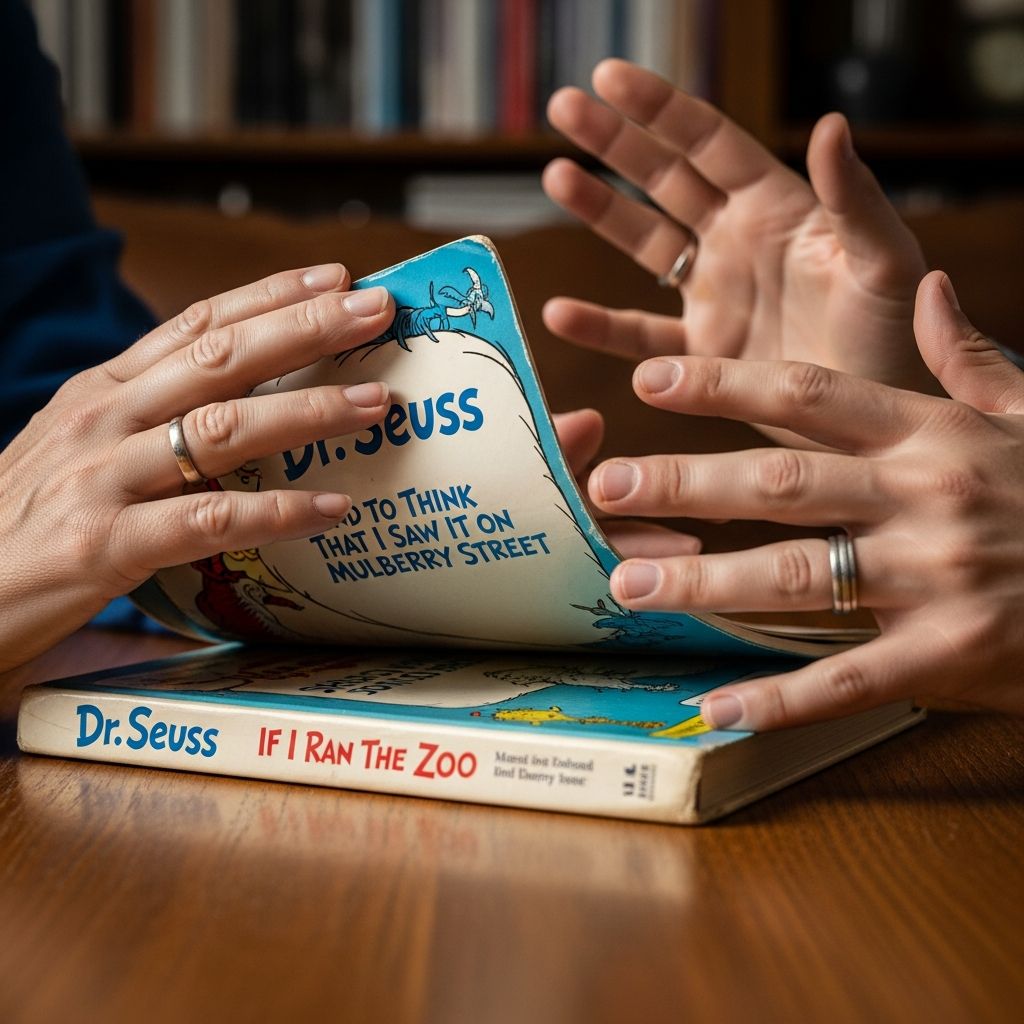
- And to Think That I Saw It on Mulberry Street
- If I Ran the Zoo
- McElligot’s Pool
- On Beyond Zebra!
- Scrambled Eggs Super!
- The Cat’s Quizzer
These titles represented a selection from the author’s extensive catalog rather than a comprehensive removal of all his works. Many of Geisel’s most famous and celebrated books, including The Cat in the Hat and The Lorax, remained in print and continued to be widely distributed and celebrated in educational settings. This selective approach distinguished the decision from a complete rejection of the author’s body of work, yet the controversy surrounding the six titles nevertheless cast a shadow over discussions of his entire literary legacy.
Broader Conversations About Artistic Legacy and Social Responsibility
The Dr. Seuss controversy extended beyond questions about one author’s specific works to encompass larger philosophical debates about how contemporary society should engage with art created in previous historical periods. Fundamental questions emerged about the relationship between an artist’s personal character and their creative output, the appropriate response to discovering offensive content in beloved childhood materials, and the distinction between censorship and editorial decision-making by publishers and enterprises.
These conversations touched on matters of profound cultural significance: How should communities balance historical accuracy and educational value against the potential harm caused by reproducing offensive stereotypes? What responsibility do contemporary institutions bear for work created generations earlier, potentially reflecting prejudices that were more commonplace at the time? Can art containing problematic elements retain value if engaged with appropriate critical frameworks and contextual information? Different stakeholders, including family members, educators, literary scholars, and activists, offered varying answers to these complex questions.
The Evolution of Children’s Literature and Publishing Standards
The decision regarding Dr. Seuss’s books occurred within a broader context of evolving standards in children’s literature and publishing. Increasingly, educators and parents demanded that books offered to young readers reflect diverse perspectives, avoid harmful stereotypes, and present characters and cultures with respect and accuracy. Publishers responded to these concerns by implementing new editorial guidelines and reconsidering backlist titles that might not meet contemporary standards for inclusive representation.
This evolution reflected genuine progress in recognizing how literature shapes children’s understanding of the world and their place within it. Books that young readers encounter help form their views about different groups of people, appropriate social behaviors, and fundamental values. Consequently, careful attention to the messages conveyed through children’s literature represented a legitimate concern rather than an overreaction. The challenge remained determining how to address problematic historical content while preserving the ability to learn from and understand artistic and cultural history.
Personal Testimony and Intimate Knowledge
The stepdaughters who publicly discussed the controversy brought valuable perspectives rooted in intimate familiarity with Geisel as a person rather than solely as a public figure or literary figure. Those who had been raised within his household could speak to daily life, family values, and personal character in ways that public statements and published work could not fully convey. Yet even this intimate knowledge did not produce consensus among family members regarding the appropriate response to the publishing decision.
One stepdaughter emphasized that she had never witnessed or experienced hatred, prejudiced language, or discriminatory behavior during her years living with Geisel. She described him as a sensitive, intelligent, and caring individual who demonstrated awareness of social issues and commitment to important causes. Yet another family member might acknowledge these personal qualities while still supporting the decision to cease publication of problematic works, recognizing that personal virtue and the creation of offensive art need not be mutually exclusive.
Questions About Artistic Intent and Historical Responsibility
Central to family disagreements about the books was the question of whether understanding an artist’s personal values and intentions could or should mitigate concerns about the actual content and impact of their work. An author might harbor no racist beliefs while nevertheless creating work that reproduced harmful stereotypes common to their historical moment. Conversely, someone whose personal values included deep respect for all people might have unconsciously absorbed and expressed prejudices prevalent within their broader culture.
The stepdaughters grappled with these nuances in their attempts to defend, qualify, or critique their relative’s legacy. For some, the author’s demonstrated growth and later rejection of problematic earlier work suggested a trajectory of increasing awareness and consciousness. For others, the existence of offensive content in any published work required serious consequences regardless of the author’s personal qualities or later development.
The Ongoing Significance of the Controversy
The disagreements within the Seuss family illuminated fundamental tensions within American culture regarding how to address historical prejudice, evaluate artistic legacy, and balance multiple competing values including educational access, social responsibility, and historical preservation. These conversations were not simple or amenable to easy resolution, and the fact that family members closest to the author reached different conclusions suggested the genuine complexity inherent in these questions.
The decision by Dr. Seuss Enterprises to discontinue six titles represented one particular response to these tensions, but other approaches remained viable and worthy of consideration. Whether future discussions would validate this approach, the alternative proposals suggested by sympathetic stepdaughters, or some other framework remained to be determined as society continued wrestling with these important cultural questions.
References
- Dr. Seuss didn’t have ‘a racist bone’ in his body, stepdaughter says — Fox News. 2021-03-02. https://www.foxnews.com/us/dr-seuss-didnt-have-a-racist-bone-in-his-body-stepdaughter-says
- Dr. Seuss’ Stepdaughter Says Books Shouldn’t Be Pulled — TMZ. 2021-03-02. https://www.tmz.com/2021/03/02/dr-seuss-step-daughter-dont-pull-books-disclaimer/
- The Dr. Seuss Controversy: What Educators Need to Know — Education Week. 2021-03-02. https://www.edweek.org/teaching-learning/the-dr-seuss-controversy-what-educators-need-to-know/2021/03