Down syndrome is something some people are born with, and it is part of who they are. This guide explains what it means in simple language so kids and families can better understand, accept, and support friends who have Down syndrome.
What Is Down Syndrome?
Down syndrome is a difference people are born with that affects the way their bodies and brains grow and work. It is not a sickness you can catch, and it is not something anyone did wrong. It starts long before a baby is born, when cells are just beginning to form.
Inside each tiny cell in the body are structures called chromosomes. These chromosomes carry instructions that help decide how a person will grow, such as eye color or how tall they might become. Most people have 46 chromosomes, but people with Down syndrome usually have one extra copy of chromosome 21, so they have 47.
- Down syndrome begins before birth, when cells are dividing and copying instructions.
- People with Down syndrome usually have an extra copy of chromosome 21.
- This extra copy changes development in some ways, but it does not stop a person from learning, loving, or enjoying life.
How Chromosomes Work (Kid Version)
Think of chromosomes as tiny books of instructions inside every cell. Each “book” tells the cell how to build different parts of the body. Most people have 23 pairs of these books, which adds up to 46.
In Down syndrome, there is an extra copy of the book labeled 21. Having that extra copy means some instructions are repeated, which can slow down or change development. It does not make someone less valuable or less important. It just means their body and brain may work a little differently in certain ways.
- Chromosomes are like instruction books that guide how your body grows.
- People with Down syndrome have one extra “book” of chromosome 21.
- This extra information can affect learning, growth, and some health features.
Common Physical Features
People with Down syndrome often share some physical traits, but they also look like their families, just like everyone else. Not every person with Down syndrome will have all of these features, and having one or more of them does not always mean someone has Down syndrome.
Some common physical features may include:
- A flatter-looking facial profile or nose bridge.
- Eyes that slant slightly upward.
- A shorter neck or smaller hands and feet.
- A single deep line across the palm of one or both hands.
- Lower muscle tone, which can make the body feel a bit floppy in babies.
These features are just part of how someone looks and do not say anything about their personality, talents, or kindness.
How Learning Might Be Different
Kids with Down syndrome can learn to walk, talk, read, and write, but it may take longer and sometimes they may need extra help. Learning differences do not mean someone cannot understand things; it often means they need more time, practice, and support.
Teachers, therapists, and families often work together to help kids with Down syndrome build skills step by step. Many kids use pictures, gestures, or simple sign language along with words as they are learning to speak clearly.
- Children with Down syndrome usually reach milestones like sitting or walking later than other kids.
- They may need instructions broken into smaller steps and repeated more often.
- They often benefit from speech, physical, and occupational therapy to build skills.
Health and Medical Care
Some people with Down syndrome have certain health issues that doctors watch closely. Not everyone will have the same conditions, but regular checkups help keep them as healthy as possible. Many children see heart doctors, eye doctors, ear doctors, and other specialists as they grow.
Because of possible health differences, kids with Down syndrome often visit doctors more often than other kids. That does not mean they feel sick all the time; it usually means their families and doctors are working together to prevent problems and treat them early when they appear.
| Body Area | What Doctors Look For | How They Help |
|---|---|---|
| Heart | Heart structure and how well it pumps blood | Special scans, medicines, or surgery if needed |
| Ears and Hearing | Hearing clearly, fluid in the ears, infections | Hearing tests, tubes in ears, or hearing aids |
| Eyes and Vision | Seeing clearly, eye alignment, focus | Glasses, eye exercises, or other treatments |
| Growth and Muscles | Height, weight, strength, and balance | Physical therapy, exercise, and nutrition guidance |
Everyday Strengths and Challenges
Like all kids, children with Down syndrome have things they are great at and things that are tougher. Some may be very friendly and social, enjoy routines, or have strong visual skills. Others might have challenges with memory, paying attention, or speaking clearly.
Remember that no two people with Down syndrome are exactly the same. One child might love sports, another might enjoy music or art, and another might be a puzzle expert. It helps to focus on what each person enjoys and what helps them feel confident.
- Strengths may include kindness, determination, and strong visual or practical skills.
- Challenges can include slower speech, difficulty staying focused, or needing more time to learn new tasks.
- Support from family, teachers, and friends makes it easier to handle challenges and build on strengths.
School Life and Learning Support
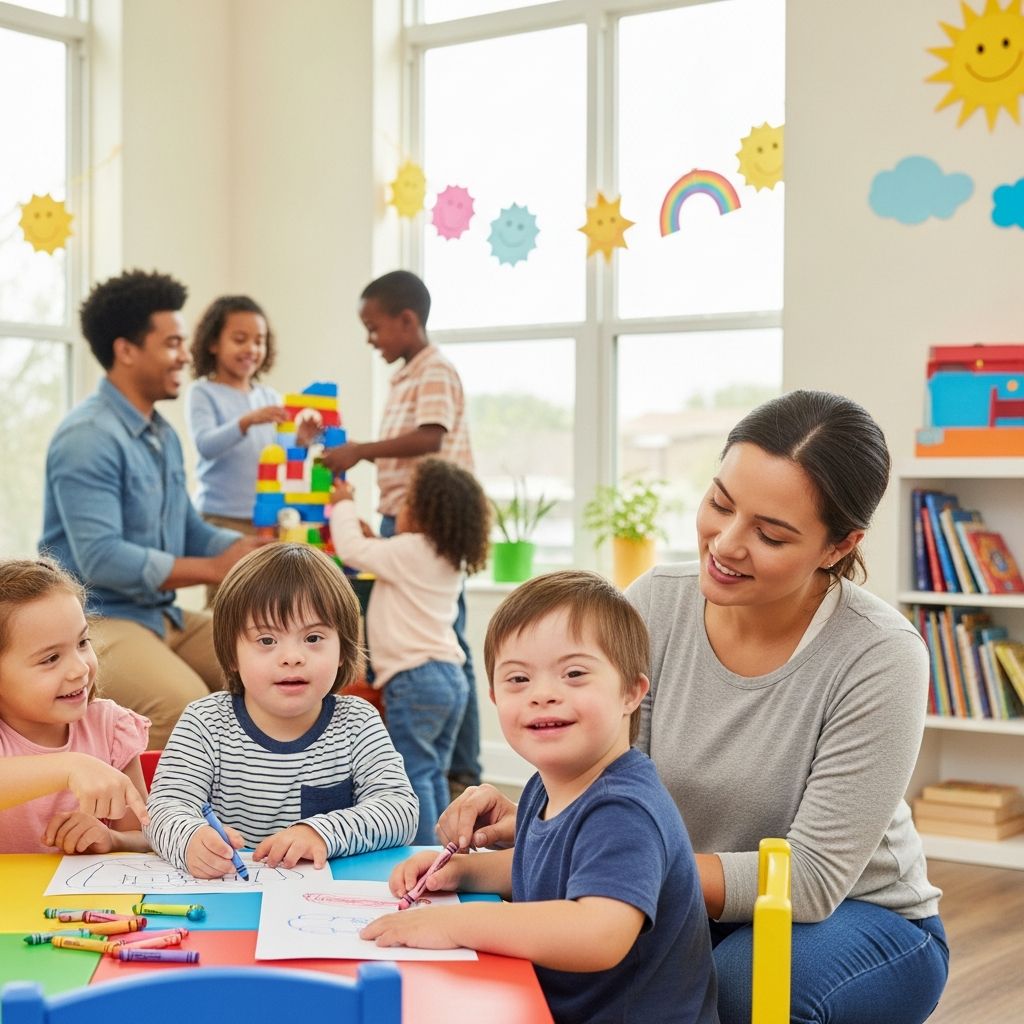
Many students with Down syndrome go to regular schools and spend time in classrooms with peers their age. Some may also spend part of the day in smaller groups or special classes where tasks are adapted to match their learning needs.
Teachers might use pictures, hands-on activities, simple step-by-step instructions, or and extra time for assignments and tests. Classmates can help by being patient, including everyone in games, and allowing time for a friend with Down syndrome to share ideas.
- Assignments may be shortened, broken into parts, or explained in simpler language.
- Visual aids like charts, pictures, and color coding can make lessons easier to follow.
- Peer buddies and group activities help students practice social and communication skills.
Feelings, Friendships, and Behavior
Kids with Down syndrome have the same kinds of feelings as everyone else. They can feel happy, sad, proud, nervous, or frustrated. Sometimes it is hard for them to express feelings with words, which can lead to behaviors like tantrums or walking away when they feel overwhelmed.
Learning to notice feelings and use coping strategies—like deep breaths, breaks, or asking for help—can make a big difference. Friends and adults can support them by staying calm, using simple language, and offering choices instead of demands.
- Clear routines and warnings before changes can prevent stress.
- Visual schedules and simple rules can help kids know what to expect.
- Celebrating small successes builds confidence and reduces frustration.
How to Be a Great Friend
Being a good friend to someone with Down syndrome is much like being a good friend to anyone else. It means being kind, patient, and respectful. It also means noticing what the person likes and including them in activities when possible.
Sometimes a friend with Down syndrome might need more time to answer a question or finish a task. Giving that extra time and not speaking over them shows respect and helps them feel valued. Listening carefully is one of the best ways to show that their thoughts matter.
- Use clear, simple sentences and give time for answers.
- Invite them to games, clubs, and group activities.
- Offer help, but ask first and accept “no” if they want to try alone.
- Stand up against teasing or bullying and tell a trusted adult.
Respectful Language and Inclusion
The words people use can either hurt or help. It is important to use respectful language when talking about someone with Down syndrome. Instead of defining a person by a condition, it is better to say “a person who has Down syndrome” so it is clear that the person comes first.
It is never okay to use mean names or jokes about disabilities. If someone does, you can calmly say it is not kind and walk away or tell an adult. Inclusive language and behavior help create a school and community where everyone feels welcome.
- Say “a child who has Down syndrome,” not just “a Down syndrome kid.”
- Avoid using disability words as insults or jokes.
- Correct friends gently if they say something hurtful, or ask an adult for help.
Down Syndrome Myths vs. Facts
There are many myths about Down syndrome that are not true. Learning the facts helps people treat others more fairly and kindly. Here is a simple table you can use to understand some common misunderstandings.
| Myth | Fact |
|---|---|
| People with Down syndrome cannot learn. | People with Down syndrome can learn many skills, but may need more time and support. |
| All people with Down syndrome are the same. | Each person has a unique personality, interests, and abilities. |
| People with Down syndrome are always happy. | They experience a full range of emotions, just like everyone else. |
| They cannot participate in sports or activities. | Many enjoy sports, music, art, and clubs with the right support and safety checks. |
Growing Up With Down Syndrome
Children with Down syndrome grow up to be teenagers and adults who can take part in many parts of community life. Some may go to college programs, have jobs, play on teams, or be volunteers. The path can look different for each person, but goals and dreams are still very important.
Practicing daily living skills—like getting dressed, helping with chores, and making simple choices—helps them become more independent. Support from families, schools, and communities can open more doors as they grow older.
- Adults with Down syndrome may work, volunteer, or continue learning in different programs.
- Life skills training helps them make decisions and take part in everyday activities.
- Friendships and social opportunities remain important at every age.
Frequently Asked Questions (FAQs)
Can you catch Down syndrome from someone?
No. Down syndrome is not contagious. It is something a person is born with, caused by differences in chromosomes. You can play, learn, and spend time with friends who have Down syndrome without any risk of “catching” it.
Did anyone do something wrong to cause Down syndrome?
No one causes Down syndrome by something they did or did not do. It happens by chance when the cells are forming before a baby is born. Parents, kids, and teachers are never to blame.
Do people with Down syndrome understand what is going on around them?
Many people with Down syndrome understand a lot about what is happening, even if it is hard for them to show it with words. They might need extra time to think, respond, or make decisions. Treating them with respect and patience helps them share their thoughts more easily.
Will a child with Down syndrome always need help?
Most people need some kind of help throughout life, and that is also true for many people with Down syndrome. The kind of help they need may change as they grow, and they can often do many things on their own with practice, tools, and support.
How can kids learn more and help others understand?
Kids can read books, watch trustworthy videos, ask questions in class, and talk kindly with families who want to share their experiences. Explaining to others that people with Down syndrome are more like everyone else than they are different helps make schools friendlier and more welcoming.
Key Takeaways for Kids and Families
Down syndrome is one part of who a person is, but it does not define everything about them. People with Down syndrome can love, laugh, learn, and dream just like anyone else. When classmates and families focus on kindness and understanding, everyone benefits.
- Down syndrome comes from having an extra copy of chromosome 21.
- It can affect growth, learning, and health, but support helps a lot.
- Respectful language, patience, and inclusion make schools and communities stronger.
- Each person with Down syndrome is unique, with their own talents, interests, and goals.