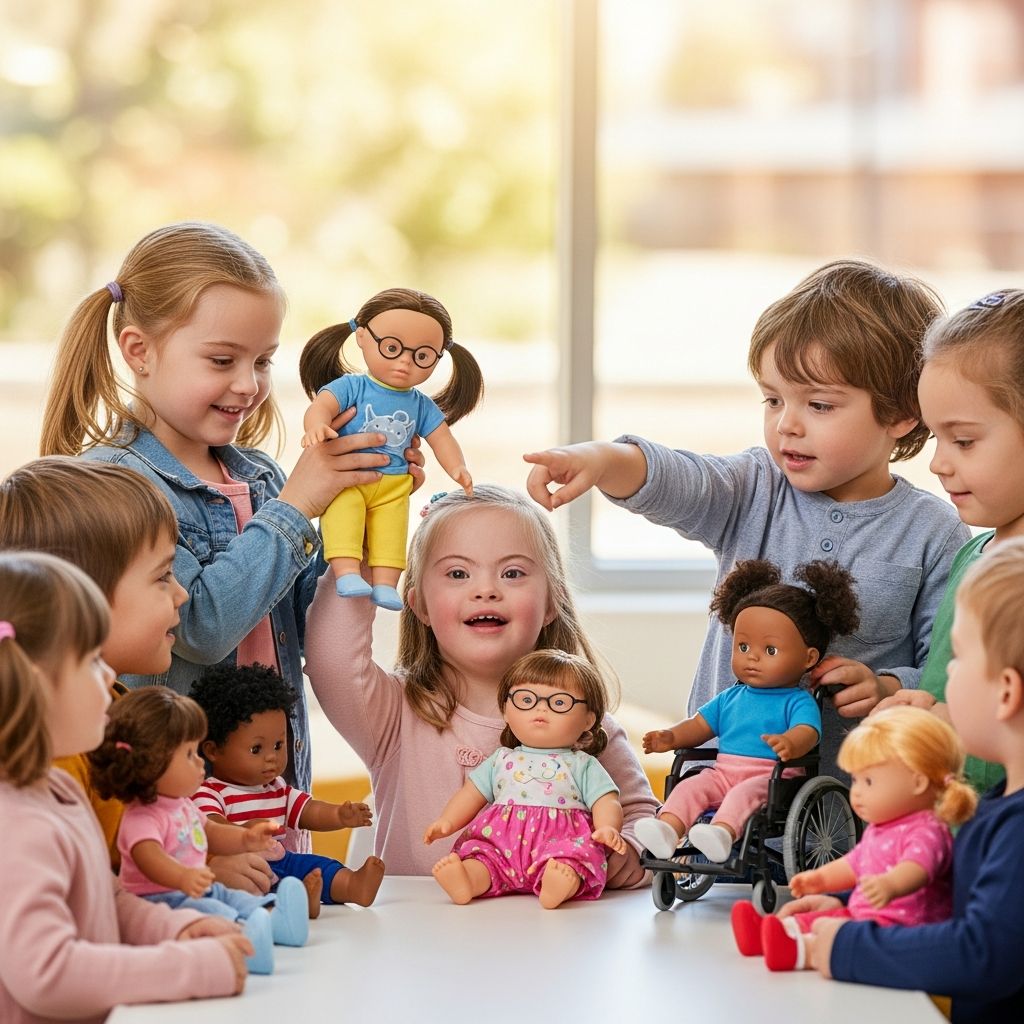
Representing diversity in toys has become a vital movement in child development, with dolls featuring Down syndrome characteristics leading the charge. These toys allow children to see themselves and others reflected in play, nurturing empathy and inclusion from an early age.
The Growing Need for Diverse Toys in Modern Playtime
Children’s toys shape their worldview, influencing how they perceive differences and abilities. Traditionally, doll lines favored uniform appearances, often overlooking conditions like Down syndrome, which affects about 1 in 700 births worldwide. Introducing dolls with realistic traits such as almond-shaped eyes, a flatter facial profile, and a single palmar crease addresses this gap, helping kids with Down syndrome build positive self-images while teaching peers about acceptance.
Play is a child’s primary language for learning social norms. When toys mirror real-life diversity, they spark conversations about uniqueness, reducing stigma and promoting kindness. Parents and educators report that such dolls encourage imaginative scenarios where differences are celebrated, not hidden.
Key Features That Make These Dolls Authentic
Inclusive Down syndrome dolls stand out through thoughtful design elements. Common traits include softer body proportions, distinctive eye shapes, and accessories like ankle-foot orthotics to reflect medical realities. Materials are safe, often phthalate-free vinyl or plush fabrics meeting EN71 standards, ensuring durability for active play.
- Facial details: Rounder faces, upward-slanting eyes, and smaller noses for accurate representation.
- Body design: Shorter stature, flexible joints for posing, and anatomically correct features.
- Accessories: Symbolism like three-chevron necklaces denoting the extra 21st chromosome, or culturally diverse clothing.
- Safety and quality: Handcrafted or machine-molded with non-toxic materials for ages 3+.
These elements not only educate but also make play relatable, allowing children to dress, feed, and care for dolls as they would real siblings or friends.
Spotlight on Leading Brands Pioneering Inclusion
Several companies have stepped up to create these specialized dolls, each bringing unique approaches to representation.
| Brand | Key Offerings | Unique Aspects | Target Age |
|---|---|---|---|
| Miniland | 15-inch dolls in various ethnicities (Caucasian, African-American, Asian) | Montessori-inspired, promotes coexistence values; hearing and eye impairment options too | 3+ |
| Barbie (Mattel) | Fashionista line with Down syndrome sculpts, including Black doll variant | Partnership with NDSS; orthotics, chromosome symbols; blind doll addition | 3+ |
| Bee Like Kids (Tyber) | Baby dolls with realistic smiles, multiple nationalities | Phthalate-free, EN71 certified; emphasizes family diversity | 18 months+ |
| Kinderland | Handmade reborn-style dolls | Custom based on photos; plush options for sensory play | 3+ |
| Kaplan Early Learning | 15-inch anatomically correct dolls | Focus on special needs awareness in classrooms | Preschool |
Barbie’s entry, launched in 2023 with NDSS collaboration, marked a milestone, followed by expansions in 2024. Miniland’s range spans genders and conditions, ideal for diverse classrooms.
How These Dolls Boost Emotional and Social Growth
For children with Down syndrome, seeing a doll like themselves validates their identity, combating feelings of otherness. Studies show representation enhances self-esteem, as kids engage more confidently in play. Peers benefit too, learning empathy through role-play—caring for a doll with orthotics teaches patience and understanding.
Social skills flourish: children practice sharing, communication, and conflict resolution in inclusive scenarios. Educators use these dolls in curricula to discuss disabilities, fostering anti-bullying attitudes early. Parents note reduced questions like \”Why is she different?\” turning into \”Let’s help her walk!\”
Real-World Impact: Stories from Families and Classrooms
Families share transformative experiences. One parent described their child’s joy at brushing a doll’s hair, mirroring their own routine, building daily confidence. In classrooms, teachers report heightened peer interactions, with neurotypical kids advocating for the \”special doll\” during group play.
Challenges and Future Directions in Inclusive Toy Design
Despite progress, hurdles remain: limited availability, higher costs (often $30–$100), and ensuring cultural sensitivity across global markets. Manufacturers address this via partnerships and feedback loops. Looking ahead, expect more tech integration like app-linked stories or AR features to deepen educational play.
The toy industry must prioritize scalability—mass producers like Mattel set precedents, but indie makers offer customization. Parental buying guides emphasize checking certifications and reviews for quality.
Comparing Benefits Across Age Groups
| Age Group | Primary Benefits | Example Play Activities |
|---|---|---|
| Toddlers (1-3) | Sensory exploration, basic empathy | Cuddling, simple dressing |
| Preschool (3-5) | Social awareness, role-play | Feeding, doctor visits |
| School-age (6+) | Deep discussions, advocacy | Storytelling, group inclusion games |
Frequently Asked Questions (FAQs)
Why are Down syndrome dolls important for all children?
They teach empathy and acceptance, helping kids without disabilities understand and value differences, leading to kinder interactions.
Are these dolls safe for young children?
Yes, most meet EN71 or ASTM standards, using non-toxic, phthalate-free materials; always check age ratings.
How do Barbie’s Down syndrome dolls differ from others?
Designed with NDSS input, they include specific traits like a single palm line and orthotics, blending with the Fashionista line for broad appeal.
Can I customize a Down syndrome doll?
Brands like Kinderland offer handmade, photo-based customs; others provide diverse skin tones and outfits.
Where to buy inclusive dolls?
Specialty sites like Bee Like Kids, HABA, or major retailers carrying Miniland and Barbie; check for authenticity.
Do these dolls help with therapy?
Often used in occupational and speech therapy to model routines and build confidence through familiar play.
In summary, inclusive dolls with Down syndrome features are more than toys—they’re catalysts for empathy, self-worth, and societal change. By integrating them into play, we equip the next generation with tools for a truly accepting world.
References
- Barbie® Dolls with Down syndrome — National Down Syndrome Society (NDSS). 2024-07-23. https://ndss.org/barbie-ndss
- Barbie Introduces Its First Doll with Down Syndrome — Mattel Corporate. 2023-04-25. https://corporate.mattel.com/news/barbie-introduces-its-first-doll-with-down-syndrome-further-increasing-representation-in-the-toy-aisle
- My Friends & Me – 15\” Doll with Down Syndrome – Girl — HABA USA. Accessed 2026. https://www.habausa.com/products/miniland-realistic-montessori-doll-with-down-syndrome
- Dolls with Special Needs 15\” — Kaplan Early Learning. Accessed 2026. https://www.kaplanco.com/product/37430P/dolls-with-special-needs-15-inch?c=2%7CDP1020
- Baby Doll With Down Syndrome — Bee Like Kids. Accessed 2026. https://www.beelikekids.com/collections/baby-doll-with-down-syndrome