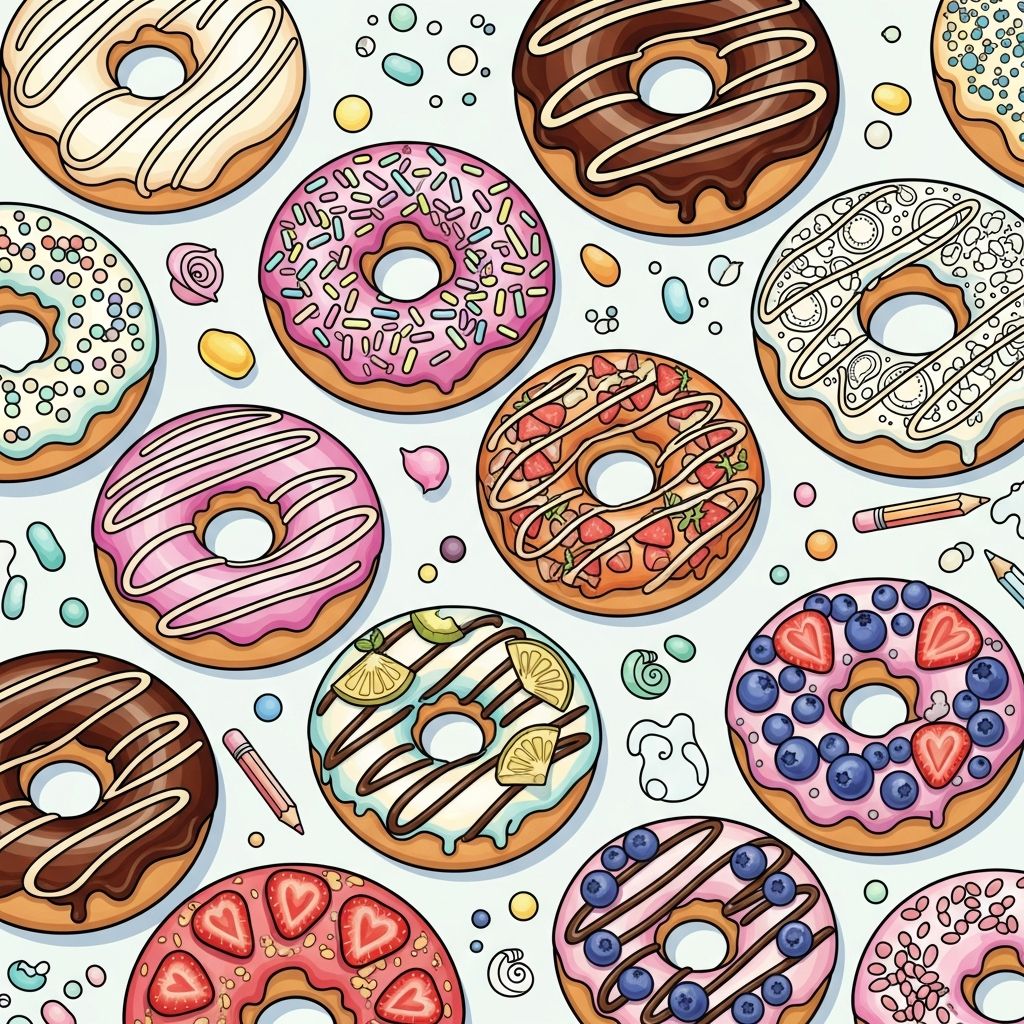
Donut coloring pages do more than decorate the fridge – they help children practice important early learning skills while having fun with a cute, familiar treat. With the right pages and a few simple ideas, you can turn coloring time into a creative, stress-free activity your kids look forward to every week.
Why Donut Coloring Pages Are So Appealing
Donuts are instantly recognizable, colorful, and playful, which makes them a natural hit with kids of all ages. The circular shape, frosting, and sprinkles offer plenty of opportunities for experimenting with patterns and color combinations.
Because donuts look friendly and non-threatening, hesitant or perfectionist kids often feel more relaxed trying new colors and designs. Instead of worrying about being “realistic,” they can focus on having fun with purple frosting, rainbow sprinkles, or imaginary flavors.
- Simple shapes make it easier for younger children to stay within the lines.
- Repetitive elements like sprinkles and stripes are perfect for practicing patterns.
- Fun themes – like party donuts, animal donuts, or holiday donuts – keep kids engaged.
Developmental Benefits Hidden in Each Sprinkle
Coloring pages may look like a simple pastime, but they support several areas of early development. Donut designs are especially effective because they blend repetition (round shapes, sprinkles) with creative freedom (colors, toppings, and backgrounds).
When children sit down with donut coloring pages, they practice both physical and cognitive skills without feeling like they are doing “schoolwork.” This makes donut pages an easy win for busy parents and teachers.
Fine Motor Skills and Hand Control
Holding crayons, colored pencils, or markers builds the muscles in the hands and fingers that children need for writing, cutting, and tying shoes. The curved edges of donuts and the tiny sprinkle details give kids lots of chances to slow down and control their strokes.
- Tracing the round outline of the donut improves wrist rotation.
- Coloring inside the frosting area teaches control over pressure and movement.
- Adding tiny sprinkles helps children practice precise, small movements.
Color Recognition and Early Math Concepts
Donut coloring pages are an easy way to practice colors, counting, and simple patterns. Parents and educators can turn a single page into a mini lesson without planning a formal activity.
- Ask kids to color sprinkles in groups: three blue, five red, two green.
- Invite them to create AB, AAB, or ABC color patterns with sprinkles or stripes.
- Talk about halves and quarters by dividing the donut into slices and coloring each section differently.
Creativity, Storytelling, and Imagination
Because donuts can be almost any flavor or color, children feel free to experiment and invent their own ideas. A donut can become a galaxy, a monster face, a unicorn snack, or the logo for a pretend bakery.
Encouraging kids to talk about their donut as they color helps strengthen language skills too. Ask what it tastes like, who might eat it, or where it is being served, and let them build a story around their art.
Types of Donut Coloring Pages to Try
Not all donut coloring pages are the same. Choosing the right style for your child’s age and interest level can keep frustration low and excitement high. Mixing a few styles together also helps kids grow their skills over time.
| Style | Best For | What Makes It Fun |
|---|---|---|
| Simple outline donuts | Toddlers and preschoolers | Thick lines and large areas to color, great for beginners. |
| Donuts with faces or characters | Preschool to early elementary | Expressive eyes, smiles, and props that spark stories. |
| Patterned donuts | Older kids and detail-lovers | Intricate sprinkles, swirls, and toppings to fill in. |
| Scene-based donut pages | Kids who enjoy storytelling | Donuts in shops, parties, or picnics that invite imagination. |
| Themed holiday donuts | Seasonal activities | Donuts decorated for Halloween, winter holidays, or birthdays. |
Rotating between simple designs and more detailed ones helps children feel both successful and challenged. On tired days, a plain donut outline may be best. When they are focused and excited, a full donut café scene keeps them busy longer.
How to Use Donut Coloring Pages at Home
Donut coloring pages are incredibly flexible. They can fill a rainy afternoon, serve as a quick quiet-time activity, or become the centerpiece of a themed family night. With a few small tweaks, the same page can feel new again and again.
Quick Setup Tips for Busy Parents
Preparing a small “coloring station” makes it easy to say yes when your child asks to color. You do not need a separate room or fancy supplies; a simple basket or drawer will do.
- Print a mix of donut designs and keep them in a labeled folder.
- Offer a selection of crayons, colored pencils, and washable markers.
- Include a few extras like glitter glue, stickers, or washi tape for special days.
Donut-Themed Learning Moments
Turn donut coloring time into a playful learning opportunity without making it feel like homework. A few questions or prompts can add structure while keeping things light and enjoyable.
- Ask your child to invent a new flavor and describe how it tastes, smells, and looks.
- Invite them to name their donut shop and design a simple logo in the corner of the page.
- Practice early money skills by pretending each donut costs a certain amount and “selling” them to family members.
Classroom Ideas for Teachers and Homeschoolers
Donut coloring pages are easy to add to lesson plans, morning work bins, or early finisher activities. Because they are non-intimidating and cheerful, they create a positive atmosphere for group work and centers.
Teachers and homeschool families can tie donut pages into themes like community helpers (bakers), nutrition discussions, or even simple economics and entrepreneurship units.
Center Activities and Group Projects
In a classroom or homeschool co-op, donut coloring lends itself to collaborative projects. Students can each color one donut and then combine them into a shared display.
- Create a “class donut shop” bulletin board featuring each child’s decorated donut.
- Hang donut garlands across windows or doorways for seasonal celebrations.
- Use donut pages as a calming choice for early finishers or test-prep breaks.
Integrating Donuts into Lessons
With a little creativity, donut pages can reinforce core subjects. Instead of adding extra worksheets, you can use coloring pages as the backdrop for academic practice.
- Math: Write simple addition, subtraction, or multiplication problems inside the donut. Have students solve the problem before they color each section.
- Language arts: Ask students to write a short descriptive paragraph or story about their donut on the back of the page.
- Science: Use donut shapes to discuss solids, liquids (icing), and changes in states while baking.
Creative Craft Projects Using Donut Coloring Pages
Once your child finishes coloring, the fun does not have to end. Completed donut pages can be cut, glued, strung, and framed to create simple crafts and decorations. This encourages kids to see their artwork as something worth saving and displaying.
Easy Donut Crafts Kids Love
- Donut garland: Cut out several colored donuts, punch a small hole at the top of each, and string them onto yarn or ribbon to hang across a wall, window, or bookshelf.
- Party placemats: Laminate finished donut pages to use as reusable placemats for snack time or birthday parties.
- Door signs: Glue a donut onto colored cardstock, add your child’s name, and tape it to their bedroom or playroom door.
- Bookmarks: Cut a colored donut in half and attach it to a strip of cardstock for a cute corner bookmark.
- Framed “bakery art”: Place your child’s favorite donut design in a simple frame and hang it near the kitchen or dining area.
Donut Coloring for Special Occasions
Donut-themed pages fit naturally into many celebrations, from everyday rewards to bigger events. Printing a small stack of pages is an inexpensive way to keep kids entertained during gatherings.
- Use donut coloring as an icebreaker activity at birthday parties or sleepovers.
- Offer donut pages as a calm-down station during family holidays or large get-togethers.
- Pair coloring with real donuts or a simple homemade treat for a themed family night.
Tips for Printing and Displaying Donut Coloring Pages
A few small printing and storage tricks can make donut coloring smoother for everyone. Good paper and thoughtful organization help kids feel like their artwork matters.
Printing for Best Results
- Use slightly thicker printer paper or light cardstock if your child loves markers or paint.
- Print a mix of portrait and landscape pages to add variety.
- Save your favorite donut designs in a folder on your computer so you can reprint them later.
Displaying Finished Masterpieces
Displaying your child’s donut art shows them that creativity is valued. Rotating displays keep your walls fresh while motivating kids to keep coloring and improving.
- Create a designated “Donut Gallery” on the fridge, a bulletin board, or a hallway wall.
- Use simple clipboards or clothespins on a string to make it easy to swap out completed pages.
- Save a few favorites in a binder or portfolio so your child can see their progress over time.
Donut Coloring Pages FAQs
What age are donut coloring pages best for? Donut coloring pages can work for toddlers through early teens, depending on the complexity of the design. Simple outline donuts with thick lines suit little hands, while older kids often enjoy more detailed scenes and patterns. Which coloring tools work best on donut pages? Crayons and washable markers are perfect for younger children, while older kids might prefer colored pencils or gel pens for finer details. If you plan to add paint or glitter glue, try printing on thicker paper or light cardstock. How can I make coloring time last longer? Offer a variety of donut designs and encourage kids to create a set, like a donut shop menu or a full party spread. You can also combine coloring with simple games: challenge kids to use only warm colors on one donut, only cool colors on another, or create a sprinkle pattern that repeats. Are donut coloring pages educational? Yes. Children practice fine motor skills, hand-eye coordination, color recognition, and early math concepts like counting and patterning. When you add conversation and storytelling, they also strengthen vocabulary and creative thinking. How can I store finished donut coloring pages? Rotate a few favorites on your walls or fridge and keep the rest in a binder with plastic sleeves or a simple art folder. Over time, this becomes a fun record of your child’s growth and changing style.
Donut coloring pages blend play, creativity, and learning into a single, low-prep activity that works just as well on a quiet afternoon as it does at a lively party. With a small stack of printed designs and a handful of coloring tools, you can turn ordinary moments into sweet, memory-making experiences.