Many caregivers worry that picking up, comforting, and staying close to a 13-month-old will create a child who can never separate, sleep alone, or feel secure without constant attention. In reality, sensitive and responsive caregiving is one of the strongest predictors of a child’s long-term confidence and emotional resilience.
Why 13 Months Is a Clingy Age
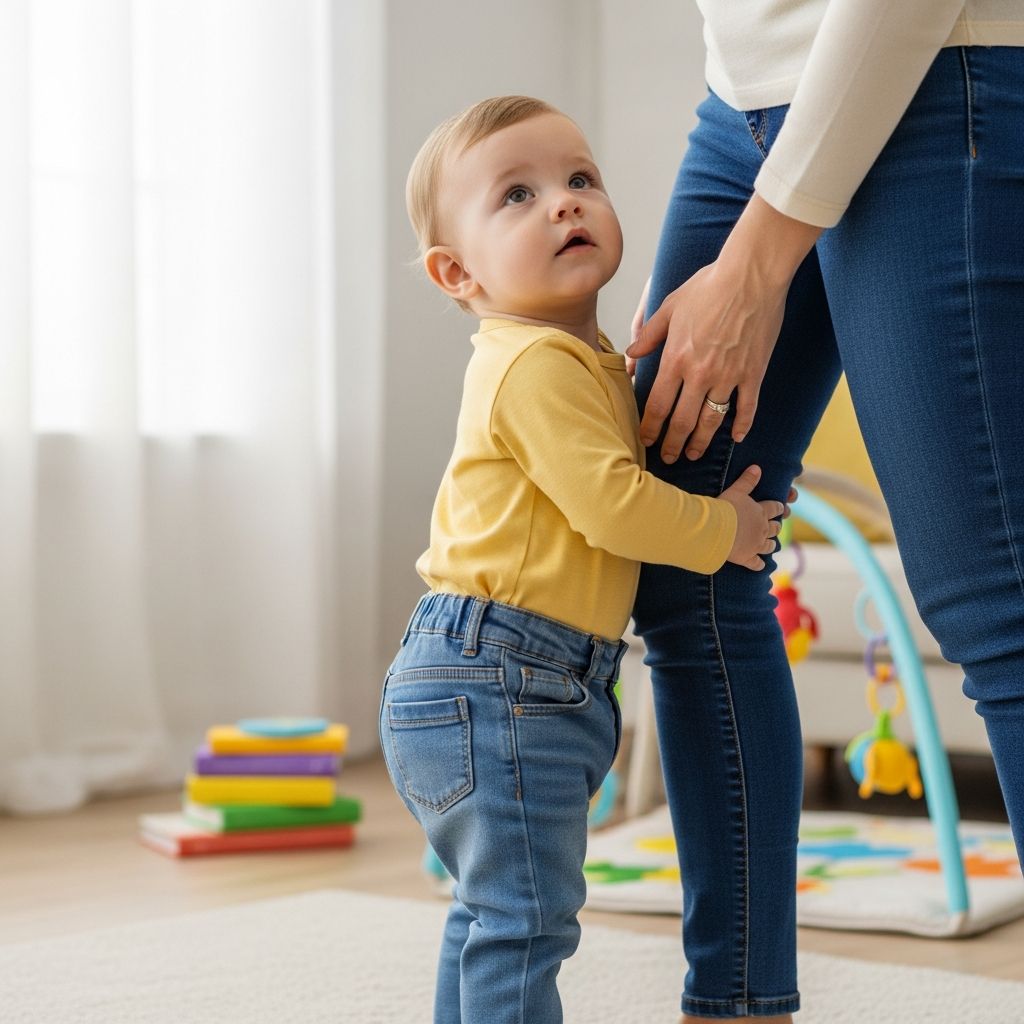
Around the first birthday, toddlers begin walking, babbling more, and exploring, yet they still depend heavily on their caregivers to feel safe. This mix of curiosity and vulnerability often shows up as clinginess, crying when a parent leaves the room, or needing to be held more frequently. These behaviors are usually signs of a healthy attachment system doing its job rather than a problem caused by being too responsive.
Developmentally, toddlers this age are starting to understand that people can go away and come back, but they do not yet fully trust that separations are temporary. They use proximity to their main caregiver as an anchor—checking back frequently, needing eye contact, or insisting on being carried—to manage the stress of a big new world.
- Increased awareness of distance from caregivers can trigger anxiety.
- New skills like walking make the world feel both exciting and overwhelming.
- Language is still limited, so toddlers rely on crying, clinging, or protesting to communicate distress.
What Responsive Parenting Really Means
Responsive parenting is not about saying yes to every wish or preventing all frustration. It is about noticing a child’s signals, interpreting what they likely mean, and responding in a way that is warm, consistent, and developmentally appropriate. Over time, this predictable responsiveness teaches a child that their needs matter and that adults are reliable.
Rather than reinforcing clinginess, responsiveness helps a toddler gradually internalize the sense of safety that allows them to separate more confidently. When a child trusts that a caregiver will return, they can take emotional risks like trying the slide alone, greeting a new adult, or falling asleep without constant contact.
- Observing: Watching body language, facial expressions, and sounds.
- Interpreting: Asking, “Is this hunger, fatigue, fear, or a need for comfort?”
- Responding: Offering touch, words, or limits that fit the situation.
Clingy Behaviors That Are Usually Normal
Not every intense reaction is a sign something is wrong. Between 12 and 18 months, many children display behaviors that feel extreme to adults but are common for their age. Understanding what falls within the range of typical development can reduce anxiety about being too responsive.
Below are examples of clingy behaviors that, in an otherwise healthy and growing toddler, often reflect a normal, temporary phase:
- Crying or protesting when a caregiver walks out of sight.
- Wanting only one preferred adult, even rejecting others.
- Needing to be held more in unfamiliar places or around new people.
- Demanding physical contact during transitions like bedtime or drop-off.
- Clinging more after illness, travel, or schedule changes.
Responsive vs Overprotective: Key Differences
Sometimes caregivers blend the ideas of “responsive” and “overprotective,” but they are not the same. The goal is not to eliminate every uncomfortable feeling your toddler has, but to walk alongside them as they work through it. Responsiveness supports growth; overprotection blocks it.
The table below highlights the difference between a responsive approach and one that unintentionally keeps a child too dependent:
| Responsive Approach | Overprotective / Intrusive Approach |
|---|---|
| Notices distress, offers comfort, and then allows the toddler to return to play when ready. | Rushes in at the first sign of fussing and removes all challenge or frustration. |
| Sets gentle limits while acknowledging emotions (e.g., “You’re upset I’m leaving, and I will come back.”). | Avoids all separations to prevent crying, even when short and manageable. |
| Encourages small steps toward independence with support nearby. | Does tasks the child can attempt alone, preventing practice and mastery. |
| Allows the child to express big feelings safely. | Distracts or silences emotions quickly to keep things calm. |
Why Clinginess Often Increases When You Are Responsive
When caregivers become more emotionally available and consistent, toddlers may initially appear even more demanding. This does not mean responsiveness is a mistake; instead, it usually means the child finally feels safe enough to show the depth of their need.
Imagine a toddler who previously learned not to cry because comfort was inconsistent. Once that same child experiences predictable soothing, they may “catch up” by seeking extra closeness for a time. With continued reliability and appropriate boundaries, this surge in clinginess typically settles and becomes a foundation for future independence.
- Increased clinginess after positive changes can be emotional “backpay.”
- Children test whether the new pattern of responsiveness can be trusted.
- Consistency over weeks and months matters more than any single hard day.
Supporting Your Toddler While Encouraging Independence
Responsive parenting does not mean you must be available every second or abandon your own needs. It uses the security of your relationship to scaffold new skills, including the ability to be apart for short periods. The goal is a balance between connection and gentle stretching.
The strategies below help a 13-month-old feel safe while slowly increasing their capacity to handle separation and frustration:
- Use short, predictable separations. Step into another room for a brief, announced absence and return as promised. Repeat this pattern regularly so your toddler experiences leaving and returning in manageable doses.
- Create goodbye rituals. A simple wave at the window, a special phrase, or a short song can make transitions feel familiar and less overwhelming.
- Stay emotionally present even when you set limits. You might say, “You want me to hold you, and I need to finish cooking; I’ll talk to you and stay nearby while you play on the floor.”
- Invite independent play within a safe radius. Set up a secure space where your toddler can explore while still seeing or hearing you.
- Label feelings. Putting words to emotions—“scared,” “sad,” “mad,” “missing mommy”—helps toddlers feel understood and begins to build self-regulation.
Common Fears Parents Have About Clinginess
Many caregivers of 13-month-olds carry quiet fears that their child’s clinginess signals a lifelong pattern. These worries are understandable, especially when friends, relatives, or online voices suggest that comfort will “spoil” a child. Examining these beliefs can help you respond from confidence rather than fear.
Here are frequent concerns and why they are usually misplaced:
- “If I pick up my crying toddler, they’ll never learn to self-soothe.” In reality, self-soothing is learned through repeated experiences of being soothed by a trusted adult, then gradually internalizing that calm.
- “My child is clingier than others—did I cause this?” Temperament plays a large role. Some toddlers are naturally more sensitive or cautious and need more reassurance even with excellent parenting.
- “If I go back to work or take time for myself, I’ll damage our bond.” A secure attachment can absolutely coexist with daycare, babysitters, and parental breaks, as long as separations are handled with warmth and reliability.
Reading Your Own Signals as a Parent
Parenting a clingy toddler can be physically draining and emotionally triggering. Your reactions—frustration, guilt, resentment, or anxiety—are signals too. They may point to exhaustion, lack of support, or old stories about what a “good” parent should look like.
Responsive parenting includes caring for your own nervous system so you can stay flexible and present. When your cup is empty, it becomes harder to tolerate crying, set boundaries kindly, or interpret clinging as communication rather than manipulation.
- Notice when you feel overwhelmed or trapped by your child’s need for closeness.
- Seek micro-breaks: a short walk, deep breaths at the sink, or a five-minute stretch.
- Ask for help from partners, friends, or community resources when possible.
Practical Day-to-Day Examples
Abstract principles are helpful, but everyday life with a 13-month-old is built from hundreds of small moments. The examples below show how responsiveness and gentle limits can work together in typical situations.
These illustrations are not scripts to memorize, but starting points you can adapt to your own family values and circumstances.
- Kitchen clinginess: Your toddler wraps around your legs while you cook. You can acknowledge their need (“You want to be close while I’m making dinner”), place them safely in a high chair with a snack or toy nearby, keep talking or singing, and offer a hug break when possible.
- Bedroom separation: When you place your toddler in the crib, they cry and reach for you. You can stay a short time, use a consistent routine (song, phrase, gentle touch), and leave with a clear cue that you’ll check back after a few minutes if needed.
- Social gatherings: In a busy environment, your toddler hides their face or clings. Instead of forcing interaction, you can hold them, describe what is happening, and allow them to watch from your arms until they feel safe enough to explore.
When Clinginess Might Need Extra Attention
While clinginess at 13 months is usually normal, there are times when it can signal something more. Trust your sense of your child and consider speaking with a pediatric or child development professional if you notice patterns that feel concerning or intensify over time.
Red flags do not automatically mean something is wrong, but they are reasons to gather more information and support:
- Loss of skills your child previously had (such as babbling, eye contact, or walking).
- Very limited interest in play, exploration, or interaction most of the day.
- Extreme distress with any separation that does not ease at all over weeks, despite consistent routines.
- Concerns from multiple caregivers about development, communication, or responsiveness.
Frequently Asked Questions About Clingy 13-Month-Olds
Will my toddler ever become independent if I keep comforting them?
Yes. Independence grows from a foundation of security, not from being left to handle distress alone before they are ready. Consistently meeting your toddler’s emotional needs now makes it easier for them to separate with confidence later.
Am I allowed to say no even if my child cries?
Absolutely. Responsive parenting allows for clear, kind boundaries. Your job is to keep your child safe and supported, not to prevent every tear; you can say no while still acknowledging and soothing their disappointment.
How long does the clingy phase usually last?
Clinginess tends to come in waves rather than following an exact timeline. Many toddlers show peaks around major developmental leaps, illnesses, or life changes, with calmer stretches in between as confidence grows.
What if other adults say I’m “spoiling” my child?
Generational beliefs about crying and comfort vary widely. You can politely acknowledge others’ opinions while staying grounded in your understanding that emotional responsiveness helps build secure, resilient children.
Can I practice responsive parenting if I work full time?
Yes. What matters most is the quality of your interactions when you are together, not the number of hours alone. Predictable routines, warm reunions, and attuned responses during everyday care all contribute to a strong attachment.
Key Takeaways for Worried Parents
If your 13-month-old seems extra clingy, it is very likely a sign that their attachment system is active and working, not that you have been too responsive. By staying warm, consistent, and gently boundaried, you help your child move through this normal stage and emerge more secure.
Responsive parenting is not the enemy of independence; it is its starting point. Over time, the very closeness you offer now becomes the inner confidence your child carries into the wider world.