The menstrual cycle serves as a fundamental indicator of reproductive health and potential fertility. For individuals seeking to conceive, understanding how cycle length influences the ability to become pregnant is essential. While a standard menstrual cycle typically ranges from 24 to 38 days, variations in cycle length—particularly shortened cycles—can signal underlying health considerations that may affect conception rates.
Defining Cycle Length and Normal Variations
A typical menstrual cycle spans approximately 28 days, though individual variation is normal and common. Medical professionals generally consider cycles between 21 and 35 days to fall within expected parameters. However, some individuals experience consistently shorter cycles, defined as fewer than 24 days in length. These abbreviated cycles warrant closer examination, particularly for those actively trying to conceive, as they may indicate physiological changes affecting reproductive capacity.
The menstrual cycle consists of distinct phases, each with specific hormonal and physiological functions. Understanding these phases helps clarify why cycle length matters for fertility outcomes.
The Follicular and Luteal Phases: Timing Matters
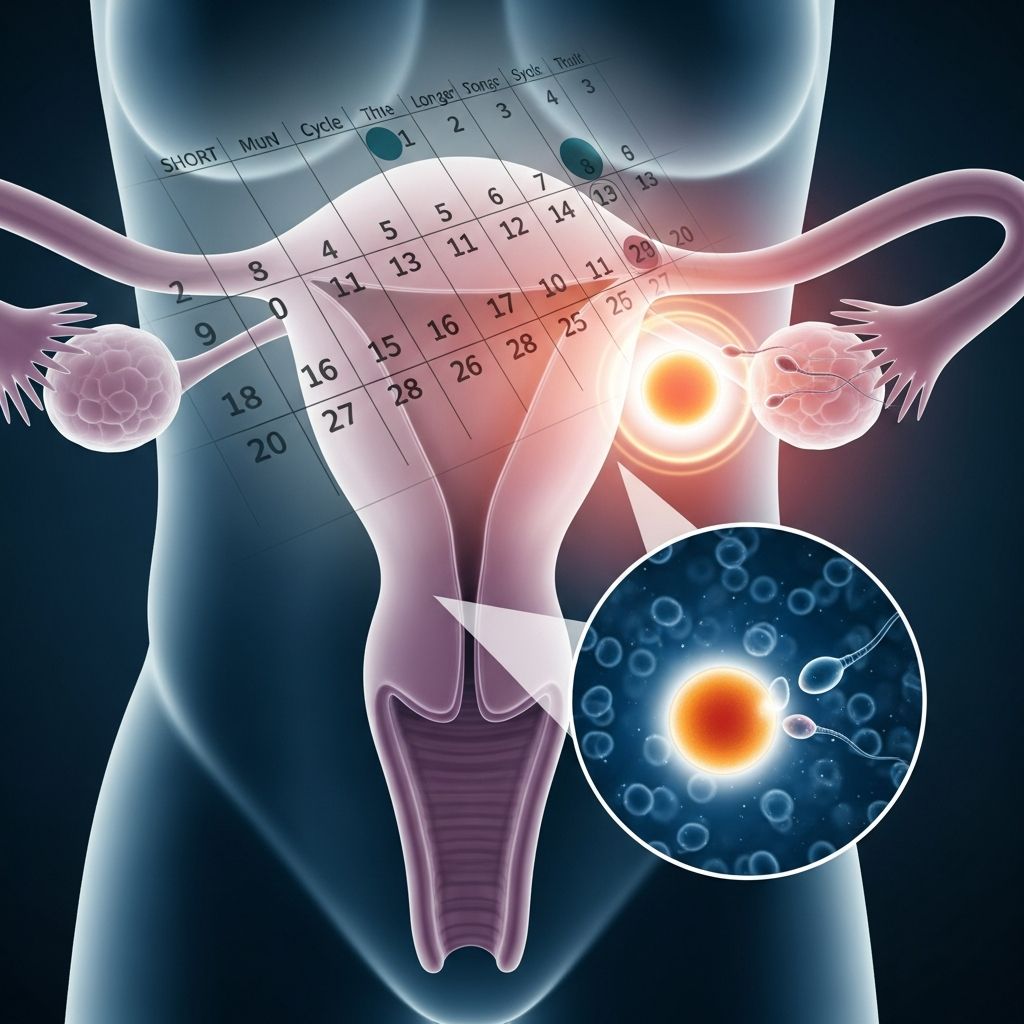
The menstrual cycle divides into two primary phases, each critical to reproductive function. The follicular phase begins on the first day of menstruation and extends through ovulation. During this time, the pituitary gland releases follicle-stimulating hormone (FSH), which stimulates the ovaries to produce follicles containing eggs. The uterine lining simultaneously thickens in preparation for potential pregnancy. This phase typically lasts 10 to 16 days but varies considerably among individuals.
The luteal phase follows ovulation and continues until menstruation begins. During this phase, the corpus luteum produces progesterone, a hormone essential for maintaining the uterine lining and supporting early pregnancy. The luteal phase normally lasts 12 to 16 days. A shortened luteal phase—lasting fewer than 12 days—may reduce progesterone levels, potentially compromising the uterine environment needed for successful implantation.
When a menstrual cycle becomes noticeably shorter, one or both phases may be compressed, creating physiological challenges for conception.
Research Findings on Shortened Cycles and Conception Rates
Scientific research consistently demonstrates a relationship between cycle length and fertility outcomes. Multiple prospective cohort studies have examined this connection in women actively attempting pregnancy.
Key research findings include:
- A Harvard University study identified that menstrual cycles featuring premature or delayed bleeding correlate with reduced fertility compared to regular cycles
- A Boston University School of Public Health investigation confirmed that shorter-than-normal cycles present fertility challenges for many women
- A Danish prospective cohort study of women aged 18 to 40 found that cycles shorter than 25 days were associated with delayed time to pregnancy, with peak fertility occurring in cycles of 32 to 33 days
- Research indicates that cycles shorter than 26 days may decrease conception chances by more than 50%
These studies control for various confounding factors including age, body mass index, smoking history, and contraceptive use, strengthening confidence in their findings. The research suggests that short cycle length functions as a biological marker that may indicate reduced egg quality, altered hormonal patterns, or other reproductive system abnormalities.
Underlying Causes of Shortened Menstrual Cycles
Several physiological mechanisms can produce consistently shortened cycles. Understanding potential causes helps individuals and healthcare providers identify appropriate interventions.
Ovarian Reserve and Egg Quality
One significant cause of shortened cycles relates to declining ovarian reserve—the number and quality of eggs remaining in the ovaries. As women age, the total egg supply naturally diminishes. Concurrently, egg quality typically declines. When the ovaries contain fewer high-quality eggs, they respond differently to hormonal signals from the brain.
Dysfunctional ovaries lose their ability to communicate effectively with the pituitary gland and hypothalamus. The brain compensates by releasing elevated levels of follicle-stimulating hormone (FSH) even during the luteal phase of the previous cycle, attempting to stimulate these compromised eggs to mature. This elevated FSH causes the follicular phase to shorten, resulting in earlier ovulation and a compressed overall cycle length.
Hormonal Imbalances
The menstrual cycle depends on intricate hormonal coordination. When the body experiences imbalances in estrogen, progesterone, FSH, or luteinizing hormone (LH), cycle length may shift. These hormonal disturbances can stem from thyroid dysfunction, adrenal insufficiency, or other endocrine disorders.
Reproductive Conditions
Certain medical conditions directly affect cycle length. Polycystic ovary syndrome (PCOS) exemplifies this phenomenon, potentially disrupting normal ovulation patterns and altering cycle duration. Endometriosis and uterine structural abnormalities may also influence menstrual characteristics.
Perimenopause
As women approach menopause, menstrual cycle length frequently shortens. This transition typically occurs in the years leading up to perimenopause, when ovarian function begins declining. The shortened cycles during this life stage reflect reduced ovarian reserve and changing hormonal patterns.
Distinguishing Between Menstrual Duration and Cycle Length
An important distinction exists between cycle length and menstrual period duration. Cycle length measures the number of days from the first day of one menstruation to the first day of the next. Period duration measures how many days bleeding occurs, typically ranging from three to seven days.
While these characteristics can influence fertility, they function somewhat independently. A woman might have a short cycle with normal bleeding duration, or a normal-length cycle with notably short bleeding. Research examining period duration in relation to fertility has produced mixed results, with some studies suggesting that shorter periods may indicate an unsuitable uterine lining, while others find minimal association with conception rates.
Ovulation: The Critical Fertility Window
Despite the documented challenges associated with shortened cycles, it remains crucial to recognize that pregnancy remains possible even with a short menstrual cycle. The primary determinant of pregnancy potential is the occurrence and timing of ovulation.
Ovulation—the release of a mature egg from the ovary—represents the pivotal reproductive event. Without ovulation, pregnancy cannot occur naturally. Some shortened cycles result from anovulatory bleeding, where menstruation occurs without preceding ovulation, making conception impossible during that cycle. However, many individuals with short cycles do ovulate, maintaining reproductive potential.
The timing of ovulation within a shorter cycle may shift earlier, compressing the available window for conception. When ovulation occurs prematurely, the luteal phase shortens, potentially reducing progesterone production and uterine preparation for implantation. Nevertheless, identifying the actual ovulation date through tracking methods or medical testing can help maximize conception timing even in abbreviated cycles.
Diagnostic Approaches for Shortened Cycles
When individuals experience consistently short menstrual cycles and struggle with conception, medical evaluation becomes valuable. Healthcare providers employ several diagnostic strategies:
- Cycle tracking: Documenting cycle length over several months establishes patterns and confirms whether shortening is consistent or occasional
- Ovulation confirmation: Ovulation predictor kits, basal body temperature charting, or transvaginal ultrasound can confirm whether ovulation is occurring and when
- Hormone testing: Blood tests measuring FSH, LH, estrogen, and progesterone levels at appropriate cycle times reveal hormonal imbalances
- Ovarian reserve assessment: Tests such as anti-mullerian hormone (AMH) measurement or antral follicle count via ultrasound provide information about remaining egg supply
- Thyroid evaluation: Thyroid function tests identify whether thyroid disease contributes to cycle irregularities
- Pelvic ultrasound: Imaging can detect structural abnormalities, cysts, or conditions like PCOS affecting the reproductive organs
Strategies for Optimizing Fertility With Shortened Cycles
Individuals experiencing short menstrual cycles who desire to conceive have several evidence-based options:
Precise Ovulation Tracking
Since ovulation timing remains the crucial fertility factor, accurate detection becomes especially important with shortened cycles. Ovulation predictor kits detecting the LH surge, combined with basal body temperature monitoring or ultrasound tracking, helps identify the optimal conception window. This precision is valuable when ovulation may occur earlier than in standard 28-day cycles.
Lifestyle Optimization
While lifestyle modifications alone cannot alter cycle length, certain practices support overall reproductive health. Regular moderate exercise, adequate sleep, stress reduction, balanced nutrition, and maintenance of healthy body weight all contribute to hormonal equilibrium and ovarian function. These measures may help optimize egg quality, which particularly matters when ovarian reserve becomes limited.
Medical Interventions
For individuals not conceiving naturally despite appropriate timing, fertility treatments may be appropriate. Options include:
- Ovulation stimulation: Medications like clomiphene citrate or letrozole stimulate the ovaries to produce multiple follicles, improving conception odds
- Assisted reproductive technology: In vitro fertilization (IVF) bypasses many fertility barriers and allows direct control of the cycle, beneficial when significant ovarian reserve depletion exists
- Progesterone supplementation: When luteal phase insufficiency is confirmed, supplemental progesterone can support the uterine environment for implantation
Alternative and Complementary Approaches
Some individuals explore complementary medicine traditions. Acupuncture, for instance, has been studied for its effects on reproductive health. Research indicates that acupuncture may enhance blood circulation to reproductive organs, potentially supporting follicle development and ovulation. Additionally, acupuncture may reduce stress, which can positively influence fertility. However, these approaches should complement, not replace, evidence-based medical evaluation and treatment.
Age Considerations and Cycle Changes
Menstrual cycle length naturally changes across the lifespan. Young individuals often experience longer, more irregular cycles that stabilize with age. Conversely, as women approach their 40s and beyond, cycles often shorten, reflecting the declining ovarian reserve inherent to reproductive aging.
For this reason, shortened cycles become increasingly common as women age, and this age-related shortening corresponds with reduced fertility potential. However, research confirms that short cycle length itself independently predicts reduced fertility, even among younger women, suggesting that shortened cycles indicate genuine physiological changes beyond normal aging.
When to Seek Professional Evaluation
Individuals experiencing consistently short cycles—particularly those lasting 24 days or fewer—may benefit from professional evaluation, especially if attempting to conceive. Warning signs warranting medical consultation include:
- Cycles consistently shorter than 24 days persisting for three or more months
- Inability to conceive after one year of unprotected intercourse (six months for women over 35)
- Significant changes in established cycle patterns
- Short cycles accompanied by other symptoms like extreme flow changes, pain, or irregular bleeding
- Family history of premature menopause or reproductive difficulties
Frequently Asked Questions About Short Cycles and Fertility
Can someone with a short menstrual cycle still become pregnant?
Yes, pregnancy is absolutely possible with a short menstrual cycle. While shortened cycles correlate with reduced conception rates on average, many individuals with short cycles ovulate normally and conceive successfully. The key factor determining pregnancy potential is whether and when ovulation occurs, not cycle length itself.
What cycle length provides the best fertility outcomes?
Research indicates that cycle lengths of 32 to 33 days are associated with the highest fertility rates, though cycles ranging from 27 to 31 days also support good fertility potential. However, even with longer cycles, individual variation in ovulation timing and egg quality remains significant.
Does a short period (bleeding duration) mean reduced fertility?
Bleeding duration and cycle length are distinct characteristics. While period duration may relate to uterine lining development, research shows inconsistent associations between bleeding duration and fertility. Medical evaluation can determine whether short bleeding indicates a specific fertility concern.
How can I identify my ovulation date with a short cycle?
Ovulation tracking becomes even more important with short cycles. Methods include ovulation predictor kits (which detect the LH surge), basal body temperature charting, cervical mucus monitoring, and ultrasound imaging. Combining multiple methods increases accuracy in identifying your fertile window.
At what age do cycles typically shorten?
While some cycle shortening occurs naturally with age, significant shortening typically becomes more apparent in the mid-40s as women approach perimenopause. However, shortened cycles at any age warrant evaluation to identify underlying causes.
Are there treatments that can lengthen a short menstrual cycle?
Treatments addressing underlying causes—such as thyroid medication for thyroid disease, medication for PCOS, or lifestyle modifications—may help normalize cycle length. However, if shortening results from declining ovarian reserve, no treatment can extend cycle length; instead, fertility strategies focus on optimizing remaining egg quality and conception timing.
References
- Short Period Can Affect Your Fertility — GinSen Clinics. 2024. https://www.ginsen-london.com/blog/short-period-and-fertility/
- A Prospective Cohort Study of Menstrual Characteristics and Time to Pregnancy — U.S. National Library of Medicine, National Center for Biotechnology Information. 2011. https://pmc.ncbi.nlm.nih.gov/articles/PMC3166706/
- What Does Your Menstrual Cycle Say About Your Fertility? — Shady Grove Fertility. 2024. https://www.shadygrovefertility.com/article/menstrual-cycle-faq/
- Short Luteal Phase — The Evewell, IVF & Fertility Clinic London. 2024. https://www.evewell.com/support/short-luteal-phase/
- What Can Cause a Short Period? — Stony Brook Medicine. 2024. https://www.stonybrookmedicine.edu/islandfertility/news/short-period