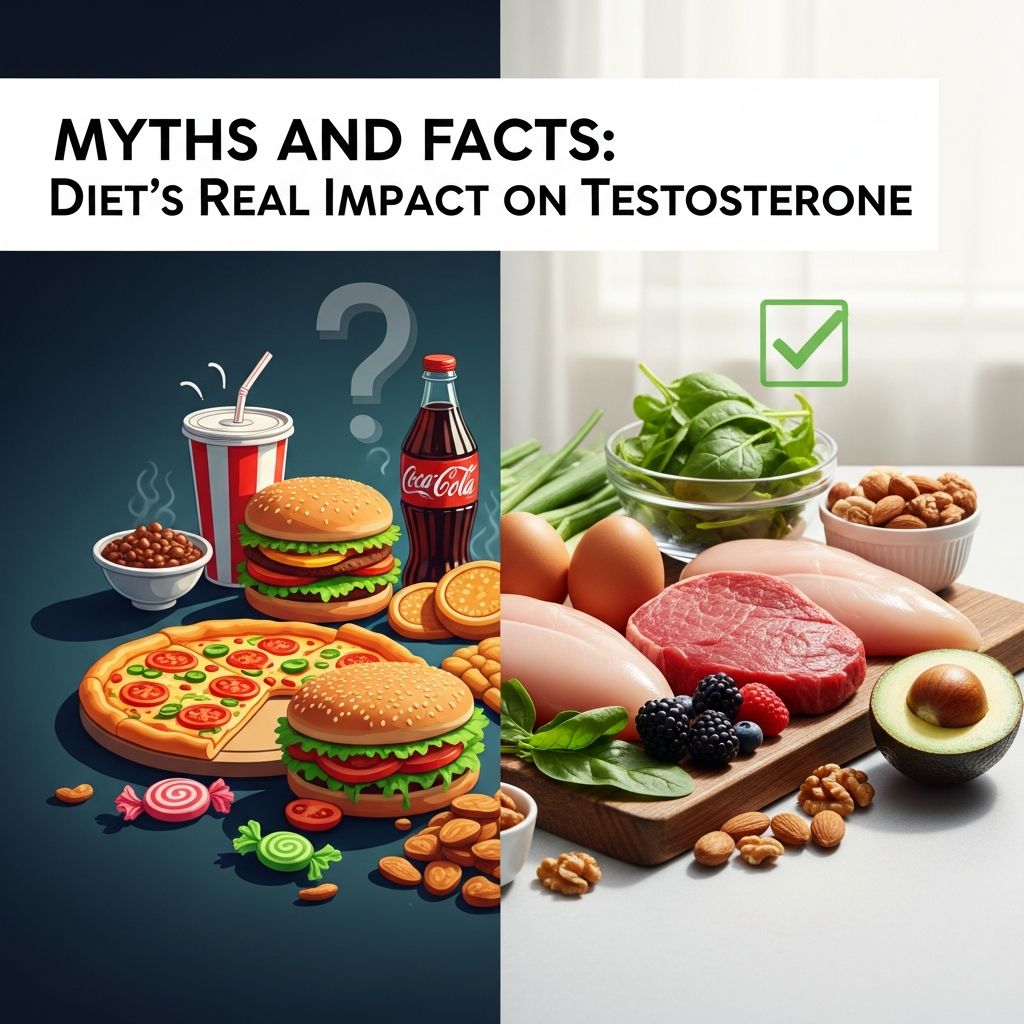
Testosterone, a key hormone for men, influences muscle mass, energy, mood, and libido. Many believe certain foods can skyrocket or crash these levels, but scientific evidence shows diet plays a supportive, not transformative, role. A balanced approach to eating, combined with exercise and sleep, optimizes hormone production more effectively than any single superfood.
Understanding Testosterone Regulation in the Body
The body tightly controls testosterone via the hypothalamus-pituitary-gonadal axis. The hypothalamus releases gonadotropin-releasing hormone (GnRH), prompting the pituitary gland to secrete luteinizing hormone (LH) and follicle-stimulating hormone (FSH). LH stimulates Leydig cells in the testes to produce testosterone. This feedback loop maintains levels around 300-1000 ng/dL in healthy adult men, adjusting to age, stress, and lifestyle.
Nutrition influences this indirectly by providing building blocks like cholesterol (a testosterone precursor), zinc, vitamin D, and magnesium. Deficiencies can lower levels, but excess from food rarely spikes them beyond normal ranges due to homeostatic mechanisms. For instance, low-fat diets correlate with reduced testosterone, emphasizing fats’ role in hormone synthesis.
Common Food Myths: What Doesn’t Work as Advertised
Online claims tout oysters, onions, or pomegranates as testosterone miracles. While nutrient-rich, they don’t cause dramatic surges. Oysters provide zinc, vital for testosterone synthesis, but studies show supplementation corrects deficiencies rather than boosting above baseline in healthy men.
- Onions and garlic: Contain flavonoids that may protect sperm and support hormone signaling, but human trials lack robust evidence for testosterone elevation.
- Pomegranate juice: Reduces cortisol (a testosterone suppressor) and improves mood, yet increases are modest and short-term.
- Soy products: Feared for estrogen-like isoflavones, but meta-analyses confirm no impact on total or free testosterone in men.
Saw palmetto and chrysin (from honey) show mixed results; some studies note minor free testosterone rises in deficient men, but not in young, healthy individuals. These myths persist due to animal studies or small human trials not generalizable to broad populations.
Nutrients That Genuinely Support Hormone Health
Focus on overall nutrient density rather than isolated foods. Key players include:
| Nutrient | Role in Testosterone | Food Sources |
|---|---|---|
| Zinc | Enzyme cofactor for testosterone synthesis; prevents deficiency-related drops | Oysters, beef, beans, nuts |
| Vitamin D | Acts like a steroid hormone; low levels link to hypogonadism | Fatty fish (salmon, mackerel), fortified foods, sunlight |
| Magnesium | Boosts free testosterone by lowering SHBG binding | Spinach, almonds, peanuts |
| Healthy Fats | Cholesterol precursor; low-fat diets reduce levels | Avocados, olive oil, nuts |
| Boron | May decrease SHBG, increasing free testosterone | Fruits, legumes, nuts |
A Mediterranean-style diet—rich in veggies, fruits, lean proteins, and healthy fats—associates with higher testosterone via better weight control and insulin sensitivity. Ketogenic diets showed promise in one study, elevating total testosterone over Western diets in resistance-trained men.
Debunking Testosterone Killers in Your Diet
No food “kills” testosterone outright, but patterns matter. Excessive alcohol disrupts LH signaling, lowering levels chronically. Processed sugars spike insulin, potentially suppressing production over time. Soy myths are overstated; even high intake doesn’t alter hormones significantly.
Protein sources like whey outperform soy post-exercise for testosterone response, but both build muscle when paired with training. Over-restriction, like chronic low-calorie dieting, tanks hormones by stressing the body.
Lifestyle Factors: Beyond the Plate for Peak Levels
Diet alone isn’t enough. Resistance training elevates testosterone acutely and chronically. Sleep deprivation halves daytime levels; aim for 7-9 hours. Stress management via meditation or green tea (antioxidants may aid) supports balance.
Supplements like ashwagandha or ginger show preliminary benefits, but consult professionals. Weight loss in obese men via diet and exercise can double testosterone.
Practical Meal Plans for Hormonal Support
Build meals around whole foods:
- Breakfast: Eggs with spinach, avocado, and whole-grain toast (protein, magnesium, fats).
- Lunch: Grilled salmon salad with olive oil dressing, nuts, and berries (vitamin D, antioxidants).
- Dinner: Lean beef stir-fry with broccoli, onions, and quinoa (zinc, protein, fiber).
- Snacks: Greek yogurt with pomegranate seeds or Brazil nuts (selenium, probiotics).
Track intake: 20-35% calories from fats, adequate protein (1.6g/kg bodyweight), and micronutrients. Hydrate and limit booze to occasional.
Age-Related Changes and When to Seek Help
Testosterone declines 1-2% yearly after 30, accelerating with poor habits. Symptoms like fatigue, low libido, or muscle loss warrant blood tests. Normal ranges vary; free testosterone matters more than total.
Primary hypogonadism (testicular issue) or secondary (pituitary) require medical evaluation. Lifestyle tweaks often suffice for mild declines; TRT for severe cases.
Frequently Asked Questions (FAQs)
Can specific foods like oysters instantly boost testosterone?
No, they provide zinc to prevent deficiency but won’t cause spikes in healthy men. Consistent nutrition supports steady levels.
Does a low-fat diet lower testosterone?
Yes, studies link low-fat intake to reduced levels; prioritize healthy fats like those in fish and avocados.
Is soy bad for men’s testosterone?
No significant impact per meta-analyses; moderate consumption is fine.
How does exercise fit with diet for testosterone?
Resistance training amplifies benefits; pair with protein-rich meals for optimal response.
Should I take testosterone-boosting supplements?
Evidence is weak for most; focus on diet first and consult a doctor.
Key Takeaways for Long-Term Hormone Health
Embrace balanced eating over fads. A nutrient-dense diet prevents dips, supports recovery, and enhances vitality. Combine with strength training, sleep, and stress reduction for best results. Monitor via labs if concerned—personalized advice trumps generics.
References
- 12 Natural Foods to Boost Testosterone — Vinmec. 2023. https://www.vinmec.com/eng/blog/12-natural-foods-that-increase-testosterone-en
- Manipulation of Dietary Intake on Circulating Testosterone — PMC (NCBI). 2021-10-27. https://pmc.ncbi.nlm.nih.gov/articles/PMC8538516/
- Improving Low Testosterone Naturally — VA Whole Health Library (U.S. Dept. of Veterans Affairs). 2023. https://www.va.gov/WHOLEHEALTHLIBRARY/tools/improving-low-testosterone-naturally.asp
- 8 Proven Ways to Increase Testosterone Levels Naturally — Healthline. 2023. https://www.healthline.com/nutrition/8-ways-to-boost-testosterone
- Can Foods Boost Testosterone for Men and Women? — NASM Blog. 2023. https://blog.nasm.org/can-foods-boost-testosterone
- A Review of foods and food supplements increasing testosterone — Journal of Men’s Health. 2021. https://www.jomh.org/articles/10.31083/jomh.2021.008
- Can Specific Foods or Diets Boost Your Testosterone Levels — NCBI Research News. 2023. https://www.ncbi.nlm.nih.gov/search/research-news/14903