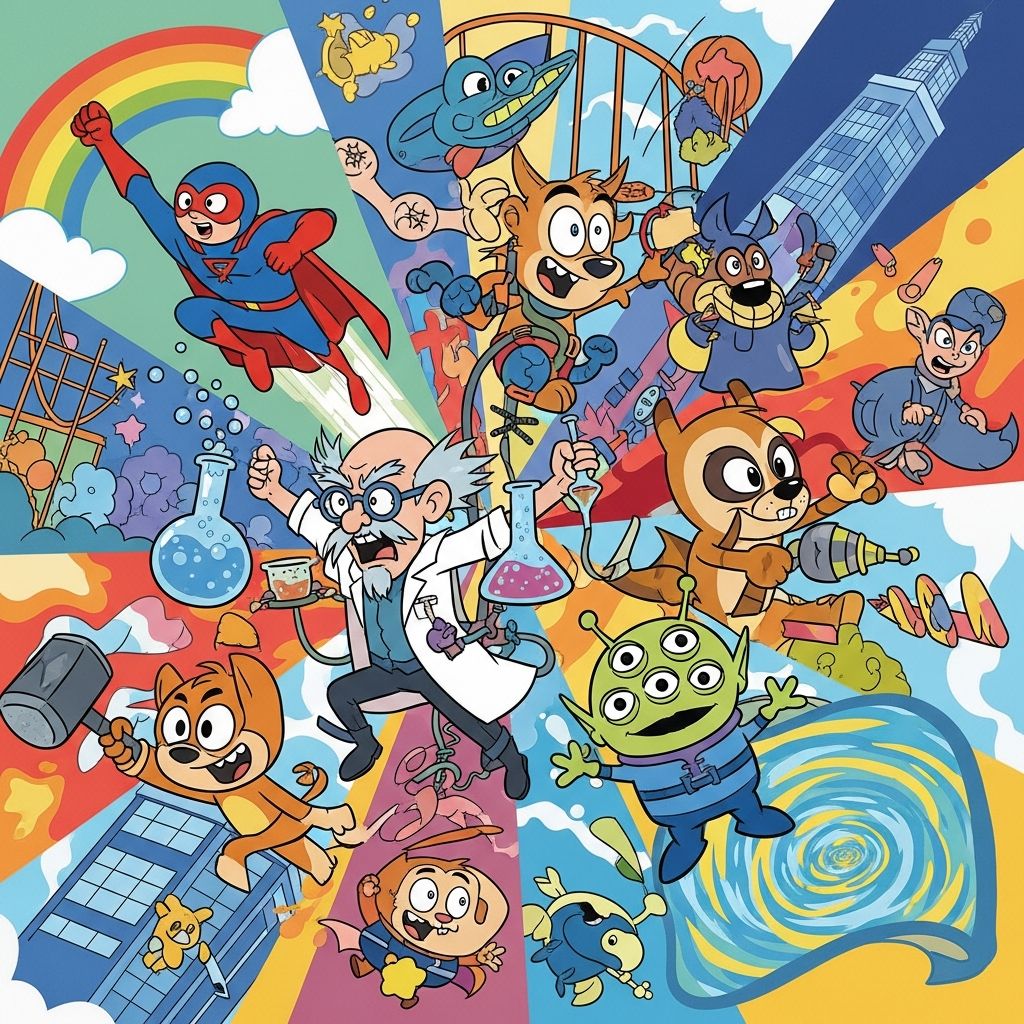
For many families, brightly colored cartoons with absurd jokes and nonstop action feel like a harmless, even cherished, part of childhood. Some parents, however, notice something different when the screen clicks off: a preschooler who suddenly cannot listen, melts down over tiny frustrations, or seems wired and scattered. This contrast raises a fair question: can very fast, fantastical cartoons briefly scramble young children’s ability to think clearly and behave calmly?
Research on preschoolers suggests that certain shows, especially those with rapid scene changes and unreal, chaotic scenarios, can temporarily interfere with skills like self-control, planning, and flexible thinking immediately after viewing. These skills sit at the heart of what psychologists call executive function, and they matter for everything from following directions to waiting a turn. At the same time, the findings are more nuanced than a simple “this cartoon ruins your child’s brain” headline, and parents have more power and flexibility than they may realize.
What Executive Function Really Is
Executive function is a cluster of mental abilities that help children manage their thoughts, emotions, and actions in goal-directed ways. It includes working memory (holding information in mind), inhibitory control (resisting impulses), and cognitive flexibility (shifting between rules or tasks). For a preschooler, these skills show up in very practical moments: remembering a two-step instruction, waiting for a snack, or switching from playtime to cleanup without falling apart.
- Working memory: Keeping track of what an adult just said, like “Put your shoes by the door and grab your backpack.”
- Inhibitory control: Holding back the urge to interrupt, hit, or grab a toy, even when emotions run high.
- Cognitive flexibility: Adjusting when plans change or when a game suddenly has a new rule.
These abilities grow rapidly in the early years, and the brain systems behind them are sensitive to both stress and stimulation. The concern is that some forms of media may overload or confuse these systems in the short term, particularly when the content is wildly unrealistic and moves at a speed no real-world setting can match.
Why Fast, Fantastical Cartoons Stand Out
Not all cartoons are created equal. The research that raised alarms about certain shows did not focus on screen time in general, but on a combination of features: a frantic pace, frequent scene changes, and scenarios that violate everyday logic. In these programs, characters may teleport, transform, or bounce back from injury without explanation, and the camera angle can change every few seconds.
This style creates a level of sensory and cognitive demand that preschool brains must work hard to track. Very young children often process events more slowly than adults realize, so when the screen leaps from one improbable situation to another, their attention is repeatedly yanked and reset. Over a few minutes, that stream of rapid, fantastical images can leave their self-regulation temporarily depleted, like a muscle briefly worn out by sprinting rather than jogging.
What Research Suggests About Short-Term Effects
One influential study with preschoolers compared three groups: children who watched a very fast, fantastical cartoon, children who watched a slower, realistic show, and children who spent the same time drawing. After only a few minutes, those who had viewed the rapid cartoon performed worse on tasks that measured executive function, such as following rules, switching between instructions, and delaying gratification.
The key points from this line of research include:
- The negative effects showed up immediately after watching a short segment, not hours later.
- The impact was on tasks like problem-solving and impulse control, not on language or basic knowledge.
- The comparison was between types of activities, suggesting that pace and realism, not just screen time, matter.
Importantly, the studies were limited in scope: they involved relatively small groups of children from specific backgrounds and looked only at immediate effects, not long-term outcomes like school achievement or mental health. The data do not prove that occasional viewing of a fast-paced cartoon will cause permanent damage. Rather, they indicate that parents may see a short-lived dip in cooperation and self-control right after such shows.
Fast Cartoons Versus Slower Stories
Researchers often contrast fast, fantastical cartoons with slower, more realistic children’s programs. Slower shows usually involve fewer scene changes, more predictable plots, and events grounded in everyday experience, such as friendships, family routines, or problem-solving in familiar settings. These differences appear to matter for how easily preschoolers can stay oriented and regulated.
| Feature | Fast, Fantastical Cartoons | Slow, Realistic Programs |
|---|---|---|
| Scene changes | Very frequent, often every few seconds, with sudden jumps and visual gags. | Infrequent, allowing children to linger on each scene. |
| Content realism | Characters defy laws of physics and logic, quickly shifting settings and abilities. | Events reflect plausible, everyday situations children might encounter. |
| Story structure | Jokes and action sometimes overshadow coherent cause-and-effect. | Narratives highlight clear problems and resolutions. |
| Immediate cognitive load | High; brains must track constant shifts and impossibilities. | Moderate; easier for preschoolers to process and follow. |
This does not mean slower shows are automatically “good” and faster ones automatically “bad.” Instead, the table highlights why a child might behave differently after each. After a calmer, realistic program, a preschooler may ease into the next activity. After a frenetic, surreal cartoon, the same child may feel mentally overstimulated and less able to switch gears.
What This Looks Like in Everyday Family Life
Parents often report a predictable pattern: a child laughs and seems entranced during a fast-paced cartoon, but within minutes of turning it off, that same child becomes whiny, oppositional, or uncooperative. The research on executive function provides one plausible explanation: the child’s brain has just spent several minutes processing highly demanding input, leaving fewer resources for tasks like listening, waiting, or problem-solving.
- A child who usually can follow a simple three-step instruction suddenly cannot remember step two.
- Transitions, such as moving from screen time to putting on shoes, provoke outsized frustration.
- Impulses—shouting, grabbing, or running off—are harder for the child to resist in the immediate aftermath.
For adults, this shift can feel like disrespect or defiance, but seeing it as a temporary drain on executive function changes the response. Instead of assuming the child is choosing to misbehave, parents can recognize that the brain just ran a mental marathon and may need a brief cool-down before handling complex directions or self-control demands.
Short-Term Effects Versus Long-Term Fears
It is important to distinguish between immediate, short-lived effects and long-term developmental risks. The existing studies focus largely on the brief window right after viewing and do not claim that a few minutes of a fast-paced cartoon will cause chronic attention problems or academic difficulties by itself. Many children who watch such shows will grow up to function perfectly well, especially when their days also include rich play, conversation, sleep, and physical activity.
That said, early childhood is a sensitive period for brain development, and patterns repeated day after day matter more than one isolated episode. If a child spends a large share of waking hours immersed in rapidly shifting, fantastical screen worlds, it may shape expectations about how stimulating everyday life should feel and how quickly things ought to change, potentially challenging attention and patience over time.
How to Use This Information Without Panic
Parents can use these insights not as a call to guilt, but as a guide for small, practical adjustments. The goal is not to banish every silly cartoon, but to align viewing habits with what is known about preschool brains. That means noticing both the content and the timing of shows, and building in routines that protect a child’s capacity to think and self-regulate.
- Treat fast, fantastical cartoons as occasional treats rather than default background noise.
- Avoid scheduling them right before moments that demand cooperation, such as school, dinner, or bedtime.
- Pair screen time with plenty of offline, open-ended play, which strengthens executive function rather than depleting it.
This approach keeps the discussion grounded: instead of arguing about whether a specific character is “good” or “bad,” families can focus on balance, rhythm, and readiness—what a child is asked to do during the fragile minutes after the credits roll.
Practical Strategies for Smoother Transitions
Once parents accept that certain shows may temporarily tax a child’s executive function, it becomes easier to plan transitions that set everyone up for success. Thoughtful routines can transform the most chaotic post-screen moments into manageable, even pleasant, parts of the day.
- Schedule a buffer activity: After a very stimulating cartoon, insert five to ten minutes of calm play, drawing, or reading before expecting complex instructions or chores.
- Keep instructions simple: Immediately after viewing, offer one- or two-step directions rather than long lists.
- Use visual cues: A picture schedule or simple chart can supplement tired working memory and reduce arguments.
- Stay nearby: During the first few minutes after turning off the TV, offer more guidance and connection, not less, as your child recalibrates.
In practice, this might mean turning off the show ten minutes earlier and inviting your child to build with blocks, color, or look at picture books before asking for help setting the table or getting dressed. Those minutes serve as a recovery zone for the brain systems that control attention and self-restraint.
Looking Beyond Single Shows: The Bigger Media Landscape
Conversations about one specific cartoon often tap into a broader concern: children are growing up surrounded by rapid-fire digital experiences, from streaming video to games and apps that reward constant tapping and swiping. Public health experts worry that this environment normalizes high-speed, multi-sensory stimulation as the baseline, making ordinary life feel slow and uninteresting by comparison.
At the same time, media can be constructive when designed thoughtfully. Programs and platforms that slow down, build coherent stories, and encourage real-world exploration can support learning and empathy rather than undermine them. The question for families is not whether children will encounter digital media, but how often, how intense it is, and what else fills the spaces around it.
Simple Guidelines for Healthier Screen Habits
Parents do not need a degree in psychology to set reasonable boundaries. A few clear, consistent guidelines can protect executive function while leaving room for fun. These guidelines work best when tailored to each child’s temperament, age, and needs.
- Match content to age: Favor shows designed for preschoolers, especially those with slower pacing and relatable situations.
- Limit daily exposure to frenetic content: Reserve the most chaotic cartoons for limited, specific windows, rather than letting them dominate viewing time.
- Anchor screen time in routine: Tie viewing to predictable parts of the day and avoid last-minute binges before challenging activities.
- Co-view when possible: Watching together helps adults notice how a child reacts and opens the door for simple conversations about what is happening on screen.
These basic guardrails do not require perfect consistency. Occasional exceptions for travel days, illnesses, or special family events are unlikely to undo a generally thoughtful approach. The aim is not rigid control but a steady pattern that supports, rather than strains, a young child’s growing brain.
Frequently Asked Questions
Does a single episode of a fast-paced cartoon harm my child permanently?
Current research does not support the idea that a single short viewing session will cause permanent damage. Instead, studies highlight small, temporary drops in executive function—such as trouble following directions or delaying gratification—immediately after watching fast, fantastical content. Long-term outcomes depend far more on overall media patterns and the richness of a child’s daily life outside of screens.
Should I ban fast-paced cartoons entirely?
For most families, an outright ban is neither realistic nor necessary. A more balanced strategy is to limit how often these shows are watched, avoid them right before situations that require cooperation, and provide calming buffer activities afterward. Completely eliminating a beloved character can sometimes backfire, increasing its allure, while reasonable boundaries allow children to enjoy fun media within a supportive structure.
Is all children’s television equally risky?
No. Studies draw a distinction between fast, fantastical cartoons and slower, realistic programs created for preschoolers. The latter typically feature fewer scene changes, clearer storylines, and relatable experiences, which place less immediate demand on young children’s executive function and may be more supportive of learning. When choosing shows, looking at pacing and realism can be as important as checking ratings.
What if my child already watches a lot of frenetic shows?
Families can shift habits gradually rather than making abrupt, dramatic changes. Introducing more slow-paced, age-appropriate content, reducing overall screen time bit by bit, and building in predictable off-screen routines can all support better self-regulation over time. Even when previous habits were less than ideal, young brains remain remarkably adaptable, especially when given consistent, nurturing experiences offline.
How can I tell if a show is too fast for my child?
Pay attention to both the screen and your child’s behavior afterward. Programs with constant jump cuts, surreal transformations, and few quiet moments are likely more demanding, especially if your child seems wired, forgetful, or defiant when it ends. If calmer shows lead to smoother transitions and fewer conflicts, that is valuable feedback about what your child’s developing brain currently handles best.
Bringing It All Together
Fast-paced, fantastical cartoons can be entertaining and culturally influential, but they also place heavy demands on the very mental systems preschoolers need for everyday tasks. Evidence points to short-lived drops in executive function immediately after viewing, particularly in areas like impulse control and problem-solving. With this knowledge, parents can adjust timing, frequency, and follow-up routines so that cartoon chaos does not spill over into the rest of the day.
A childhood that includes some zany, over-the-top cartoons can still be healthy and joyful when balanced with slower stories, imaginative play, real-world conversations, sleep, and movement. The goal is not to raise children in a bubble, but to recognize how different types of media affect their still-growing brains and to make thoughtful choices in response.