Parents often seek peace of mind through technology when it comes to their baby’s sleep safety, especially regarding **Sudden Infant Death Syndrome (SIDS)**. These tragic events, though rare, claim around 1 in 3,000 U.S. infants annually, prompting many to consider specialized monitors that track heart rate, oxygen levels, and breathing. However, major health organizations like the American Academy of Pediatrics (AAP) advise against relying on these devices for SIDS reduction due to insufficient evidence of effectiveness.
This article dives deep into the science, technology, and practical realities of infant monitoring devices. We’ll explore their capabilities, limitations, regulatory concerns, and why evidence-based safe sleep practices remain the gold standard. Drawing from peer-reviewed studies and official guidelines, we aim to empower parents with balanced, actionable information.
Understanding SIDS and the Appeal of Monitoring Technology
**SIDS** is defined as the sudden, unexplained death of an infant under one year old, typically during sleep. While the exact causes remain elusive, research points to factors like unsafe sleep environments, overheating, and vulnerabilities in the infant’s cardiorespiratory system. Clinical data from memory-monitor recordings in SIDS cases reveal patterns such as progressive heart rate (HR) decreases and reduced heart rate variability (HRV) occurring minutes to hours before the event.
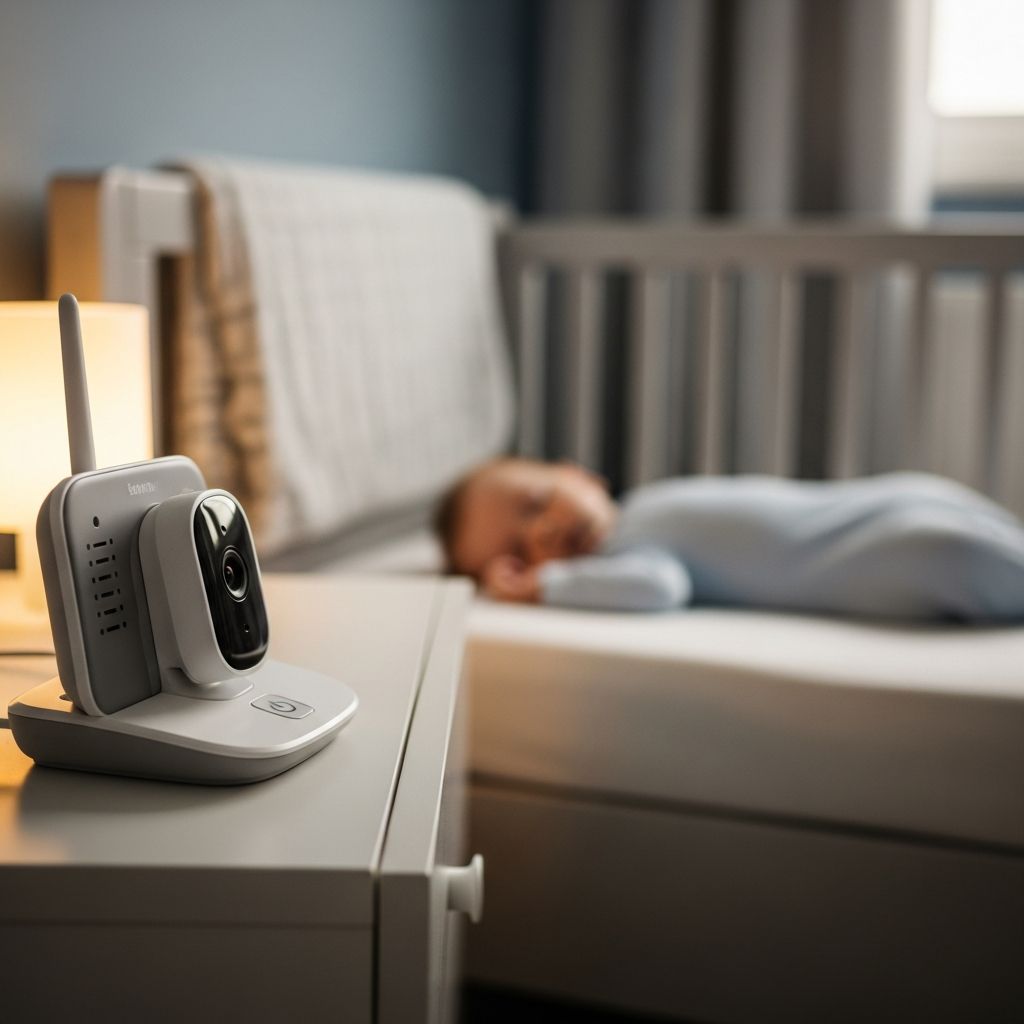
This has fueled interest in home monitors that detect such anomalies. Devices range from wearable pulse oximeters (measuring blood oxygen and pulse) to under-mattress sensors and non-contact camera systems using photoplethysmography (PPG) to track vital signs remotely. Proponents argue these could alert parents in time for intervention, potentially averting tragedy. Yet, as we’ll see, the evidence tells a more nuanced story.
Types of Infant Monitoring Devices Available Today
Modern baby monitors have evolved beyond simple audio or video into sophisticated vital-sign trackers. Here’s a breakdown:
- Wearable Monitors: Sock-like devices (e.g., pulse oximeters) clip onto the foot to measure oxygen saturation (SpO2) and heart rate. They alarm if levels drop below thresholds.
- Pad-Based Sensors: Placed under the mattress, these detect movement and breathing patterns via piezoelectric technology.
- Camera-Based Systems: Non-contact options use video to estimate HR and respiration through skin color changes (PPG). Advanced models employ multi-channel imaging (e.g., RGB, cyan, orange) for better accuracy up to 3 meters away.
- Multifunctional Cribs: Smart bassinets with built-in sensors for comprehensive tracking.
These gadgets promise real-time alerts via apps, but their reliability varies. NICU studies show camera-based HR monitoring can achieve medical-grade accuracy (e.g., bias of 2.52 bpm with limits of ±5.48 bpm) under controlled conditions. Home use, however, introduces variables like motion artifacts and lighting, often degrading performance.
Scientific Evidence: Do Monitors Actually Prevent SIDS?
Despite marketing claims, rigorous evidence linking consumer monitors to SIDS prevention is scarce. The landmark CHIME study (1990s) monitored over 1,000 infants for 700,000 hours and found erratic breathing common in all babies, not just high-risk ones—challenging the idea of ‘pathologic’ events unique to SIDS.
AAP’s 2016 guidelines explicitly state: “Do not use home cardiorespiratory monitors as a strategy to reduce the risk of SIDS,” citing outdated studies from the 1980s-2001 that showed no benefit. Critics of monitors note even hospital-grade devices fail to prevent SIDS, so consumer versions—often less accurate—are unlikely to succeed.
Manufacturer data is anecdotal: One company reported one death among 350,000 devices, with ‘dozens’ of life-saving testimonials, but this lacks peer-reviewed validation and could reflect selection bias. A CHOP study tested popular wearables like the Owlet Dream Sock and Baby Vida: Owlet detected hypoxemia inconsistently, while Baby Vida failed entirely, showing falsely low pulses.
| Device Type | Key Strength | Evidence of SIDS Prevention | Accuracy Issues |
|---|---|---|---|
| Wearable Pulse Oximeters | Portable, app alerts | None proven | Inconsistent hypoxemia detection |
| Under-Mattress Pads | Non-invasive | No outcome improvements | Motion artifacts |
| Camera-Based | Contactless, multi-vital tracking | Promising in labs, unproven at home | Lighting/motion sensitivity |
Randomized controlled trials (RCTs) are needed but ethically challenging—requiring hundreds of thousands of infants due to SIDS rarity. Without them, claims remain speculative.
Regulatory Warnings and Potential Risks
The U.S. Food and Drug Administration (FDA) has issued strong cautions: “Do not use unauthorized infant devices for monitoring vital signs,” as many lack safety and efficacy reviews. Unauthorized products risk inaccurate readings, false alarms causing parental anxiety, or missed events fostering complacency.
False positives lead to unnecessary doctor visits and stress, while false negatives provide a dangerous illusion of security. For high-risk infants (e.g., post-ALTE), prescribed monitors may help detect issues, but not for healthy babies. Literature shows no correlation between home monitoring and SIDS reduction, even in at-risk groups.
Proven Safe Sleep Strategies: The Real Path to SIDS Reduction
Instead of unproven tech, focus on AAP-backed practices, which have slashed SIDS rates by over 50% since the 1990s Back to Sleep campaign:
- Place baby **back to sleep** on a firm, flat surface.
- Use a sleep sack; avoid loose bedding, pillows, or bumpers.
- Room-share without bed-sharing for 6-12 months.
- Keep baby at a comfortable temperature; no overheating.
- Offer a pacifier at sleep onset (if breastfeeding is established).
- Avoid smoke exposure and alcohol/illicit drugs around baby.
These modifiable factors address proven risks far more effectively than any monitor.
Who Might Benefit from Monitoring Devices?
Monitors aren’t useless for all. They suit:
- Premature infants or those with known conditions like bradycardia.
- Parents needing reassurance for movement/audio checks (non-vital monitors).
- High-risk cases under medical prescription.
For healthy, full-term babies, benefits are psychological at best, with risks of over-reliance. Consult pediatricians before purchasing.
Future Directions in Infant Monitoring Research
Emerging tech like AI-enhanced camera systems could improve accuracy by filtering artifacts via independent component analysis (ICA). Single-channel algorithms show promise for nighttime use without multi-light setups. However, until large-scale RCTs confirm SIDS prevention, experts urge caution.
Non-contact vital monitoring in NICUs demonstrates feasibility, hinting at home potential—but translation requires validation. Parents should prioritize evidence-based habits over gadgets.
Frequently Asked Questions About Baby Monitors and SIDS
Can baby monitors prevent SIDS?
No, there is no scientific evidence that consumer monitors reduce SIDS risk. AAP does not recommend them for this purpose.
Are wearable oxygen monitors safe and accurate?
Studies show inconsistency; some fail to detect low oxygen reliably compared to medical devices. FDA warns against unauthorized ones.
What if my baby is premature or high-risk?
Prescribed hospital-grade monitors may be appropriate; consult your doctor.
Do video monitors help with SIDS?
They provide visual reassurance but lack proven vital-sign accuracy for prevention.
What’s the best way to reduce SIDS risk?
Follow AAP safe sleep guidelines: back sleeping, firm surface, no soft bedding.
In summary, while infant monitors offer comfort, they don’t replace proven safe sleep fundamentals. Invest in education and habits that demonstrably save lives.
References
- In the Debate Over ‘SIDS Monitors,’ Evidence Is Thin All Around — Undark. 2021-05-24. https://undark.org/2021/05/24/sids-monitors-may-not-prevent-sids/
- Camera-Based, Non-Contact, Vital-Signs Monitoring Technology — Frontiers in Neurology. 2016-12-20. https://www.frontiersin.org/journals/neurology/articles/10.3389/fneur.2016.00236/full
- Baby Sleep Monitors Have Little Evidence of Effectiveness — Journal of Urgent Care Medicine. N/A. https://www.jucm.com/baby-sleep-monitors-have-little-evidence-of-effectiveness/
- Home Cardiorespiratory Monitoring in Infants at Risk for Sudden — PMC. 2022. https://pmc.ncbi.nlm.nih.gov/articles/PMC9227273/
- Consumer-use Baby Monitors Have Little Proven Benefit for Healthy — CHOP. N/A. https://www.chop.edu/news/consumer-use-baby-monitors-have-little-proven-benefit-healthy-infants
- Do Not Use Unauthorized Infant Devices for Monitoring Vital Signs — FDA. N/A. https://www.fda.gov/medical-devices/safety-communications/do-not-use-unauthorized-infant-devices-monitoring-vital-signs-fda-safety-communication
- Home Cardiorespiratory Monitoring — My Health Toolkit. N/A. https://www.myhealthtoolkit.com/web/public/brands/medicalpolicyhb/external-policies/home-cardiorespiratory-monitoring/