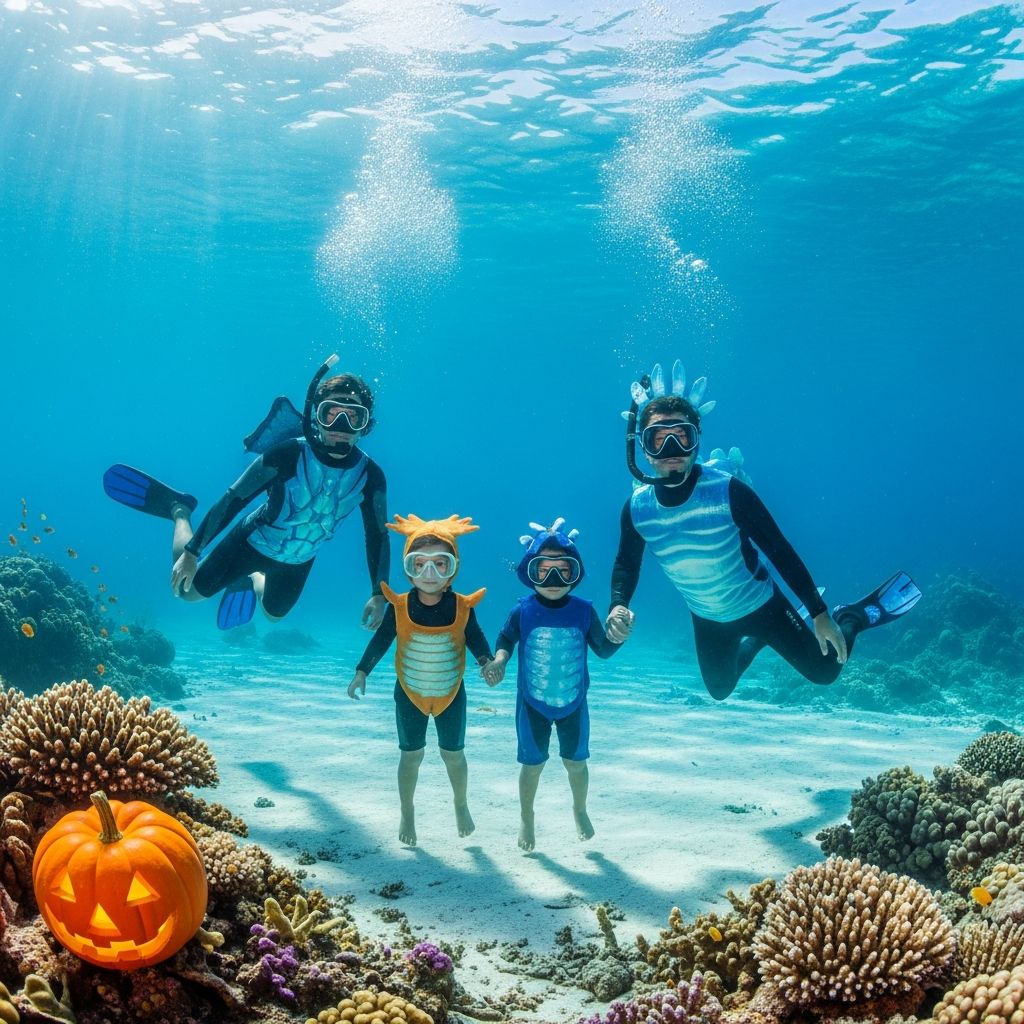
Transform Halloween into an ocean adventure with homemade costumes inspired by sea life, coral reefs, and deep-sea creatures. This guide shows you how to design, build, and style unique underwater looks using items you already own or can easily find on a budget.
Why Choose an Under-the-Sea Theme?
Underwater costumes are colorful, whimsical, and work beautifully for every age, from toddlers to teens and adults. They are also incredibly flexible: the same basic supplies can turn into jellyfish tentacles, mermaid fins, seaweed fronds, or bubbly waves with just a few tweaks.
- Perfect for group and family costumes because you can mix different sea creatures and still look coordinated.
- Easy to adapt for warm or cold weather by layering tights, leggings, and long sleeves under the designs.
- Budget-friendly since many elements can be upcycled from cardboard, old clothing, craft scraps, and party supplies.
Planning Your Ocean Costume Look
A little planning before you start cutting and gluing will save you time and stress. Begin by deciding whether you want a specific creature—like a shark or jellyfish—or a more abstract ocean design, such as waves, coral, or sea foam.
Pick a Color Palette
Most underwater costumes look fantastic when you limit yourself to three or four main colors. Think about the mood you want to create: eerie deep-sea blues, tropical brights, or soft pastel mermaid tones.
- Classic ocean: Deep blues, teal, sea green, white.
- Tropical reef: Coral pink, sunny yellow, turquoise, purple.
- Enchanted lagoon: Lavender, mint, silver, pearl, soft gold.
Choose Your Base Outfit
The base layer is the comfortable clothing you decorate or build onto. It should be simple, breathable, and easy to move in, especially for kids running from house to house.
- Leggings or joggers in a solid color.
- Long-sleeve T-shirts, leotards, or fitted tops.
- Simple hoodies or zip-up sweatshirts for creatures with heads, fins, or teeth.
Core Materials and Tools
You do not need a professional costume shop to create amazing results. Many underwater costumes can be made with craft basics and repurposed household items.
| Material | Best Uses | Tips |
|---|---|---|
| Felt sheets | Fins, shells, eyes, scales, teeth | Does not fray, easy to cut; great for no-sew details. |
| Tulle or organza | Waves, jellyfish tentacles, mermaid fins | Layer multiple colors for extra depth and shimmer. |
| Cardboard | Fins, dorsal spines, large shells, seaweed signs | Reinforce with tape at fold lines so it does not bend. |
| Ribbon & streamers | Tentacles, seaweed strands, flowing details | Mix widths and textures for a more organic look. |
| LED string lights | Glowing jellyfish, anglerfish lures, deep-sea glimmer | Use battery-operated packs; keep wires tucked and secured. |
Costume Idea 1: Floating Jellyfish
A jellyfish costume is dramatic yet surprisingly lightweight. It works well for adults, teens, or kids and can be as simple or elaborate as you like.
How to Build the Jellyfish Top
The top structure mimics the jellyfish bell. You can adapt this basic approach to suit different ages and heights.
- Start with a wide-brim hat, bike helmet, or lightweight bowl as a form to build on.
- Cover the form with fabric or tissue paper in shades of white, pale blue, or translucent purple, attaching with tape or non-toxic glue.
- Add volume by taping or gluing soft materials (like bubble wrap or packing paper) underneath, then covering again for a smooth surface.
- Finish the bell with iridescent or glittery fabric, leaving the underside relatively open so you can see.
Creating Wavy Tentacles
The tentacles are what truly bring the costume to life. Work in layers to mimic the drifting motion of a jellyfish.
- Use curled ribbon, strips of tulle, and fabric scraps in varying lengths.
- Attach strands all around the edge of the bell so they fall around your shoulders.
- Include a few shorter strands mixed with long pieces so walking is not difficult.
- For a glowing effect, weave a short battery-powered string of lights among the tentacles, securing the battery pack firmly inside the bell.
Completing the Look
Pair the bell and tentacles with a monochrome base outfit for a unified, floaty appearance.
- Wear all-white, pale blue, or lavender leggings and tops.
- Add subtle face paint or glitter to suggest bioluminescence.
- Optional: Sew or glue a few ribbon strands to cuffs or hems so your arms and legs trail extra tentacles when you move.
Costume Idea 2: Friendly Shark
A shark outfit can be fierce, funny, or somewhere in between, depending on the facial expression you choose. This version focuses on comfort and ease of movement for a busy Halloween night.
Simple Shark Hoodie
The easiest way to make a shark costume is to build on a gray hoodie and matching pants. The hood becomes the shark head, and the body of the sweatshirt becomes its torso.
- Cut a long strip of white felt and create a zigzag edge for teeth.
- Attach this strip around the edge of the hood so the teeth frame the face when the hood is up.
- Cut two felt circles for eyes and smaller black circles for pupils, then glue or sew them near the top of the hood.
- Make a dorsal fin from stiff felt or cardboard covered with fabric, and sew or safety-pin it to the back of the hoodie.
Finishing Touches
Small details can transform a basic hoodie into a recognizable sea predator.
- Add small side fins made of felt to the arms or sides of the sweatshirt.
- Paint simple gill lines on the sides of the hood with fabric paint or a permanent marker.
- For little kids, soften the look by giving the shark cartoon-style eyes and a friendly smile instead of sharp angles.
Costume Idea 3: Mermaid or Merman
Mermaid and merman costumes can be glamorous, spooky, or playful. Focus on shimmering textures and scale-like patterns rather than a rigid tail, so walking remains safe and easy.
Walkable Tail Skirt
Rather than a closed tail, make a skirt that suggests a fin while still allowing full motion.
- Use a long skirt or leggings as a base in teal, green, or purple.
- Cut scale shapes from felt or metallic paper and layer them like shingles down the legs or around the hem.
- Create a flared fin by adding wedge-shaped panels of tulle or soft fabric at the back or sides near the ankles.
Sea-Inspired Top and Accessories
The upper half of the costume is where you can let creativity shine, especially with accessories and hair.
- Decorate a fitted top with fabric glue and “treasures” like faux pearls, sequins, and shells (plastic or craft versions).
- Braid hair and weave in ribbons, beads, and thin strips of tulle to mimic strands of seaweed.
- Use highlighter colors, shimmery makeup, or face paint to create a subtle scale pattern along the temples and cheekbones.
Costume Idea 4: Glowing Deep-Sea Diver
A deep-sea diver adds a fun, adventurous twist to an underwater group. It also pairs well with creature costumes if you want a whole ocean scene.
DIY Air Tank and Gear
This costume relies on a black or dark base layer that suggests a wetsuit. The “equipment” is mostly built from lightweight recycled containers.
- Clean and dry two identical plastic bottles, such as soda or juice containers.
- Paint them silver or bright yellow and allow them to dry completely.
- Tape or glue the bottles side by side and attach straps made from wide ribbon or old belts so they can be worn like a backpack.
- Add a length of flexible tubing from one bottle to the front of the costume, finishing it with a circular felt piece as a mouthpiece.
Helmet and Details
The helmet can be as simple as a snorkel mask and swim cap or as elaborate as a cardboard sphere with painted “bolts.”
- Use a real or toy mask and flippers if walking conditions are safe.
- Attach reflective tape to arms and legs so the diver seems to glow in the dark.
- Add toy fish, seaweed ribbons, or plastic sea creatures to the tank straps to suggest a long swim through crowded waters.
Costume Idea 5: Seaweed, Coral, and Ocean Effects
Not every costume has to be a specific creature. Abstract designs like seaweed, coral, or waves are visually striking and easy to customize.
Simple Seaweed Outfit
A seaweed costume is flexible, comfortable, and works well as a last-minute addition to an underwater group.
- Start with a dark green or black base layer.
- Cut long, wavy strips of green fabric, felt, or ribbon and attach them loosely to the clothing so they dangle and sway.
- Add a few plastic fish or shell shapes among the strands to show that you are part of an underwater ecosystem.
Colorful Coral Ensemble
Coral costumes rely on volume and bold color. The shapes do not need to be precise; in fact, irregular forms look more natural.
- Attach clusters of rolled-up fabric, foam tubes, or pool noodle segments to a vest or shirt.
- Use bright oranges, reds, pinks, and neon greens to imitate various coral species.
- Consider adding a few small fish, starfish, or crab cutouts attached with clear thread, as if they are swimming nearby.
Making It a Coordinated Family or Group Theme
Underwater themes are especially fun when several people dress in related styles. This makes school events, parties, or neighborhood trick-or-treating feel like a mini parade.
Family Costume Combinations
Mixing creatures with abstract elements creates variety while keeping everyone on theme. Try some of these combinations.
- Parent as deep-sea diver, kids as jellyfish, shark, and mermaid.
- One adult as coral reef, others as clownfish, sea turtle, or tiny seahorse.
- Group of friends as different shades of ocean waves, each with unique accessories like foam, pearls, or shipwreck pieces.
Adding Story and Personality
Giving your group a shared story makes costumes more memorable. Decide whether you are a mysterious deep-sea research team, a lively tropical reef community, or a magical underwater kingdom.
- Create simple character names and backstories for kids to act out while they trick-or-treat.
- Coordinate color palettes so everyone looks like part of the same underwater world, even if the creatures are different.
- Use matching face paint accents—like the same shade of glitter or a shared wave pattern—to tie all the looks together.
Safety, Comfort, and Eco-Friendly Tips
Halloween costumes should be fun, but they should also be safe, comfortable, and as kind to the planet as possible. A few small decisions can make a big difference.
Staying Safe and Visible
Underwater themes often use dark blues and greens, so think about visibility if you will be outside after dark.
- Add reflective tape to hems, shoes, or accessories.
- Keep headpieces lightweight and make sure they do not block vision or hearing.
- Avoid long, loose pieces near feet that could cause tripping; trim tentacles or fins to a safe length.
Comfort and Weather-Proofing
Costumes are worn for hours, so build in comfort from the start.
- Choose soft layers that can be added or removed depending on the temperature.
- Place scratchy materials like sequins or cardboard on outer layers only, not directly against the skin.
- Test movement—walking, sitting, climbing stairs—before the big night to see if anything needs adjusting.
Greener Costume Choices
Since underwater themes naturally remind people of the ocean, it is a great opportunity to make eco-conscious choices.
- Reuse old clothes, boxes, and packaging as costume bases instead of buying everything new.
- Avoid real shells or coral that may come from unsustainable harvesting; choose craft versions instead.
- Store your costume carefully or trade pieces with friends so items get used for multiple events and not just one night.
SEO-Friendly FAQ: DIY Underwater Costumes
What is the easiest underwater Halloween costume to make?
A simple seaweed or wave costume is often the easiest, because it mostly requires cutting strips of green or blue fabric and attaching them to clothing you already have. You can complete the look in under an hour with scissors, safety pins, and ribbon.
Can I make an ocean costume with no sewing at all?
Yes, many underwater costumes are completely no-sew. Fabric glue, double-sided tape, safety pins, and pre-made elastic headbands can replace stitching for fins, tentacles, and decorative details.
How do I add lights safely to a jellyfish or deep-sea costume?
Use battery-powered LED strands designed for crafts and make sure the battery pack is secure and not directly touching bare skin. Keep wires tucked and avoid placing lights near the face, especially for young children.
What should my child wear under a mermaid or shark costume if it is cold?
Layer thermal leggings and a long-sleeve shirt in a coordinating color under the main costume pieces. If possible, size the outer layers one size up to leave room for warm clothing underneath without looking bulky.
How can I keep underwater costumes affordable?
Start by shopping at home—look for old party decorations, gift wrap, and clothing you can upcycle. Focus on one or two standout elements, like a dramatic headpiece or tail, and keep the rest of the costume simple.
With a bit of imagination, a few craft supplies, and a playful approach, an ordinary hoodie or skirt can become a jellyfish, shark, mermaid, or glowing reef guardian. Dive into these DIY ideas, adapt them to your family’s style, and enjoy a Halloween that feels like a trip beneath the waves.