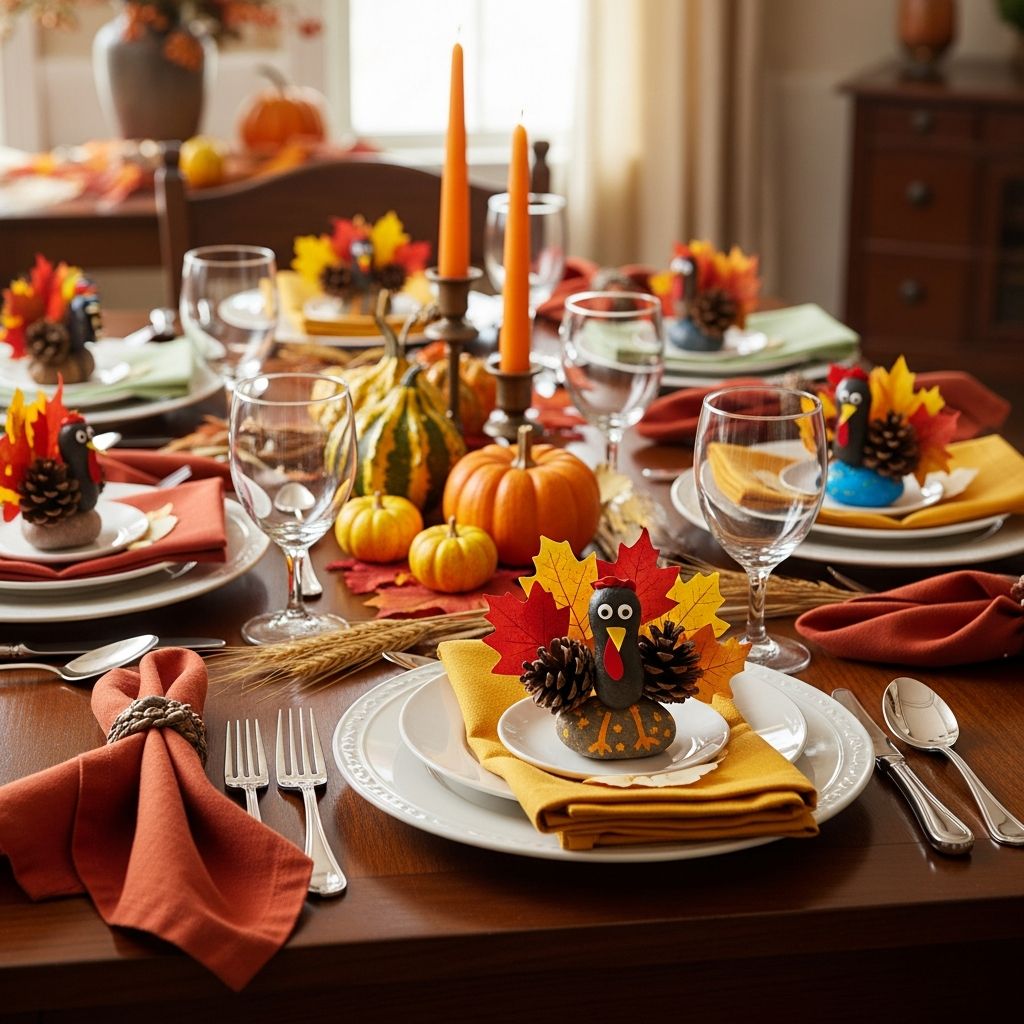
Homemade turkey place cards are a small detail that can completely change the mood of your Thanksgiving table, turning a simple meal into a warm, personal celebration. They guide guests to their seats, act as conversation starters, and double as keepsakes that remind everyone of time spent together. Instead of relying on store-bought name cards, crafting your own turkeys adds personality, creativity, and a bit of playful charm to your holiday decor.
This guide walks through fresh ideas for designing turkey place cards with different looks and difficulty levels, along with tips for organizing your project, involving kids, and styling the finished cards on your table. Whether you want something quick and simple or you enjoy an afternoon of crafting, you will find an approach that works for your family and celebration style.
Why Turkey Place Cards Elevate Thanksgiving
Thanksgiving is a holiday centered on gratitude, gathering, and abundance, and the way the table looks can reinforce that feeling before the first plate is even served. Turkey place cards instantly bring a seasonal touch that connects the meal to the story and symbols of the holiday. They also show guests that you thought about them individually, right down to where they sit and how their name is displayed.
Beyond aesthetics, place cards can solve practical problems with grace. They help you organize seating when you have a mix of ages, personalities, and dietary needs, reducing last-minute shuffling and awkwardness. For families with children, giving everyone a named spot can turn sitting down to dinner into a game, making the table feel inviting rather than formal or intimidating.
Planning Your Turkey Place Card Project
A bit of planning will keep your crafting session fun instead of stressful, especially if you are preparing for a large group or involving younger helpers. Start by thinking about the tone of your gathering and how much time you realistically have before the holiday. A relaxed, rustic dinner might call for simple cardstock turkeys with hand-drawn feathers, while a more formal meal may suit layered designs with metallic details or rich textures.
Consider these questions before you begin:
- How many guests are you hosting and how far in advance can you prepare the cards?
- Are children helping, and if so, what tasks are safe and age-appropriate for them?
- Do you want the place cards to be flat on the plate, clipped to a napkin, or standing upright?
- Will the place cards double as favors, small gifts, or gratitude prompts?
Basic Supplies You May Need
You can create turkey place cards from almost anything, but a few flexible supplies make the process easier and more polished. The list below covers common materials used in multiple variations so that you can mix and match ideas without buying specialized items for every design. Feel free to substitute what you already have at home instead of purchasing everything new.
- Cardstock or heavy paper in neutral and fall colors (brown, tan, red, orange, yellow, gold)
- Scissors, craft knife, and a cutting mat or safe surface
- Glue stick, white craft glue, or double-sided tape
- Markers, gel pens, or brush pens for names and details
- Small embellishments like googly eyes, ribbon, twine, or buttons
- Optional: clothespins, mini easels, wooden discs, or corks to help turkeys stand upright
Design Approaches at a Glance
There is no single “correct” way to make a turkey place card, which is part of the fun. To help you choose, the table below briefly compares four popular approaches: quick cut-and-fold turkeys, layered paper turkeys, nature-inspired turkeys, and favor-style turkeys that hold treats. You can mix elements from different approaches to create a style that feels uniquely yours.
| Design Style | Best For | Difficulty | Key Materials |
|---|---|---|---|
| Quick cut-and-fold turkey | Busy hosts, large guest lists | Easy | Cardstock, markers, basic scissors |
| Layered paper turkey | Craft lovers, detailed decor | Moderate | Colored cardstock, glue, templates, pens |
| Nature-inspired turkey | Rustic or eco-friendly tables | Easy–moderate | Leaves, pinecones, twigs, tags |
| Favor-style turkey | Kids’ tables, playful celebrations | Moderate | Candy, mini bags or cups, labels |
Idea 1: Simple Cut-and-Fold Turkey Cards
If you are short on time or prefer a clean, graphic look, simple cut-and-fold turkeys are a perfect starting point. Each card begins as a rectangle of cardstock folded like a tent, with a stylized turkey face and feathers drawn or glued on the front. The guest’s name sits either below the turkey or inside the card, depending on how minimal you want the design to appear.
To make them, cut uniform rectangles, fold them in half, and lightly sketch a round body near the fold. Then add a simple beak, wattle, and eyes using marker or glued paper shapes. Finish by writing each name in neat lettering, using different pen colors or small doodles to match each guest’s personality. Because the base is the same for every card, you can create a matching set quickly, even for a large gathering.
Idea 2: Layered Paper Turkeys with Dimensional Feathers
For a more detailed look, layered paper turkeys add depth and texture to each place setting. This design uses separate pieces for the body, feathers, and small facial details, assembled like a collage on a sturdy base. The result feels almost like a tiny piece of art and can be treasured as a keepsake long after the dishes are cleared.
Begin by cutting circles or ovals for the turkey bodies from brown cardstock and a set of feather shapes from several fall colors. Arrange the feathers in a fan shape and glue them behind the body, staggering colors for contrast. Add a small triangle for the beak, a thin teardrop for the wattle, and either hand-drawn or glued-on eyes. Mount the finished turkey on a folded card or a small wooden disc, then attach a name strip along the bottom edge so it is easy to read from across the table.
Idea 3: Nature-Inspired Turkeys Using Leaves and Found Objects
If you enjoy bringing the outdoors in, nature-inspired turkeys are a beautiful way to echo the colors and textures of late autumn. Fallen leaves, pressed ahead of time or freshly collected, can become feather fans, while pinecones or smooth stones serve as the turkey’s body. A simple paper beak and name tag transform these found elements into charming, organic place cards.
Gather your materials on a walk or from your yard, choosing leaves that are relatively flat and still vibrant in color. Glue or tape the leaves in an arc behind a small pinecone or folded paper body, creating a fan of natural feathers. Write each guest’s name on a tag or narrow strip of cardstock, then tie or glue the label to the front. These turkeys blend seamlessly with centerpieces made of pumpkins, greenery, and candles, giving your table a cohesive, seasonal look.
Idea 4: Turkey Place Cards that Double as Favors
Some of the most memorable place cards do double duty as small gifts that guests can enjoy during or after the meal. Turkey-themed favor cards are especially popular at kids’ tables, where a bit of candy or a tiny toy can help pass the time between courses. The basic concept is to create a small container or wrapper shaped like a turkey and attach the guest’s name where it is easy to see.
Mini paper cups, fabric pouches, or clear treat bags can all be turned into turkey bodies with paper feather fans attached at the back. Fill the container with wrapped candies, trail mix, or even tea bags for adults, and secure it with ribbon or twine. Then, add a name tag at the front or on a tiny stick that stands upright from the treat. The finished favors become both decoration and delightful surprise, reinforcing the generosity at the heart of the holiday.
Kid-Friendly Turkey Place Card Activities
Inviting children to help with the place cards transforms a necessary preparation task into a meaningful family ritual. Kids love seeing their own artwork at the table, and adults appreciate the charm of slightly wobbly lines and imaginative color choices. To keep the process fun and low-stress, choose techniques that tolerate imperfections and avoid supplies that require high precision.
Here are some kid-friendly ideas:
- Handprint turkeys: Trace or stamp children’s hands and turn the fingers into feathers, adding a round body and name on top.
- Sticker turkeys: Provide blank tent cards and a mix of turkey or feather stickers so kids can decorate freely.
- Coloring-page bases: Pre-draw or print simple turkey outlines on cardstock and invite kids to color and write names.
- Shape collages: Cut circles, triangles, and ovals from colored paper and let children assemble turkeys like a puzzle.
Lettering and Personalization Tips
Names are the heart of a place card, so legible, attractive lettering makes a big difference in how polished your turkeys look. You do not need formal calligraphy skills to create beautiful labels; simple, consistent handwriting in a contrasting color can be just as effective. If you are nervous about writing directly on the finished card, practice on scrap paper first or attach separate name strips that can be replaced if needed.
For added personality, consider small variations that reflect each guest. You might choose ink colors that match their favorite hues, add a tiny doodle that represents a hobby, or write a one-word blessing or descriptor under the name. Even a subtle detail—like mixing block letters for the name with a cursive word such as “welcome” or “thankful”—can make each card feel special without requiring extra materials.
Coordinating Place Cards with Your Table Setting
Thoughtful integration of turkey place cards into the broader table design helps everything feel cohesive instead of cluttered. Begin by noticing the dominant colors of your dishes, napkins, and centerpiece, then echo those tones in the paper, ink, or embellishments you choose. If your tableware is already very colorful, a simpler, neutral turkey may be more harmonious, while a mostly white or wood-toned setting can handle bolder designs.
Experiment with the placement of each card to find the most practical and visually pleasing arrangement. Some hosts prefer to tuck turkeys onto the rim of a plate or rest them on folded napkins at the center of the setting. Others line them up just above the plates for a uniform look or cluster them near a bread plate or water glass. As you decide, make sure names remain easy to read from a standing angle so guests can find their seats quickly.
Time-Saving Strategies for Busy Hosts
Holiday schedules can be hectic, but a few strategic choices keep your turkey place card project manageable. One approach is to batch tasks: cut all bases at once, assemble bodies next, then add names right before the meal when your final guest list is confirmed. Preparing a small kit of pre-cut shapes and labels also allows you to craft in short bursts instead of tackling everything in a single marathon session.
Other options for saving time include using simple, repeatable designs with minimal layers, relying on coordinated pre-printed patterns for the base cards, or delegating steps to willing family members. Older kids or teenagers can handle cutting and gluing, while younger children might be in charge of placing stickers or sorting colors. When the focus stays on connection and creativity rather than perfection, even quick, imperfect turkeys will charm your guests.
Common Mistakes and How to Avoid Them
Most issues with place cards come from either practicality or durability. Cards that are too flimsy may tip over when someone sits down or when air currents move across the table. To avoid this, use heavier cardstock, ensure a wide enough base, or attach turkeys to a stable object like a mini clothespin or wooden slice that grips the card or napkin.
Another common challenge is readability: highly decorative fonts, very small lettering, or low-contrast ink can make names hard to see in dim dining-room lighting. Test one example at your table before making the full set, checking visibility from several angles. Finally, keep decorations away from open flames and hot dishes, and avoid materials that shed glitter or crumbs onto plates to maintain both safety and cleanliness.
Frequently Asked Questions About Turkey Place Cards
How far in advance can I make turkey place cards?
Place cards made entirely from paper and other dry materials can usually be created several weeks before Thanksgiving, provided they are stored flat and away from moisture and direct sunlight. If you use real leaves, pinecones, or food items, it is best to create or assemble those closer to the holiday so that they stay fresh and intact.
What if my guest list changes at the last minute?
Plan for changes by making a few extra blank turkeys or leaving the name area unfinished until a day or two before your meal. You can also keep a small supply of matching cardstock and pens on hand to quickly add new cards if an unexpected guest arrives.
Can turkey place cards work for buffet-style meals?
Even if guests serve themselves from a buffet, place cards can still be helpful and charming at the dining table. Use them to designate seats for family members who need easier access, or to group guests who will enjoy sitting together. For a more casual style, you can also attach name tags to glasses or napkins and let people move them as they choose their seats.
How do I store or reuse the place cards after Thanksgiving?
Many people like to keep especially meaningful cards, such as those decorated by children or bearing handwritten notes, in a memory box or scrapbook. If your designs are more neutral, you can carefully remove the name labels and reuse the turkeys for another year by adding new names or turning them into general table decorations.
Are there alternatives if I do not want turkey imagery?
If turkeys are not your style, the same techniques can be applied to pumpkins, autumn leaves, acorns, or simple geometric shapes in fall colors. The key is the personalized name and thoughtful presentation; the specific motif is entirely up to your taste.
Bringing It All Together
Turkey place cards may be small, but they carry a surprising amount of meaning: they welcome each person by name, capture the spirit of the season, and often become treasured mementos of a special meal. With simple supplies, a bit of planning, and a willingness to embrace handmade charm, you can create place cards that make your Thanksgiving table feel intentional and inviting. Choose the ideas that match your time, style, and family traditions, and enjoy the process as much as the finished result.