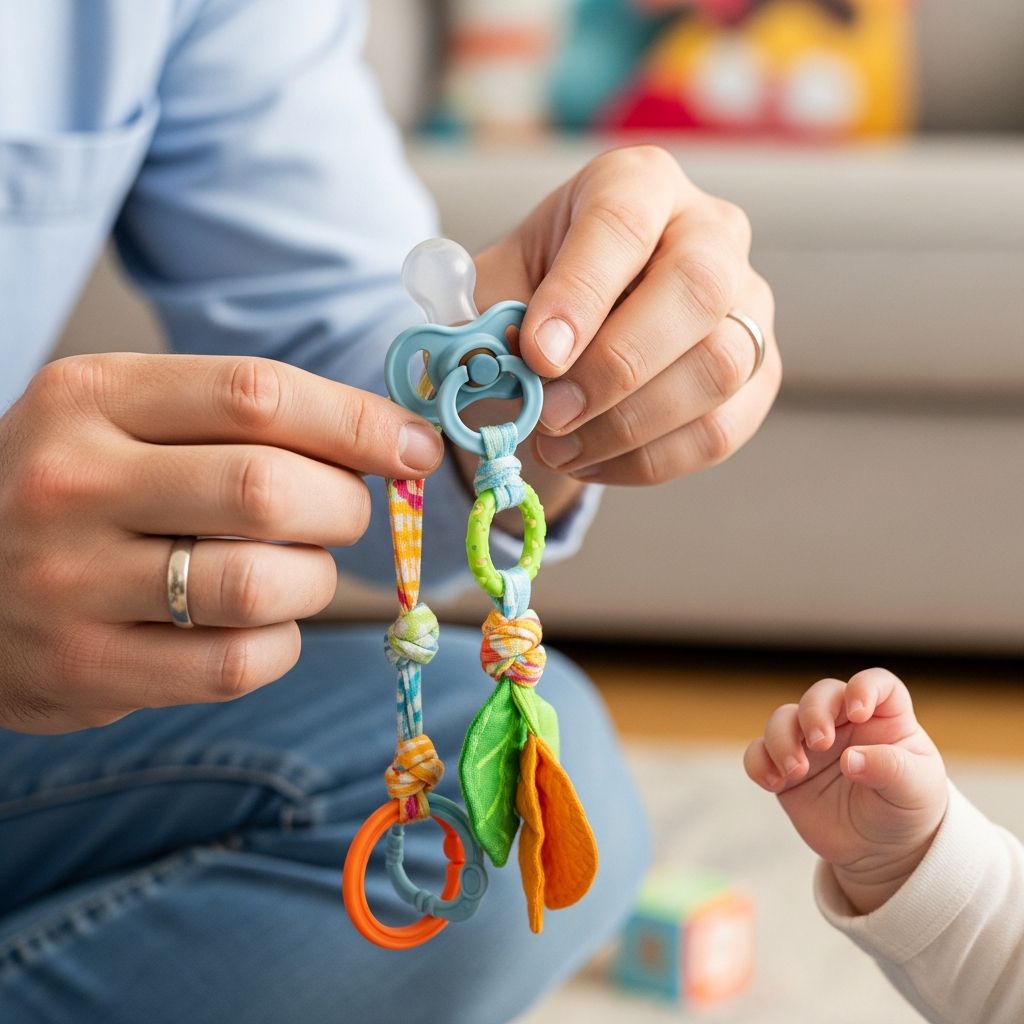
Every parent knows the desperation of crawling under the crib at 3 a.m. searching for a lost pacifier while a tired baby wails in the background. A clever dad recently shared a simple DIY hack that turns an ordinary pacifier and a small plush toy into a smart, easy-to-grab comfort buddy for babies. This kind of idea does more than stop crying; it shows how creativity and problem-solving can transform everyday parenting struggles into small victories.
Why Parents Love Pacifier Hacks
Pacifiers are often a lifesaver for soothing fussy babies, but they come with common problems: they fall, get lost, roll under furniture, or slip from a sleepy baby’s mouth at the worst possible moment. Parents are constantly looking for ways to keep pacifiers cleaner, easier to find, and less likely to disappear during naps and nighttime sleep.
- Babies drop pacifiers frequently, which interrupts soothing and sleep.
- Parents often spend time and energy hunting for pacifiers around the house or in the crib.
- A smart hack that connects a pacifier to a soft toy or handle gives little hands something to grab, making it easier for baby to self-soothe.
In this context, a dad’s DIY pacifier-and-plush solution feels brilliant because it solves several issues at once: visibility, grip, and comfort. Even more, it shows other caregivers that small, thoughtful changes can have an outsized impact on daily routines.
The Basic Idea Behind the DIY Pacifier-and-Plush Hack
The heart of the hack is simple: attach a baby-safe pacifier to a small, lightweight plush toy in a way that is secure, washable, and easy for baby to hold. The plush makes the pacifier bigger and easier to spot, and the toy itself becomes a comforting object. The result is a two-in-one soothing tool that can help babies find their pacifier on their own, especially in a dark crib or car seat.
The goal is not just to make something cute but to solve real problems:
- Giving baby a soft, friendly object to cuddle while using the pacifier.
- Helping baby grab and reposition the pacifier independently.
- Reducing the number of times adults must reinsert the pacifier during naps and overnight.
While parents should always follow manufacturer safety guidance and pediatric recommendations, many find that this style of pacifier-and-plush combo fits naturally into bedtime and naptime routines when used correctly.
How a Dad’s DIY Approach Stood Out
What made this dad’s solution stand out was not just the idea of combining a pacifier with a plush toy, but the thoughtful way he adapted it for his own child. His baby had a favorite small stuffed animal, and instead of purchasing an all-new item, he used creativity to connect that beloved toy with a familiar pacifier type his baby was already willing to take.
- He worked with what his child already loved: a specific small plush character.
- He adjusted the connection so the pacifier remained easily removable for cleaning or replacement.
- He tested the setup while present, watching how his baby interacted with the object, and made changes for comfort and safety.
This approach resonated with many parents because it combined personalization, thriftiness, and practicality. Instead of buying several new items and hoping baby would accept them, he adapted something familiar and comforting.
Step-by-Step: Creating Your Own Safe Pacifier-and-Plush Combo
Parents inspired by similar hacks can create their own version at home, but safety and hygiene should always come first. The following outline gives a general sense of how to approach a DIY pacifier-and-plush combo safely and thoughtfully.
1. Choose the Right Plush Toy
- Pick a small, lightweight plush that is easy for a baby to grasp.
- Avoid toys with small parts that can detach, such as loose eyes, beads, or buttons.
- Make sure the toy is machine washable and designed for infants or young children.
Parents often prefer animal shapes with simple limbs because babies can grip a leg, tail, or ear easily. Avoid anything oversized or heavy that might cover the baby’s face.
2. Select a Baby-Safe Pacifier
- Use a pacifier that meets safety standards and is appropriate for your baby’s age.
- Check that it is one solid piece, without parts that can break off.
- Stick with a style your baby already accepts to avoid unnecessary frustration.
Many parents choose pacifiers with a clear ring or handle, because this part can help attach the pacifier to fabric or a soft loop without permanently altering the pacifier itself.
3. Plan a Safe Attachment Method
The key is to connect the pacifier and plush toy securely, but in a way that allows the pacifier to be removed for cleaning or replacement. Parents should avoid using anything that may create long, loose cords or stiff, poking edges.
- Short, firmly sewn fabric loops or reinforced ribbon segments are safer than long strings.
- Attachment points should be double-stitched and inspected regularly for wear.
- Do not tie knots or fastenings that could come loose and pose a choking hazard.
Whenever possible, keep the connection short and close to the toy’s center so the pacifier does not dangle near the baby’s neck or wrap around limbs.
4. Test the Hack Under Supervision
Before adding the new combo to naps or nighttime sleep, caregivers should observe how baby handles it during awake, supervised play. This allows adults to see whether the plush is too heavy, too large, or awkwardly placed.
- Watch to see if baby can easily bring the pacifier to the mouth while holding the toy.
- Check whether the attachment pulls the pacifier out of the mouth or stays nicely balanced.
- Inspect the toy and connection for any signs of fraying or tearing after each use.
If anything seems off—too heavy, too loose, or irritating to baby—it is important to adjust or abandon the design. Safety should always come before convenience.
Benefits and Drawbacks for Parents to Consider
A pacifier-and-plush hack can be helpful, but it is not perfect for every family or every baby. Weighing pros and cons helps parents decide whether this style of solution fits their situation and comfort level.
| Potential Benefit | What It Means for Families |
|---|---|
| Easier for baby to find and hold | The plush gives little hands something larger to grasp, which can lead to more independent soothing during naps or nighttime. |
| Less time spent searching for pacifiers | Parents may spend fewer minutes looking under cribs, couch cushions, or car seats because the toy makes the pacifier more visible. |
| Built-in comfort item | The toy may become a familiar companion that helps signal sleep time and provides extra reassurance in new environments. |
| Customizable and personal | Parents can choose characters or designs that match their baby’s preferences, making the item special and unique. |
There are also things to watch out for:
- Some babies might become very attached to the combo, making weaning from the pacifier later a bit more emotional.
- The plush must be washed regularly, which requires an attachment method that can handle frequent cleaning.
- Caregivers need to follow safe sleep guidelines and their pediatrician’s recommendations about what, if anything, baby should have in the crib at different ages.
Safety and Hygiene Considerations
Any time parents modify or combine baby items, safety deserves extra attention. While a pacifier-and-plush hack can be perfectly reasonable when done carefully, certain habits help keep it as safe and sanitary as possible.
Pacifier Safety Tips
- Inspect pacifiers daily for cracks, tears, or signs of wear and replace them promptly.
- Use age-appropriate designs and follow the manufacturer’s cleaning instructions.
- Avoid homemade pacifiers or attaching pacifiers to objects not designed for infant use.
Many pediatricians recommend limiting how long a child uses pacifiers as they grow older, especially in relation to dental development. Parents can talk with their child’s healthcare provider about timing and alternatives.
Plush Toy and Fabric Safety
- Choose toys labeled for infant use, without loose parts or long fur that can shed.
- Wash the plush regularly, especially after illness or heavy use.
- If using ribbon or fabric loops, keep them short and secure, avoiding any bow or knot that could come undone.
As babies grow and become more mobile, revisit how and when they use pacifier-and-plush combos. What feels safe for a very young baby might change as they start rolling, crawling, or sleeping in different positions.
Practical Tips for Everyday Use
Once parents have a safe setup they trust, integrating the pacifier-and-plush combo into daily life becomes the next step. Small habits help keep the item useful, clean, and easy to find.
- Keep one combo in the crib or dedicated sleep space and another in the diaper bag for outings.
- Assign a consistent washing schedule (for example, every few days or after any visible soiling).
- Have at least one backup plush-and-pacifier setup in case the favorite gets lost or left at daycare.
Consistency helps babies associate the item with calm, comfort, and sleep. Over time, this routine can make naps, bedtime, and travel transitions smoother for everyone.
FAQs About Pacifier and Plush Hacks
1. Is it safe to let my baby sleep with a pacifier attached to a plush toy?
Safety recommendations vary by age and source, and parents should always follow their pediatrician’s guidance and official safe sleep guidelines. Many experts recommend keeping the sleep space as bare as possible for very young infants. As babies grow older and more mobile, caregivers may feel more comfortable with certain soft items, but this should be a personal, informed decision.
2. How often should I clean a pacifier-and-plush combo?
Pacifiers should be cleaned regularly, especially after being dropped, and replaced according to manufacturer guidance. Plush toys benefit from frequent washing as well, particularly if they are used daily or come into contact with milk, drool, or spit-up. Choosing a machine-washable toy makes this much easier.
3. What if my baby refuses the new combined version?
Some babies are very particular about how their pacifiers feel and may take time to adjust to a toy attached. Parents can introduce the combo gradually during awake, supervised play rather than during high-stress moments like an overtired bedtime. If baby still resists, it may help to keep the original pacifier style on hand and try again later or accept that this specific hack may not be the right fit.
4. Will a pacifier-and-plush combo make it harder to wean my child from pacifiers later?
It can, because the combo may become a beloved comfort object. However, that attachment can also be useful during weaning: some parents remove the pacifier but leave the plush toy as a familiar friend for sleep, helping ease the transition. Planning ahead and talking with a pediatrician about timing and strategies can make the process gentler for everyone.
5. Can I buy a ready-made pacifier-and-plush product instead of making one?
Yes, there are many commercially available products that combine pacifiers with small plush toys or handles. These are typically designed and tested with safety, washability, and durability in mind. For parents who prefer not to craft or modify items themselves, these ready-made options can offer similar benefits without the DIY steps.
Final Thoughts on Creative Parenting Hacks
One of the most encouraging parts of modern parenting is seeing how caregivers share small, practical ideas that make everyday life easier. A dad’s clever pacifier-and-plush hack is a reminder that parents do not need elaborate gadgets to improve routines; sometimes, a bit of imagination turns familiar items into powerful tools for comfort and calm.
As with any baby product or modification, safety, supervision, and regular checks for wear and tear are essential. When those boxes are checked, a thoughtful pacifier hack can offer more restful nights, fewer frantic searches for lost binkies, and a sweet, cuddly companion that helps little ones feel secure.