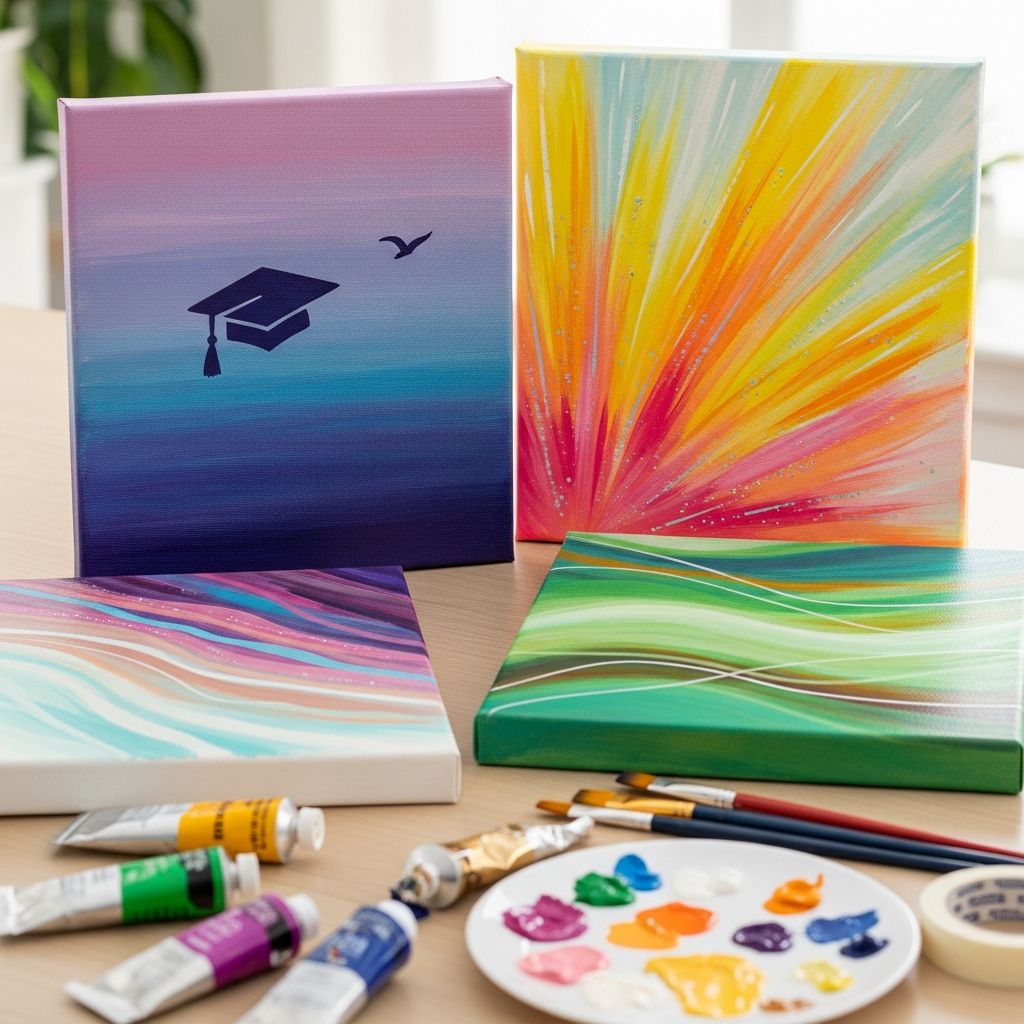
Graduation is more than a ceremony; it marks the moment someone steps from one chapter of life into the next. A handmade inspirational canvas painting captures that turning point with color, words, and heart in a way store-bought gifts rarely can.
This guide walks you through designing, painting, and personalizing motivational word art on canvas so you can create a gift that speaks directly to your graduate’s dreams and strengths.
Why Inspirational Canvas Art Makes a Perfect Graduation Gift
A canvas with meaningful words becomes a quiet coach on the wall, encouraging your graduate on days when life feels uncertain. Unlike a generic card, it can stay with them in a dorm, first apartment, or office as a long-lasting reminder of support.
- Highly personal: You choose the words, colors, and style that match the graduate’s personality.
- Budget-friendly: A few basic supplies can create a gift that looks like boutique wall art.
- Evergreen encouragement: Motivational messages do not expire when the party is over.
Planning Your Painting: Questions to Ask Before You Start
A thoughtful plan prevents random designs and helps your finished piece feel intentional. Before buying supplies or sketching layouts, consider a few simple questions about the graduate and the space where the art will live.
- Where will they likely hang it (dorm room, bedroom, office, studio)?
- Which colors do they love or already use in their decor or clothing?
- What kind of message motivates them: soft reassurance or bold challenge?
- Do they prefer clean minimal design or energetic, layered color?
Simple Planning Worksheet (Text-Only Table)
| Element | Options | Your Choice |
|---|---|---|
| Canvas Size | Small (8×10), Medium (11×14), Large (16×20+) | |
| Message Style | Quote, single word, short phrase, word collage | |
| Color Mood | Calm neutrals, school colors, bright & bold, monochrome | |
| Lettering Style | Block, script, mixed fonts, stenciled | |
| Extra Details | Subtle patterns, borders, tiny icons, gold accents |
Gathering Supplies: What You Actually Need
You do not need a full art studio to create polished word art. A handful of basic tools can take you from blank canvas to frame-worthy piece without specialized training.
- Canvas or canvas panel (any size, pre-primed is easiest).
- Acrylic paints in 3–6 coordinating colors plus white and black.
- Brushes: one flat brush for backgrounds, one small round brush for details.
- Pencil and eraser for light sketching.
- Painter’s tape or masking tape for crisp lines and borders.
- Ruler for spacing and alignment.
- Paint pens or fine-tip markers designed for use on acrylic surfaces (optional but helpful for lettering).
- Clear acrylic sealer or brush-on varnish for protection.
Choosing the Right Words for Your Graduate
Words are the heart of this project. The message you choose will echo in your graduate’s mind long after the party, so choose something that feels like a conversation between you and them.
Types of Messages to Consider
- Single power word: A short word like “Courage” or “Begin” can make a strong visual and emotional impact.
- Short phrase: A few words such as “Trust your path” or “Make your mark” can inspire without overwhelming the design.
- Word collage: A cluster of 6–12 words that describe their strengths, values, or goals (for example: “curious, kind, resilient, bold, patient, creative”).
- Personal mantra: A sentence you have said to them often or a line they repeat to themselves when things get hard.
Before committing paint to canvas, write several options on paper and say them aloud. Choose the one that feels empowering, honest, and timeless.
Color Palettes That Support the Message
The colors you choose can reinforce the emotion behind your words. A calm message pairs well with soft tones, while a bold challenge comes alive with contrast and saturation.
Sample Palette Ideas
- Calm confidence: Dusty blue, warm gray, soft white, muted gold.
- Ambitious and bold: Deep navy, bright yellow, crisp white, small pops of red.
- Creative and playful: Turquoise, coral, sunny yellow, light teal.
- Minimal and modern: Black, white, charcoal, one accent color like mustard or forest green.
If you know your graduate’s school colors, you can use them as accents without turning the piece into a logo. Keep neutrals in the background and let the brighter shade highlight key words.
Basic Step-by-Step Process
The steps below offer a simple roadmap from blank canvas to finished, gift-ready artwork. Feel free to adapt and improvise as you gain confidence.
- Prep the workspace. Cover the table, pour paints onto a palette or plate, and keep a cup of water and paper towels nearby.
- Paint the background. Use a flat brush to lay down one or more colors, either as a solid wash, gradient, or loose abstract texture. Let it dry thoroughly.
- Lightly sketch the layout. With pencil and ruler, mark rough guidelines for your words and any borders or shapes.
- Add the lettering. Use a small brush or paint pen to fill in letters, working slowly and building up opacity in layers.
- Refine and decorate. Clean edges, adjust spacing, and add supporting details like lines, dots, or tiny icons if desired.
- Seal the surface. Once everything is fully dry, apply a thin layer of clear sealer to protect your work.
- Finish the back. Add a short handwritten note, date, and your name for a keepsake touch.
Layout Ideas for Word-Focused Canvases
The same set of words can look completely different depending on how you arrange them. Experiment on paper first, then commit the chosen layout to canvas.
Popular Layout Approaches
- Center spotlight: One word or short phrase in large letters at the center, with small decorative elements around the edges.
- Stacked lines: Several short lines of text, each on its own row, with increasing or decreasing font size for emphasis.
- Diagonal path: The message travels from bottom left to top right, visually echoing the idea of moving forward and upward.
- Frame and focus: A simple border frames the canvas while the words stay clean and uncluttered in the middle.
- Word cloud: Multiple related words grouped together with varied sizes, almost like a loose constellation.
Lettering Tips for Non-Artists
Beautiful lettering can feel intimidating, but there are several approaches that require patience more than drawing skill. The key is working in layers and giving yourself room to correct small mistakes.
- Print your phrase in a font you like, tape it above your canvas, and use it as a visual guide for proportions.
- Lightly draw each letter with pencil first, then paint over it slowly with a small brush or paint pen.
- Use painter’s tape to block out straight lines or large block-letter shapes, then fill in with paint for crisp edges.
- Work with simpler uppercase letters if cursive feels overwhelming.
- Keep a damp brush handy to gently wipe away tiny paint slips while they are still wet.
Adding Personal Touches That Speak to the Graduate
Subtle, customized details transform a general inspirational quote into something deeply personal. These touches do not need to be obvious to everyone; they only need to mean something to your graduate.
- Include small icons: a tiny book for a reader, a music note for a musician, or a compass for an adventurer.
- Hide a meaningful date or number in the background patterns or along the border.
- Use their signature color for one key word so it feels uniquely theirs.
- Incorporate a short inside joke or phrase only your family or friend group understands (while keeping the main message readable to anyone).
Finishing, Framing, and Display Ideas
A few final touches can elevate your painting from DIY project to polished keepsake. Think about how the graduate might display the piece in different spaces over the next few years.
- Paint the edges of the canvas in a coordinating color so it looks finished even without a frame.
- Add simple hardware or a sawtooth hanger to the back so it is ready to hang immediately.
- Pair the painting with a small easel if they are likely to place it on a desk or bookshelf.
- Include a brief note suggesting how the piece can be used: over a study desk, near their front door, or in a creative workspace.
Example Themes for Different Types of Graduates
Matching the message and style to the graduate’s personality helps your gift feel like it was designed just for them. Use the ideas below as starting points and customize freely.
| Graduate Type | Message Direction | Color Mood |
|---|---|---|
| The Dreamer | Encourage big goals, imagination, and risk-taking. | Soft blues, lavender, touches of silver or pearly white. |
| The Planner | Celebrate patience, focus, and steady progress. | Neutrals, navy, muted green accents. |
| The Trailblazer | Highlight courage, independence, and leadership. | High contrast: black, white, and one bold accent like red or gold. |
| The Nurturer | Affirm compassion, kindness, and connection. | Warm earth tones, soft pinks, gentle greens. |
| The Innovator | Inspire curiosity, learning, and experimentation. | Bright mixes: teal, orange, lime, and crisp white. |
Writing a Short Dedication on the Back
Adding a dedication turns your canvas into a time capsule of this milestone. Keep it brief and specific so it feels intimate without overshadowing the front message.
- Include the graduate’s name, their graduation year, and the school or program.
- Add one or two sentences about what you admire in them or what you hope this artwork reminds them of.
- Sign with your name or a nickname they use for you.
Frequently Asked Questions
Do I need art experience to make this look good?
No formal art experience is necessary. Focus on clean color choices, simple lettering, and a clear message instead of complex illustration. Practicing your layout and letters on scrap paper first will build confidence.
What size canvas should I choose?
A medium size such as 11×14 or 12×16 works well for most quotes because it offers enough space for readable text without overwhelming a dorm or office wall. Smaller canvases are better for single words or very short phrases.
Can I use markers instead of paint?
Paint pens or markers made for use on acrylic surfaces are great for lettering and details, especially if you feel uncomfortable with a brush. For the background, however, acrylic paint tends to look more polished and durable than standard markers.
How long will the project take?
Plan for 2–4 hours total, including drying time between layers. Simple designs with one or two colors and a short phrase can be completed more quickly, while layered backgrounds or detailed lettering may require more patience.
What if I make a mistake?
One of the advantages of acrylic paint is its flexibility. Once an area is dry, you can often paint over mistakes with a fresh layer of background color and then redo the lettering. Small imperfections usually disappear once the entire piece is finished and viewed from a distance.
Is this idea only for high school or college graduations?
This style of inspirational art works for any milestone: trade schools, certificate programs, career changes, or even personal achievements like completing a long-term project. Simply adjust the message and colors to match the occasion and person.
Final Thoughts on Creating Meaningful Word Art
A handmade inspirational canvas does more than decorate a wall; it tells your graduate, “I see who you are and who you are becoming.” With a modest investment of time and materials, you can create a gift that continues to speak encouragement long after the cap and gown are put away.
Lean into your relationship, choose words that feel authentic, and let each brushstroke be a quiet reminder of your belief in their future.