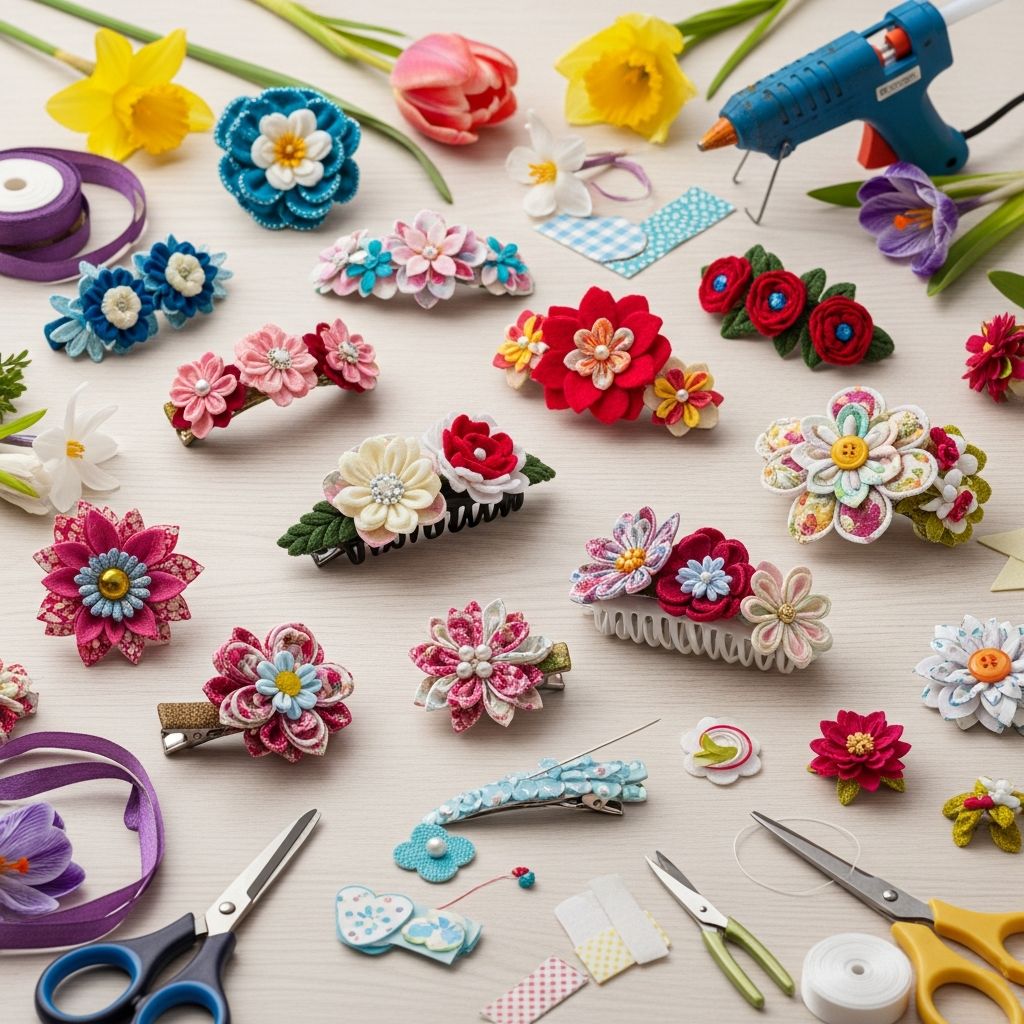
Bright flower hair clips are an easy way to bring a little springtime to any day. With just a few basic supplies and a bit of imagination, you can turn felt, faux flowers, or fabric scraps into hair accessories that kids will be excited to wear and proud to say they helped make.
This guide walks you through several approaches to crafting DIY flower hair clips, all inspired by the joy of spring and simple enough for family craft time.
Why Flower Hair Clips Make a Great Family Craft
Short, hands-on projects are especially helpful for younger children, supporting focus, hand strength, and early coordination skills in a playful way. Flower hair clips are ideal because they are small, colorful, and quick to finish.
- Fast results: Most designs can be completed in 15–30 minutes.
- Low cost: You can use leftover craft supplies and recycled materials.
- Flexible difficulty: Offer simple gluing for preschoolers and more detailed cutting or layering for older kids.
- Wearable art: Children get to see and use what they made right away.
Basic Tools and Materials You Will Need
You can mix and match supplies depending on what you already have at home. The lists below are suggestions, not strict rules.
Core Supplies
- Plain hair clips (alligator clips, snap clips, or barrettes)
- Felt sheets or sturdy craft foam
- Faux flowers (silk or fabric flowers you can disassemble)
- Fabric scraps (cotton, satin, or ribbon pieces)
- Glue (tacky craft glue for kids, or hot glue gun for adults)
- Scissors (child-safe scissors for kids, sharp scissors for adults)
- Cardstock or thin cardboard for templates
Optional Decorative Add-Ons
- Buttons, faux pearls, or small beads
- Glitter glue or metallic paint pens
- Small felt leaves or pre-cut leaf shapes
- Thin ribbon for bows and dangling accents
| Material | Best For | Kid-Friendliness |
|---|---|---|
| Felt | Simple flat flowers, beginner projects | Very high – easy to cut and glue |
| Faux flowers | Realistic, full blossoms | High – adult should handle wire cutting |
| Fabric scraps | Layered or ruffled flowers | Medium – may fray, requires closer help |
Project 1: No-Sew Felt Blossoms for Everyday Wear
Felt is forgiving, soft, and holds its shape well, which makes it perfect for simple flower clips that young crafters can help assemble.
Step-by-Step Instructions
- Create a simple petal template. On cardstock, draw a rounded petal about the length of your thumb and cut it out.
- Trace and cut petals. Use the template to trace 5–8 petals on felt. Older kids can cut their own; younger kids can choose colors while an adult cuts.
- Cut a small circle base. Cut a felt circle slightly smaller than a coin. This will be the backing for the petals.
- Arrange your flower. Lay the circle on the table and dry-fit the petals around the edge until you like the shape.
- Glue petals. Add a small dot of glue near the edge of the felt circle and press each petal in place, overlapping slightly.
- Add a flower center. Glue a button, bead cluster, or small contrasting felt circle in the middle.
- Attach to the clip. Place a line of glue on the top flat side of the clip and press the felt circle firmly onto it. Let dry completely.
Variations for Felt Flowers
- Layered blooms: Make a larger and smaller flower, then stack them with glue for more depth.
- Leaf accents: Cut simple leaf shapes from green felt and glue them behind the flower before attaching to the clip.
- Monogram center: Draw an initial on the center circle with a paint pen for a personalized clip.
Project 2: Faux Flower Clips with Realistic Petals
Silk or fabric flowers from craft stores can be easily transformed into polished hair clips. This approach is especially handy when you need a quick accessory for a party or school performance.
How to Deconstruct Faux Flowers Safely
- Choose a bloom you like and gently pull it off the main stem.
- Look for the small plastic piece at the base that holds the petals together.
- Carefully remove or trim this plastic piece with scissors or wire cutters so the flower sits flat.
- Remove any heavy or bulky pieces that would make the clip uncomfortable.
Building the Clip
- Prepare the base. Cut a felt circle that fits the underside of the flower.
- Glue the flower to felt. Add glue to the back of the flower and press it onto the felt circle.
- Hide the clip. Open the hair clip and apply glue to its top flat side.
- Attach the felt. Press the felt-backed flower onto the clip. Hold for several seconds or use a clamp while it sets.
- Add fillers (optional). Glue in small buds, greenery, or tiny blossoms around the main flower for a layered look.
Tips for Comfortable Wear
- Make sure no sharp plastic or wire edges are exposed.
- Keep the flower size in proportion to the child’s head so it is not too heavy.
- Test the clip in your own hair first to ensure it feels secure and balanced.
Project 3: Scrap-Fabric Blooms with Gentle Ruffles
Repurposing fabric scraps into flowers is a budget-friendly way to keep textiles out of the trash and introduce kids to basic design thinking about color and texture.
Simple Fold-and-Roll Flower
- Cut a strip. Use a long fabric strip about 3–4 cm wide.
- Fold and twist. Fold the strip in half lengthwise, then gently twist as you roll it into a spiral.
- Secure with glue. As you roll, stop every centimeter or so to add a dot of glue, pressing the layers together.
- Finish the back. Glue a felt circle onto the underside of the rolled flower to tidy up loose edges.
- Attach to clip. Glue the felt backing to your hair clip as in previous projects.
Mixing Textures and Colors
- Combine matte cotton with shiny satin for contrast.
- Use patterned scraps for outer layers and solid colors near the center.
- Add a thin ribbon loop or bow beneath the flower for extra movement.
Color and Design Ideas Inspired by Spring
Flower hair clips naturally fit spring themes, but you can adapt the palette for any season or special event. Encouraging kids to choose colors and arrangements supports creativity and decision-making.
Seasonal Color Palettes
- Spring: Soft pinks, lilacs, mint green, butter yellow, light blue.
- Summer: Bright coral, sunshine yellow, turquoise, hot pink, lime.
- Autumn: Rust, mustard, deep plum, forest green, burnt orange.
- Winter: Icy blue, silver, deep red, evergreen, cream.
Themed Clip Suggestions
- Garden party: Two or three small flowers clustered together on one clip.
- Birthday: Use the child’s favorite colors and add a glittery number charm.
- School spirit: Choose school colors and add a tiny felt pennant shape.
- Holiday: White flowers with silver centers for winter or red and pink blooms for Valentine’s Day.
Safety Tips for Crafting with Kids
Craft time is an opportunity to practice safe tool use and patience. When working with children, especially under age eight, supervision is essential around scissors, hot glue, and small pieces.
- Use age-appropriate tools: Provide blunt-tip scissors and non-toxic, washable glue for young children.
- Avoid choking hazards: For toddlers and preschoolers, skip tiny beads and ensure any small parts are firmly attached.
- Manage hot glue: Adults should handle hot glue guns. Kids can point to where glue should go and help press with a craft stick.
- Secure hair clips: Check that clips open and close smoothly and that no rough edges touch the scalp.
Making It a Family Tradition
Turning flower clip making into a recurring ritual can give kids something to look forward to at the start of each season or before special occasions. Research on family routines suggests that shared creative activities can strengthen family bonds and provide a sense of stability.
Fun Ways to Use Your Flower Clips
- Coordinate clips with outfits for picture day or concerts.
- Clip one onto a gift bag instead of using a disposable bow.
- Use as party favors where guests decorate their own flower and take it home.
- Attach to headbands or hats for a quick makeover.
Frequently Asked Questions (FAQs)
Q1: What glue works best for flower hair clips?
A: For adults or older teens, a low-temperature hot glue gun creates a strong bond between felt, fabric, and metal clips. For younger kids, thick tacky craft glue is safer, though it takes longer to dry. Avoid very runny school glue, which may not hold heavier flowers securely.
Q2: How long do faux-flower clips usually last?
A: With gentle use and careful storage, faux-flower clips can last for months or even years. Keeping them in a small box and avoiding crushing or pulling on petals helps preserve their shape.
Q3: Can I wash these clips if they get dirty?
A: Instead of soaking them, spot-clean with a slightly damp cloth. Excess water can loosen glue or warp felt. For fabric flowers, you can lightly brush off dust with a soft, dry paintbrush.
Q4: What if my child has very fine hair?
A: Choose smaller, lighter flowers and use clips with good gripping teeth, like lined alligator clips. You can also clip the flower onto an elastic headband so the accessory stays in place without tugging on delicate hair.
Q5: Are there no-sew, no-glue options?
A: Yes. Some faux flowers come with twisty wire stems that can be wrapped tightly around a metal hair comb or pin. However, for kids’ accessories, a bit of glue usually makes the clip more stable and comfortable.
References
- Developmentally Appropriate Practice in Early Childhood Programs Serving Children from Birth Through Age 8 — National Association for the Education of Young Children (NAEYC). 2020-06-01. https://www.naeyc.org/resources/position-statements/dap
- Arts Education and Positive Youth Development: Cognitive, Behavioral, and Social Outcomes of Adolescents Who Study the Arts — U.S. National Endowment for the Arts. 2012-03-30. https://www.arts.gov/sites/default/files/Arts-At-Risk-Youth.pdf
- Textiles and the Environment: The Role of Recycling and Reuse — European Environment Agency. 2022-02-10. https://www.eea.europa.eu/publications/textiles-and-the-environment
- Family Routines and Rituals — American Academy of Pediatrics, HealthyChildren.org. 2012-10-01. https://www.healthychildren.org/English/family-life/family-dynamics/communication-discipline/Pages/Family-Routines-and-Rituals.aspx