Taking a baby or toddler to the pool or beach can be magical, but nothing ends the fun faster than an unexpected pool accident. Swim diapers exist to prevent exactly that, yet many parents are unsure whether to use disposable or reusable options, how they differ from regular diapers, or what they actually do in the water. This guide breaks it all down in simple, practical terms so you can choose confidently.
What Swim Diapers Really Do (And Don’t Do)
Before comparing types, it helps to understand what swim diapers are designed for. Many caregivers assume they work like regular diapers, but they have a very specific purpose.
- Primary job: Contain solid stool so it does not escape into the pool.
- What they do not do: Absorb urine. Both disposable and reusable swim diapers allow pee to pass through.
- Why they aren’t absorbent: A typical diaper that soaks up water would balloon, become heavy, and weigh a child down, which is unsafe.
Think of a swim diaper as a snug, water-ready barrier whose main mission is to catch solids and keep the pool sanitary, not as a flotation device or a full-service diaper.
Types of Swim Diapers
There are two main categories of swim diapers, and both are approved for pool use when they fit correctly.
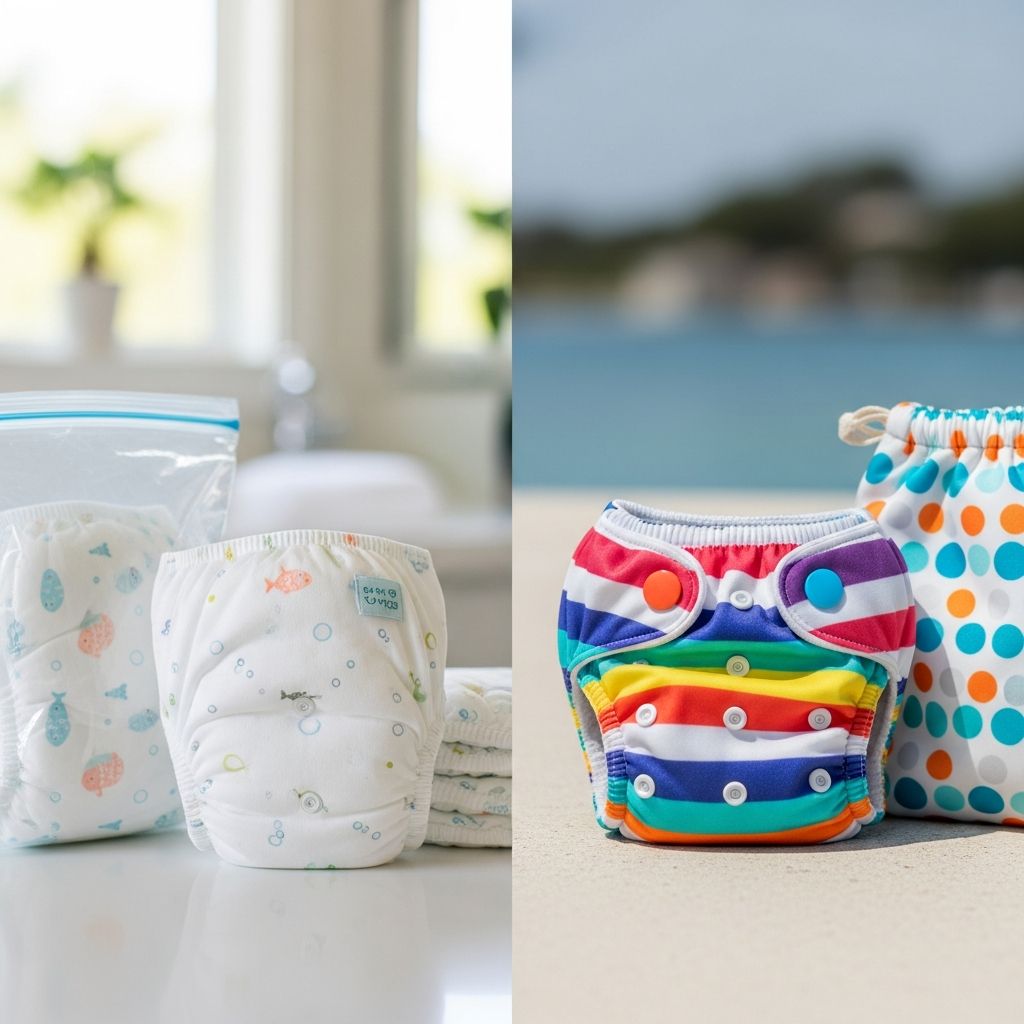
- Disposable swim diapers: Single-use, paper-like products that are thrown away after one swim session.
- Reusable swim diapers: Washable fabric diapers designed to be worn again and again.
Some families use a combination of both, depending on whether they are at their local pool, on vacation, or at a water park with strict policies.
Key Differences at a Glance
| Feature | Disposable Swim Diapers | Reusable Swim Diapers |
|---|---|---|
| Usage | Single use, then discarded | Washed and worn multiple times |
| Upfront cost | Low per diaper | Higher per diaper |
| Long-term cost | Higher if swimming often | Lower per swim for frequent use |
| Convenience | Very convenient; no washing | Requires rinsing, washing, and drying |
| Fit and comfort | Standard sizes; sometimes less adjustable | Often more adjustable; soft fabric |
| Environmental impact | More waste sent to landfills | Less waste over time |
| Travel-friendliness | Ideal for flights, hotels, long days out | Less convenient when laundering is difficult |
Disposable Swim Diapers: Pros, Cons, and Best Uses
Why Some Parents Prefer Disposables
Disposable swim diapers appeal to parents who value simplicity and minimal cleanup during water outings. They are often sold right alongside regular diapers, which makes them easy to grab with your usual supplies.
- Effortless cleanup: After a swim, you simply remove the diaper, roll it up, and throw it away.
- Good for occasional swimmers: If your child only visits the pool a few times each summer, buying a pack may be more practical than investing in multiple reusable options.
- Handy for emergencies: They are useful to keep in your bag or car for surprise splash pads or unplanned swim invites.
Drawbacks of Disposable Swim Diapers
As with any convenience product, disposable swim diapers come with trade-offs. Understanding these helps you decide when they make the most sense.
- Ongoing cost: You must buy a new one for every single swim session, and if you change mid-session after a bowel movement, costs increase quickly.
- Fit limitations: Sizes are often based on broad weight ranges, which can lead to gaps around legs or waist for children who are between sizes.
- Waste generation: Each diaper goes straight to the trash, which can bother environmentally conscious families.
Reusable Swim Diapers: Pros, Cons, and Best Uses
Why Reusables Are Growing in Popularity
Reusable swim diapers have become more popular as families look for options that are both budget-friendly and kinder to the environment. Many parents also appreciate that they can feel softer against a baby’s skin.
- Cost-effective for frequent swimmers: If you visit the pool or beach regularly, a small set of reusable swim diapers can cover an entire season.
- Customizable fit: Adjustable snaps, hook-and-loop closures, or drawstrings can help achieve a snug, leak-resistant fit around the legs and waist.
- Less trash: Rewashing instead of discarding every time significantly reduces the number of diapers going into landfills.
- Cute designs: Many reusable options come in bright colors and patterns that can double as swim bottoms under a rash guard.
Challenges With Reusable Swim Diapers
While reusable swim diapers offer many benefits, they do demand a bit more effort and planning. For some families, this is manageable; for others, it can be a deal-breaker.
- Washing required: After use, you need to rinse, store, and later wash the diaper according to the manufacturer’s instructions.
- Less ideal for long trips: If you will not have access to laundry, toting home multiple soiled diapers can be inconvenient.
- Drying time: Depending on the fabric and climate, it may take some time for a freshly washed diaper to dry thoroughly.
Cost Comparison Over a Season
Cost is one of the biggest deciding factors for many families. To simplify, imagine a typical swim season for a toddler who goes to the pool once a week for three months.
- Scenario 1 – Disposable only: One swim diaper per swim, plus a backup for accidents, could equal 12–24 diapers per season.
- Scenario 2 – Reusable only: Two or three reusable diapers purchased at the start of the season may cover all outings.
Exact numbers will vary by brand and location, but in general, the more often you swim, the more a reusable system tends to save money over time.
Fit, Comfort, and Leak Protection
Getting the Right Fit
A swim diaper is only as effective as its fit. A diaper that is too loose may allow solids to escape, while one that is too tight can cause red marks and discomfort.
- Look for a snug fit at the thighs and waist, similar to a gentle seal.
- The diaper should not sag heavily when your child exits the water.
- With reusable styles, adjust snaps or closures before you get to the pool so you are not fumbling poolside.
Comfort Considerations
Babies and toddlers often move more freely when their swim diaper feels soft and non-bulky. Some children barely notice a well-fitting swim diaper, while others may tug at waistbands or leg holes.
- If your child is sensitive to textures, consider fabric reusables, which often feel more like regular swimwear.
- For babies who hate clothing changes, pull-on styles can be faster than those with multiple closures.
Hygiene and Pool Rules
Even with the best swim diaper, good hygiene habits matter. Many pools have rules that require both a swim diaper and an additional layer.
- Check local rules: Some facilities require a snug swim diaper plus a tight-fitting swimsuit over it.
- Bathroom breaks: Encourage older toddlers to take regular bathroom breaks to minimize the chance of accidents in the pool.
- Change promptly: If your child has a bowel movement, leave the water immediately, change the diaper, and rinse your child before returning.
Following these steps helps prevent pool closures and protects other swimmers, especially babies and people with weaker immune systems.
Practical Tips for Packing Your Swim Bag
Whether you pick disposable, reusable, or a combination, a little preparation can make pool days smoother. Use this checklist as a starting point.
- 1–3 swim diapers (plus one extra, no matter what type you use)
- A separate zippered wet bag or plastic bag for used diapers
- Regular diapers or training pants for the trip home
- Rash guard or swim shirt, hat, and baby-safe sunscreen
- Small pack of wipes and a portable changing mat
If you are using reusables, pack at least one extra in case of an early accident or if the first diaper becomes very messy.
How to Care for Reusable Swim Diapers
Reusable swim diapers will last longer and perform better if cared for correctly. Most brands include specific instructions, but these general steps are common.
- Rinse as soon as possible after use, especially if soiled.
- Remove any solids into the toilet before rinsing.
- Wash in warm or cool water with a gentle detergent that does not leave heavy residue.
- Avoid fabric softeners or bleach that can damage elastic and waterproof layers.
- Line-dry when possible to preserve the fabric and elastics.
With thoughtful care, many reusable swim diapers can last through multiple seasons or even be passed down to younger siblings.
How Many Swim Diapers Do You Really Need?
The right number depends on how often your family swims and whether you favor disposable or reusable styles.
- Occasional swimmers (once a month or less): One small pack of disposables or two reusable diapers is usually enough.
- Weekly swimmers: One pack of disposables per season or three reusable diapers to rotate while washing and drying.
- Frequent swimmers (multiple times per week): A small stash of four or more reusables offers flexibility and cost savings.
If you are unsure, starting with one reusable and a small package of disposables lets you experiment without a big commitment.
When a Hybrid Approach Makes Sense
You do not have to pick a single camp and stay there. Many parents like a blended strategy that uses each type where it shines.
- Use reusables for local swim lessons and backyard pools, where laundry is easy.
- Keep disposables on hand for travel days, hotel stays, or times when you cannot rinse or wash right away.
- Some caregivers even layer: a disposable underneath and a snug reusable over the top for added security, if allowed by the pool.
This flexible method gives you convenience and long-term savings while reducing overall waste.
Choosing the Best Option for Your Family
There is no single “right” answer; the best swim diaper choice depends on your lifestyle, budget, and comfort level with laundry. Use these questions as a quick decision guide.
- How often will your child be in the water this season?
- Do you have easy access to laundry after most swims?
- Are you primarily seeking convenience, savings, reduced waste, or a mix of all three?
- Does your child have sensitive skin that might respond better to certain fabrics?
- Do your local pools or swim schools have specific requirements for diaper type or layering?
Your answers will naturally point you toward disposable, reusable, or a mixture of both types.
Frequently Asked Questions
Do swim diapers hold pee?
No. Swim diapers are designed to let urine pass through. If they absorbed pee like regular diapers, they would swell with pool water and become too heavy and bulky for safe swimming.
Can I use a regular diaper in the pool?
Regular diapers are not made for water. They soak up large amounts of liquid, balloon, and can break apart, releasing absorbent gel into the pool. This is messy, uncomfortable for your child, and often against pool rules.
Should I put another diaper under a swim diaper?
Do not put a regular diaper under a swim diaper; it will still swell and weigh your child down. If extra protection is desired, some caregivers use a disposable swim diaper underneath a reusable swim diaper, but only if it does not interfere with fit or violate facility guidelines.
How long can my child wear a swim diaper?
A swim diaper can be worn for the duration of a swim session as long as it remains clean and well-fitting. If your child has a bowel movement, it should be changed as soon as possible, and the child should be rinsed before returning to the water.
Are reusable swim diapers sanitary?
Yes, reusable swim diapers can be very sanitary when rinsed promptly, washed thoroughly, and dried completely between uses. Following the care instructions provided by the manufacturer keeps them safe and effective.
What size swim diaper should I buy?
Always check the size chart for your chosen brand and consider both weight and body shape. For reusables, adjustable designs with snaps or drawstrings can provide more flexibility if your child is between sizes.
Final Thoughts
Swim diapers may look like a small detail in your pool bag, but they play an important role in keeping shared water spaces clean and family outings stress-free. Whether you choose disposable, reusable, or a combination of both, focusing on fit, comfort, and practicality will help your child enjoy the water while you worry less about what is happening under the surface.