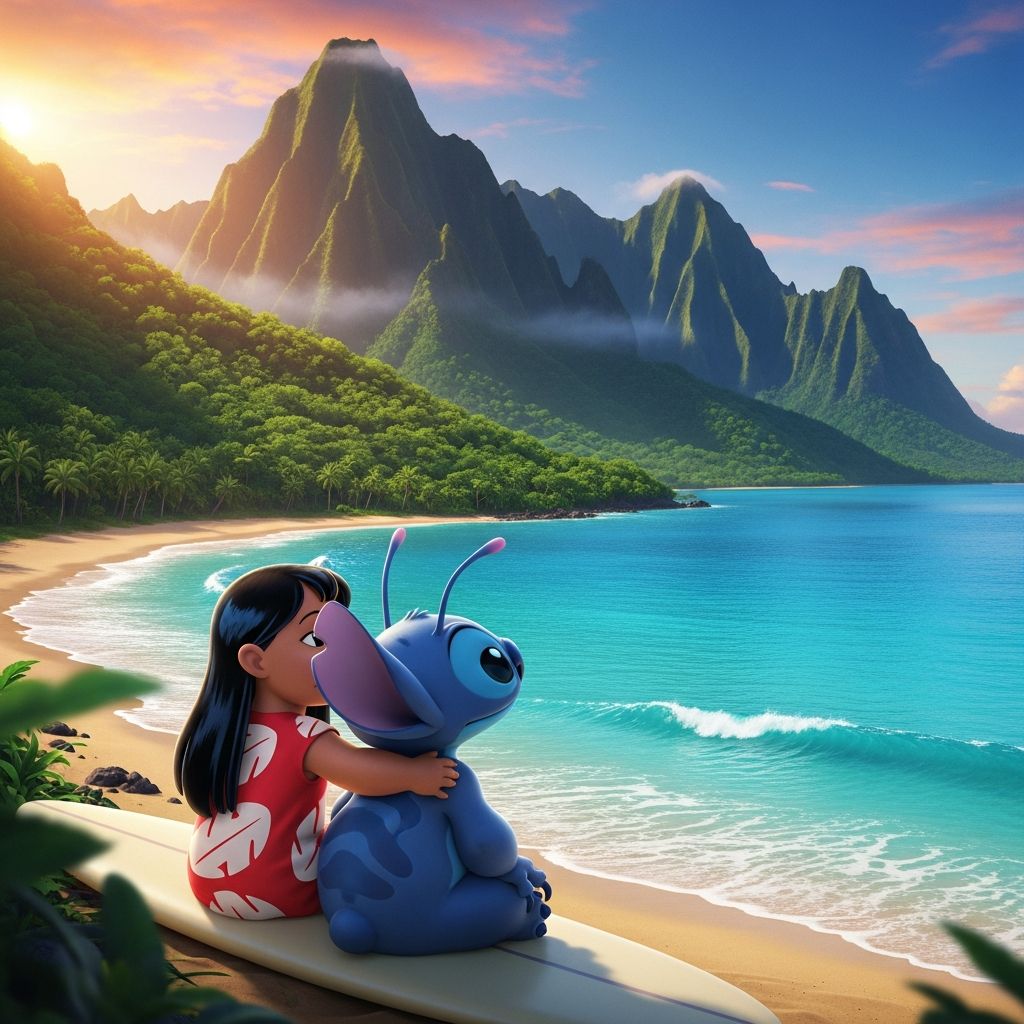
Disney’s live-action remake of Lilo & Stitch revisits one of the studio’s most distinctive early-2000s films, a story that originally stood out for its hand-drawn animation, Hawaiian setting, and focus on a non-traditional family. In translating that film into live action, Disney has made a series of creative, technical, and casting choices that have sparked intense conversation about representation, identity, and what it means to update a cult classic for a new audience.
This article examines what changed in the remake, why those changes matter to fans and critics, and how the debate fits into Disney’s broader strategy of reworking its animated catalog.
The Original ‘Lilo & Stitch’: Why It Mattered
When the animated Lilo & Stitch was released in 2002, it arrived during a lull for Disney’s traditional animation but quickly earned a devoted following. Beyond the story of a chaotic alien and a lonely girl, the film resonated for several reasons:
- Grounded setting: It was one of the rare major studio animated films set in Hawai‘i, with attention to local landscapes and culture.
- Non-traditional family: The relationship between Lilo and her older sister Nani, who is effectively acting as a guardian, brought social realism unusual for a Disney feature.
- Representation for Pacific Islanders: For many Pacific Islander and Hawaiian viewers, it was one of the first times they saw a family resembling their own at the center of a global kids’ movie.
- Subtle critiques of tourism and colonialism: The original film and its deleted material included gestures toward the pressures of tourism and the legacy of colonization in Hawai‘i.
Because of this legacy, any changes in a remake carry more weight than a simple visual update. They touch on a film that, for many, helped shape how they saw themselves in popular culture.
From Animation to Live Action: The Remake in Context
The live-action Lilo & Stitch sits within a wave of Disney remakes that has included Beauty and the Beast, The Lion King, Aladdin, The Little Mermaid, and a forthcoming Snow White adaptation. These projects are often framed as attempts to introduce classic stories to younger viewers while monetizing familiar brands.
At the same time, they have repeatedly triggered public debate about race, colorism, and authenticity in casting, from critiques of “race-swapping” formerly white characters to frustration when characters of color are lightened or reimagined.
| Aspect | 2002 Animated Film | Live-Action Remake |
|---|---|---|
| Medium | Hand-drawn animation | Live action with CGI |
| Setting | Hawaiian island setting, stylized visuals | On-location Hawai‘i with realistic environments |
| Stitch | Cartoon alien with exaggerated expressions | CGI creature integrated into live-action footage |
| Key Themes | Found family, grief, social services, tourism subtext | Similar family themes, with adjustments to side characters and visual gags |
Major Character and Design Changes
To adapt the world of Lilo & Stitch into a photoreal environment, filmmakers altered several of the most visually stylized elements. Some of these updates are purely technical; others reflect more cautious choices about gender expression and cultural commentary that have drawn criticism.
Pleakley: From Alien in Drag to Human in Menswear
One of the most discussed changes involves the character Pleakley. In the animated movie, Pleakley is an alien tasked with retrieving Stitch who attempts to blend into Earth by wearing dresses, wigs, and overtly feminine outfits. Fans often read Pleakley as a playful drag figure or as a character who disrupts traditional gender norms.
In the live-action version, promotional materials show Pleakley and his partner Jumba appearing as human men in standard menswear rather than flamboyant disguises.
- Supporters of the original design argue that removing Pleakley’s gender-bending outfits erases a form of queer-coded visibility that meant a lot to some viewers.
- Some online commentators have linked this decision to a broader trend of large studios retreating from queer imagery when facing political pushback or international market pressure.
- The director has publicly stated that he experimented with various visual effects to keep the aliens’ exaggerated looks, but struggled to make them convincing in live action, citing believability rather than censorship as the reason for the change.
This debate captures a recurring question in contemporary media: when is a change a technical compromise, and when is it a retreat from riskier representation?
Jumba and the Aliens: Realism vs. Cartoon Logic
Other extraterrestrial characters, notably Jumba, have also been redesigned to fit a live-action world. Instead of broad, exaggerated bodies and faces, their onscreen presence is toned down or shifted closer to human performers.
From a production standpoint, this is consistent with other Disney remakes, which frequently trade exaggerated animation for grounded textures and lighting. But some fans argue that the original’s charm lay partly in its willingness to be weird and cartoonish. Reducing that visual eccentricity can feel like sanding off the story’s rough edges.
Casting and Colorism: Who Gets to Represent Hawai‘i?
The casting of the live-action film has generated as much conversation as the design changes, especially around questions of colorism and authenticity in representing Native Hawaiians and Pacific Islanders.
Nani and Accusations of Colorism
In the original film, Nani is a darker-skinned Hawaiian young woman whose experiences subtly reflect the realities of working-class life and discrimination in Hawai‘i. In the remake, Disney cast Sydney Agudong, a performer from Hawai‘i with a lighter complexion. While she has local ties, some viewers objected that her appearance did not match Nani’s original darker-skinned design.
- Critics argue that lightening a character who was one of the few darker-skinned leads in Disney’s catalog reinforces a long history of sidelining darker actors, even in stories set in communities of color.
- Online discussions have linked this decision to the broader phenomenon of colorism in film and television, in which lighter-skinned actors of partial heritage are often prioritized over darker-skinned community members for lead roles.
- Others note that Agudong’s local origin and personal excitement about representing Hawai‘i complicate easy narratives of blame, highlighting the structural nature of casting power rather than individual malice.
Colorism is a well-documented issue in global media, where lighter skin has historically been privileged in casting, advertising, and storytelling. Scholarly work on race and media has shown that this can subtly shape standards of beauty and belonging, especially for younger viewers.
David and the Recasting Controversy
Another controversy emerged around the role of David, Nani’s supportive friend and love interest. After reports surfaced about racially offensive language and posts associated with an early casting choice, the actor was replaced before filming progressed.
This incident underscores how social media histories are now integral to casting politics. While studios have always vetted performers, widespread archiving of past posts means that offensive content is more likely to surface and spark backlash, especially when a project is already framed as a milestone for representation.
Representation, Tourism, and What Was Left Out
Beyond individual characters, critics have also pointed to shifts in how the remake approaches Hawai‘i itself. The original animated film included small but pointed jokes and visual touches about tourism and the outsider gaze: tourists taking photos, mispronounced Hawaiian words, and the subtle tension between local life and a global vacation industry.
Some of those elements appear softened or reoriented in the live-action version.
- Where the animated film occasionally framed tourists as oblivious or intrusive, updated scenes and background casting choices sometimes neutralize or invert that critique.
- Commentators who study media representations of Indigenous communities argue that these choices can dilute commentary on colonialism and the economic pressures facing Native Hawaiians.
Disney has faced long-standing criticism for its treatment of Indigenous cultures, from early animated features that trafficked in caricatures to more recent films that seek to celebrate local traditions while still primarily serving global audiences. Lilo & Stitch occupies a particularly delicate position as it simultaneously offered more nuanced representation and still functioned as a mass-market product benefiting a multinational corporation.
Fan Reactions and Online Debate
The response to the remake has been polarized, with online spaces amplifying both celebration and outrage.
Common perspectives include:
- Nostalgic disappointment: Fans deeply attached to the 2002 film see visual and story changes as unnecessary tampering with something that already worked.
- Representation watchdogs: Activists and media critics focus on casting and design choices that, in their view, roll back hard-won gains in visibility for darker-skinned and queer-coded characters.
- Pragmatic defenders: Some viewers argue that adaptation inevitably requires change and that the remake should be judged primarily on its emotional impact and craft, not its fidelity to every detail.
These debates echo wider discussions in film criticism and media studies about who cultural products are for, how they negotiate competing audiences, and whether global entertainment companies can meaningfully center marginalized communities without compromising under commercial pressure.
Disney’s Broader Pattern of Remake Backlash
The uproar around Lilo & Stitch is not an isolated case. Other recent and forthcoming remakes, such as The Little Mermaid and Snow White, have drawn scrutiny over casting, story revisions, and perceived ideological messages.
This reflects several overlapping trends:
- Heightened sensitivity to representation: After years of pressure from scholars, activists, and audiences, casting and storytelling decisions are watched more closely and critiqued in real time.
- Political polarization: Media representation has become a proxy battlefield for broader cultural conflicts, with the same decision praised as progress by some and condemned as propaganda by others.
- Brand management: As Disney relies on familiar IP, it must satisfy nostalgic older viewers while also appealing to younger audiences with different expectations around diversity and inclusion.
In this context, Lilo & Stitch becomes more than a children’s movie. It serves as a case study in how large studios navigate—and sometimes stumble through—the intersection of commercial imperatives and cultural responsibility.
What These Changes Mean for Young Viewers
For children encountering Lilo & Stitch for the first time through the remake, the film may still function as a warm story about family, grief, and loyalty. Many of its core themes remain intact: Lilo’s loneliness, Nani’s struggle to keep the family together, the intrusion of child welfare authorities, and Stitch’s evolution from destructive creature to beloved companion.
However, changes in casting, color, and gender expression can subtly shape which children feel most seen.
- Darker-skinned Hawaiian and Pacific Islander kids who connected strongly with Nani’s animated presence may not recognize themselves as clearly in a lighter-skinned portrayal.
- Queer and gender-nonconforming viewers who cherished Pleakley as a rare, if imperfect, example of gender-bending humor in a mainstream family film may feel that a small but meaningful space has been closed off.
Media researchers have long noted that seeing one’s community represented in varied, non-stereotypical ways contributes to a sense of belonging and self-worth, while absence or distortion can reinforce marginalization. Debates around seemingly small design choices in a children’s movie are, in part, debates about that larger psychological and social impact.
How to Watch the Remake Critically
For parents, educators, and older fans planning to watch the live-action Lilo & Stitch with children, there are ways to engage with the film that honor both its emotional power and the valid critiques surrounding it.
- Pair the remake with the original: Watching both versions invites discussion about how stories change over time and why filmmakers might update characters or visuals.
- Talk about Hawai‘i beyond the movie: Use the film as a starting point to learn about Hawaiian history, the impact of tourism, and Native Hawaiian perspectives that go beyond a vacation postcard image.
- Discuss representation openly: Ask children what they notice about who is on screen, how they look, and how they are treated. This can help develop critical media literacy.
- Acknowledge both enjoyment and critique: It is possible to appreciate parts of the remake—the performances, music, or emotional beats—while still questioning the choices behind it.
Frequently Asked Questions
Why is the casting of Nani in the live-action remake controversial?
Many viewers feel that casting a lighter-skinned actress for Nani, who was originally depicted as darker-skinned, reflects a pattern of colorism in film, where lighter actors are often favored for prominent roles even in stories centered on communities of color.
Did Disney remove Pleakley’s drag to avoid LGBTQ+ themes?
The director has stated that the change was driven by visual effects and believability concerns in live action, but critics and fans argue that the result still erases a form of queer-coded or gender-nonconforming representation that mattered to them.
Is the story of the remake very different from the 2002 film?
The central plot—Lilo adopting Stitch, Nani trying to keep their family together, and alien agents pursuing the creature—remains broadly similar. The larger shifts are in character designs, side characters, and the intensity of certain social and political undercurrents.
Why do Disney remakes often provoke so much backlash?
They combine nostalgic attachment to beloved originals, corporate expectations for global box-office success, and contemporary debates over race, gender, and identity. Any change can feel amplified because it affects icons that audiences have known for decades.
How can families address problematic aspects while still enjoying the film?
Families can watch with a critical eye: discuss what works emotionally, note where representation feels strong or weak, explore real Hawaiian history and culture, and treat the film as one story among many rather than a definitive portrait of Hawai‘i or its people.
References
- ‘Lilo & Stitch’ remake breaks records, sparks controversy over characters — Scripps News. 2025-05-31. https://san.com/cc/lilo-stitch-remake-breaks-records-sparks-controversy-over-characters/
- Why the Live-Action Lilo & Stitch Remake Has Sparked Controversy — TIME. 2025-05-24. https://time.com/7287535/lilo-and-stitch-disney-casting-controversy/
- Live action ‘Lilo & Stitch’ casting sparks colorism controversy — Berkeley High Jacket. 2025-04-21. https://berkeleyhighjacket.com/2025/entertainment/lilo-stitch-controversybigger-issue
- ‘Lilo & Stitch,’ ‘Moana,’ and Disney’s Representation of Indigenous Peoples — Maile Arvin, Colonialism, Bitch! 2016-08-24. https://colonialismbitch1.rssing.com/chan-58124034/article14.html