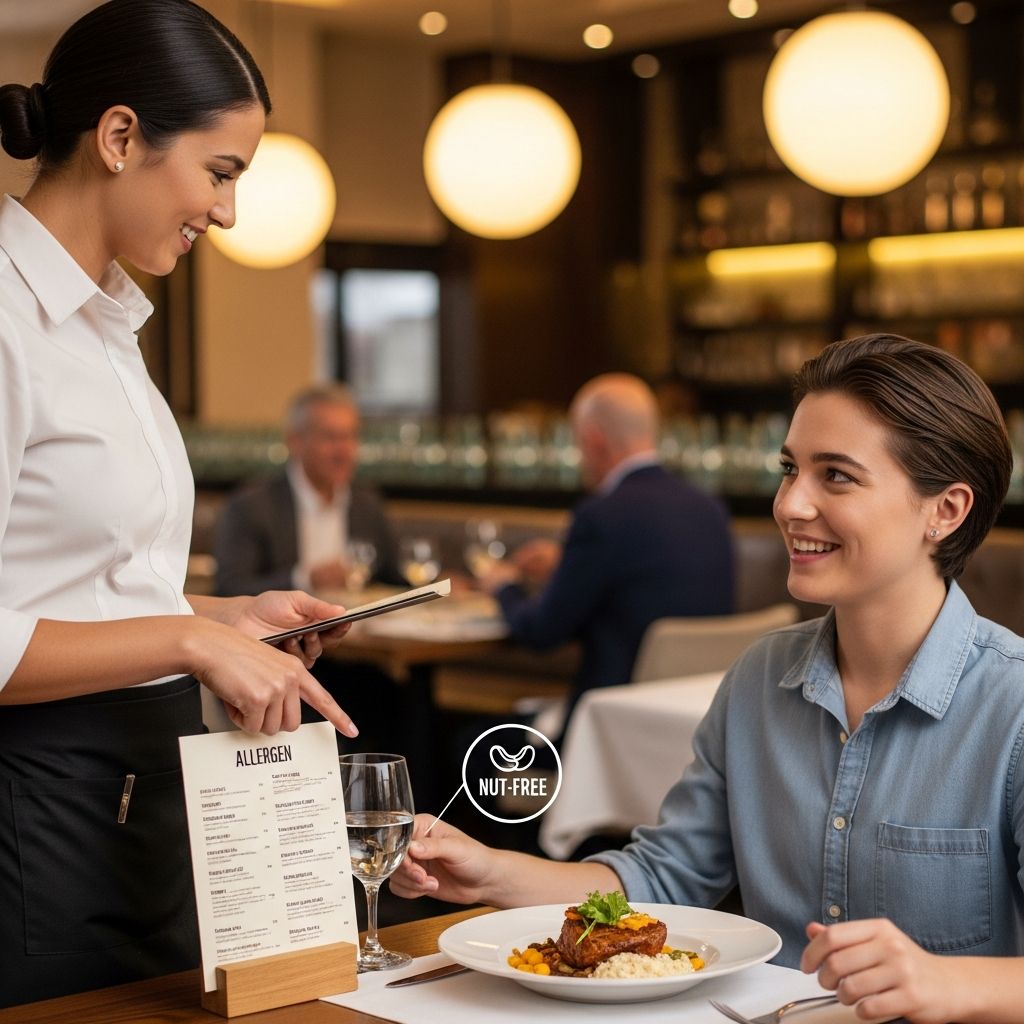
Nut allergies affect millions worldwide, posing significant challenges during restaurant visits where hidden ingredients and cross-contamination lurk. With careful preparation, families can minimize risks and savor meals out. This guide draws from expert recommendations to empower you with actionable steps for safer dining.
Understanding Nut Allergy Risks in Restaurants
Peanuts and tree nuts frequently appear in sauces, desserts, and ethnic cuisines, triggering severe reactions including anaphylaxis—a rapid, potentially fatal response involving airway swelling, breathing difficulties, and shock. Cross-contact occurs when allergens transfer via shared surfaces, utensils, or oil, even in trace amounts undetectable by sight or taste. Buffets, bakeries, and fried foods amplify these dangers due to communal handling.
Awareness of these hazards is crucial: epinephrine auto-injectors must always accompany diners, as reactions demand immediate intervention. Recent data underscores the prevalence, with nut allergies among the top food triggers for emergency visits.
Pre-Planning Your Restaurant Visit
Success begins before stepping foot in a restaurant. Start by reviewing online menus for allergen disclosures—many establishments now highlight nut-free options. Contact the venue ahead to discuss accommodations, inquiring about dedicated prep areas or ingredient sourcing. Opt for off-peak hours when kitchens operate slower, allowing staff focused attention to your needs.
- Research cuisines: Avoid high-risk ones like certain Asian or Middle Eastern dishes heavy in nuts.
- Filter reviews: Search for allergy mentions to gauge reliability.
- Select familiar spots: Chain restaurants often have standardized protocols.
Compile a chef card—a wallet-sized document listing your allergies, safe alternatives, and reaction severity. Templates are available from allergy organizations; present it clearly to staff.
Selecting Low-Risk Dining Venues
Not all restaurants suit nut-allergic patrons equally. Prioritize those with explicit allergy policies, visible online. Steer clear of buffets where utensils migrate between dishes, heightening cross-contact. Bakeries and ice cream shops pose similar threats from shared tools.
| High-Risk Venues | Why Avoid | Safer Alternatives |
|---|---|---|
| Buffets & Salad Bars | Spoon cross-over contaminates foods | À la carte service |
| Asian Fusion (peanut-heavy) | Frequent nut use in sauces | Italian or grilled meats |
| Fryer-Based Spots | Shared oil transfers allergens | Steamed or baked options |
| Bakeries/Ice Cream | Shared scoops and counters | Dedicated nut-free cafes |
Family-style platters demand vigilance; request separate serving tools. Chains with allergy training, like those partnering with organizations, often excel.
Effective Communication with Restaurant Staff
Upon arrival, inform your server immediately and request the chef or manager. Stress that even microscopic traces can provoke reactions—never allow ‘picking out’ allergens. Phrase requests assertively: “My child has a severe nut allergy; please confirm no peanuts, tree nuts, or shared equipment.” If uneasy, depart promptly.
Wipe tables, chairs, and menus with allergen-safe wipes before seating. For children, supervise closely and pack safe backups like plain fruits. Educate companions on symptoms and epinephrine use.
Navigating Menus and Ordering Wisely
Choose simple dishes: grilled proteins, steamed vegetables, or plain rice minimize hidden risks. Interrogate sauces, marinades, and garnishes—nuts lurk in pestos, moles, and glazes. Decline fried items cooked in communal oil.
- Safe bets: Fresh salads (dressing aside), steamed seafood, basic pastas.
- Questionable: Curries, satays, desserts, breaded apps.
- Verify: ‘Nut-free’ claims with direct chef questions.
If errors occur—like unintended nuts on a plate—demand a fresh preparation; retain the original until resolved.
Preventing Cross-Contact in the Kitchen
Cross-contact thrives in busy kitchens via fryers, cutting boards, and gloves. Request allergen-free prep zones, fresh gloves, and dedicated utensils. Hot, soapy washes neutralize residues—dry wiping insufficient. At home-mimicking restaurants, advocate for top-shelf storage of safe foods.
Post-meal, clean hands and surfaces to avert secondary exposure.
Emergency Preparedness Essentials
Two epinephrine auto-injectors are non-negotiable, alongside an action plan detailing dosing and 911 protocols. Train family on administration; check expiration dates routinely. Mild symptoms warrant antihistamines, but anaphylaxis demands epinephrine first. Symptoms include hives, vomiting, throat tightening—act swiftly.
Teaching Kids Allergy Awareness
Empower children: “No sharing food, always ask first, speak up for safety.” Role-play scenarios, provide medical alert bracelets. Pack safe snacks for reassurance, fostering independence without fear.
Common Pitfalls and How to Avoid Them
- Over-reliance on labels: Menus may omit traces; always verify verbally.
- Peak-hour rushes: Errors spike; time visits strategically.
- Complacency with ‘safe’ spots: Protocols vary; reconfirm each trip.
- Forgetting meds: Double-check before leaving home.
Frequently Asked Questions
Can I trust a restaurant’s ‘nut-free’ label?
Not entirely—labels indicate intent, but cross-contact risks persist. Confirm with staff on prep methods.
What if the chef can’t guarantee safety?
Politely leave and select another venue prioritizing allergies.
Are chain restaurants safer?
Often yes, due to training and policies, but verify individually.
How do I handle group dining?
Notify all, use separate plates/tools, wipe shared surfaces.
What’s the best emergency response?
Administer epinephrine, call 911; follow with ER visit even if improving.
(Word count: 1678, excluding metadata and HTML tags)
References
- Food Allergy? You Can Still Enjoy Eating Out — Utah Allergies. 2023. https://www.utahallergies.com/post/food-allergy-you-can-still-enjoy-eating-out
- Avoiding Cross-Contact Allergen Contamination — Food Allergy Awareness & Education Network (FAACT). Accessed 2026. https://www.foodallergyawareness.org/food-allergy-and-anaphylaxis/cross-contact/cross-contact/
- Managing a Peanut or Tree Nut Allergy — Geisinger Health. 2025-08-13. https://www.geisinger.org/health-and-wellness/wellness-articles/2025/08/13/13/17/managing-a-peanut-or-tree-nut-allergy
- Dining Out with Food Allergies — American Academy of Allergy, Asthma & Immunology (AAAAI). Accessed 2026. https://www.aaaai.org/tools-for-the-public/conditions-library/allergies/dining
- Hosting Guests with Food Allergies: 6 Tips for a Safer Meal — Michigan Medicine. Accessed 2026. https://www.michiganmedicine.org/health-lab/hosting-guests-food-allergies-6-tips-safe-meal
- Food Allergies: How to Cope (for Teens) — Nemours KidsHealth. Accessed 2026. https://kidshealth.org/en/teens/food-allergy-coping.html
- Avoiding Cross-Contact — Food Allergy Research & Education (FARE). Accessed 2026. https://www.foodallergy.org/resources/avoiding-cross-contact