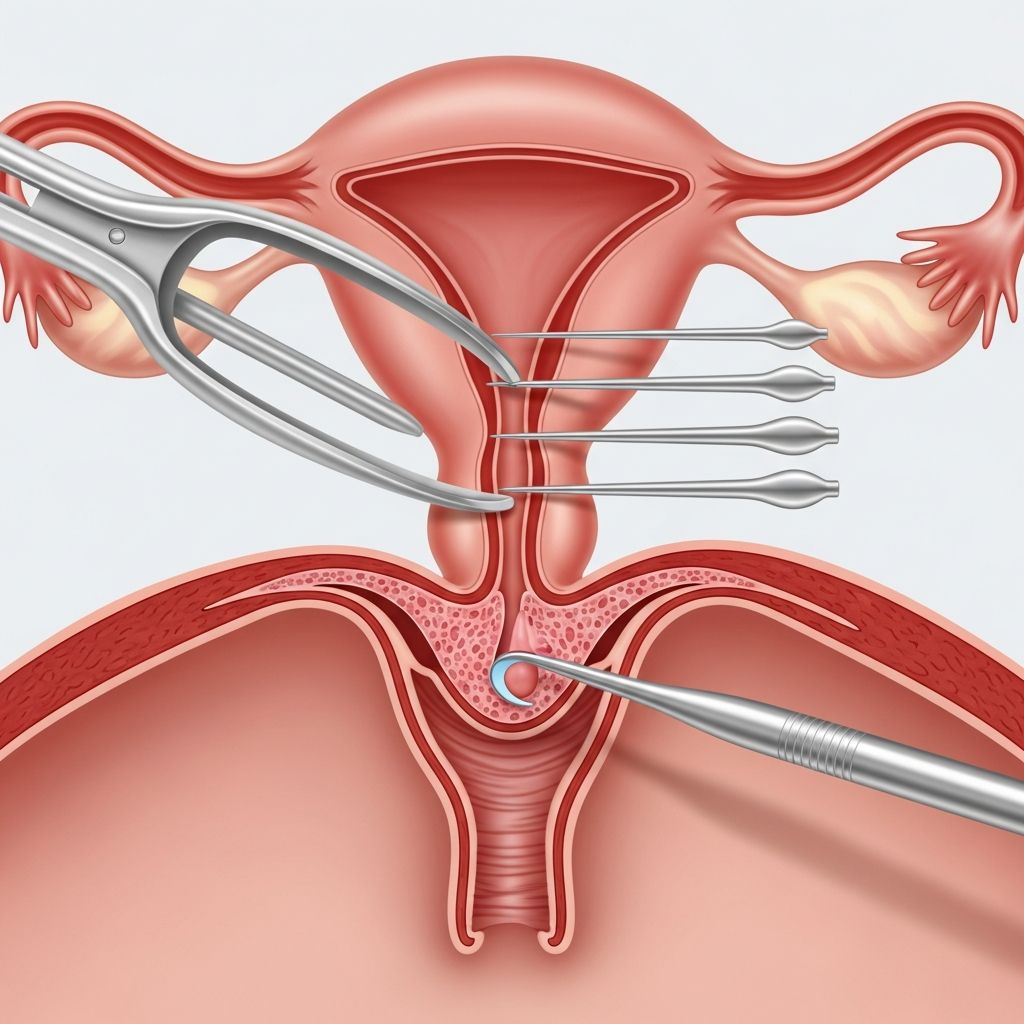
Dilation and curettage, commonly known as D&C, is a routine gynecological surgery that involves opening the cervix and scraping or suctioning tissue from the uterus. This procedure serves both diagnostic and therapeutic roles in women’s health, helping manage issues like heavy bleeding or incomplete miscarriages.
Understanding the D&C Procedure
The D&C process begins with dilation of the cervix, the lower narrow part of the uterus, using progressively thicker rods or medication to gently widen it. Once dilated, a curette—a spoon-shaped instrument—or a suction device removes the endometrial lining or other uterine contents.
Typically performed in a hospital, clinic, or outpatient surgical center, the entire process lasts 10 to 20 minutes under local, regional, or general anesthesia, ensuring patient comfort.
- Cervical dilation: Achieved with dilators or medications like misoprostol.
- Tissue removal: Via sharp curettage or vacuum aspiration for efficiency.
- Optional hysteroscopy: A camera may visualize the uterus for precision.
Primary Medical Indications for D&C
Healthcare providers recommend D&C for various uterine conditions. It effectively clears retained tissue post-miscarriage or delivery, preventing infection and excessive bleeding.
| Condition | Purpose of D&C | Benefits |
|---|---|---|
| Miscarriage | Remove retained products of conception | Reduces infection risk, controls bleeding |
| Abnormal uterine bleeding | Sample endometrium for diagnosis | Identifies causes like polyps or hyperplasia |
| Postpartum complications | Evacuate remaining placenta | Prevents hemorrhage |
| Molar pregnancy | Remove abnormal tissue | Manages potential hemorrhage |
| Polyps or fibroids | Excise benign growths | Alleviates symptoms |
For early pregnancy loss, D&C is chosen in about 50% of cases when natural passage or medication fails, offering quicker recovery than expectant management.
D&C in Pregnancy Termination
While D&C can be used for elective abortion, particularly in early gestation, it is one method among surgical options like vacuum aspiration. It provides rapid completion and effective pain control compared to medical abortion, though patient preferences and gestational age guide selection.
In non-elective contexts, such as missed miscarriage, it ensures complete evacuation, minimizing complications like endometritis.
Preparing for Your D&C
Preparation involves fasting if general anesthesia is used, discussing medical history, and arranging post-procedure support. Providers may administer medications to soften the cervix beforehand.
- Inform your doctor of allergies, current medications, or bleeding disorders.
- Avoid certain blood thinners as advised.
- Plan for rest and light activity post-procedure.
Step-by-Step: What Happens During D&C
Patients are positioned in stirrups similar to a pelvic exam. A speculum exposes the cervix, which is then dilated sequentially.
- Speculum insertion for cervical visualization.
- Dilators gradually open the cervix (typically to 0.5 inches).
- Curette or suction device enters the uterus to scrape walls from fundus to os, rotating 360 degrees for thoroughness.
- Tissue is collected for pathology if diagnostic.
Suction D&C uses vacuum for faster, gentler removal, often preferred.
Anesthesia and Patient Comfort
Anesthesia options include local (cervix numbed), sedation, or general. Most patients report no pain during the procedure due to sedation.
Monitoring by nurses, anesthesiologists, and surgeons ensures safety.
Potential Risks and Complications
Though generally safe with low complication rates, risks include:
- Infection: Rare, prevented with antibiotics.
- Bleeding: Usually light; heavy cases managed medically.
- Cervical injury or uterine perforation: Less than 1% incidence.
- Asherman syndrome: Scarring from aggressive curettage, potentially affecting fertility.
Contraindications include active pelvic infection unless septic abortion requires urgent evacuation.
Recovery Process After D&C
Recovery is swift; most resume normal activities in 1-2 days. Expect cramping, spotting for 1-2 weeks.
- Immediate post-op: Monitored for 30-60 minutes.
- Home care: Use pads (no tampons), avoid intercourse/baths for 2 weeks.
- Pain relief: Ibuprofen or prescribed meds.
- Follow-up: Pathology results in 1-2 weeks; fertility returns quickly.
Full recovery typically within 1-2 weeks, with lighter periods possible afterward.
Diagnostic Value of D&C Samples
Tissue analysis aids in detecting endometrial hyperplasia, cancer, or hormonal imbalances causing bleeding. It’s more comprehensive than office biopsies.
Alternatives to D&C
Options vary by indication:
- Medication for miscarriage (misoprostol).
- Endometrial biopsy for sampling.
- Hysteroscopy for visualization and removal.
- Expectant management for early losses.
Frequently Asked Questions About D&C
Is D&C painful?
No, anesthesia ensures comfort during the procedure. Mild cramping may follow.
How long does recovery take?
Most return to work in 1-2 days; full recovery in 1-2 weeks.
Does D&C affect fertility?
Rarely; risks like scarring are minimal with modern techniques.
Can D&C be done outpatient?
Yes, often in clinics or day surgery centers.
Is D&C used for abortion?
Yes, as a surgical method for early termination or miscarriage management.
What if I have heavy bleeding after D&C?
Contact your provider immediately; it may indicate incomplete evacuation.
Choosing D&C: Patient Considerations
Discuss benefits versus alternatives with your provider. Factors include gestational age, health status, and preferences. ACOG guidelines support informed decision-making.
In miscarriage care, D&C offers emotional closure through prompt resolution.
References
- Dilation and curettage (D&C) — Mayo Clinic. 2023-10-18. https://www.mayoclinic.org/tests-procedures/dilation-and-curettage/about/pac-20384910
- What to Expect During a Dilation and Curettage, or a D&C — Hey Diana Health. 2024-05-15. https://heydianahealth.com/dilation-curettage-dc/
- What is Dilation & Curettage (D&C)? A Fertility Nurse Explains — Illume Fertility. 2023-11-02. https://www.illumefertility.com/fertility-blog/what-is-dilation-curettage-procedure
- Dilation and Curettage — StatPearls, NCBI Bookshelf. 2023-07-17. https://www.ncbi.nlm.nih.gov/books/NBK568791/
- Dilation and Curettage (D&C) — ACOG. 2024-02-10. https://www.acog.org/womens-health/faqs/dilation-and-curettage
- Dilatation and curettage (D&C) — Better Health Channel. 2023-08-22. https://www.betterhealth.vic.gov.au/health/conditionsandtreatments/dilatation-and-curettage-dc
- Dilation and Curettage (D&C): Treatment, Risks & Recovery — Cleveland Clinic. 2024-01-05. https://my.clevelandclinic.org/health/procedures/dilation-and-curettage