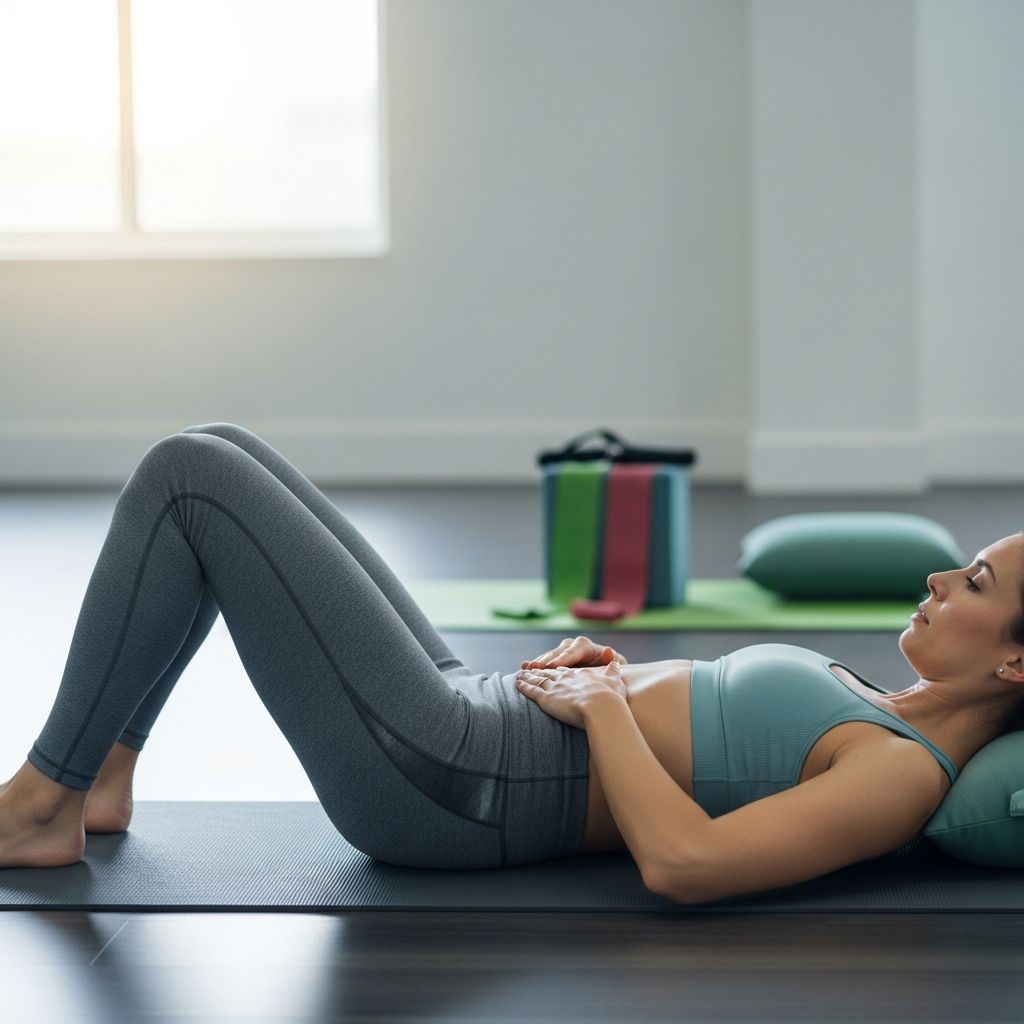
Diastasis recti is a separation of the abdominal muscles that can leave your core feeling weak, unstable, and unfamiliar, especially after pregnancy or major body changes. The right approach is not endless crunches, but gentle, targeted exercises that teach your deep core and pelvic floor to work together again.
What Diastasis Recti Actually Is
Diastasis recti occurs when the two sides of the rectus abdominis (the “six-pack” muscles) drift apart, stretching and thinning the connective tissue called the linea alba. Unlike a true hernia, the tissue is weakened but not torn through, which means organs do not push through a hole in the abdominal wall.
Many people first notice the condition as a ridge or bulge along the midline of the belly that becomes more obvious when they sit up, cough, or strain. The separation itself is not always painful, but it can change how the core functions and how the abdomen looks and feels. [10]
Common Causes and Risk Factors
Any situation that repeatedly or suddenly increases pressure inside the abdomen can contribute to diastasis recti. Pregnancy is the most common cause, but the condition can also affect people who have gained weight quickly, perform heavy lifting with poor technique, or do intense abdominal work without proper support.
- Pregnancy and postpartum changes, especially in multiple or closely spaced pregnancies.
- High body mass index and central weight gain, which continuously load the abdominal wall.
- Heavy lifting, chronic coughing, or straining with constipation, all of which spike core pressure.
How Diastasis Recti Feels Day to Day
For some, diastasis recti is mostly a cosmetic concern, but others notice changes in strength, comfort, and confidence with movement. [10] A reduced ability to generate tension through the midsection can make lifting, rolling out of bed, or carrying children feel surprisingly hard.
- A visible bulge or doming along the midline of the abdomen during effort.
- Lower back discomfort, poor posture, or a sense of instability when standing or walking.
- Difficulty with core-focused exercises and sometimes pelvic floor issues like leakage with coughing or jumping.
Simple At-Home Self-Check
A self-check does not replace a clinical exam, but it can give a rough idea of whether there is separation and how the tissue feels. If anything feels painful, stop and seek guidance from a healthcare professional or pelvic health physical therapist.
- Lie on your back with knees bent, feet flat, and one hand behind your head.
- Place the fingertips of your other hand across the midline of your abdomen at the level of your belly button.
- Gently lift your head and shoulders just off the floor while pressing fingers down into the midline, feeling for a gap between the two muscle edges.
- Check just above and just below the belly button as well.
Many clinicians consider a gap greater than about two centimeters to be significant, but the quality and tension of the tissue under your fingers often matters more than the exact width. A soft, squishy feel under pressure suggests the linea alba is not transmitting force effectively yet, even if the gap is small.
Why Traditional Ab Work Isn’t Always Your Friend
Standard core moves like sit-ups, crunches, and some planks can dramatically raise internal abdominal pressure, which may push the midline outward and worsen doming. [10] If the connective tissue cannot meet and share load effectively, the pressure will seek the path of least resistance—often the very gap you are trying to improve.
- Aggressive sit-ups and jackknives can exaggerate the midline bulge and strain the linea alba. [10]
- Heavy lifting without breath control or bracing can overwhelm the healing tissues.
- High-impact exercise, especially when pelvic floor function is compromised, may compound symptoms.
Core Rehab Principles That Actually Help
Effective diastasis recti rehab focuses on retraining the deep core system: the diaphragm, transverse abdominis, pelvic floor, and multifidus muscles. [10] The goal is not a flat stomach overnight but better tension, support, and coordination through the trunk in everyday life.
- Use the breath: exhale with effort and avoid breath-holding in challenging movements.
- Think “wrap and lift”: gently drawing the lower belly inward while the pelvic floor lifts on the exhale.
- Prioritize quality over quantity; a few good reps with proper alignment beat dozens of rushed ones.
Foundation: Breathing and Alignment
Good rehab starts with how you stand, sit, and breathe, because these factors influence baseline pressure inside the abdomen. Slouched posture and shallow chest breathing reduce the contribution of the diaphragm and can overload the abdominal wall and pelvic floor. [10]
- Stacked posture: ears over shoulders, ribs over pelvis, weight evenly distributed through the feet when standing.
- 360-degree breathing: allowing the ribcage and lower belly to expand on inhale and gently recoil on exhale, rather than shrugging the shoulders.
Beginner-Friendly Activation Exercises
The first phase of exercise for diastasis recti should be slow and controlled, focusing on deep muscle engagement rather than visible “six-pack” work. Many people find it helpful to practice these moves daily in short sessions, building awareness before adding load or complexity.
- Supine deep core breathing: lying on your back, knees bent, one hand on the lower belly, inhale to gently expand, exhale to feel the lower belly draw inward without tensing the upper abs or holding the breath.
- Pelvic floor and transverse connection: on exhale, imagine lifting the pelvic floor upward and zipping the lower abdomen inward, then fully release on inhale.
- Heel slides: from the same position, exhale to engage the deep core, then slowly slide one heel away along the floor and back, keeping the abdomen from doming.
Progressing to Functional Strength
Once you can control doming and maintain tension at rest, it becomes safer to introduce movements that challenge the trunk in more planes. [10] The key is to add difficulty gradually while continuously monitoring the midline for bulging, pulling, or discomfort.
- Dead bug variations: lying on your back with hips and knees at 90 degrees, exhale and extend one leg or arm at a time while keeping the abdomen steady.
- Side-lying leg lifts: strengthening the lateral core and hip muscles, which help support pelvic alignment.
- Elevated plank holds: starting with hands on a wall or countertop to reduce load, then gradually lowering the elevation as control improves. [10]
Sample Weekly Core-Friendly Routine
This example week shows one way to organize gentle, progressive work for someone dealing with mild to moderate diastasis recti, with rest or walking on other days. Always adjust for your personal recovery, and consult a professional if you are unsure whether a move is right for you.
| Day | Focus | Example Exercises |
|---|---|---|
| Day 1 | Activation | Supine deep core breathing, pelvic floor lifts, heel slides (2–3 sets of 8–10 each). |
| Day 3 | Stability | Dead bug arms-only, side-lying leg lifts, gentle elevated plank holds. [10] |
| Day 5 | Function | Chair squats with breath control, supported carries (holding light weight close), step-ups with core engagement. |
Movements to Approach With Caution
Some exercises are not inherently “bad” but may be too demanding for a healing core if performed too early or with poor technique. [10] Watching for doming, pain, or pressure downward into the pelvic floor is crucial when experimenting with more intense activities.
- Full sit-ups, double leg lifts, and advanced Pilates roll-ups before you can control the midline. [10]
- Heavy barbell lifts without proper bracing and breath strategies.
- High-impact running, jumping, or core-intensive boot camps when leakage, bulging, or pain are still present.
When Exercise Alone May Not Be Enough
Many people see meaningful improvement in symptoms with structured exercise programs and lifestyle adjustments over several weeks or months. However, in more severe cases—or when a true hernia is also present—non-surgical care may not fully restore function or appearance.
- Persistent, wide separation with very thin tissue that does not respond to months of guided rehab.
- Coexisting umbilical or ventral hernia, which may require surgical repair.
- Significant distress about abdominal appearance that impacts quality of life, even after conservative care.
In these situations, surgical procedures such as abdominoplasty with muscle repair can be considered, ideally after childbearing is complete. Surgery aims to bring the muscle edges together and reinforce the linea alba, but it carries usual operative risks and still benefits from pre- and post-operative core conditioning.
Diastasis Recti vs. Hernia: Key Differences
People often worry that a visible midline bulge means a dangerous hernia, but diastasis recti and hernias are different problems, even if they can occur together. Understanding the distinction can reduce fear and guide the right kind of help.
| Feature | Diastasis Recti | Abdominal Hernia |
|---|---|---|
| What it is | Separation and thinning of connective tissue between abdominal muscles. | Defect or opening in the abdominal wall allowing tissue or organs to protrude. |
| Typical risk | Usually low risk of acute emergency but may affect function and appearance. | Incarceration or strangulation of tissue is possible and may be urgent. |
| Main treatments | Exercise, lifestyle changes, sometimes surgery for severe or persistent cases. | Often surgical repair, especially when symptomatic or complicated. |
Working With Professionals
A pelvic health or women’s health physical therapist can assess your breathing patterns, core mechanics, and pelvic floor function in ways that a simple self-check cannot. These specialists can individualize exercise progressions, teach safer lifting techniques, and coordinate care if surgery is under consideration.
Your primary care provider, obstetric provider, or surgeon can help rule out hernias and other issues, and make referrals for imaging or specialty care when needed. Collaborative care tends to produce better outcomes than trying to manage complex symptoms alone.
Lifestyle Habits That Support Healing
Exercise is only one part of diastasis recti recovery; everyday habits either reinforce or undermine the work you do in short workouts. Think of each lift, cough, or transition from lying to sitting as a chance to practice good pressure management.
- Roll to your side before sitting up, instead of jackknifing straight forward.
- Exhale and gently engage the deep core before lifting a child, grocery bag, or heavy object.
- Address chronic coughing, constipation, and smoking, which can repeatedly strain the abdominal wall.
FAQs About Diastasis Recti and Exercise
Can diastasis recti heal on its own?
In some people, especially in the early postpartum period, the abdominal wall gradually regains tension and the separation narrows without formal treatment. When symptoms persist or the gap feels soft and unsupported months later, directed exercise and professional guidance are more likely to help than simply waiting.
Is it ever too late to work on diastasis recti?
There is no strict time limit for improving core function, even years after pregnancy or weight changes. While structural changes in the tissue may not fully reverse, targeted training can still improve strength, stability, and symptom control long after the separation first appeared. [10]
Will I always see a bulge?
Some people regain near-complete tension and see the midline flatten at rest and during effort, while others notice a small, harmless contour that remains. Cosmetic outcomes depend on factors like collagen quality, skin elasticity, genetics, and the severity and duration of the separation.
Can men or people who haven’t been pregnant get diastasis recti?
Yes, abdominal separation is not exclusive to pregnancy and can appear in people of any sex or gender when the abdominal wall is exposed to sustained or repeated pressure. Central weight gain, heavy lifting, and certain training habits can all contribute in non-pregnant individuals.
Is surgery the only way to “fix” it?
For many, non-surgical care significantly reduces bulging, improves function, and resolves pain, making surgery unnecessary. Surgery is usually reserved for severe, persistent cases, often with hernias or major functional impairment, and should follow a careful discussion of risks, benefits, and timing.
Moving Forward With Confidence
Diastasis recti does not mean your body is broken, but it does mean your core needs thoughtful attention rather than punishment. With informed exercise, better pressure management, and, when appropriate, help from skilled professionals, most people can regain a strong, capable center that supports both daily life and the activities they love.