Diaper rash is one of the most common skin problems babies and toddlers face, but it can still feel upsetting when a once-smooth bottom becomes red, irritated, and tender. The good news is that most rashes are mild, short-lived, and respond well to simple home care when parents know what to do.
This guide explains why diaper rash happens, how to tell what kind your child might have, the most effective ways to treat it, and smart habits that can help keep it from coming back.
What Exactly Is Diaper Rash?
Diaper rash, sometimes called diaper dermatitis, is irritation and inflammation of the skin in any area covered by a diaper, including the buttocks, genitals, lower abdomen, and upper thighs. The skin may look red, shiny, bumpy, or chapped, and your baby may act more fussy than usual when the area is touched or cleaned.
Although diaper rash is uncomfortable, it is rarely dangerous. The main goals are to relieve discomfort, protect the skin while it heals, and prevent the irritation from turning into a more serious infection.
Why Diaper Rash Happens
Most diaper rashes have more than one cause. Understanding the main triggers can help you decide what changes to make in your baby’s routine.
- Moisture and friction: Skin that stays damp from urine or stool softens and becomes more vulnerable to rubbing from the diaper, leading to chafing and breakdown.
- Irritating substances: Enzymes in stool and chemicals in urine can irritate the outer layer of the skin when they sit against it for too long.
- Heat and lack of air: The diaper area is warm and covered, which can trap sweat and decrease airflow, making it easier for irritation and germs to flourish.
- New products: Some babies react to fragrances, preservatives, or dyes in wipes, diapers, detergents, or creams.
- Infections: If the skin barrier is damaged, bacteria or yeast can overgrow, causing a more severe or persistent rash.
Common Types of Diaper Rash
Not all rashes in the diaper area are the same. Knowing the differences can guide you toward the right treatment and help you decide whether to call your child’s healthcare provider.
| Type | What It Looks Like | Key Clues |
|---|---|---|
| Simple irritation rash | Red, slightly swollen patches on areas that touch the diaper the most | Improves quickly with frequent changes and barrier cream |
| Yeast (fungal) rash | Bright red, may be shiny, often with small red bumps or “satellite” spots | Often appears in folds and creases; may not improve with regular cream alone |
| Bacterial rash | May have yellow crusts, oozing, or painful-looking sores | Can spread quickly; usually needs medical treatment |
| Allergic or contact rash | Red or bumpy areas where a specific product touches the skin | Often appears shortly after switching wipes, diapers, or detergents |
Signs and Symptoms to Watch For
Most parents first notice a change in their baby’s mood or behavior during diaper changes before they realize how irritated the skin has become. Paying attention to early signs can help you act before the rash worsens.
- Redness or pink patches on the buttocks, genitals, or inner thighs.
- Skin that appears shiny, puffy, or feels warm to the touch.
- Dry, flaky, or peeling skin in the diaper area.
- Small bumps, spots, or areas that look chapped.
- Baby crying, squirming, or arching away when the diaper area is wiped.
Everyday Habits That Increase Risk
Some situations make diaper rash more likely to develop or harder to clear. Identifying patterns can help you adjust your routine and reduce flare-ups.
- Less frequent diaper changes, especially overnight or during car trips.
- Frequent loose stools or diarrhea, which exposes the skin to more irritating enzymes.
- Recent colds, stomach bugs, or antibiotics that change the normal balance of skin germs.
- Starting new foods that change the acidity or frequency of stools.
- Tight diapers or clothing that rub and trap heat.
Step-by-Step Home Care for Mild Diaper Rash
Most mild rashes improve within a few days when you focus on three core steps: keeping the area clean, keeping it as dry as possible, and protecting the skin with a barrier.
1. Change Diapers More Often
- Check your baby’s diaper at least every two hours during the day and promptly after bowel movements.
- Consider one extra change at night if rashes are a frequent problem and your baby tolerates the disruption.
2. Clean the Area Gently
- Use warm water and soft cotton pads or a clean cloth when possible, patting rather than scrubbing.
- If you use wipes, choose unscented, alcohol-free options designed for sensitive skin.
- Avoid vigorous rubbing; gently blot moisture away instead.
3. Let the Skin Air Out
- Give your baby short diaper-free periods on a waterproof pad or towel several times a day.
- Loosen diapers slightly so air can circulate if full diaper-free time is not practical.
4. Use a Protective Barrier
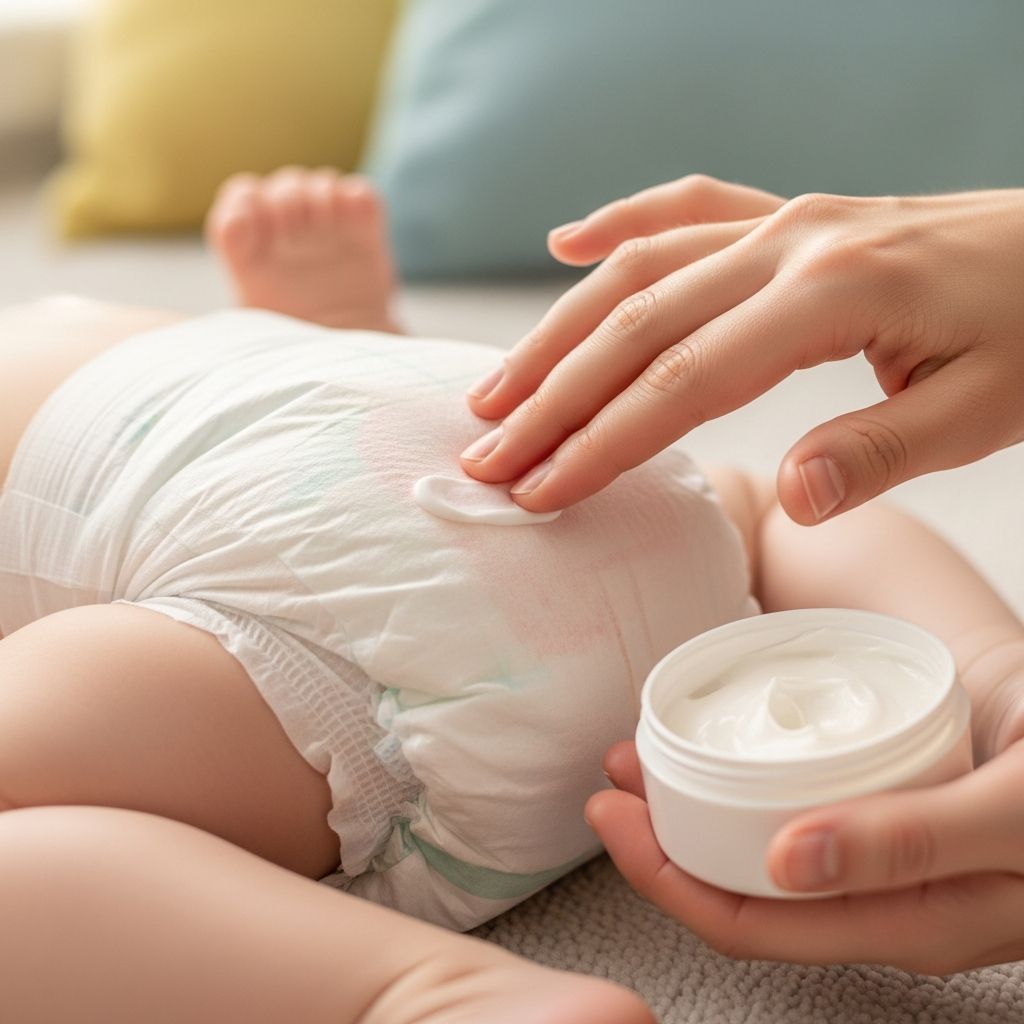
A thick barrier cream or ointment helps shield the skin from moisture and irritants while it heals. Applying it consistently is one of the most effective home treatments for diaper rash.
- Choose a fragrance-free cream or ointment with ingredients such as zinc oxide or petrolatum.
- Apply a generous layer with each diaper change, especially at bedtime and after bowel movements.
- You do not need to scrub off every trace at each change; gently wipe away only what is soiled and add a fresh layer.
When the Rash Might Be Yeast-Related
Sometimes a fungus called Candida takes advantage of already irritated skin and causes a yeast diaper rash. These rashes can be stubborn and often appear after a bout of diarrhea or a course of antibiotics.
Clues that yeast may be involved include an intense, almost beefy-red color, involvement of skin folds, and small separate spots around the edges of the main rash. These spots can look like scattered red dots or tiny pimples.
When Bacteria Could Be the Problem
If the skin is broken, raw, or has been irritated for several days, bacteria can enter and cause deeper infection. This type of rash often looks more alarming and painful than a simple irritation rash.
- Yellow crusts, honey-colored scabs, or areas that ooze fluid.
- Blisters or sores that seem to spread rather than improve.
- Skin that feels hot and very tender, along with fever or unusual fussiness.
Any of these signs should prompt a call to your child’s healthcare provider, as prescription creams or antibiotics may be needed.
Choosing Diapers, Wipes, and Creams Wisely
The products you put on your baby’s skin matter, especially when the diaper area is already sensitive. While no single brand is best for every child, a few principles can help you make good choices.
- Diapers: Whether cloth or disposable, aim for options that fit well, absorb quickly, and are not overly tight around the legs or waist.
- Wipes: Look for fragrance-free, alcohol-free wipes labeled for sensitive skin; if irritation continues, switch to water and soft cloths for a while.
- Barrier products: Thicker ointments tend to protect longer, especially overnight; creams may feel lighter and be easier to spread for frequent daytime changes.
- Extras: Powders and strong fragrances are generally not necessary and can sometimes worsen irritation if they clump or trap moisture.
Simple Prevention Strategies That Work
While no strategy can guarantee your baby will never get a rash, consistent preventive habits can greatly reduce both how often rashes occur and how severe they become.
- Change diapers promptly after bowel movements and regularly during the day.
- Use a thin layer of barrier ointment as part of the normal routine if your baby tends to be rash-prone.
- Allow diaper-free time daily to let the skin breathe.
- Avoid experimenting with many scented products at once so you can spot reactions quickly.
- Monitor skin closely during illnesses, teething, and dietary changes when stools may be more frequent or acidic.
When to Call the Doctor
Most diaper rashes can be safely treated at home, but sometimes professional guidance is important. Contact your child’s healthcare provider if any of the following occur:
- The rash does not improve after two to three days of careful home treatment.
- You see blisters, open sores, pus, or yellow crusting.
- The redness spreads beyond the diaper area or you suspect infection.
- Your baby has a fever, extreme fussiness, or seems unwell in addition to the rash.
- You are unsure what type of rash it is or what to apply safely.
Frequently Asked Questions About Diaper Rash
How long should it take for a diaper rash to clear?
Many mild rashes begin to look better within 24 hours of more frequent changes, gentle cleaning, and consistent barrier cream. Completely normal-looking skin may take several days, and more stubborn rashes with yeast or deeper irritation can take a week or longer, depending on the treatment.
Is diaper rash a sign of poor hygiene?
Diaper rash is extremely common and can happen even when parents are very attentive. It reflects how delicate baby skin is and how challenging it is to keep it perfectly dry. Good hygiene and quick responses to early redness are helpful, but the occasional rash is almost inevitable during the diaper years.
Can my baby go to daycare with a diaper rash?
Most diaper rashes are not contagious, so children can usually attend daycare as long as they seem comfortable and do not have signs of a serious infection or fever. It is helpful to let caregivers know about the rash, which cream you are using, and how often you would like diapers changed while your baby is there.
Do cloth diapers or disposable diapers cause fewer rashes?
Both cloth and disposable diapers can work well when changed often and used with good skin-care habits. Some families find that high-absorbency disposable diapers keep the skin drier, while others prefer the breathability and customization of cloth. If rashes become frequent, it may be worth trying a different type or brand to see what suits your baby best.
Are home remedies like cornstarch or baking soda baths safe?
Mild home measures can be helpful when used carefully and with guidance from a healthcare professional. Plain warm-water baths can soothe sore skin, and some families use small amounts of certain household items when advised by a clinician. However, powders and untested mixtures can sometimes irritate the skin or be inhaled, so always check with your child’s doctor before trying remedies beyond simple baths, air time, and barrier creams.
Final Thoughts for Parents
Diaper rash can be frustrating and even guilt-inducing, but it is a normal part of caring for babies and young children. With gentle cleaning, frequent diaper changes, thoughtful product choices, and lots of patience, most rashes fade quickly and leave no lasting problems. Trust your instincts, keep a close eye on your baby’s skin, and reach out to a healthcare professional whenever the rash seems unusually severe, painful, or persistent.