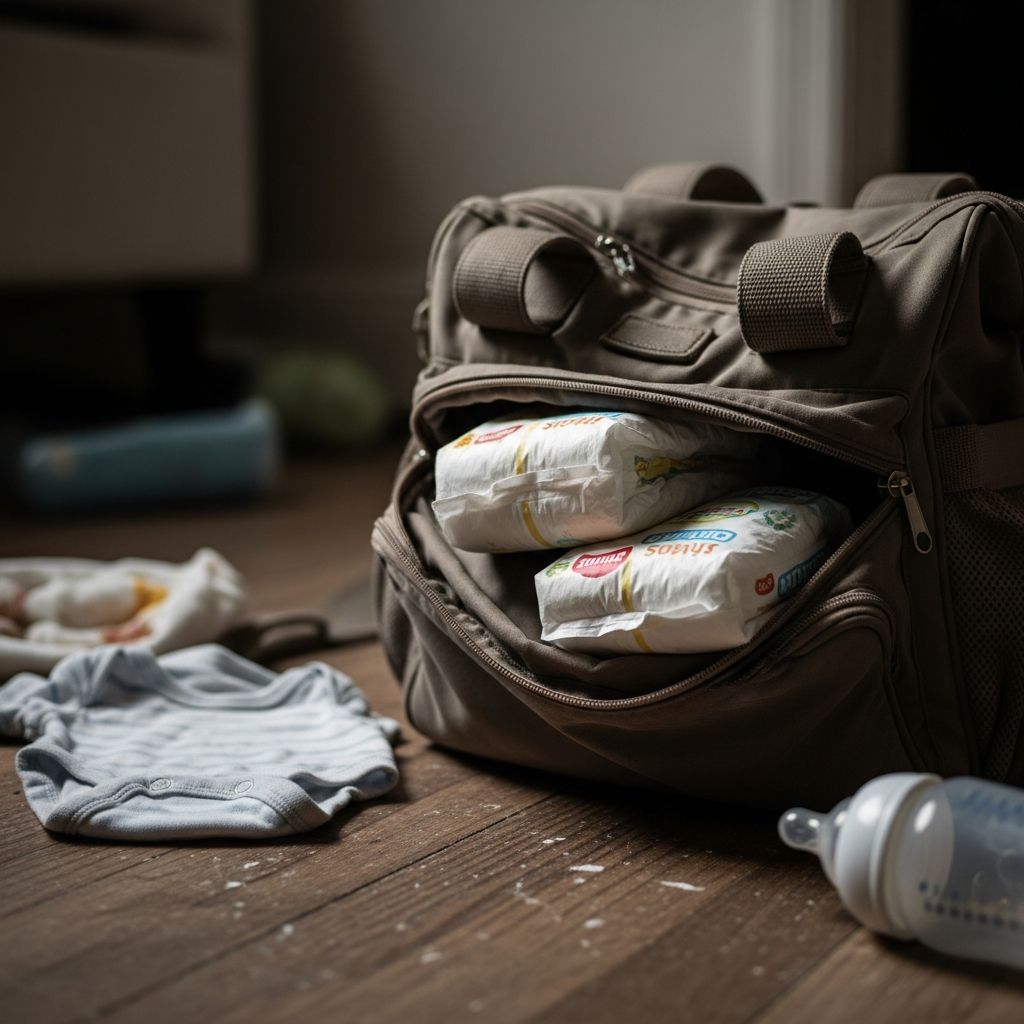
A staggering one in three American families with young children grapples with diaper need, the inability to afford sufficient diapers to keep infants and toddlers clean, dry, and healthy. This widespread issue, affecting nearly 8 million children under age 3, imposes severe financial, health, and emotional burdens, exacerbated by the absence of federal support programs.
The Hidden Scale of Diaper Insecurity
Diaper insecurity touches households across income levels but hits hardest those near or below the poverty line. Surveys reveal that 33% of US families experience this challenge, defined by running out of diapers frequently, struggling to pay for them, or lacking enough to maintain hygiene. The Urban Institute estimates nearly half of families with children aged 3 and younger face this problem, translating to a national gap requiring 4.8 billion diapers annually for low-income households below 300% of the federal poverty level.
Costs add up quickly: diapering one child averages $18 weekly or $936 yearly, though some estimates peg monthly expenses at $70-$100. Low-income families spend disproportionately—up to 14% of their income on diapers—twice the share of higher-income households, due to limited access to bulk discounts, transportation, or online delivery.
- Prevalence by state: Varies widely, from 38% of young children in Vermont to 59% in Texas needing extra support.
- Household impact: 75% of affected parents feel embarrassed, and 80% hesitate to discuss their struggles.
Health Risks for Children and Parents
Prolonged time in soiled diapers triggers immediate and lasting health issues. Babies risk severe rashes, urinary tract infections, and skin breakdowns, while parents face heightened stress leading to depressive symptoms. A 2013 Pediatrics study found 30% of mothers reported diaper need, linking it to emotional strain that disrupts parent-child bonding—critical for brain development, learning, and social skills.
Without secure attachments in early life, children may suffer lifelong developmental setbacks. Parents reusing diapers or stretching changes exacerbate these risks, creating a cycle of physical discomfort and psychological distress.
| Consequence | Impact on Child | Impact on Parent |
|---|---|---|
| Rashes & Infections | Skin irritation, UTIs | Guilt, anxiety |
| Missed Bonding | Developmental delays | Depression, stress |
| Hygiene Issues | Chronic health problems | Emotional exhaustion |
Economic Barriers and Daily Struggles
Diapers’ evolution into absorbent, convenient disposables has driven prices up to about $1,000 per child annually, outpacing wages for many. Low-income families lack washing machines for cloth alternatives, face daycare policies requiring disposables, and can’t access bulk buys without cars, credit, or internet.
This forces tough choices: diapers versus food, rent, or utilities. One in four affected caregivers misses work or school due to childcare barriers, averaging 5.1 days monthly—hindering employment and education. Single parents, in particular, cycle through job loss without reliable care.
Low-income families pay 14% of income on diapers, while wealthier ones pay half that, highlighting stark inequities in access to modern conveniences.
Why Public Assistance Falls Short
No federal program covers diapers. SNAP (food stamps), WIC, and TANF exclude them, leaving families to shoulder full costs despite other aid. State-level efforts vary, but nationwide gaps persist. Past proposals, like a $10 million pilot in presidential budgets, stalled in Congress.
Cloth diapers offer savings but impractical for many: laundromats ban them, homes lack machines, and daycares reject them. Subscription services bypass some hurdles but require tech and delivery access unavailable to all.
Real Stories from Affected Families
Consider Megan Ohlinger, whose high-risk pregnancy compounded financial woes, mirroring countless tales of rationing diapers. Lalandria Goolsby in Florida foresaw the burden prenatally, as rising living costs clashed with unchanging benefits. These narratives underscore a “diaper divide”: technology aids the affluent while trapping others in scarcity.
Parents report shame in stretching supplies, fearing judgment, yet silence perpetuates the crisis.
Community and Policy Responses
Organizations like the National Diaper Bank Network distribute essentials, but supply lags demand. Advocacy pushes for diaper inclusion in aid programs, bulk purchase incentives, and workplace subsidies. States testing diaper allowances show promise, reducing missed workdays.
- Expand TANF to include diapers.
- Fund community banks with federal grants.
- Offer tax credits for families.
- Partner with employers for stipends.
Long-Term Solutions for Family Stability
Addressing diaper need demands multifaceted action: policy reform, corporate discounts, and awareness campaigns. Integrating diapers into WIC or SNAP could alleviate immediate pain, while investments in affordable childcare break poverty cycles.
Economists note that easing this burden boosts workforce participation, yielding societal returns. For instance, fewer missed days mean stable incomes and healthier kids.
Frequently Asked Questions (FAQs)
What is diaper need?
Diaper need occurs when families can’t afford enough diapers to keep children clean and healthy, affecting 1 in 3 US households with young kids.
How much do diapers cost annually?
Averaging $936 per child, or $70-$100 monthly, with low-income families spending up to 14% of income.
Can cloth diapers solve the problem?
Often not, due to laundry access issues, daycare rules, and cleaning challenges.
Why no government help for diapers?
Federal programs like SNAP and WIC exclude them; reform efforts continue.
What are the child health effects?
Rashes, infections, and bonding disruptions with lifelong developmental risks.
Path Forward: Breaking the Diaper Divide
Diaper insecurity is a solvable public health crisis. By bridging policy gaps and amplifying support networks, the US can safeguard vulnerable families, fostering healthier starts for millions of children. Urgent action promises economic and emotional relief.
References
- 1 in 3 U.S. families have trouble affording diapers, survey finds — CBS News. 2023-10-01. https://www.cbsnews.com/news/1-in-3-families-trouble-affording-diapers-survey/
- The bottom line: One in three families can’t afford diapers. Why are they so expensive? — Center for Health Journalism. 2023-09-15. https://centerforhealthjournalism.org/our-work/reporting/bottom-line-one-three-families-cant-afford-diapers-why-are-they-so-expensive
- Nearly 8 Million US Children Live in Families That Struggle to Afford Enough Diapers — Urban Institute. 2024-01-10. https://www.urban.org/research/publication/nearly-8-million-us-children-live-families-struggle-afford-enough-diapers
- Fact of the Week: 1 in 3 Moms Struggle to Pay for Diapers — Community Health Network. 2023-11-05. https://www.chn.org/voices/fact-week-1-3-moms-struggle-pay-diapers/
- Diaper need in America — National Diaper Bank Network. 2025-03-01. https://nationaldiaperbanknetwork.org/the-need/
- The Diaper Divide — Obama White House Archives. 2016-03-10. https://obamawhitehouse.archives.gov/blog/2016/03/10/diaper-divide