Leaving the house with a baby can feel like planning a mini expedition, but the right diaper bag turns chaos into something close to calm. This guide walks you through what to pack, how to organize it, and how to adjust your bag as your baby grows—without overstuffing or forgetting the truly important things.
Why Your Diaper Bag Matters More Than You Think
A diaper bag is less about the bag itself and more about the system you build around it. Done well, it becomes a mobile command center that keeps your baby comfortable and you less stressed when life inevitably gets messy.
Instead of cramming in “everything just in case,” the goal is to carry a focused set of items that cover the most common situations: diaper changes, spills, hunger, comfort, and small emergencies.
Choosing the Right Diaper Bag Style
Before you think about what goes inside, it helps to choose a bag style that fits your daily life, body, and parenting setup. The best bag is the one you will actually carry and keep stocked.
Common Diaper Bag Types
- Backpack style: Keeps your hands free, distributes weight evenly, and is ideal if you babywear or chase older siblings.
- Tote or shoulder bag: Easy to access on the go and can double as a work or personal bag, but may strain one shoulder over long outings.
- Messenger or crossbody: Good for quick trips and convenient access, though it can swing around when you bend or pick up baby.
- Convertible bags: Switch between backpack and tote straps so different caregivers can wear it their preferred way.
Features That Actually Make a Difference
- Multiple compartments (including at least one zippered pocket for valuables).
- Easy-to-wipe interior and exterior fabrics.
- Insulated pocket or room for a small cooler sleeve, if using bottles.
- Stroller straps or clips for longer walks or errands.
- Lightweight when empty so it doesn’t become unmanageable when full.
The Core Diaper Bag Essentials (Every Age)
Regardless of whether you have a newborn or a toddler, certain categories rarely change. Think of these as your “never leave home without it” list.
| Category | Items to Include | Suggested Quantity |
|---|---|---|
| Diapering | Diapers, wipes, diaper cream, disposable or reusable bags, portable changing pad | 1 diaper per 2–3 hours out + 1–2 extra; 1 travel wipes pack |
| Clothing | Extra outfit for baby, spare socks, optional extra shirt for caregiver | 1–2 outfits depending on outing length |
| Feeding | Bottles, formula or breast milk, snacks, bib, burp cloth, water for caregiver | Enough for 1–2 feeds or snack times |
| Comfort | Pacifier, small toy, light blanket | 1–3 small items |
| Hygiene & Safety | Hand sanitizer, tissues, mini first-aid basics, sanitizer wipes | Travel sizes |
| Caregiver Essentials | Wallet, keys, phone, lip balm, personal medication | 1 set |
Diapering: Building a Stress-Free Change Kit
Most diaper bag emergencies start with an overfull diaper or a messy blowout. A well-planned diapering section means you can handle a change in any restroom—or backseat—without panic.
What to Pack for Diaper Changes
- Diapers (plan one per 2–3 hours you will be out, plus one or two extras).
- Travel pack of baby wipes for diapers, sticky hands, and mystery spills.
- Diaper cream or barrier ointment in a small tube.
- Portable, foldable changing pad (many diaper bags include one, but any wipeable mat works).
- Disposable diaper bags or a reusable wet bag to contain dirty diapers or soiled clothes.
Organization Tip: The “Grab-and-Go” Change Pouch
Consider building a small diapering pouch that contains everything needed for a single change. This way you can grab just that pouch and baby instead of lugging the whole bag into tight restrooms or friends’ bedrooms.
Refill this pouch as soon as you get home so it is always ready for the next outing.
Backup Clothing: Planning for Spit-Ups and Spills
Babies have a special talent for needing a wardrobe change right when you are far from home. A simple clothing plan can save you from having to buy an emergency outfit at the nearest store.
- One full extra outfit (onesie or bodysuit, pants, and socks).
- Season-appropriate layers (sweater, light jacket, or sunhat as needed).
- Optional spare shirt for you in case of spit-up or leaks.
Pack the backup outfit in its own resealable bag; when a blowout happens, clean clothes come out of the bag and the dirty ones go straight in.
Feeding on the Go: Bottle, Breast, or Snacks
What you pack for feeding will depend on your baby’s age and how they eat, but the principle is the same: prepare for at least one more feeding than you expect to need.
If You Are Bottle-Feeding
- Pre-measured formula or pumped breast milk in clearly labeled containers.
- Clean bottles with caps or travel lids.
- Small insulated sleeve or cooler pack, if needed.
If You Are Breastfeeding
- Nursing cover if it makes you more comfortable (optional).
- Reusable or disposable nursing pads in case of leaks.
- Water bottle for staying hydrated.
For Older Babies and Toddlers
- Age-appropriate snacks such as puffs, crackers, or cut fruit in a leak-resistant container.
- Silicone bib or wipe-clean bib that folds small.
- Soft-spout cup or straw cup if your child uses one.
Comfort Items: Soothing Away Meltdowns
Even a short errand can feel endless if your baby is overtired or overstimulated. A few well-chosen comfort items can help your child settle in the car, stroller, or waiting room.
- One or two pacifiers in a case, if your child uses them.
- A small, favorite toy or rattle that can be easily rinsed or wiped.
- A soft cloth or lovey that your baby associates with sleep or calm.
- A light blanket that doubles as a nursing cover, stroller cover, or play mat.
Hygiene, Health, and “Just in Case” Supplies
Minor mishaps and messes are almost guaranteed when you are out with little ones. Having a tiny hygiene and first-aid section prevents small issues from derailing your day.
Everyday Clean-Up
- Travel-size hand sanitizer for adults and older kids.
- Tissues or soft pocket-pack wipes.
- Sanitizing wipes for high-touch surfaces like restaurant high chairs.
Mini First-Aid Basics
- A few bandages in various sizes.
- Small tube or packet of baby-safe ointment (as recommended by your pediatrician).
- Digital thermometer stored in a protective case, if you are often out for long stretches.
- Any prescribed medications your child may need, carried according to your doctor’s and pharmacist’s instructions.
Seasonal and Weather-Specific Add-Ons
Your diaper bag will naturally change with the seasons and your climate. Review your bag every few weeks to swap out items that no longer match the weather.
Warm Weather Extras
- Sunhat with a brim that covers face and neck.
- Sunscreen approved for your baby’s age (ask your pediatrician for guidance).
- Light, breathable blanket or muslin for shade.
- Extra water for adults and older children.
Cold or Rainy Weather Extras
- Warm hat and mittens that stay on securely.
- Layering piece like a fleece or sweater for baby.
- Stroller rain cover or small umbrella.
- Travel-size baby-safe moisturizing balm for chapped cheeks or lips, as recommended by your pediatrician.
Age-Based Diaper Bag Checklists
What you carry for a sleepy newborn looks different from what you need for a curious toddler who wants snacks and entertainment. Use these age-based lists as a starting point and adjust to your child’s personality.
Newborn to 3 Months
- Diapers, wipes, cream, changing pad, and wet bag.
- Two extra outfits (newborns are champions of outfit changes).
- Burp cloths for spit-ups.
- Feeding supplies: bottles and milk or nursing support items.
- Light blanket, pacifier, and a simple soft toy or rattle.
3 to 9 Months
- Standard diapering kit with slightly fewer backup outfits (usually one or two).
- Feeding items plus starter snacks if recommended by your pediatrician.
- Teething toy or ring if your baby is chewing on everything.
- A couple of more engaging toys or crinkle books.
9 Months to Toddler
- Fewer diapers, but more emphasis on snacks, sippy cup, and bibs.
- Simple, easy-on clothing in case of spills or playground dust.
- Small books, cars, or figurines for restaurant or waiting room entertainment.
- Basic first-aid and hygiene items, especially wipes and sanitizer.
Caregiver Essentials: Don’t Forget Yourself
It is easy to over-prepare for the baby and under-prepare for yourself. Yet your comfort directly affects how smoothly any outing goes.
- Wallet, keys, phone, and any access cards you need.
- Water bottle and a small snack, especially if you are breastfeeding or pumping.
- Personal medications such as allergy tablets or pain relievers, as advised by your healthcare provider.
- Hair tie, lip balm, and travel-size hand cream if those small comforts matter to you.
How to Organize Your Diaper Bag for Real Life
A diaper bag works best when you can reach for something without digging. Simple organization keeps you from feeling like you are rummaging through a laundry basket every time your baby cries.
Simple Organization Strategies
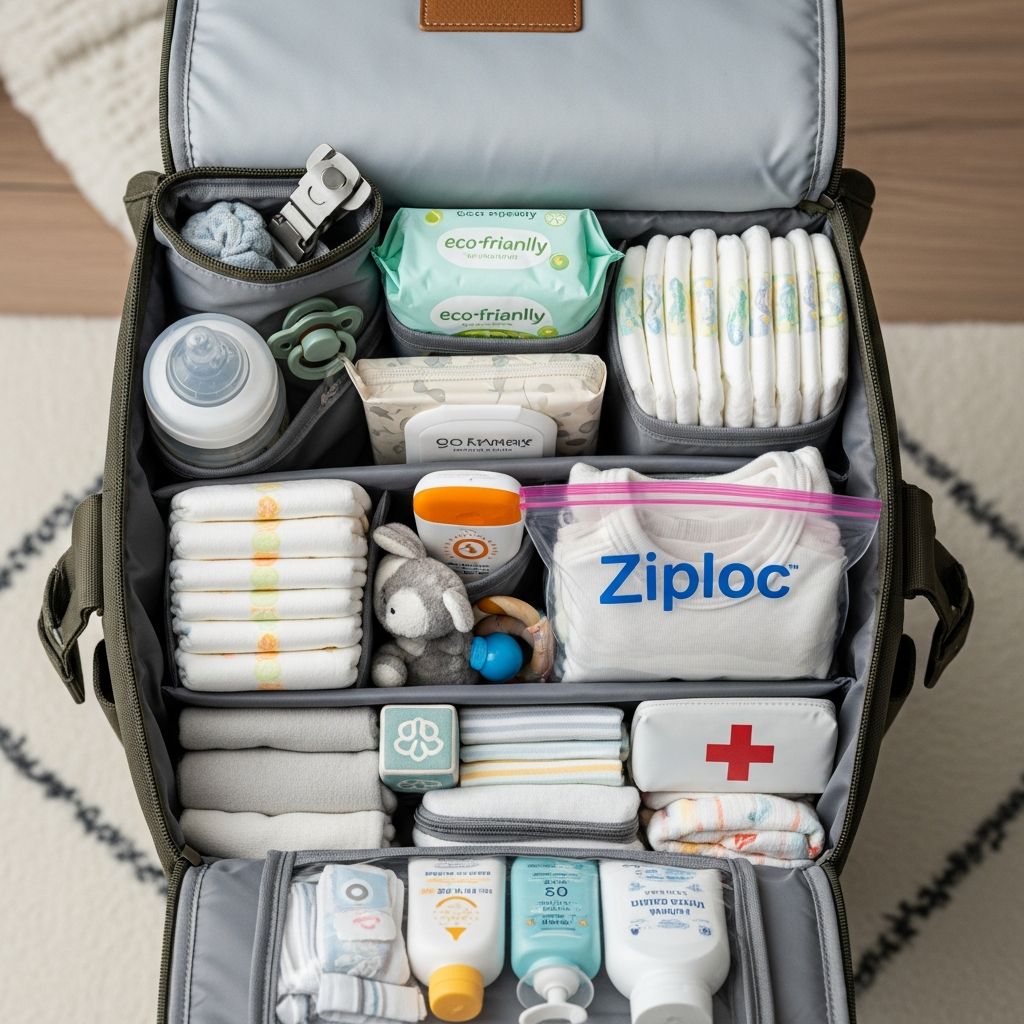
- Use small pouches by category (diapering, feeding, clothing, first-aid) so everything has a home.
- Assign specific pockets for personal items like wallet, keys, and phone.
- Keep frequently used items—wipes, pacifier, burp cloth—in outer or top pockets for fastest access.
The Five-Minute Reset Routine
At the end of each day or when you walk in the door, do a quick reset. Toss any trash, restock diapers and wipes, refill snacks, and swap out dirty clothes.
Building this into your routine means your diaper bag is almost always ready for the next outing, even if plans change unexpectedly.
Common Diaper Bag Mistakes to Avoid
Parents often learn through trial and error, but a few common pitfalls come up again and again. Steering around them can make outings much smoother.
- Overpacking: Carrying everything “just in case” turns your bag into a burden; focus on problems you are likely to face, not far-fetched scenarios.
- Underpacking essentials: Skipping backup clothes or extra diapers is a risk you will almost always regret at the worst time.
- Ignoring weight and comfort: A heavy, awkward bag makes errands exhausting and harder on your back and shoulders.
- Never rotating items: Outgrown clothes, expired snacks, and too-small diapers can quietly accumulate if you never edit your bag.
Sample Packing Lists for Different Outings
While your core essentials stay similar, you can trim or tweak your bag depending on whether you are heading to the park, the doctor, or a full-day event.
Quick Errand (Under 2 Hours)
- 2–3 diapers and a slim wipes pack.
- Portable changing pad and one disposable bag.
- One backup outfit and a burp cloth.
- One bottle or snack, depending on age.
- Pacifier and one small toy.
- Wallet, keys, phone, and hand sanitizer.
Half-Day Outing
- 4–6 diapers and full travel wipes.
- Two outfits and weather-appropriate layers.
- Enough bottles or snacks for two feedings.
- Comfort items (lovey, blanket, toys, books).
- Expanded first-aid basics and surface wipes.
Full-Day Trip or Travel
- Plenty of diapers (estimate generously) and at least one full wipes pack.
- Multiple outfits and a designated bag for dirty laundry.
- Portable changing pad and extra wet bags.
- Meals, snacks, and hydration for baby and caregivers.
- Additional entertainment: books, small toys, or a downloaded playlist of soothing sounds.
- Any medications or comfort items your child depends on at home.
SEO-Friendly FAQs About Diaper Bags
How many diapers should I keep in my diaper bag?
A practical rule is to pack one diaper for every two to three hours you expect to be away from home, plus one or two extra for unexpected delays. Adjust up or down based on how often your baby typically needs changing and the length of your outing.
What is the minimum I can pack for a short trip?
For a brief errand, the bare minimum is a small change kit (diapers, wipes, cream, and a changing pad), one backup outfit, a feeding option, and your personal essentials. Anything beyond that is helpful but not strictly necessary for outings under an hour or two.
Do I really need a special diaper bag, or can I use any bag?
You can absolutely use any sturdy bag you already own as long as it is comfortable to carry and has enough space for your essentials. Many parents prefer backpack-style daypacks, totes, or messenger bags and then add their own pouches and organizers.
How often should I clean and restock my diaper bag?
A quick reset after each outing keeps your bag in good shape: remove trash, replace used diapers or snacks, and swap out dirty clothes. Once a month, do a deeper clean, checking for outgrown items, expired products, and anything that no longer matches the current season.
What should go in a diaper bag first-aid kit?
A simple diaper bag first-aid kit might include assorted bandages, baby-safe ointment, tissues, and any medications recommended by your child’s healthcare provider. Keep everything in a labeled, easy-to-find pouch so you are not digging around in an emergency.