Bridging Two Worlds: The Multicultural Origins of Día de los Muertos
Día de los Muertos, translated as “Day of the Dead,” stands as one of the most profound and visually stunning celebrations in the Western Hemisphere. This sacred observance reflects centuries of cultural convergence, where Indigenous Aztec rituals intertwined with Spanish Catholic traditions to create a unique festival that honors the departed while celebrating the continuity of life itself. Rather than being a mournful occasion, this holiday embodies a philosophy that death is not an ending but a transformation—a moment when the boundaries between the living and the deceased become temporarily permeable.
The roots of this celebration stretch back more than five hundred years to the time when Spanish conquistadors arrived in Mesoamerica. Before European contact, the Aztec civilization had maintained elaborate ceremonies dedicated to death and remembrance for generations. When the Spanish brought Catholicism to the region, they encountered indigenous populations already engaged in sophisticated rituals honoring their ancestors. Rather than completely suppressing these traditions, Spanish colonial authorities chose to synchronize Aztec death rituals with Catholic holy days, particularly All Saints’ Day and All Souls’ Day. This fusion created something entirely new—a celebration that honors both indigenous cosmology and Catholic theology.
Ancient Aztec Roots: Understanding Pre-Colonial Death Ceremonies
Long before November 1st and 2nd became recognized commemorative dates, the Aztec people structured their entire calendar around honoring the dead. The Aztec ritual calendar designated two twenty-day months specifically for celebrating the deceased: one honoring children and another honoring adults. These ceremonies reflected a fundamentally different worldview than that held by many Western cultures—one in which the dead remained active participants in the community rather than disappearing into an abstract afterlife.
Central to Aztec death philosophy was the goddess Mictēcacihuātl, known as the Lady of the Dead and Queen of Mictlān, the underworld realm. The Aztecs believed this powerful deity maintained sovereignty over the bones of deceased individuals and ensured their proper care and transformation. According to Aztec cosmology, bones held extraordinary spiritual significance—they were not merely physical remnants but vessels containing the essence necessary for creating new life. Once yearly, Mictēcacihuātl would ascend from the underworld to inspect how her charges were being honored by their living families.
The Aztec celebration known as Quecholli occurred between October 20 and November 8, honoring Mixcóatl, the god of war. This festival included placing altars laden with tamales near burial grounds of fallen warriors, believed to sustain them during their spiritual journey. Such practices demonstrate that ancient Mesoamericans understood death not as a final conclusion but as a transition requiring ceremonial support and remembrance from those left behind.
The Spanish Influence: Creating Religious Syncretism
When Spanish missionaries arrived in the Americas in the sixteenth century, they encountered civilizations with deeply embedded death rituals that they recognized as incompatible with strict Catholic doctrine. However, European Catholicism itself had adopted pagan elements into its practice over preceding centuries. The Spanish observed that All Saints’ Day and All Souls’ Day, celebrated on November 1st and 2nd respectively, coincided roughly with the timing of indigenous death ceremonies.
Rather than completely eradicating Aztec practices, colonial authorities strategically blended the two traditions. In Spain, families would visit cemeteries, decorate graves with flowers and candles, and bring offerings of food to honor their deceased relatives. These Catholic customs aligned remarkably well with Aztec veneration practices. The Spanish recognized this compatibility and facilitated a gradual merging of traditions, allowing indigenous populations to maintain cultural continuity while ostensibly practicing Catholic faith.
This syncretism proved particularly resilient in rural and less affluent communities where indigenous and mestizo populations remained concentrated. As Mexico modernized in subsequent centuries, these marginalized regions preserved the blended traditions more faithfully than urbanized areas, resulting in a celebration that retained authentic indigenous elements alongside adopted Catholic features.
Sacred Symbols and Their Layered Meanings
The symbols associated with Día de los Muertos illustrate the sophisticated blending of these two religious systems. Many objects carried fundamentally different meanings across cultural contexts, yet both Aztec and Spanish peoples could incorporate them into their respective spiritual frameworks.
Skulls and Skeletal Imagery
For the Aztec civilization, skulls and bones represented reservoirs of profound spiritual power. The practice of displaying skulls on sacred racks symbolized sacrifice and transformation. When Spanish priests encountered these representations, they recontextualized them through a Catholic lens, converting Aztec stone skulls into memento mori—reminders of human mortality and the need for spiritual preparation. This reframing allowed both cultures to engage with the same powerful imagery while maintaining their distinct theological interpretations.
Marigolds and Floral Tributes
The bright yellow cempoalxochitl flowers, commonly known as marigolds, feature prominently in contemporary Día de los Muertos celebrations. According to legend, a young woman so devastated by her lover’s death in warfare prayed to the sun with such intensity that the celestial body took pity upon her suffering. The sun transformed her deceased lover into the golden flower associated with the holiday and converted her into a hummingbird, allowing them to remain eternally connected. These mythological origins demonstrate how Mesoamerican cultures wove natural elements into their spiritual narratives.
Pan de Muerto and Sweet Offerings
Pan de muerto, a distinctly Mexican bread often shaped to resemble bones, combines indigenous agricultural traditions with Spanish baking practices. Similarly, candy skulls (calaveras) emerged as a blended creation, adapting Spanish marzipan techniques to Aztec symbolic preferences. These edible representations of death transform a sobering subject into something approachable and even festive for younger generations.
Building Ofrendas: Creating Bridges Between Worlds
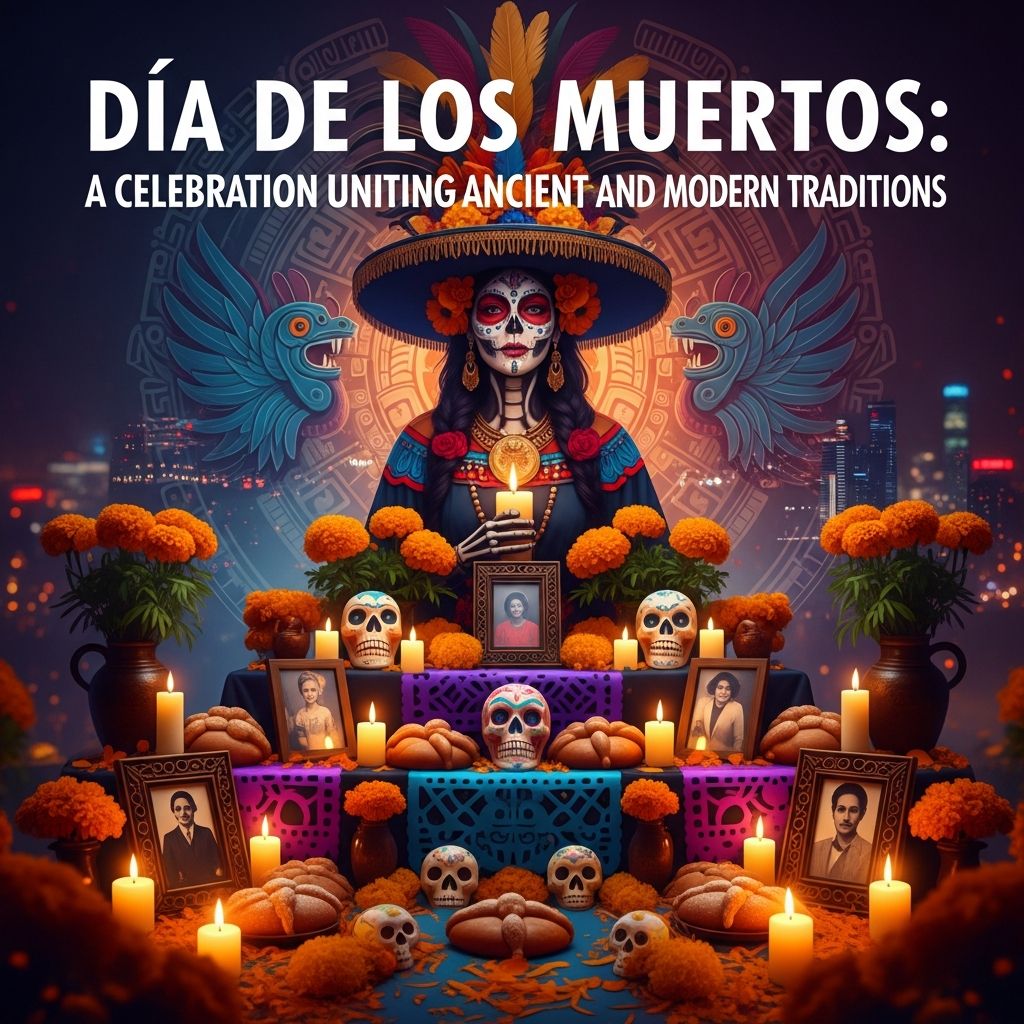
The most visually distinctive element of Día de los Muertos celebrations is the construction of ofrendas—home altars designed to welcome and honor deceased relatives. These sacred spaces function as physical manifestations of the belief that the living and the dead maintain relational bonds transcending physical death.
A traditional ofrenda incorporates multiple symbolic elements, each serving a specific spiritual purpose:
- Photographs: Images of deceased loved ones positioned prominently to acknowledge their individual identities and personalities
- Candles: Flames that guide spirits from the afterlife back to their families’ homes
- Food and Beverages: Favorite meals and drinks of the deceased, sustaining them on their journey and demonstrating continued familial care
- Water: One of four essential elements representing purification and renewal
- Personal Possessions: Objects that evoke memories and reflect the unique characteristics of those being honored
- Papel Picado: Intricately perforated paper banners in vibrant colors that flutter with spiritual presence
- Incense: Smoke that carries prayers and creates a welcoming atmosphere
The construction of an ofrenda represents an act of love and remembrance, requiring family members to reflect deeply on their relationships with the departed and select items that authentically represent those individuals’ lives and preferences. This process transforms grief into creative expression and maintains psychological connection across the boundary of death.
The Evolution of Día de los Muertos in Modern Times
While the core spiritual significance of Día de los Muertos has remained constant, the ways communities celebrate have evolved considerably. In the nineteenth century, newspaper accounts described primarily long processions to cemeteries, sometimes concluding in behaviors frowned upon by respectable society. The tradition of velar (staying awake all night with the deceased) emerged relatively recently, developing after Mexican Reform Laws under President Benito Juárez relocated family burial grounds from churches to civil cemeteries, necessitating family members to guard possessions displayed at graveside altars.
The literary tradition of calaveras literarias—satirical poems and cartoons featuring skeletal imagery applied to public figures—developed in the eighteenth or nineteenth century after a newspaper published a dream narrative of a cemetery where all inhabitants had died. This creative tradition allowed communities to engage death through humor and social commentary, reflecting the Mexican cultural philosophy that acknowledges death without surrendering to despair.
Contemporary celebrations increasingly incorporate community festivals, parades, and public displays alongside private family ceremonies. Major cities throughout Mexico and Latino communities worldwide host elaborate Día de los Muertos events featuring costume wearing, artistic performances, and educational activities introducing younger generations to ancestral traditions.
Teaching Children About Death Through Celebration
One distinctive feature of Día de los Muertos is its approach to discussing mortality with children. Rather than treating death as a taboo subject, this celebration presents it as a natural life transition deserving respect and remembrance. Children participate in creating ofrendas, decorating graves with flowers, and learning stories about deceased family members, normalizing death within a context of love and connection.
The holiday provides an opportunity for parents and educators to discuss grief, remembrance, and the lasting impact of loved ones’ lives. Through participation in rituals and creation of symbolic objects, children develop healthy frameworks for understanding mortality while maintaining emotional bonds with departed relatives.
Geographic Expansion and Cultural Significance
Although most strongly identified with Mexico, Día de los Muertos celebrations extend throughout Latin America and wherever substantial Latino populations reside. Communities in the United States, Central America, and beyond have adopted and adapted the tradition, maintaining core elements while incorporating local cultural expressions. Old Town San Diego, California, annually hosts traditional two-day celebrations culminating in candlelit processions to historic cemeteries, demonstrating how the tradition adapts to different geographic and cultural contexts.
The UNESCO recognition of Día de los Muertos as a Masterpiece of the Oral and Intangible Heritage of Humanity has elevated the celebration’s profile internationally and contributed to increased awareness among non-Latino communities about the holiday’s spiritual significance and cultural value.
Frequently Asked Questions About Día de los Muertos
When exactly is Día de los Muertos celebrated?
The primary celebration occurs on November 1st and 2nd, corresponding with Catholic All Saints’ Day and All Souls’ Day respectively. Many communities begin preparations and ceremonies on October 31st, and festivities may extend several days depending on regional traditions.
Is Día de los Muertos the same as Halloween?
No. While both occur around the same time, they have completely different origins and purposes. Halloween derives from Celtic traditions and has become largely secularized and commercialized in North America. Día de los Muertos maintains deep spiritual and cultural significance rooted in Aztec and Catholic traditions, focused specifically on honoring deceased loved ones.
Why do celebrations include skulls and skeletal imagery instead of appearing somber?
Mexican culture maintains a distinctive relationship with death, viewing it not as something to fear but as a natural transition. The skull imagery represents a celebration of life lived, acknowledging mortality while refusing to surrender joy and cultural expression to grief. This approach reflects indigenous philosophies that death and life are interconnected aspects of existence.
Can non-Mexicans participate in Día de los Muertos celebrations?
Yes. Many communities welcome respectful participation from people of all backgrounds. However, it is important to approach the celebration with cultural sensitivity, understanding its spiritual significance rather than treating it as a costume party or entertainment spectacle. Participating in authentic ofrendas, attending community ceremonies, or learning about the tradition demonstrates appropriate respect.
How has Día de los Muertos been preserved over centuries?
The celebration survived through its integration into Catholic practice, allowing indigenous families to maintain ancestral traditions while appearing to follow colonial religious requirements. Rural and indigenous communities particularly preserved authentic elements, which urban populations later recognized as culturally significant. Contemporary efforts to document and teach about the tradition ensure transmission to new generations.
References
- Día de los Muertos History — University of Kansas Center of Latin American Studies. https://clacs.ku.edu/dia-de-los-muertos-history
- Professor explains origins and significance of Día de los Muertos — Towson University News. 2024. https://www.towson.edu/news/articles/2024/dia-de-los-muertos-explained.html
- Understanding the History and Traditions of Día de los Muertos — University of Arizona News. https://news.arizona.edu/news/understanding-history-and-traditions-dia-de-los-muertos
- Day of the Dead — Wikimedia Foundation. https://en.wikipedia.org/wiki/Day_of_the_Dead
- Day of the Dead Resources — National Museum of the American Latino, Smithsonian Institution. https://latino.si.edu/learn/teaching-and-learning-resources/day-dead-resources