Developmental dysplasia of the hip (often shortened to DDH) is a condition in which a baby’s hip joint does not form in the usual way, making the ball and socket less stable and more likely to slide partly or completely out of place. It ranges from a mildly shallow hip socket to a fully dislocated hip.
How a Healthy Baby Hip Is Built
To understand DDH, it helps to picture how a typical hip joint looks in a baby. The hip is a ball-and-socket joint: the rounded top of the thighbone (the femoral head) sits inside a curved cup in the pelvis (the acetabulum). Strong ligaments and surrounding muscles keep the ball centered in the socket while allowing smooth movement.
In newborns, much of this joint is made of soft cartilage rather than hard bone, which allows room for growth but also makes the hip more moldable. How the joint is positioned before and after birth helps shape it over time, which is why problems with position and stability early in life can lead to DDH.
What Does Developmental Dysplasia of the Hip Mean?
Developmental dysplasia of the hip happens when the ball is not held snugly in the socket or the socket is too shallow to cover the ball well. The problem may affect one hip (usually the left) or both hips, and the severity can differ from side to side. Some babies are born with an obviously dislocated hip, while others have a hip that is only slightly loose and becomes more unstable over time.
Because the word “developmental” is included, parents sometimes worry that the problem will get worse no matter what. In reality, the term refers to the fact that the issue is related to joint development in early life and can be influenced by both the baby’s position in the womb and life after birth. With timely diagnosis and proper treatment, most babies develop stable, healthy hips.
Why Some Babies Develop DDH
There is no single cause of DDH; instead, several factors increase the chance that a baby’s hip will form abnormally. Anything that places extra pressure on a baby’s hips in late pregnancy or restricts movement can contribute to the problem. Family history also plays a role, suggesting that some babies inherit a tendency toward looser joints or shallower hip sockets.
- Position in the womb: Babies that are breech, especially with feet or bottom down near the birth canal, have their hips held in a straighter position that can stress the joint.
- First pregnancy: In a first pregnancy, the uterus and abdominal wall may be tighter, leaving less room for the baby to move freely.
- Female sex: Girls are affected more often than boys, possibly because maternal hormones can make ligaments looser in female babies.
- Family history: Having a parent or sibling who had DDH raises the likelihood that a new baby will also develop the condition.
- Tight swaddling with straight legs: Wrapping a baby with the hips and knees forced straight can push the ball out of the socket in babies whose hips are already a bit unstable.
Early Signs Parents Might Notice
Many babies with DDH do not show obvious symptoms, especially in the first weeks of life, which is why regular newborn and infant checkups are important. However, some physical clues can suggest that one or both hips are not sitting properly in the socket. These signs are often subtle and easier to see as the baby grows.
- Uneven thigh or buttock creases: The folds of skin under the buttocks or on the thighs may look deeper or higher on one side than the other.
- Limited outward hip movement: When the baby lies on the back and the legs are gently opened, one hip may not spread out as far.
- Apparent leg length difference: One knee may look lower when both hips and knees are bent.
- Unusual leg position: One leg may seem to turn outward more than the other or appear shorter.
- Limping or toe walking later on: In toddlers and young children, untreated DDH may show up as a limp, waddling walk, or walking on the toes on one side.
These signs do not always mean a child has DDH, but they are strong reasons to ask for a careful hip evaluation by a pediatrician or a pediatric orthopedic specialist.
How Doctors Check Your Baby’s Hips
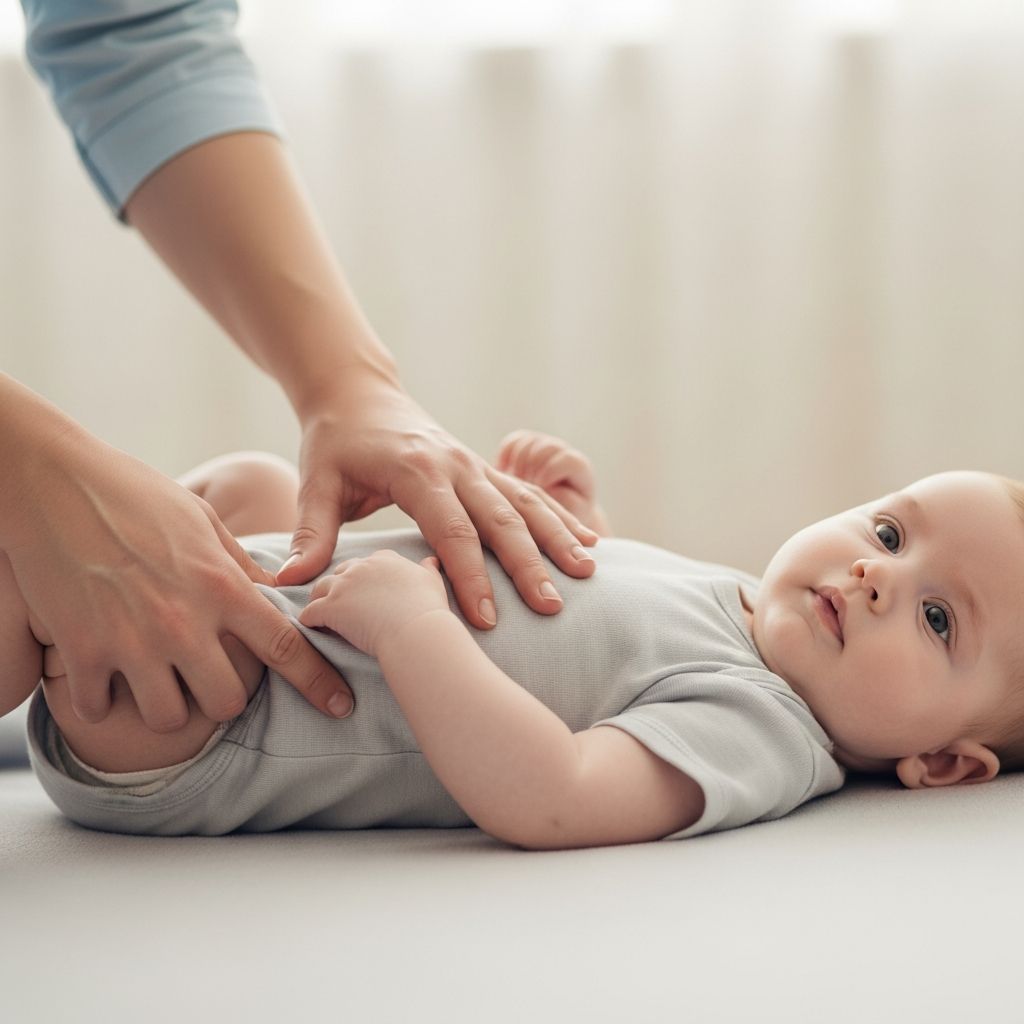
Every newborn should have a hip exam soon after birth, and the hips are usually checked again during routine well-baby visits. During the physical exam, the clinician gently moves the baby’s legs to feel whether the hips are stable in the sockets. Specialized maneuvers are used to sense a click, slide, or clunk that might suggest the ball is slipping in or out.
Physical exams are more reliable in the first few months of life. If the baby is older or the findings are unclear, or if risk factors like breech birth or family history are present, imaging studies help confirm the diagnosis.
Imaging Tests Used for Diagnosis
Because the newborn hip is mostly cartilage, standard X-rays do not show clear details in the first months. Ultrasound, which uses sound waves to create pictures, is the main tool used for younger infants. It allows the provider to see the shape of the socket, the position of the ball, and how the hip moves when the baby’s leg is gently adjusted.
As the child grows and more bone forms, X-rays become more useful. For older babies and toddlers, X-rays show how well the ball sits within the socket, the angle of the hip bones, and any long-term changes that may have developed. These images guide decisions about treatment and help monitor progress over time.
Grading the Severity of DDH
DDH covers a spectrum from mild looseness to complete dislocation. Doctors often use descriptive terms to explain where a child falls on that spectrum, which helps families understand why a particular treatment is recommended. The basic categories describe how the ball and socket relate to each other at rest and during movement.
| Term | What It Means | Typical Treatment Approach |
|---|---|---|
| Mildly unstable hip | The ball stays in the socket most of the time but can shift slightly with certain movements. | Close observation, repeat exams, and sometimes a soft brace if the hip does not improve on its own. |
| Dislocatable hip | The ball is in the socket at rest but can be pushed out of place with gentle pressure. | Early bracing, often with a harness that holds the hips in a flexed, outward position. |
| Dislocated hip | The ball rests outside the socket and may or may not slide back in with certain movements. | Harness or brace first if the baby is young; later, a reduction procedure and possibly surgery. |
Why Early Treatment Makes a Difference
When DDH is found in the first few weeks or months, treatment can often guide the hip into a better position while the joint is still very moldable. In many cases, this happens without the need for surgery, using only a harness or brace to keep the hips in the best alignment for growth. This early guidance encourages the socket to become deeper and the ball to become more rounded and stable.
If DDH is missed or left untreated, the body sometimes adapts in ways that are not ideal. Children may develop differences in leg length, abnormal walking patterns, pain, or early arthritis in adolescence or adulthood. Acting early greatly reduces the chance of these long-term problems and supports more natural, comfortable movement.
Non-Surgical Treatment Options
For most infants diagnosed in the first few months of life, the first line of treatment is a device that holds the hips in a flexed and outward position. The goal is to keep the ball deep in the socket while still allowing the baby to move and kick within a safe range. Parents often worry about comfort, but babies usually adjust quickly and can sleep, feed, and grow normally in these devices.
- Harnesses: Soft harnesses are commonly used for very young infants. They hold the hips in a bent and spread-apart position while allowing some movement.
- Rigid braces: For slightly older babies or when more support is needed, a firmer brace may be used to maintain the correct hip angle.
- Time in the device: Many babies wear the harness or brace full-time at first, then gradually move to part-time use as the hips become more stable.
- Follow-up imaging: Ultrasound or X-ray checks are scheduled to be sure the hip is improving as expected.
When Surgery Is Considered
Surgery is generally reserved for situations where non-surgical options do not work or the child is diagnosed later, when the joint is less flexible. The aim is always the same: to place the ball securely inside the socket and to shape the bones so they support each other well. Surgeons consider the child’s age, severity of the dislocation, and any previous treatments when choosing the specific procedure.
- Closed reduction: Under anesthesia, the surgeon gently moves the hip into the correct position and then applies a specialized cast to maintain the alignment for several weeks or months.
- Open reduction: If soft tissue structures are blocking the hip from going into place, the surgeon makes a small incision to remove obstacles and then stabilizes the hip, often with a cast afterward.
- Bone procedures (osteotomies): In older children or severe cases, reshaping the thighbone or pelvis may be needed to create a better-fitting socket.
Although surgery can sound frightening, these procedures are well-studied, and most children go on to have active, comfortable lives with the right postoperative care and follow-up.
Caring for a Baby in a Harness or Cast
Life with a harness, brace, or body cast requires some adjustments, but families quickly learn new routines that keep the baby clean, comfortable, and safe. Clothing, diapering, and positioning may change, yet most everyday activities are still possible with creativity and guidance. The care team should walk through practical steps and provide written instructions tailored to the specific device.
- Diapering: Always place the diaper under the straps or cast edges so moisture does not soak into the device. Changing frequently reduces skin irritation.
- Skin care: Check visible skin at least once a day for redness, blisters, or pressure marks. Never place powders or creams under the straps unless instructed.
- Clothing choices: Loose-fitting outfits, onesies a size up, and wide-legged pants are easier to put on over a harness or brace.
- Handling and holding: Support the baby under the bottom and behind the shoulders, letting the legs stay in the spread, bent position recommended by the clinician.
- Car seats and carriers: Use equipment that allows the hips to remain flexed and apart. Some standard seats are too narrow; your team can suggest models or adjustments.
Safe Swaddling and Hip-Healthy Habits
Parents can help protect hip development in all babies, whether or not DDH is present, by allowing the hips and knees to stay bent and mobile. Swaddling can be soothing, but it should never force the legs to stay straight and tightly wrapped against each other. Instead, think of wrapping the arms and trunk snugly while leaving room for the hips and legs to move.
- Choose swaddles or blankets that allow the legs to fall into a natural “froggy” position, with hips bent and knees apart.
- Avoid slings or carriers that let the baby dangle with legs straight down and close together for long periods.
- Encourage supervised tummy time and play positions that allow free kicking and stretching.
Long-Term Outlook for Children With DDH
With early diagnosis and appropriate treatment, most children with DDH develop strong, stable hips and participate in normal activities without pain or limitation. Regular follow-ups during childhood help confirm that the joint continues to grow well and that no new alignment issues arise. Many children who were treated as babies never remember wearing a harness or cast later in life.
When DDH is more severe or diagnosed later, the treatment course can be longer and may involve multiple procedures. Even then, modern techniques and careful monitoring have greatly improved outcomes. The earlier families feel informed and supported, the better prepared they are to navigate each step.
How Parents Can Advocate for Their Child
Parents play a central role in spotting early concerns, attending follow-up appointments, and carrying out home care plans. Asking questions, taking notes during visits, and learning what to watch for between appointments help ensure that subtle changes are not missed. Open communication with the care team builds trust and makes it easier to adjust the plan if something is not working.
- Keep a record of all imaging, procedures, and devices your child has used.
- Bring up any new limping, pain, or change in movement pattern as soon as it appears.
- Seek a second opinion from another pediatric orthopedic specialist if you feel uncertain about the diagnosis or proposed treatment.
Frequently Asked Questions About DDH
Is developmental dysplasia of the hip painful for babies?
Most infants with DDH do not show obvious signs of pain, especially early on. The concern is less about immediate discomfort and more about how an unstable hip might affect walking, alignment, and comfort as the child grows.
Can DDH correct itself without treatment?
Mild looseness in a newborn’s hips may improve on its own as the ligaments tighten and the baby grows, which is why some babies are monitored closely instead of treated right away. However, clearly dislocated or highly unstable hips are unlikely to normalize without guided positioning or other interventions, and delaying treatment can make correction harder later.
Will my baby be able to walk and play normally after treatment?
Most children who receive timely and appropriate treatment for DDH learn to walk, run, and play just like their peers. Some may reach certain milestones slightly later, especially if they spend time in a cast or brace, but they usually catch up once treatment is complete.
Does DDH always affect both hips?
No. DDH can affect only one side or both sides, and the severity can differ between hips. Many babies have more noticeable instability on the left, possibly related to common positions in the womb, but each child’s pattern is unique.
Can I prevent DDH in my baby?
Not all cases of DDH can be prevented because genetics and womb positioning are beyond parental control. Still, using hip-friendly swaddling, choosing supportive carriers, and attending regular well-baby checkups help identify and reduce avoidable risks.
Key Takeaways for Families
- DDH is a problem with how the hip joint forms and stabilizes in early life, ranging from mild looseness to full dislocation.
- Many babies with DDH show few outward signs, which is why routine newborn and infant hip exams are essential.
- Early diagnosis usually means simpler treatment, often with a harness or brace rather than surgery.
- Parents can support healthy hip development by allowing free leg movement and avoiding tight, straight-leg swaddling.
- With modern care, most children treated for DDH go on to lead active, pain-free lives.