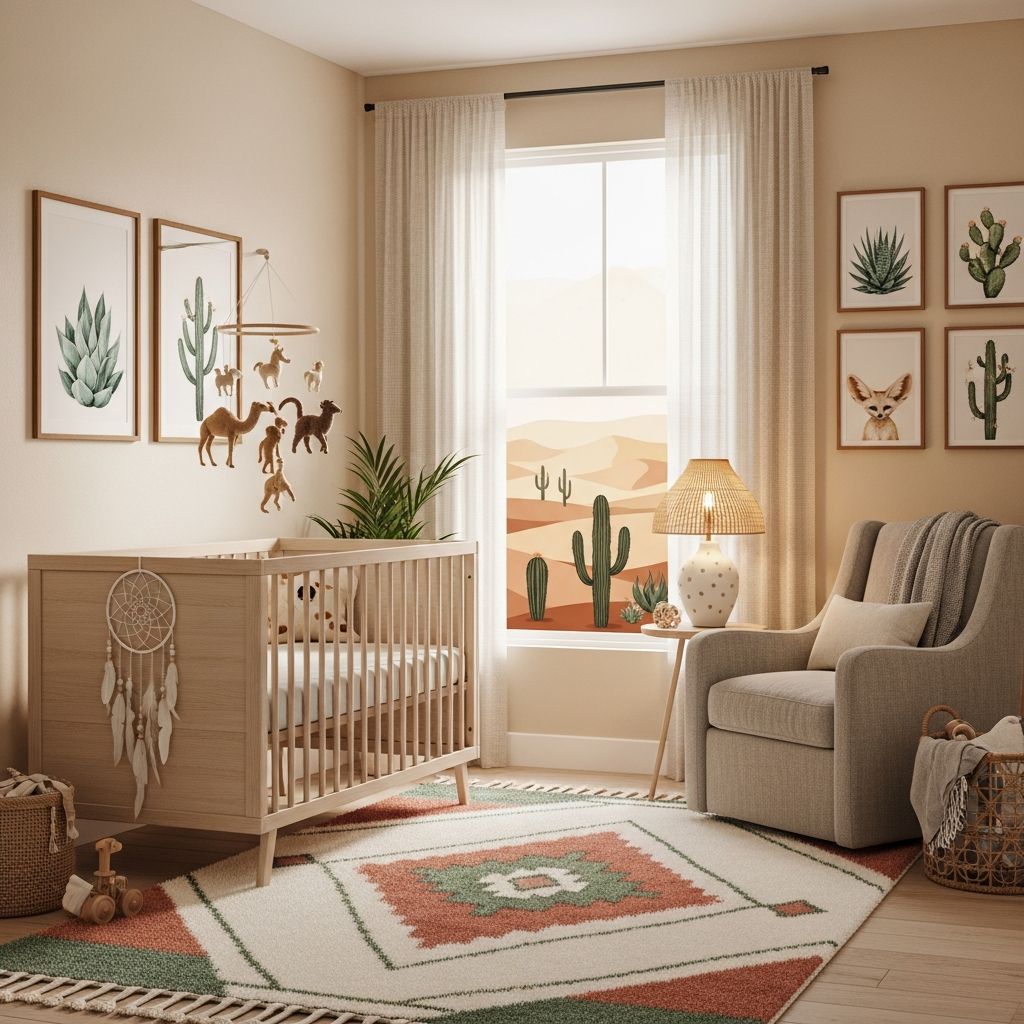
Imagine a nursery that whispers tales of vast dunes, starlit skies, and gentle breezes—a space where your baby can drift into peaceful slumber amid the calming embrace of nature’s arid beauty. Desert-themed nurseries have surged in popularity for their gender-neutral appeal, soothing color schemes, and organic vibes that promote restful environments. This guide dives deep into designing such a retreat, drawing inspiration from real-life transformations that turn ordinary rooms into enchanting oases.
Why Choose a Desert Theme for Your Nursery?
Desert motifs stand out for their versatility and psychological benefits. The expansive, minimalist landscapes evoke tranquility, reducing overstimulation for newborns sensitive to bright colors. Earthy tones like terracotta, sage green, and warm beiges mimic sun-baked sands and resilient cacti, fostering a sense of grounded security. Parents often select this theme after personal adventures, such as camping trips that ignite a passion for nature’s understated elegance.
Key advantages include:
- Gender neutrality: Avoids stereotypical pinks and blues, suiting any baby.
- Calming atmosphere: Low-contrast palettes support better sleep cycles, as supported by child development studies on color’s impact on mood.
- Sustainable appeal: Emphasizes natural fibers and recycled materials, aligning with eco-conscious parenting.
- Timeless growth: Evolves with the child into a playroom or tween haven without major overhauls.
Real parents report their little ones sleeping longer in these serene setups, attributing it to the theme’s inherent peacefulness.
Building the Perfect Color Palette
The heart of a desert nursery lies in its palette. Start with a base of soft neutrals: sandy beiges for walls, accented by muted ochres and dusty sages. Introduce depth with rust-red throws or clay-toned rugs, evoking sunset horizons. Avoid stark whites; opt for creamy off-whites to warm the space.
| Color Family | Shade Examples | Nursery Use | Mood Effect |
|---|---|---|---|
| Neutrals | Beige, Taupe, Cream | Walls, Crib Sheets | Calming, Expansive |
| Earthy Warmth | Terracotta, Burnt Orange | Accents, Pillows | Energizing yet Soft |
| Cool Accents | Sage Green, Dusty Blue | Curtains, Art | Balancing Freshness |
| Metallics | Brass, Matte Gold | Hardware, Lamps | Subtle Glamour |
Test samples in natural light; deserts shift hues from dawn to dusk, so versatile shades ensure adaptability. For cohesion, pull colors from a single inspirational photo, like a cactus silhouette against a twilight sky.
Essential Furniture Selections
Furniture should blend functionality with desert rusticity. A convertible crib in natural wood—think acacia or oak with a weathered finish—serves as the centerpiece. Pair it with a dresser doubling as a changing table, topped with a woven basket for diapers.
- Crib: Bi-fold designs in light oak mimic desert driftwood.
- Rocking Chair: Wicker or rattan with plush cushions for nursing comfort.
- Storage: Open shelves for books and toys, lined with jute rope.
Prioritize safety: Ensure all pieces meet CPSC standards, with rounded edges and non-toxic finishes. A mobile arm in curved metal adds whimsy, spinning subtle desert motifs overhead.
Wall Treatments and Textural Magic
Transform blank walls into storytelling canvases. Apply a textured plaster finish for an adobe-like effect, or wallpaper with subtle geometric patterns reminiscent of Navajo weaves. Hang a large landscape print—perhaps a watercolor of dunes or a starry night—to anchor the theme.
Incorporate texture everywhere:
- Woven wall hangings from sustainable fibers.
- Macramé plant holders with faux succulents (real ones pose risks).
- Framed pressed botanicals like agave leaves.
Lighting plays a starring role: Drape sheer linen curtains for diffused sunlight, and install a brass floor lamp with a woven shade. String lights mimicking fireflies add nighttime magic without overwhelming glare.
Bedding and Soft Furnishings
Layer bedding for coziness and safety. Opt for organic cotton sheets in chambray or linen, patterned with faint cactus motifs. A lightweight quilt in patchwork earth tones provides breathable warmth.
Essential soft items:
- Throw pillows in fringe-trimmed wool.
- A plush area rug in sisal or seagrass.
- Blackout curtains in linen to block light for naps.
Choose GOTS-certified organics to minimize allergens, ensuring breathability in varying climates.
Playful Accents and Wildlife Whimsy
Infuse personality with desert creatures. A fennec fox illustration or plush cactus toys nod to arid inhabitants without clutter. Shelves can display minimalist animal figurines—think roadrunners or horned lizards—crafted from wood or ceramic.
Personalize with:
- Custom name signs in rustic metal.
- Vintage-inspired maps of desert trails.
- Scent diffusers with subtle sandalwood oils for aromatherapy.
Sustainable Choices for an Eco-Desert Haven
Deserts teach resilience; mirror this with green practices. Source furniture from reclaimed wood, bedding from bamboo, and decor from upcycled materials. LED bulbs and solar-powered nightlights cut energy use. Avoid plastics; embrace ceramics and glass for durability.
Benefits include lower VOC emissions for better air quality, crucial for tiny lungs. Programs like the EPA’s Safer Choice label guide selections.
Budgeting Your Desert Nursery Dream
| Category | Low-Budget Option | Mid-Range | Luxury Pick | Est. Cost |
|---|---|---|---|---|
| Paint/Wallpaper | Sample Pots + DIY Texture | Premium Peel-and-Stick | Hand-Plastered Adobe | $50-$500 |
| Crib & Dresser | Second-Hand Refinish | Convertible Wood Set | Handcrafted Rattan | $200-$1500 |
| Bedding & Rug | Thrifted Quilts | Organic Cotton Sets | Custom Woven Pieces | $100-$800 |
| Decor & Lighting | DIY Macramé | Brass Lamps | Artisan Prints | $75-$600 |
Total budgets range from $500 for DIY enthusiasts to $5,000 for bespoke designs. Shop sales, thrift, and marketplaces for steals.
Step-by-Step Setup Guide
- Plan Layout: Sketch room flow prioritizing crib near windows.
- Prep Walls: Prime and paint in phases.
- Assemble Core Furniture: Secure to walls per safety codes.
- Layer Textiles: Start with rug, then bedding.
- Add Accents: Hang art at eye level for adults/baby.
- Test Ambiance: Spend nights trialing lighting and scents.
Frequently Asked Questions (FAQs)
What makes a desert nursery suitable for newborns?
Its muted colors and natural textures minimize sensory overload, promoting longer sleep stretches and easier settling, ideal for delicate sleep patterns.
Is this theme gender-neutral?
Absolutely—earth tones and nature motifs transcend gender, allowing flexibility as your child grows.
How do I keep it clean with a baby?
Choose washable fabrics, sealed wood surfaces, and machine-safe rugs; vacuum weekly and spot-clean art.
Can I incorporate plants safely?
Use preserved or artificial succulents in high, stable holders to avoid toxins and topples.
What’s the best lighting for sleep?
Combine dimmable warm LEDs (2700K), blackout shades, and red-toned nightlights to mimic sunset without blue light disruption.
Personal Stories: Real Desert Nurseries
One family, post-camping adventure, swapped a vibrant setup for sands and sages, noting their baby’s improved naps. Another blended boho elements like feathers with Joshua Tree hues, creating a space that soothed colic cries. These tales highlight the theme’s adaptability across climates and styles.
Transitioning older siblings? Incorporate shared elements like fox prints from prior themes, easing the shift while refreshing the vibe.
References
- Child Development and Color Psychology — American Academy of Pediatrics. 2023-05-15. https://publications.aap.org/pediatrics/article/151/5/e2022056772/190000/Color-and-Child-Development
- Guidelines for Children’s Sleep Environments — National Institute of Child Health and Human Development (NICHD). 2024-02-10. https://www.nichd.nih.gov/health/topics/sleep/conditioninfo/environments
- Safer Choice Program Standards — U.S. Environmental Protection Agency (EPA). 2025-01-20. https://www.epa.gov/saferchoice
- Sustainable Nursery Design Practices — Green Building Council. 2024-11-05. https://www.usgbc.org/resources/sustainable-nurseries
- Crib Safety Standards — Consumer Product Safety Commission (CPSC). 2023-09-12. https://www.cpsc.gov/s3fs-public/CribInformationSheet.pdf