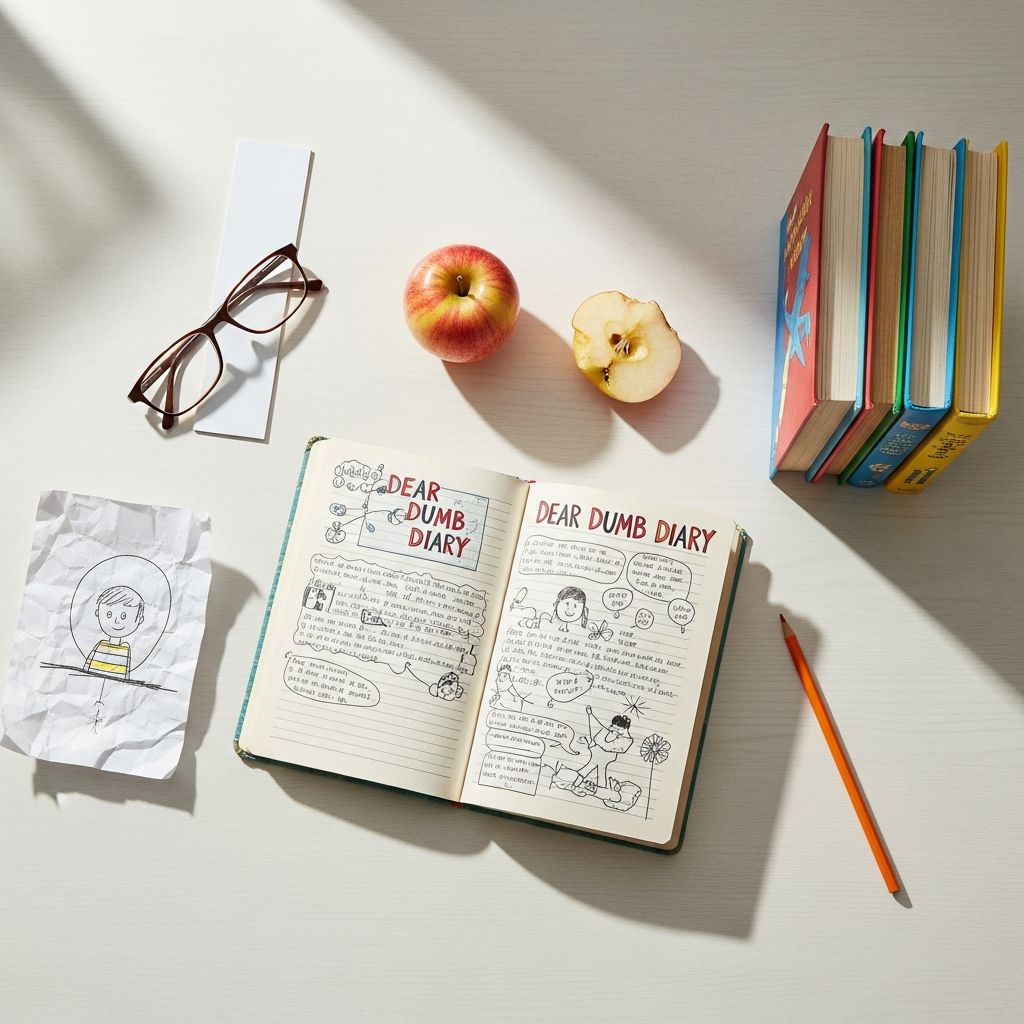
Humorous diary-style series for tweens can be wildly appealing—and a little unnerving—for parents who are not sure how much sarcasm, social drama, and bathroom humor is too much. Dear Dumb Diary sits squarely in that gray zone, which makes it worth looking at closely before handing it to a young reader.
Understanding the Series at a Glance
Dear Dumb Diary is a fictional diary kept by a middle-school girl, filled with her private thoughts about school, friendships, crushes, and everyday embarrassments. The voice is intentionally dramatic, snarky, and often exaggerated for comedic effect, mimicking how many tweens experience their inner world.
Because the main character is in middle school, the series naturally reflects that age group’s concerns: social hierarchy, appearance, popularity, crushes, and the feeling that adults “just don’t get it.” Parents considering these books should expect the emotional intensity and occasional mean-spirited comments that typically appear in real tween diaries.
- Diary-style entries, doodles, and humor-driven scenes.
- A female protagonist navigating friendships and enemies.
- Recurring school settings: hallways, cafeteria, clubs, and classroom mishaps.
Recommended Age Range: What Do the Levels Really Mean?
These books are generally shelved in the middle-grade section, often marketed for roughly ages 8–12. That does not mean every 8-year-old is ready for the social dynamics or sarcasm inside, nor that a 12-year-old will still find the tone fresh and funny. Age recommendations are guidelines, not rules.
When deciding for your child, consider not just chronological age, but also emotional maturity, reading level, and previous exposure to similar humor. An advanced 8-year-old who loves Diary of a Wimpy Kid may do fine, while a sensitive 10-year-old might feel uncomfortable with the sharper jokes.
| Child Profile | Likely Fit | Parent Considerations |
|---|---|---|
| 7–8 years, sensitive, new to chapter books | Often too early | Preview first; consider lighter series with gentler social conflict. |
| 8–9 years, strong reader, enjoys sarcastic humor | Possible fit with guidance | Discuss tone, empathy, and “jokes vs. real-life behavior.” |
| 10–11 years, typical middle-grader | Generally good target audience | Use books as a springboard for conversations about friendships and kindness. |
| 12+ years, frequent reader | May find it childish or nostalgic | Could still enjoy as comfort reading or short, funny breaks between longer novels. |
Key Themes Parents Should Know
Before you evaluate age appropriateness, it helps to understand the recurring themes and the emotional flavor of the series. The books exaggerate typical middle-school experiences, filtering them through an overly dramatic narrator who is sometimes unfair to others.
Below are the main topics that surface again and again, along with why they may either appeal to or concern caregivers.
Friendships, Frenemies, and Social Hierarchies
At the heart of the series is the messy world of middle-school relationships. Friends can be loyal one day and bafflingly distant the next. Classmates fall into labels: popular, weird, annoying, or “perfect,” and the narrator often sorts people into these boxes to make sense of her social life.
On the positive side, young readers may recognize their own confusion and feel comforted to see that others struggle too. The downside is that the language used to describe peers can sometimes be cruel, even if it is clearly meant to stay in the private pages of a diary.
Body Image and Appearance
Because the main character is in middle school, she notices physical appearance constantly: hair, clothes, figure, and how these traits translate into popularity. The books sometimes poke fun at beauty standards, but they also spend a lot of time describing who is “pretty,” “plain,” or “weird-looking.”
This may echo what your child hears in school hallways. For some readers, it can be validating to see their worries reflected; for others, the repeated focus on looks might feel overwhelming or reinforce existing anxieties.
Crushes and Early Romantic Curiosity
Crushes appear as part of the humor and drama, usually in a light, exaggerated way rather than in-depth romance. The narrator might swoon over a classmate one chapter and feel mortified by his existence the next.
Parents who are comfortable with innocent, one-sided crushes in media will likely have no issue with this element. Those hoping to delay any romantic themes until later may prefer to wait or at least read alongside their child.
Family Life and Adult Authority
Adults—parents, teachers, school staff—often show up as obstacles, oddballs, or sources of embarrassment. This is standard in comedic tween fiction, where kids see themselves as the only reasonable people in a world of baffling grown-ups.
Some parents enjoy laughing along with their kids at these portrayals; others dislike books that depict adults as clueless, unfair, or easy targets. It can help to remind children that the diary reflects one kid’s opinion, not objective reality.
Language, Humor, and “Meanness” Factor
The central question many parents have is not just what events happen in the books, but how the main character talks about them. The humor leans heavily on snark, exaggerated comparisons, and dramatic insults that sound over-the-top rather than realistic.
Understanding the tone can help you decide whether the books will feel like a healthy emotional outlet or cross the line into normalizing unkindness.
Types of Humor You’ll Find
- Sarcasm: The narrator often says the opposite of what she really means to highlight absurd situations.
- Hyperbole: Everyday mishaps are described as catastrophes of epic proportions.
- Physical comedy: Slapstick moments, awkward accidents, and exaggerated bodily reactions.
- Gross-out jokes: Occasional references to smells, messes, and other “eww” moments that many kids adore.
Is the Narrator Too Mean?
One of the trickiest aspects for adults is the way the main character describes other people. In her private diary, she can be harsh, judgmental, and sometimes unfair—calling out appearances, habits, and social status with cutting honesty.
However, the series typically makes it clear that these are fleeting thoughts, not sober assessments, and the narrator doesn’t always get rewarded for her nastier observations. Parents can use this as a gateway to discuss how thinking mean things in a diary differs from saying them aloud or acting on them.
Comparing to Real-Life Behavior
Some kids instantly understand that the tone is exaggerated: they read it like a cartoon or sit-com and don’t imitate the behavior. Others may try out the language at home or with friends, repeating phrases that sounded funny in the book.
If you already notice your child picking up catchphrases from TV or peers and testing them without understanding their impact, you may want to monitor these books more closely or delay them until your child can better separate performance from genuine communication.
Questions to Ask Before You Say Yes
Instead of focusing only on publisher age ranges, it can be more helpful to walk through a few reflective questions about your particular child. These questions act as a quick readiness checklist.
- Does my child already understand and use mild sarcasm, or do they take everything literally?
- Is my child prone to intense worry about friendships, popularity, or appearance?
- Has my child shown curiosity about books with crushes or school drama?
- Do we have an open communication style where we can talk about confusing or troubling scenes?
- How does my child handle media with characters who are sometimes unkind but ultimately growing?
If most of your answers lean toward “comfortable,” the series may be a good match. If many answers land in the “I’m not sure” or “not yet” column, consider postponing or starting with just one book and reading it together.
How to Preview the Books Effectively
For parents on the fence, a targeted preview can offer all the information you need in less than an hour. You do not have to read the entire series; getting a sense of the voice and themes in one volume is usually enough.
- Read the first few chapters: This gives a clear sample of the narrator’s tone, level of snark, and typical scenarios.
- Scan a few random entries: Flip ahead to the middle and end to see if the same type of humor continues or if the content escalates.
- Note your own reactions: If you find yourself laughing more than cringing, that’s a good sign your child may respond similarly.
- Check illustrations and doodles: They often highlight jokes and can reveal whether the visual humor aligns with your comfort level.
After previewing, you will likely know whether this is a series you want to hand over freely, read aloud together, or skip for now in favor of something that better matches your family’s values.
Using the Books as Conversation Starters
If you decide the series is acceptable, it can become a powerful tool for discussing real-life issues without lecturing. Because the narrator frequently makes mistakes, misjudges others, or overreacts, her experiences lend themselves to gentle, reflective questions.
- “Have you ever felt the way she does in this chapter?”
- “Do you think she was fair to that friend? Why or why not?”
- “What do you think would have happened if she had said that out loud at school?”
- “If you were writing a diary, how would you describe that same situation?”
These open-ended questions help kids explore empathy, perspective-taking, and self-awareness without feeling like they are being quizzed on moral lessons.
Alternatives and Read-Together Strategies
Even if you are unsure whether to give your child Dear Dumb Diary independently, you can still use the series in a shared reading approach. Joint reading lets you provide context and balance out the more dramatic or snarky moments.
- Read aloud together: Take turns reading chapters and pause to comment or laugh together at especially outrageous lines.
- Side-by-side reading: You read the same book on your own and bring it up casually at dinner or in the car.
- Combine with kinder series: Pair this series with books featuring particularly empathetic or kind protagonists to show a range of personalities.
If you decide the tone is not a good fit, there are many other diary-style or humorous middle-grade series with a softer edge. Look for titles where the main character is clearly flawed but consistently trying to grow in kindness and empathy.
Quick Pros and Cons for Busy Parents
For a final snapshot, it can help to see the main upsides and downsides in one place. Remember that where a trait falls on your personal pros/cons list may differ from another family’s assessment.
| Potential Benefit | Potential Drawback |
|---|---|
| Engaging, laugh-out-loud humor can hook reluctant readers. | Sarcastic tone may encourage mimicry in some children. |
| Relatable look at middle-school worries legitimizes kids’ feelings. | Frequent focus on looks and popularity may amplify anxieties. |
| Short chapters and diary format build reading stamina without overwhelming kids. | Occasional gross or edgy jokes may feel off-putting to some families. |
| Plenty of material for discussions about empathy, fairness, and perspective. | Requires parental engagement to unpack the messages behind the humor. |
FAQs About Dear Dumb Diary and Age Appropriateness
Is Dear Dumb Diary appropriate for an 8-year-old?
It depends on the individual child. Many 8-year-olds can handle the content if they are already accustomed to sarcastic humor and school-based social drama in other media. For more sensitive or literal-minded children, it may be better to wait a year or two or read the first book together and see how they respond.
Is the language or content too mature?
The series does not typically rely on explicit language or advanced romantic content, but it does use snarky descriptions, insults, and occasional gross-out humor. If your primary concern is profanity or graphic material, these books are generally mild; if your main worry is tone and attitude, you will want to preview the humor style.
Will my child start talking like the main character?
Some children do temporarily adopt phrases or patterns of speech from their favorite books, especially when the narrator’s voice is strong and distinct. You can address this by modeling more respectful alternatives, pointing out when the character’s way of speaking is funny on the page but not okay in real life, and setting clear expectations about how family members speak to one another.
Can boys enjoy Dear Dumb Diary, or is it only for girls?
Although the protagonist is a girl and many covers appear to target female readers, nothing about the humor or diary format is inherently gender-specific. Boys who like comedic, character-driven stories about school and friendship can absolutely enjoy the series, especially if they are already comfortable reading from a girl’s point of view.
How can I tell if my child is bothered by something in the books?
Watch for signs like reluctance to keep reading, unusual irritability after reading sessions, or repeated questions about looks, popularity, or being liked. Gently ask which scenes they enjoy the most and which ones they wish had gone differently, then follow up with supportive, nonjudgmental conversation.
Final Thought: Trust Your Knowledge of Your Child
Every book series that lives in the “snarky but funny” zone will sit differently with different families. Dear Dumb Diary can be a delightful mirror for kids who already think in big, dramatic swings—and an uncomfortable amplifier for kids who are still seeking emotional balance.
If you stay engaged, preview strategically, and keep the lines of communication open, you can use this series—or your decision to skip it—as part of a broader, thoughtful approach to guiding your child’s independent reading life.