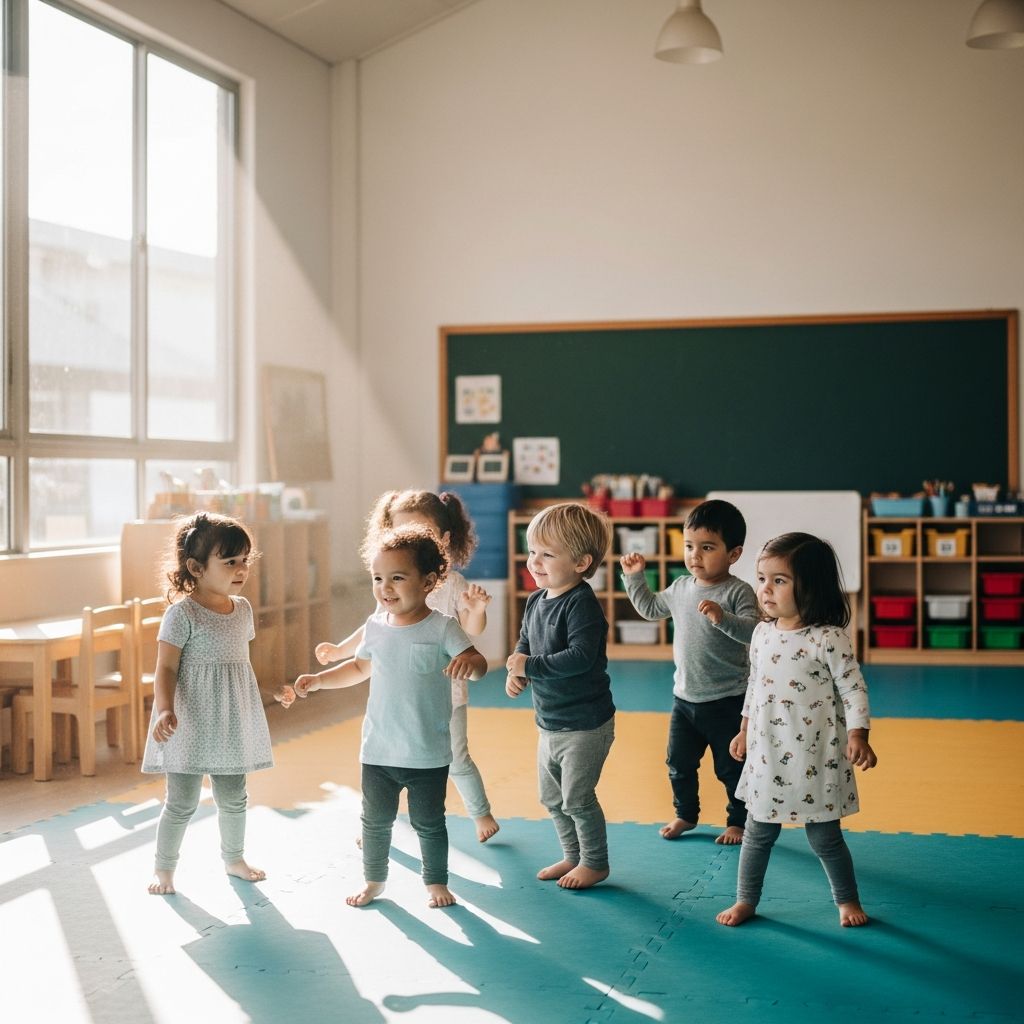
Dance is a powerful way for preschoolers to explore movement, rhythm, and self-expression while also building early academic and social skills. This dance-themed preschool lesson plan offers a complete structure for a full session, including objectives, warm-up, main activities, centers, and closing routines.
Why a Dance-Themed Lesson?
A dance theme blends music, movement, and imaginative play, making it ideal for active preschoolers. Through dance, children practice listening, following directions, coordination, and creativity in a joyful and developmentally appropriate way.
- Builds gross and fine motor skills through hopping, spinning, marching, and clapping.
- Encourages social interaction, turn-taking, and cooperation.
- Introduces early concepts such as fast/slow, high/low, and patterns through music and movement.
Lesson Objectives
The dance-themed lesson focuses on the whole child: physical, social-emotional, and cognitive development. Clear objectives help guide instruction and assessment.
- Children will move safely and confidently in personal and shared space.
- Children will follow multi-step directions during songs and games.
- Children will explore basic movement qualities such as speed, level, and energy.
- Children will express ideas and feelings through creative dance.
- Children will connect movement to simple literacy and counting activities.
Age Group and Time Frame
This dance-themed preschool lesson plan is designed primarily for children ages 3–5. It can be adjusted for slightly younger or older groups by modifying the complexity of directions and the length of activities.
| Component | Suggested Time | Focus |
|---|---|---|
| Welcome & Warm-Up | 10 minutes | Greeting, stretching, body awareness |
| Main Dance Activities | 20–25 minutes | Structured movement, creative exploration |
| Centers / Small Groups | 15–20 minutes | Fine-motor, literacy, and music connections |
| Cool-Down & Reflection | 5–10 minutes | Relaxation, sharing, transition |
Materials and Setup
Prep the room so that children can move safely and freely while also having access to a few themed learning centers. Keep materials simple and durable for preschool use.
- Music player and a playlist of child-friendly dance songs (fast, slow, instrumental, and lyric-based).
- Scarves, ribbons, or streamers for movement explorations.
- Masking tape or floor spots to mark personal space.
- Picture cards of dance poses or simple actions (jump, spin, tiptoe, stomp).
- Paper, crayons, and markers for drawing dance moves.
- Optional: simple instruments such as shakers, tambourines, or rhythm sticks.
Room Arrangement
Arrange your space to support both large-motor movement and quiet table work. A clear understanding of where each activity happens makes transitions smoother for young children.
- Open movement area in the center of the room for dancing and games.
- One or two small tables around the perimeter for drawing and fine-motor activities.
- A carpet or circle area for group discussions and read-alouds.
- Clearly marked boundaries so children know where it is safe to move.
Welcome and Circle Time
Begin with a short, consistent routine to help children feel comfortable and ready to move. This can include greetings, a dance-related question of the day, and a simple movement chant.
- Greet each child by name with a small movement (wave, bow, spin) and invite them into the circle.
- Ask a quick question such as “What is your favorite way to move?” and allow a few children to share.
- Introduce the theme by saying that today’s lesson is all about dancing, moving, and pretending with our bodies.
Warm-Up: Waking Up the Body
The warm-up prepares the body to move safely and helps children connect to the idea of listening for musical cues. Keep the sequence predictable so children build confidence over time.
- Begin with gentle stretches: reach up high, touch toes, twist slowly side to side.
- Introduce simple body-part isolations: wiggle fingers, shrug shoulders, circle wrists and ankles.
- Play a calm song and guide children to move in slow motion, then gradually pick up the pace.
- End the warm-up with a brief “freeze” game: when the music stops, everyone holds a statue pose.
Main Dance Activities
The main portion of the lesson includes guided movement games and creative dance opportunities. Mix structured activities with chances for children to improvise and explore.
1. Follow-the-Leader Dance
This activity supports listening skills and body awareness. Children copy the teacher’s movements and then have a chance to become the leader themselves.
- Form a line or stand in a circle so everyone can see the leader.
- Start with simple actions: march, hop, tiptoe, and spin.
- Invite individual children to take turns as the leader, choosing one or two moves for the group.
- Rotate frequently so many children feel included and successful.
2. Movement Qualities: Fast, Slow, High, Low
Introduce basic movement concepts that support both physical development and early math and science thinking. Use music tempo and levels in space to make these ideas concrete.
- Play a fast song and invite children to move quickly: running in place, quick jumps, or wiggles.
- Switch to a slow song and demonstrate slow-motion walking, stretching, and controlled bending.
- Ask children to dance “high” with reaching arms, tiptoes, and tall shapes.
- Ask them to dance “low” by crouching, crawling, or rolling gently on the floor (if space allows).
| Concept | Movement Example | Vocabulary |
|---|---|---|
| Speed | Running in place vs. slow stepping | Fast, slow, steady |
| Level | Tiptoe reach vs. crouching crawl | High, low, middle |
| Energy | Big jumps vs. soft floating steps | Strong, gentle, bouncy |
3. Dance With Props
Props like scarves and ribbons make movement visible and exciting. They also help children explore flow, direction, and shape in space.
- Give each child a scarf or ribbon and explain simple safety rules (no swinging near faces, keep space bubbles).
- Demonstrate movements: swishing side to side, drawing circles, making rain, or tracing big shapes in the air.
- Play a song and call out prompts such as “Make your scarf move like the wind” or “Draw a big circle above your head.”
- Invite children to show one favorite move to the group at the end.
4. Freeze Dance With Poses
Freeze dance builds impulse control and listening skills. Adding specific poses or shapes also introduces early choreography and body control.
- Play energetic music and encourage free dancing.
- When the music stops, call out a prompt such as “Make a tall shape,” “Be a tiny ball,” or “Show a happy dancer face.”
- Use picture cards of poses or actions so children can match what they see with what they do.
- Gradually introduce more complex prompts like “Make a shape with a friend” or “Create a triangle with your body.”
Learning Centers and Small-Group Activities
After large-group movement, centers give children a chance to process the theme in quieter ways. Rotate groups every few minutes or let children choose a center with guidance.
Center 1: Draw Your Dance
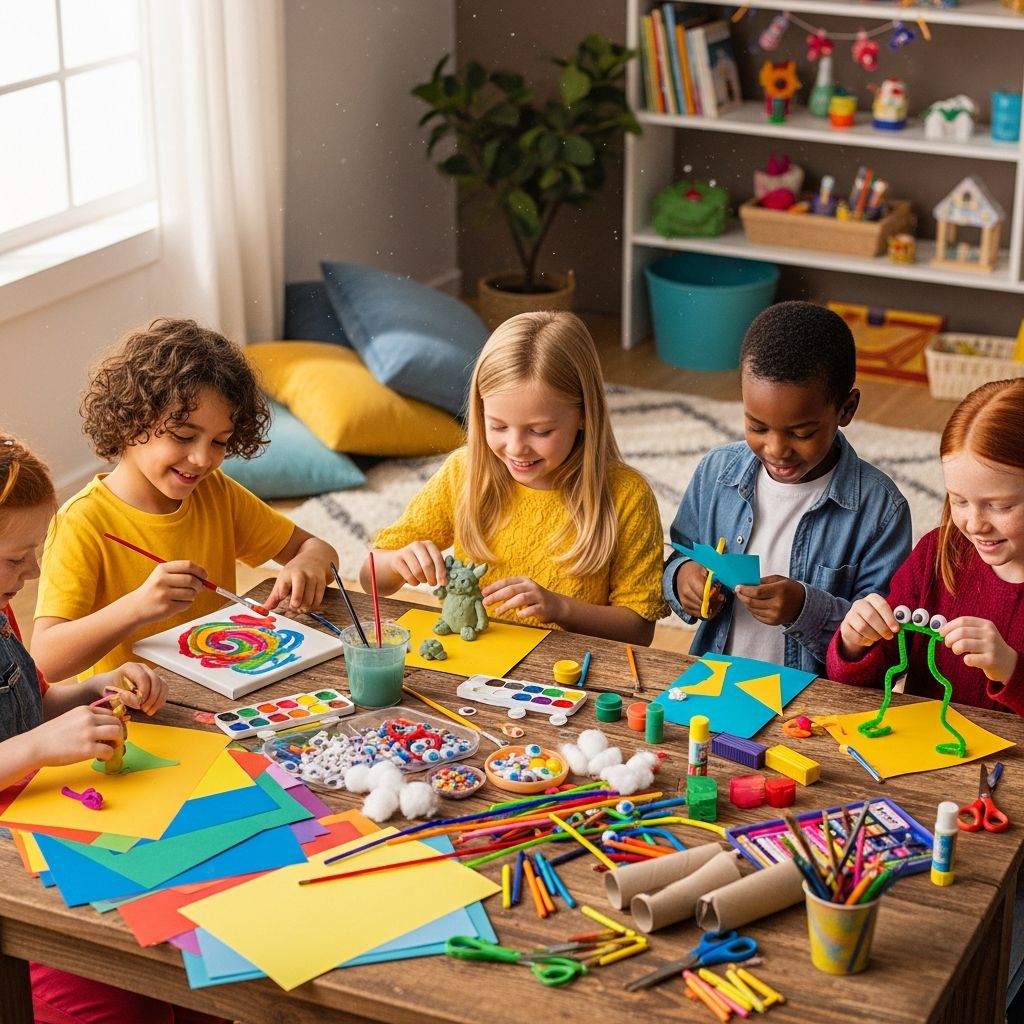
This center links art with movement. Children represent dance ideas on paper, which supports early writing and storytelling skills.
- Provide paper, crayons, and markers.
- Invite children to draw themselves dancing or to illustrate a favorite move (spin, jump, stretch).
- Encourage them to add simple details such as music notes, stage lights, or other dancers.
- Ask each child to describe their picture in one or two sentences, writing their words on the page.
Center 2: Dance Step Sequencing
Simple patterning with movement cards introduces early math and literacy skills. Children arrange and then perform sequences, connecting symbols to actions.
- Prepare small cards with pictures of basic dance moves (clap, stomp, jump, spin).
- Show a short pattern such as “clap–stomp–clap” and have children copy it with their bodies.
- Let children build their own three- or four-step sequence using the cards.
- Invite them to perform the sequence for a partner or the small group.
Center 3: Instrument and Rhythm Exploration
This center helps children connect sound and movement. They experiment with tempo, loudness, and beat using simple instruments.
- Offer shakers, rhythm sticks, or small drums.
- Show how to tap a steady beat and then try a slow and a fast beat.
- Ask children to play a rhythm and invite a partner to dance to that sound.
- Switch roles so everyone experiences being both musician and dancer.
Transitions With Movement
Use the dance theme to make transitions smooth and engaging. Short, playful movements help children move from one activity to another without losing focus.
- Ask children to “tiptoe to your table like ballerinas” or “march to the door like a parade” when changing locations.
- Use a short musical cue as a signal to clean up, sit down, or line up.
- Give each child a small movement job, such as collecting scarves or stacking floor spots, to encourage responsibility.
Cool-Down and Relaxation
After energetic dancing, the cool-down helps children regulate their bodies and emotions. It also sets a calm tone for the rest of the day.
- Play soft, slow music and guide children through gentle stretches on the floor.
- Encourage deep breathing by pretending to blow up a balloon or smell a flower and blow out a candle.
- Invite children to lie down and imagine they are resting dancers on a quiet stage.
Reflection and Sharing
End the lesson with a brief reflection that helps children put language to their experience. This step reinforces learning and builds confidence.
- Ask questions such as “What was your favorite dance move today?” or “How did your body feel when you danced fast?”
- Allow a few children to demonstrate their favorite move for the group one last time.
- Celebrate effort and creativity, emphasizing that everyone can be a dancer.
Simple Assessment Ideas
Assessment in preschool should be observational and informal. Use a quick checklist or notes to record how children engage with movement and follow directions.
- Observe whether a child can move safely in personal and shared space.
- Notice if they respond to musical cues such as start, stop, fast, and slow.
- Record examples of children creating their own dance ideas or patterns.
- Listen for vocabulary use such as high, low, fast, slow, and gentle.
Tips for Adapting the Lesson
Every group of preschoolers is different, so flexibility is important. Adjust the lesson to fit your classroom needs, available time, and children’s interests.
- Shorten or lengthen activities depending on attention span and energy level.
- Offer visual supports such as picture cards and gesture cues for children who need extra help.
- Provide alternative movements (such as seated arm dances) for children with mobility differences.
- Change the music style occasionally to keep the experience fresh and culturally inclusive.
Extension Ideas Across the Curriculum
A dance theme can easily extend into other learning areas, deepening understanding and giving children more ways to connect with movement concepts.
- Literacy: Read a story about dancing and invite children to act out parts of the story with movement.
- Math: Count jumps or claps, create AB patterns with movements, or compare long and short dances.
- Science: Talk about how hearts beat faster during dancing and slower during rest.
- Art: Use paint or collage to create colorful “dance lines” and shapes inspired by movement.
Sample Daily Schedule With Dance Theme
The following sample schedule shows how a dance theme can fit into a typical preschool day, not just a single lesson block.
| Time | Activity | Dance-Themed Focus |
|---|---|---|
| Arrival | Free play | Dance costumes in dramatic play area |
| Morning Circle | Greeting, songs | Simple action song with dance moves |
| Lesson Block | Warm-up and main dance activities | Structured movement and props |
| Centers | Art, literacy, fine-motor | Draw your dance, movement cards, rhythm center |
| Outdoor Time | Playground games | Dancing lines, follow-the-leader parades |
| Closing Circle | Cool-down and reflection | Relaxation, sharing favorite moves |
Frequently Asked Questions (FAQs)
How long should a preschool dance lesson last?
Most preschoolers do best with a 30–45 minute dance session that includes warm-up, main activities, and a short cool-down. Shorter segments can be used throughout the day if attention spans are limited or if the group is very young.
Do children need special dance shoes or clothing?
Comfortable play clothes that allow free movement are usually sufficient for a preschool dance-themed lesson. Closed-toe shoes with non-slip soles or bare feet (on a safe surface) help prevent slipping while children hop, spin, and run.
What if some children are shy or reluctant to dance?
Offer gentle encouragement and allow children to observe before joining in. Provide roles such as “music helper” or “pose chooser” so hesitant children can participate at their own comfort level while they build confidence.
How can families be involved in the dance theme?
Share a simple movement game or song that families can use at home, along with brief notes on how dance supports learning. Consider inviting caregivers to a short “dance share” at pickup time, where children demonstrate one favorite activity from the lesson.
Can this lesson be repeated?
Yes, children benefit from repetition with small variations. Reuse the structure of the lesson over several weeks, introducing new songs, props, or movement challenges each time so that children can master skills while still feeling engaged and curious.
Bringing the Dance Theme to Life
A dance-themed preschool lesson is more than just moving to music; it is a carefully structured opportunity for children to grow physically, socially, and cognitively. With clear objectives, playful activities, and thoughtful reflection, every child can experience the joy of dancing while building important school-readiness skills.