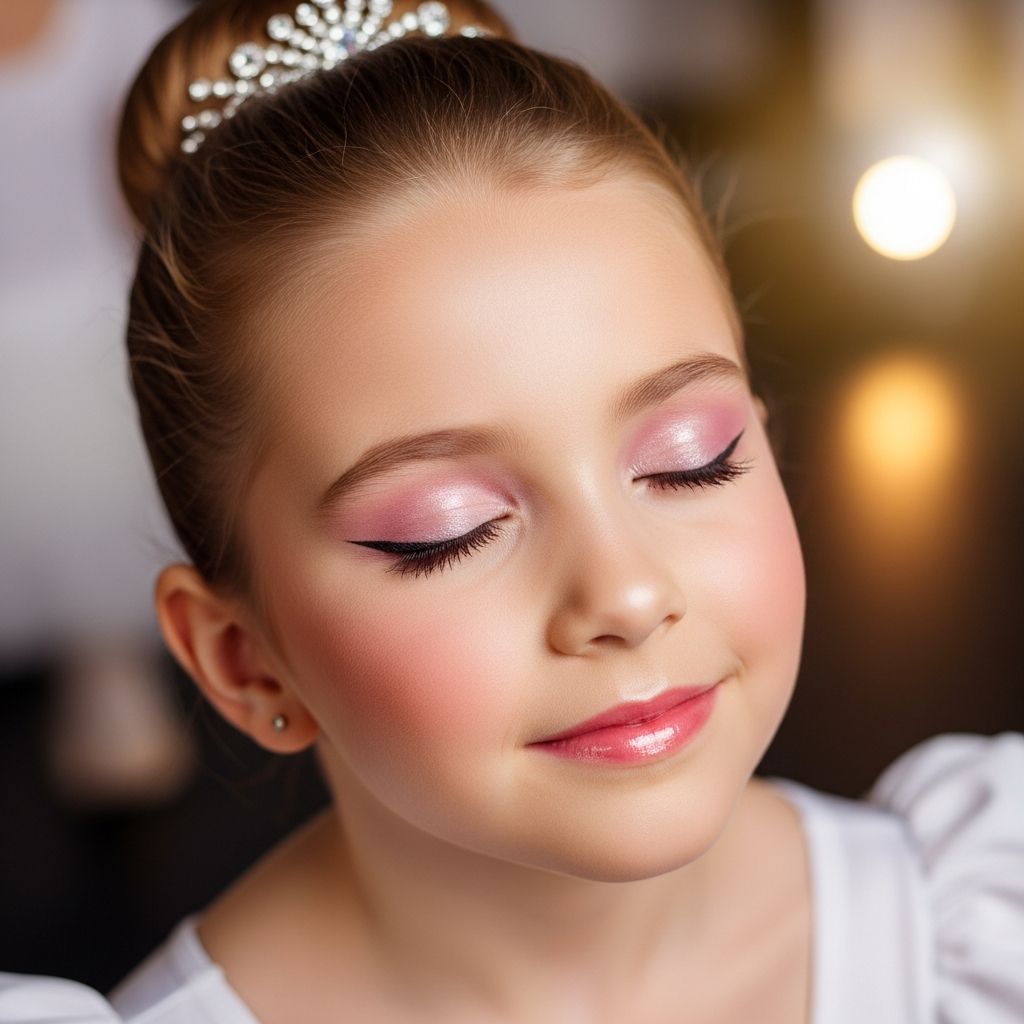
For many parents, the first dance recital brings equal parts pride and panic, especially the moment the costume packet casually mentions “full stage makeup.” What does that actually mean for a child, and how do you create a polished look that still feels age-appropriate?
This guide walks you through the purpose of stage makeup, how to choose products for young skin, and a clear step-by-step routine that keeps your dancer looking like herself, just brighter and more defined under the lights.
Why Young Dancers Need Stage Makeup
Stage makeup for children is not about making them look older; it is about making sure their features are visible from the back row of the auditorium. Bright lights, distance, and strong costumes can easily wash out a child’s face, making smiles and expressions disappear in photos and onstage.
When applied thoughtfully, stage makeup simply amplifies your child’s natural coloring so that her eyes, cheeks, and lips don’t fade into the background. The goal is “her, but clearer” rather than “miniature adult.”
Guiding Principles for Age-Appropriate Stage Makeup
Before diving into product lists and tutorials, it helps to define what “age-appropriate” actually means in the context of performance. A look that is correct under stage lights can feel intense in your living room mirror, so it is important to keep performance conditions in mind.
- Enhance, don’t transform: Aim to emphasize your child’s natural coloring instead of changing it. Think slightly deeper versions of her own lip and cheek tones.
- Prioritize comfort: Choose gentle formulas that feel light on the skin so your dancer can focus on choreography, not itchy makeup.
- Keep the palette simple: Neutral eyeshadows, soft blush, and one recital-approved lip color are usually all you need.
- Match the studio’s expectations: Always check any written makeup guidelines from the teacher or studio owner before buying products.
Essential Items for a Child-Friendly Stage Makeup Kit
You do not need a professional artist’s kit to create a clean, stage-ready look. A small, curated bag with a few well-chosen items will simplify recital day and make touch-ups quick.
Core Makeup Products
- Tinted moisturizer or lightweight foundation: Evens out the skin tone while still letting skin look like skin.
- Translucent setting powder: Reduces shine from stage lights and helps makeup last through multiple numbers.
- Neutral eyeshadow trio: A light highlight shade, a mid-tone lid shade, and a slightly deeper crease shade in browns, taupes, or soft greys.
- Soft pencil eyeliner: Brown or black-brown for younger dancers; avoid harsh, thick lines.
- Mascara: Non-waterproof is usually easier to remove, but choose waterproof if your dancer sweats heavily or cries easily.
- Powder or cream blush: Pink, rose, or peach shades chosen to mimic a natural flush, just a bit stronger.
- Recital-approved lipstick: Many studios request classic red; if not, a rose or berry tone is often a flattering choice.
Helpful Tools and Extras
- Clean makeup sponges or a flat foundation brush.
- Small eyeshadow brushes plus a fluffy blending brush.
- Soft blush brush sized for a child’s face.
- Disposable mascara wands for easier, more precise application.
- Tissues, cotton swabs, and makeup remover wipes for quick fixes.
- Labelled resealable bag or pencil case to keep everything together.
Shade Selection for Different Skin Tones
The same product can look very different across skin tones, so choosing shades with your child’s coloring in mind will help the makeup disappear into her complexion while still reading clearly on stage. When in doubt, test colors in natural light and take a quick photo to see how they appear on camera.
| Skin Tone | Foundation/Tint | Eyeshadow | Blush | Lip Color |
|---|---|---|---|---|
| Very fair | Neutral or cool ivory that matches neck | Champagne, soft taupe, light grey-brown | Pale pink, cool rose | Blue-based red or soft rose |
| Light to medium | Beige or light sand with neutral undertone | Warm beige, light bronze, caramel | Peachy pink, coral rose | Classic red, warm berry |
| Olive | Olive beige matching shoulders | Golden brown, khaki, soft copper | Warm coral, terracotta peach | Tomato red, brick red, warm berry |
| Tan to deep | Rich caramel or cocoa matched to jawline | Chocolate brown, bronze, deep gold | Brick rose, deep berry, warm plum | Blue-red, wine, vibrant berry |
Remember that undertone matters as much as depth; if your child looks chalky or dull in a shade, try a warmer or cooler version rather than automatically choosing something darker or lighter.
Step-by-Step Dance Recital Makeup Routine
The first time you apply stage makeup should never be on recital day. Practicing the routine once or twice beforehand helps both you and your dancer feel more relaxed, and it gives you time to adjust colors or placement.
1. Prep the Skin
- Start with a freshly washed face and gently patted-dry skin.
- Apply a light, fragrance-free moisturizer and allow it to soak in for a few minutes.
- If your child has very dry or very oily areas, use a small amount of primer only where needed.
2. Even Out the Complexion
- Dot tinted moisturizer or foundation on the forehead, cheeks, nose, and chin.
- Blend outward with a damp sponge, paying attention to the hairline and jaw so there are no visible lines.
- Lightly dust translucent powder over the T-zone and under the eyes to prevent shine and creasing.
3. Define the Eyes
The eyes are the most expressive feature on stage, so clear, simple definition is key. Keep the shapes soft and well-blended so your child still looks like herself up close.
- Apply the lightest eyeshadow shade across the entire lid, from lash line to just beneath the brow.
- Place the mid-tone shade on the lid, stopping at the crease, and blend where the colors meet.
- Use the deepest shade in the outer corner and crease, blending in small circles to avoid harsh lines.
- With a sharpened pencil, draw a thin line along the upper lash line, thickening slightly toward the outer edge.
- If liner is requested on the lower lash line, keep it very soft and only along the outer third of the eye.
- Finish with one or two coats of mascara, asking your dancer to look down while you gently wiggle the wand from base to tips.
4. Add Healthy Color to the Cheeks
- Ask your dancer to smile and note where the cheeks naturally become round and full.
- Apply blush to those rounded areas, then sweep it slightly upward toward the temples for lift.
- Blend until there are no obvious stripes; you should see color, but no sharp edges.
5. Finish with a Stage-Ready Lip
- Lightly blot any balm so the lips are smooth but not slippery.
- Outline the lips with a coordinating pencil if precision is needed or the lipstick tends to feather.
- Fill in with lipstick using either the bullet or a small lip brush for extra control.
- Have your child blot on a tissue and, if necessary, apply a second thin layer for longevity.
Timing Your Recital Day Routine
Recital days can be hectic, especially if your dancer has multiple numbers or siblings performing in the same show. A rough timeline helps you avoid last-minute rushing and smudges from wriggling in the car seat.
Sample Recital Day Checklist
- Night before: Wash brushes or sponges, set products in a labelled bag, and review any studio makeup guidelines.
- 3–4 hours before: Ensure your dancer has a light snack and plenty of water so she is not fidgety during makeup time.
- 1.5–2 hours before arrival: Complete full makeup, leaving lips for last if she will be eating again.
- Before leaving home: Do a quick check for smudges, re-powder if shiny, and apply final lipstick.
- Backstage: Keep a small kit with lipstick, powder, tissues, and cotton swabs for emergency touch-ups.
Comfort, Safety, and Skin Care Tips
Young skin is delicate, and many parents worry about breakouts or irritation from stage makeup. A few basic precautions can significantly reduce the chances of discomfort.
- Patch-test any new product on the inside of the wrist or behind the ear at least a day before the recital.
- Choose products labelled for sensitive skin and avoid heavy fragrance whenever possible.
- Give your child breaks during application so she does not feel overwhelmed.
- Remove all makeup gently as soon as you get home with a mild cleanser or child-friendly makeup remover.
- Follow removal with a soft washcloth, lukewarm water, and a light moisturizer.
Helping Your Child Feel Confident in Makeup
For many dancers, stage makeup is a fun part of performing; for others, it feels strange or even embarrassing. Framing it as part of the costume rather than a beauty judgment can help children feel more comfortable.
- Explain that makeup helps the audience see expressions and follow the story of the dance.
- Use practice sessions as playful “dress rehearsal” time, letting your child admire the finished look in the mirror.
- Invite your dancer to choose between two acceptable blush or lip shades; a little control can go a long way.
- Emphasize that the performance is about effort, teamwork, and joy, not about looking perfect.
Frequently Asked Questions About Dance Recital Makeup
Is stage makeup really necessary for very young dancers?
Even preschoolers can look washed out under bright lights, especially if the stage is large or the audience is far away. A very light application of neutral eyeshadow, a hint of blush, and a child-appropriate lipstick is usually enough to keep their faces visible without feeling overdone.
Should my child wear foundation?
Foundation is optional for many young dancers, particularly if they have even skin and the performance space is small. If the studio does not require it, you may choose to use only a bit of concealer where needed and a light dusting of powder to manage shine.
Are false eyelashes appropriate for kids?
False lashes are generally better reserved for older dancers and advanced performances, as they can feel heavy and uncomfortable on small eyes. If lashes are specifically requested, look for the most natural, short styles and practice applying them well before recital day.
How can I keep makeup from melting or smudging?
Using thin layers of product is more effective than piling on thick coats, which are prone to creasing. Set cream products with powder where possible, avoid heavy creams on the eyelids, and send your child onstage with a tissue to dab—rather than wipe—away sweat.
What is the best way to remove stage makeup afterward?
Begin with a gentle, oil-based remover or balm on a cotton pad to break down mascara and lipstick without excessive rubbing. Follow with a mild facial cleanser and water, then pat dry with a soft towel and apply a simple moisturizer to soothe the skin.
Making Recital Makeup Part of the Fun
With a bit of planning, stage makeup can become a special ritual rather than a source of stress. Many parents find that sharing this getting-ready time turns into a favorite recital-day memory, full of chatter, giggles, and before-and-after photos.
By keeping the focus on expression, comfort, and confidence—not perfection—you help your dancer step onstage knowing she looks the part and is ready to shine in every spotlight.