Everyday interactions between parents and children serve as the building blocks for emotional resilience, cognitive growth, and social competence. Research shows that consistent, simple actions—like engaging in shared routines or validating feelings—can lead to significant improvements in a child’s development, often rivaling the effects of formal interventions.
Building Emotional Foundations Through Active Listening
One of the most powerful daily practices is truly listening to your child without interruption. When children feel heard, they develop a secure sense of self and better emotional regulation. Authoritative parenting, which balances warmth with clear guidance, excels here by validating emotions while maintaining structure.
For instance, after a tough day at school, sit at eye level and reflect back what they say: “It sounds like you felt left out when your friend didn’t share.” This mirrors authoritative approaches, fostering self-esteem and problem-solving skills without overindulgence. Studies confirm that such responsive engagement boosts socio-emotional skills, particularly in early childhood.
- Practice daily check-ins during dinner or bedtime to invite open sharing.
- Avoid jumping to solutions; first acknowledge their perspective.
- Model calm responses to demonstrate healthy emotional processing.
Over time, this habit reduces anxiety and builds secure attachments, templates for future relationships.
Incorporating Play into Routine Moments
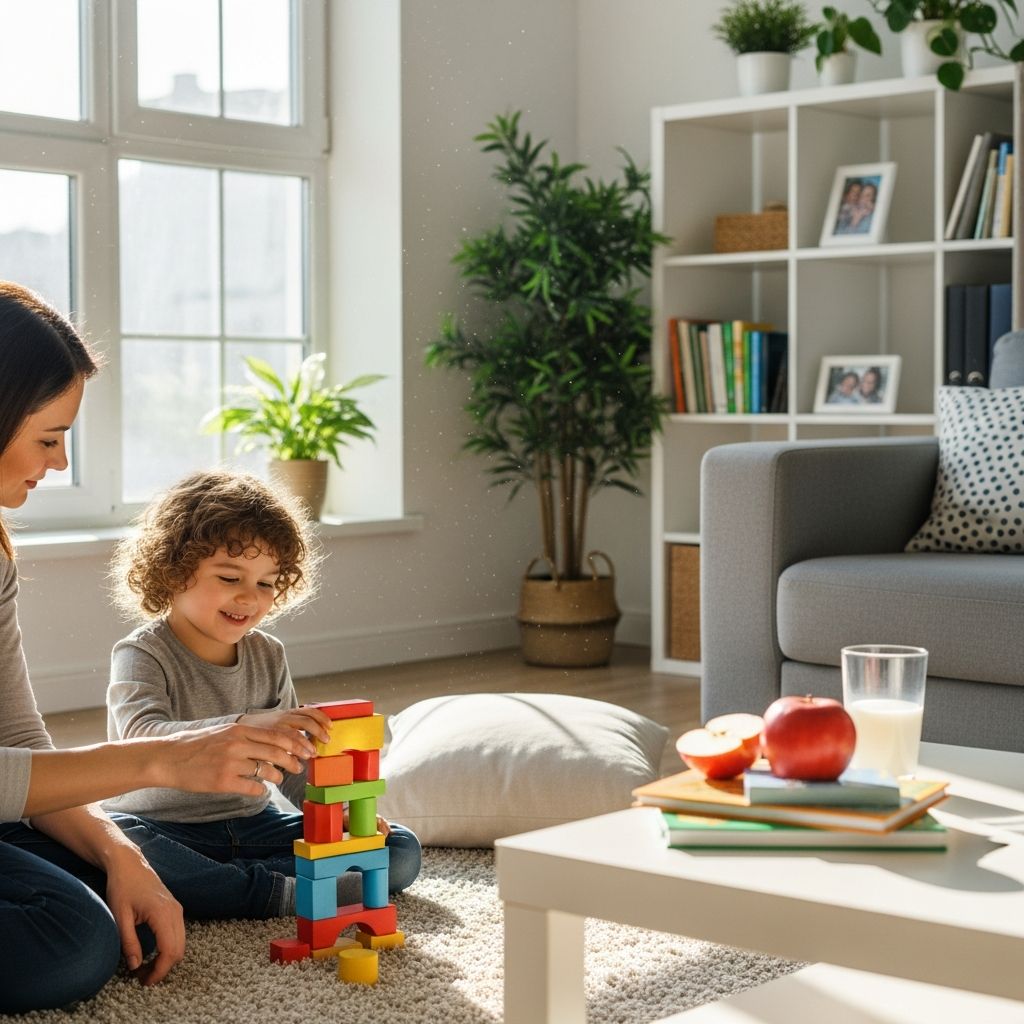
Play isn’t just fun—it’s essential for brain development. Fathers’ rough-and-tumble play, for example, encourages risk-taking and autonomy, while mothers often lead structured learning games. Integrating play into chores turns mundane tasks into skill-building opportunities.
Yale research on low-income families found that providing toys or using household items for play significantly enhanced toddlers’ cognitive and emotional skills. Parents who repurposed recyclables for games saw lasting gains without extra costs.
| Activity | Skill Developed | Example |
|---|---|---|
| Sorting laundry | Cognitive sorting | Group by colors; count items together. |
| Cooking prep | Fine motor & following steps | Stirring dough or measuring ingredients. |
| Cleaning up toys | Self-regulation | Time challenges with songs. |
These integrations align with interventions like Colombia’s First Steps program, where parental time in play activities yielded 0.3-0.4 standard deviation improvements in child outcomes, persisting years later.
Establishing Predictable Family Routines
Consistent routines provide security, aiding self-regulation and academic readiness. A systematic review links routines to gains in cognitive, social-emotional, and academic domains.
Start with bedtime: dim lights, read a story, discuss the day. This predictability reduces bedtime resistance and improves sleep, crucial for growth. Morning routines with shared breakfast build connection and set positive tones.
- Bedtime: 8 PM story and cuddles.
- Meals: Family table time, no screens.
- Weekends: Designated play blocks.
Such structures mimic positive discipline, teaching natural consequences and responsibility without harshness.
Offering Age-Appropriate Choices
Empowering kids with decisions within limits promotes independence and decision-making prowess. Permissive styles falter here by lacking boundaries, leading to impulsivity; authoritative styles thrive by guiding choices.
Say, “Do you want the red or blue cup?” for toddlers, or “Homework first or play outside first?” for older kids. This teaches autonomy while upholding rules, enhancing self-efficacy.
Research from early interventions shows parents shifting to guided choices increased play investments and child skills medium-term.
Modeling Healthy Emotional Regulation
Children absorb how parents handle stress. Demonstrating calm breathing or pausing before reacting teaches regulation over criticism.
During conflicts, narrate: “I’m feeling frustrated, so I’m taking a deep breath.” This counters negative discipline like yelling, favoring praise and soothing. Relational health perspectives emphasize these interactions for socioemotional outcomes.
Daily Affirmations for Self-Esteem
Specific praise like “You worked hard on that puzzle!” beats generic “Good job,” building growth mindsets. Track progress with charts for motivation.
- Praise effort over innate traits.
- Weekly family meetings to celebrate wins.
- Notes in lunches for older kids.
Tech Boundaries with Quality Time
Limit screens to encourage real interactions. Co-view and discuss shows to model critical thinking. Replace with board games or walks.
Studies link excessive tech to self-control issues; balanced use with parental engagement protects development.
Shared Household Responsibilities
Assign chores by age: toddlers dust, school-age set tables. This instills accountability and family bonds.
Yale findings show household involvement boosts skills via routine integration.
Cultivating Gratitude Practices
Evening thanks-sharing builds positivity. Journals for older kids reinforce resilience.
Physical Affection and Touch
Hugs release oxytocin, strengthening bonds. Daily cuddles combat stress.
Fathers’ active play complements this.
Encouraging Outdoor Exploration
Nature walks spark curiosity, reduce ADHD symptoms. Point out details to enhance observation.
Personalized Learning Moments
Follow interests: dinosaurs? Library trips. Ties to cognitive boosts from tailored engagement.
Conflict Resolution as Teaching Tool
Guide apologies and make-ups. Role-play scenarios for empathy.
Nutrition with Involvement
Kids help garden or shop, learning healthy choices.
Sleep Hygiene Mastery
Consistent schedules optimize growth hormone.
Frequently Asked Questions
What if my child resists routines?
Start small, use visuals like charts, and reward consistency with praise. Patience yields adherence.
How much playtime is enough daily?
Aim for 1-2 unstructured hours; quality over quantity via engagement.
Does parenting style change with age?
Adapt boundaries while maintaining warmth; teens need more autonomy discussions.
Can these habits help anxious kids?
Yes, routines and validation reduce anxiety by building security.
What about working parents?
Quality micro-moments like car chats count; consistency trumps duration.
References
- Parenting Styles and Their Impact on Child Development — La Trauma Therapists. 2023. https://www.latraumatherapists.com/blog/parenting-styles-and-their-impact-on-child-development
- Not just for play: parent engagement can boost toddlers’ skills development — Yale News. 2020-02-14. https://news.yale.edu/2020/02/14/not-just-play-parent-engagement-can-boost-toddlers-skills-development
- Improving Parenting Practices for Early Child Development — Journal of the European Economic Association (Oxford Academic). 2023. https://academic.oup.com/jeea/article/21/4/1510/6966539
- Parenting and Child Development: A Relational Health Perspective — PMC (NCBI). 2020. https://pmc.ncbi.nlm.nih.gov/articles/PMC7781063/
- Routines and child development: A systematic review — Wiley Online Library. 2024. https://onlinelibrary.wiley.com/doi/10.1111/jftr.12549
- Parenting Styles and Child Development — ACES Psychiatry. 2023. https://www.acespsychiatry.com/parenting-styles-and-child-development/