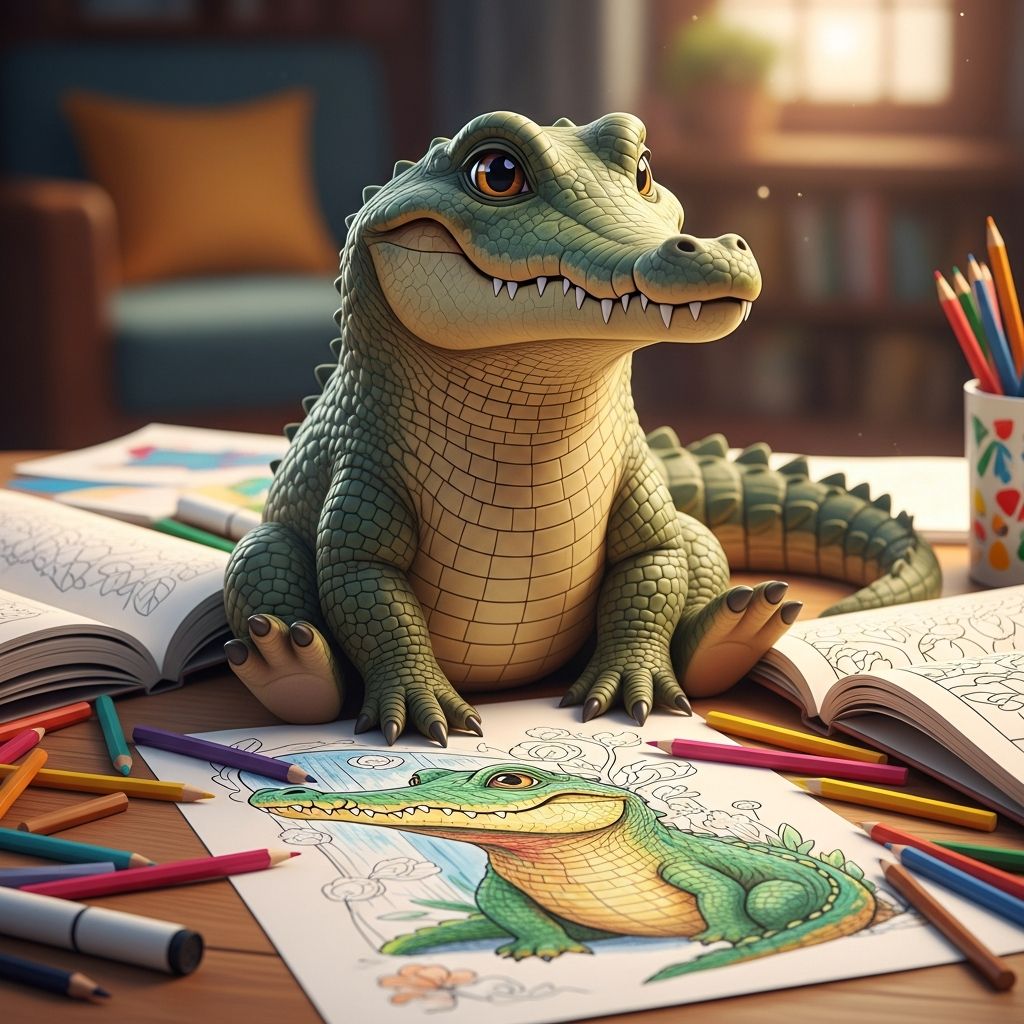
Crocodile coloring pages turn a powerful wild reptile into a safe, friendly subject that children can explore with crayons and imagination. These simple printables offer far more than just a way to pass time; they can support early learning, emotional regulation, and creativity in children of many ages. When parents and teachers use crocodile coloring pages thoughtfully, each sheet can become a mini lesson in nature, art, and mindfulness.
Why Crocodiles Make Great Coloring Subjects
Crocodiles naturally capture children’s attention with their bold shapes, textured scales, and dramatic jaws. Their distinctive bodies are easy for kids to recognize and color, even in simple line drawings. At the same time, the details in the tail, teeth, and armor-like skin provide just enough challenge to keep older children engaged. This balance of familiarity and complexity makes crocodiles ideal for a wide range of coloring skills and ages.
- The clear outline of the body helps younger children practice staying in the lines.
- The many scales and features allow older kids to experiment with shading and patterns.
- Their connection to rivers, swamps, and jungles opens up opportunities to add backgrounds and habitats.
Key Benefits of Crocodile Coloring Pages
Coloring crocodiles can support your child’s development in several important areas. These benefits appear whether you print a single sheet for a rainy afternoon or build a whole binder of animal pages over time.
- Fine motor skills: Holding crayons, controlling strokes, and coloring smaller details strengthen hand muscles and improve coordination.
- Concentration and patience: Completing a detailed crocodile drawing encourages kids to slow down, focus, and work carefully from start to finish.
- Creativity and expression: Children decide which colors to use, how fierce or friendly the crocodile looks, and what kind of scene to build around it.
- Early science learning: Crocodiles provide a natural bridge to talk about reptiles, habitats, food chains, and how wild animals live.
- Stress relief and calm: The repetitive motion of coloring can be soothing, helping kids unwind after school or busy activities.
Age-Appropriate Ideas from Toddlers to Tweens
The same crocodile theme can look very different depending on a child’s age and skill level. Choosing or adapting coloring pages thoughtfully helps keep the activity enjoyable and not frustrating.
For Toddlers and Preschoolers (Ages 2–4)
At this stage, children do not need complex details. Look for friendly, large crocodile outlines with big open spaces and minimal small lines. Encourage scribbling and color exploration rather than perfection.
- Offer thick crayons or washable markers that are easy to grip.
- Limit color choices to a few basic shades to avoid overwhelm.
- Talk about simple concepts: “This is the crocodile’s tail,” “Can you color the water blue?”
For Early Elementary (Ages 5–7)
Children in this age group are ready for a little more detail and structure. They can begin to stay within lines and follow simple directions, but still enjoy playful, cartoon-like crocodiles.
- Introduce pages with basic scales, eyes, and teeth details.
- Encourage kids to add simple backgrounds like waves, grass, or a sunny sky.
- Ask questions that spark storytelling: “Where is this crocodile going?” “Is it friendly or grumpy?”
For Older Kids (Ages 8+)
Older children may enjoy more realistic crocodiles with detailed scales, claws, and textured skin. They are often ready to mix realistic nature information with fantasy scenes.
- Provide reference photos or books so they can mimic real crocodile colors if they wish.
- Introduce concepts like shading, light sources, and texture to make the crocodile look three-dimensional.
- Encourage them to design full scenes, such as river banks, mangroves, or jungle adventures.
Fun Crocodile Themes and Page Ideas
Not all crocodile coloring pages need to look the same. Varying the theme keeps kids interested and allows you to match pages with holidays, school topics, or favorite stories.
- Friendly cartoon crocodiles: Big smiles, hats, or silly poses for younger children.
- Realistic crocodiles: Detailed scales, long snouts, and lifelike habitats for animal-loving kids.
- Adventure scenes: Crocodiles in boats, exploring jungles, or peeking from behind reeds.
- Learning pages: Simple labels for body parts (tail, jaw, scales) or spaces to write facts about reptiles.
- Seasonal crocodiles: A crocodile with a scarf in winter, sunglasses in summer, or surrounded by leaves in autumn.
Color Suggestions and Techniques
Children often reach for the same basic green crayon for crocodiles, but there is room for much more variety. Crocodiles in nature can appear brown, gray, olive, or even nearly black depending on the water and light around them. Letting kids experiment with different shades helps them see that nature is not limited to one “correct” color.
- Combine greens and browns for the body to suggest scales and shadows.
- Use lighter tones on the belly and darker ones along the back and tail.
- Add blue or green-blue around the crocodile to suggest water, and tan or gray for rocks and sand.
As kids grow more confident, they can try blending crayons or colored pencils. Showing them how to press lightly in some areas and more firmly in others can create richer, more interesting results. Even simple crosshatching (crisscross lines) can suggest the rough texture of crocodile skin.
Creating a Crocodile Learning Corner
Crocodile coloring pages can easily become the center of a small learning area at home or in the classroom. This makes the activity feel more meaningful and helps children see coloring as part of learning, not just busywork.
| Element | What to Include | Learning Focus |
|---|---|---|
| Visuals | Photos of real crocodiles, diagrams of body parts, habitat images | Observation skills, basic biology terms |
| Materials | Printed crocodile pages, crayons, markers, colored pencils, clipboards | Fine motor control, color experimentation |
| Books | Simple nonfiction about crocodiles, reptile picture books, themed storybooks | Vocabulary, reading comprehension, science facts |
| Extras | Stickers, stencils, small plastic crocodile toys | Imaginative play, storytelling prompts |
Pairing Coloring with Simple Science Facts
One of the biggest strengths of crocodile coloring pages is how easily they connect to real-world science learning. Short, age-appropriate facts turn each page into a mini nature lesson without overwhelming the child.
- Explain that crocodiles are reptiles, like lizards and turtles, and that they lay eggs.
- Point out that they live near water and often stay very still to surprise their prey.
- Talk about their powerful jaws and how their tough skin helps protect them in the wild.
For older kids, you can add slightly more advanced ideas, such as the difference between crocodiles and alligators or how crocodiles play a role in keeping ecosystems healthy by controlling populations of other animals. If a child asks deeper questions, use them as opportunities to look up information together and then add notes or labels around the coloring page.
Creative Extensions Beyond Basic Coloring
Once the main crocodile is colored, there are many ways to extend the activity. These add-ons turn a simple page into a project that may span several days or become part of a themed unit.
- Story writing: Ask children to give their crocodile a name and write a short story about its day.
- Collage backgrounds: Glue blue tissue paper for water, green paper for plants, or sand for a river bank.
- Labeling practice: Have kids write labels for parts like “tail,” “jaw,” and “scales” around the page.
- Mini booklets: Staple several colored crocodile pages together into a personal “crocodile book” with one fact per page.
Using Crocodile Coloring Pages in the Classroom
Teachers can easily integrate crocodile coloring pages into existing lessons without extra preparation. They work well during centers, early finisher time, or as part of a larger reptiles or habitats unit.
- Use them as a calm activity after a high-energy game or outdoor recess.
- Pair them with short nonfiction readings or videos about crocodiles.
- Display finished pages on a bulletin board titled “River Reptiles” or “Our Crocodile Gallery” to showcase student work.
Coloring also supports learners who need visual or hands-on tasks to process information. For example, while listening to a short lesson about crocodiles, students can color quietly, connecting spoken information to the image in front of them.
Tips for Parents: Setting Up for Success
A little planning can make crocodile coloring time smoother and more enjoyable for both children and adults. Preparing materials ahead of time reduces interruptions and allows kids to focus on the activity itself.
- Print multiple copies of favorite pages so siblings do not have to share a single sheet.
- Keep a small box or tray of crayons and pencils dedicated to coloring pages.
- Use a plastic tablecloth or large sheet of paper to protect tables from markers and paint.
- Set a relaxed tone by avoiding criticism and praising effort and creativity instead of neatness alone.
For busy days, consider keeping a folder of crocodile printables ready to grab when you need a quiet activity before dinner or during a long phone call. Children soon learn to view coloring time as a comforting routine.
Frequently Asked Questions about Crocodile Coloring Pages
Are crocodile coloring pages too scary for young kids?
Most crocodile coloring pages designed for children show friendly or cartoon-like reptiles with soft features and big smiles. If you worry about frightening a sensitive child, choose images where the crocodile looks happy or silly rather than fierce. Over time, many children come to see crocodiles as interesting animals rather than something to fear.
How can I make the activity more educational?
To add educational value, pair coloring with short facts, books, or simple diagrams about crocodiles and their habitats. You can also ask open-ended questions, such as where the crocodile might live, what it might eat, or how it might protect itself, and encourage your child to draw clues into the picture.
What materials work best for crocodile coloring pages?
Crayons are durable and easy for younger children to control, while colored pencils allow older kids to add details and shading. Washable markers are bright and fun but may bleed through thin paper, so place another sheet underneath. Some children enjoy mixing materials, such as using crayons for the crocodile’s body and markers for the background.
Can crocodile coloring help with handwriting skills?
Coloring helps strengthen the same hand and finger muscles used for handwriting by building control and endurance. When children practice staying within lines and making small, careful strokes, they develop the fine motor skills that later support neater writing. Adding simple labeling or short sentences to completed pages creates a gentle bridge between art and writing practice.
How often should my child do coloring activities?
There is no strict rule about how often a child should color; instead, focus on offering coloring as a regular, enjoyable option. Short, frequent sessions of 10 to 20 minutes can be more effective than rare, very long sessions that leave a child tired or frustrated. Allow your child to choose crocodile pages when they are in the mood and avoid forcing the activity.
Turning Pages into Lasting Memories
Finished crocodile coloring pages do not need to end up in the recycling bin immediately. Displaying a few favorites on walls or the refrigerator shows your child that their effort is valued. Others can be hole-punched and kept in a binder as a “crocodile art” collection, allowing children to look back and see how their skills grow over time.
Whether you use crocodile coloring pages for a quiet afternoon at home, a classroom science unit, or a rainy-day art project, they offer a rich blend of fun and learning. With a little creativity, each page can become a doorway to stories, science, and a lifelong appreciation for the fascinating world of reptiles.