Crib soothers promise calmer nights, fewer tears, and more sleep for exhausted parents, but they can also raise big questions: Are they safe? Will they create bad habits? How and when should you use them? This guide walks through the practical, evidence-informed ways to use crib soothers as one tool among many—not as a magic fix—to help your baby (and you) rest a little easier.
What Exactly Is a Crib Soother?
A crib soother is any device or object placed in or near your baby’s sleep space that is designed to calm, entertain, or help them fall asleep. It might make sounds, project light, play music, or offer something soft to touch or hold, depending on the baby’s age and safety guidelines.
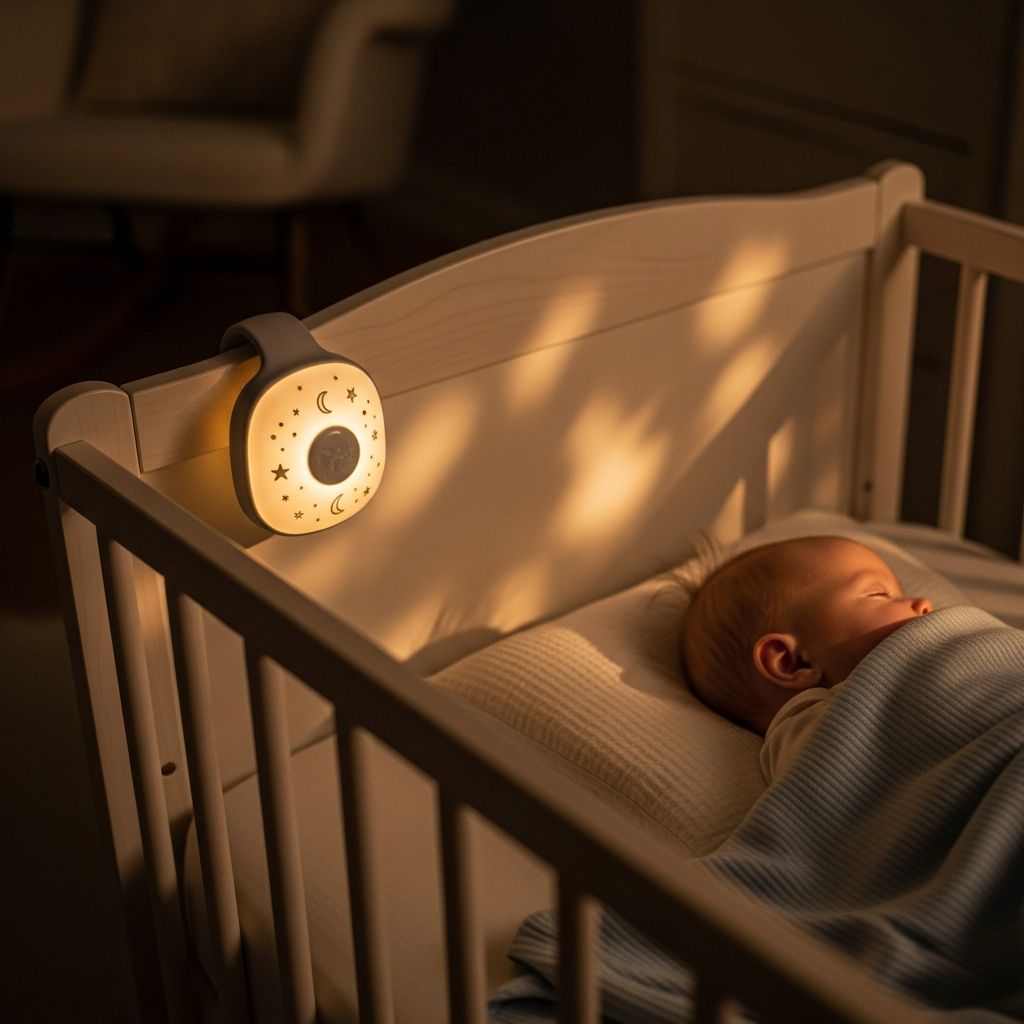
- Electronic soothers: Panels or toys that attach to the crib, often with music, white noise, or gentle movement.
- Sound machines: Standalone devices that play white noise, nature sounds, or soft music from a safe distance.
- Comfort objects (for older babies): Small, breathable loveys or blankets introduced when safe sleep guidelines allow.
- Non-electronic cues: Simple visual items like a mobile (used only when age-appropriate and safely installed).
Crib soothers can be helpful tools, but they work best when paired with realistic expectations: they may reduce fussiness or shorten settling time, but they will not eliminate night waking entirely—especially in the first year.
Why Babies Need Help Soothing
Newborns arrive with immature nervous systems and no ability to calm themselves on purpose. They rely on caregivers to regulate their bodies through touch, movement, sound, and feeding. Over time, with repeated patterns and consistent care, babies slowly learn what calm feels like and begin to participate in that process.
- Many babies have a strong need to suck, rock, or be held to feel safe enough to fall asleep.
- Sleep cycles in infancy are short, and frequent night waking is both biologically normal and protective.
- Soothers can act as familiar cues that signal, “It’s time to wind down now,” but they cannot replace responsive caregiving.
Understanding these developmental realities helps parents use crib soothers as supportive tools instead of expecting them to “fix” sleep.
Common Types of Crib Soothers
Not all soothing aids work the same way. Knowing the main types can help you choose what fits your baby’s age, personality, and your family’s comfort level.
| Type | Main Features | Best For | Key Considerations |
|---|---|---|---|
| Crib-attached light & sound toys | Music, nature sounds, soft lights or projections; often timer-based | Babies who calm with consistent sound or gentle visual cues | Avoid bright or flashing lights; choose short, predictable cycles |
| Standalone sound machines | White noise, fan sounds, rain, or ocean noise; volume controls | Masking household noise and supporting longer sleep stretches | Place away from the crib; use moderate volume, not maximum |
| Mobiles (non-electronic or simple) | Gentle movement and visual interest above the crib | Young infants at nap or pre-bed wind-down | Remove once baby can push up or grab; avoid overstimulating designs |
| Loveys & comfort objects | Small, soft, breathable items for older babies | Toddlers or older infants who seek a familiar touch item | Introduce only when safe per pediatric guidance; avoid large blankets or pillows |
When to Introduce a Crib Soother
There is no one “right” age to introduce crib soothers, but there are safety and developmental guidelines to consider. For newborns and very young infants, the focus should be on safe sleep surfaces, caregiver contact, and simple, predictable routines rather than gadgets inside the crib.
- 0–3 months: Prioritize safe sleep (firm mattress, fitted sheet, no loose items). Any soother should stay outside the crib or firmly attached and out of reach.
- 4–6 months: Some babies begin to notice consistent sounds or gentle light patterns. This can be a reasonable time to trial a sound machine or short music cycle.
- 6–12+ months: Many parents refine their approach, reducing stimulating features and keeping the sleep space simple and familiar.
Always cross-check timing and products with current pediatric and safe sleep recommendations, which can change as more research emerges.
Setting Realistic Expectations About Sleep
Crib soothers are often marketed as solutions that promise “all-night sleep,” but biology is stronger than marketing. Babies wake frequently for many reasons: hunger, growth spurts, teething, separation anxiety, or just transitioning between lighter and deeper sleep cycles.
- Some nights the soother will seem magical; other nights, your baby may resist everything.
- Improvement is usually gradual rather than a dramatic overnight change.
- Parental consistency and predictable routines often matter more than the specific device used.
Viewing crib soothers as supporting cast—not the star—reduces pressure on both the product and the parent.
How to Use Crib Soothers Wisely
Thoughtful use of crib soothers can create a calming sleep environment without overshadowing your baby’s growing ability to self-soothe. The goal is not to eliminate all help but to avoid unnecessary dependence on a single, hard-to-replace cue.
- Start simple
Choose one primary soothing element, such as white noise on a timer, instead of multiple lights, sounds, and toys at once. - Use consistent cues
Turn on the soother during the same part of your bedtime routine so your baby begins to associate that sound or glow with winding down. - Keep stimulation low
Opt for steady sounds and minimal light instead of changing colors, loud music, or flashing projections that may keep your baby awake. - Aim for short cycles
Many families find that 20–40 minutes of sound or light, then quiet darkness, balances support with space for independent settling between sleep cycles. - Stay responsive
Soothers should never replace checking on your baby, feeding when needed, or offering comfort after a hard wake-up.
Creating a Calm Sleep Environment
Crib soothers work best within an overall sleep-friendly environment rather than trying to compensate for overstimulation elsewhere. Think of the room as part of the soothing toolkit.
- Keep the room dim before bedtime, using soft, indirect light rather than bright overhead bulbs.
- Maintain a comfortable temperature: not too hot, not too cold, based on how your baby feels on their chest or back.
- Reduce background noise from TV, conversations, or electronics by closing doors or using moderate white noise.
- Build a short, predictable routine: feed, change, brief cuddle, then into the sleep space.
When the environment and routine already suggest “rest,” crib soothers have less work to do and are less likely to become the sole focus of your baby’s comfort.
Safety First: Using Soothers Responsibly
Safety should always come before convenience. Devices and comfort objects in or near a crib carry potential risks such as strangulation hazards, overheating, or suffocation if not used correctly. Thankfully, a few clear rules go a long way toward risk reduction.
- Follow current safe sleep guidelines: firm, flat surface; baby placed on the back; no loose bedding or pillows.
- Avoid cords, strings, or long attachments; choose battery-operated devices designed for infant use.
- Place electronics out of reach, securely attached, and inspect them regularly for wear or damage.
- Use moderate volume for sound machines; if you need to raise your voice to be heard beside it, it is likely too loud.
- Check the baby’s temperature by touching the chest or upper back; sweating can signal overheating.
Revisit safety recommendations periodically, as pediatric organizations may update guidance based on new research.
Avoiding Soother Dependence
One common worry is that a baby will become so attached to a crib soother that sleep becomes impossible without it. While preferences are natural, it is possible to reduce dependence with a few proactive strategies.
- Rotate soothing methods: Alternate between rocking, singing, and the crib soother so no single cue feels mandatory.
- Keep middle-of-the-night resets simple: If the soother turns off and your baby wakes, consider shorter re-activations or more hands-on comfort rather than starting a full light-and-sound show.
- Gradually shorten usage: Over weeks, you can move from all-night use to timed cycles, then to just the bedtime routine period.
- Introduce other calming skills: Gentle back pats, a predictable phrase (“Sleepy time, I’m here”), and a steady environment help your child learn that safety doesn’t depend on one gadget.
Over time, as your baby’s ability to self-soothe grows, the soother becomes an optional aid rather than a necessity.
Crib Soothers and Different Parenting Styles
Families bring their own values, cultures, and sleep philosophies into the nursery. Some parents prefer a very minimal environment; others feel comforted by having multiple tools available. There is room for flexibility as long as safety is prioritized.
- More structured parents may use soothers as part of a carefully timed routine and track how changes affect naps and night waking.
- More intuitive parents may turn the soother on only when the baby seems extra fussy, using it alongside rocking, feeding, or contact naps.
- Co-sleeping or room-sharing families might place soothers across the room or on a dresser instead of directly on the crib.
The goal is not to copy anyone else’s pattern but to find an approach that aligns with your values, your baby’s temperament, and your everyday reality.
When Crib Soothers Might Not Help
Sometimes a baby continues to struggle with sleep despite thoughtful use of crib soothers. In those situations, more sound or more motion is rarely the answer. Other factors are often at play.
- Pain or discomfort from illness, reflux, allergies, or teething can overshadow any calming device.
- Overtiredness from very short naps or too-late bedtimes can make it harder to settle, even with soothing aids.
- Major changes—such as travel, starting childcare, or a new sibling—can temporarily disrupt sleep patterns.
If sleep remains extremely fragmented, or your baby seems distressed in ways that are hard to soothe, it can be wise to discuss the pattern with a pediatric professional rather than adding more gadgets.
Transitioning Away from Crib Soothers
As children become toddlers, many parents eventually choose to phase out certain crib soothers, especially those that are noisy, bright, or difficult to replace. There is no single deadline, but gradually simplifying the sleep environment can support independent sleep skills later on.
- Choose one change at a time
For example, switch from musical lullabies to simple white noise before removing sound altogether. - Shorten duration slowly
Move from all-night sound to a 60-minute timer, then to only the first 20–30 minutes of bedtime. - Offer a new comfort cue
For an older toddler, this might be a story, a short bedtime mantra, or a special goodnight routine that remains even when devices disappear. - Expect some protests
Brief resistance is normal when routines change. Calm consistency usually brings acceptance within several nights to a couple of weeks.
The more you pair transitions with reassurance and predictability, the easier it becomes for your child to adapt to sleeping with fewer external aids.
Sample Bedtime Routine With a Crib Soother
Every family’s evening flow will look different, but a loose example can help you imagine where a crib soother might naturally fit into your night.
- Gentle play and low-key interaction 60–90 minutes before bedtime.
- Short wind-down (bath or wipe-down, diaper change, pajamas, feed).
- Carry baby into the dim bedroom; turn on white noise or soft music at a moderate volume.
- Brief cuddle, song, or quiet talking while the soother runs in the background.
- Place baby in the crib drowsy but not fully asleep when possible, using your chosen soother setting.
- Offer a gentle pat or reassuring phrase for a minute or two, then step away and listen.
This pattern can be adjusted for age, temperament, and personal preference, but its consistent structure helps the soother act as one familiar cue among many.
Frequently Asked Questions About Crib Soothers
Do crib soothers interfere with self-soothing?
Crib soothers do not automatically prevent self-soothing, but they can become crutches if they are the only calming strategy used. Aim to pair them with other stable routines—like a consistent bedtime, calming voice, and gentle touch—so your child learns multiple ways to feel safe and sleepy.
Is it okay if the soother runs all night?
Many families use white noise through the night without problems, especially if the volume is moderate and the device is placed safely away from the crib. Music and lights are often best limited to shorter periods, as continuous stimulation may interfere with deeper sleep in some children.
What if my baby cries when the soother turns off?
This reaction usually means the baby has strongly associated the sound or light with sleep. Rather than returning immediately to full-length cycles, consider briefly comforting your baby, using your voice or touch, and gradually shortening or simplifying the soother’s settings over several nights.
Are light projections safe for sleep?
Soft, dim projections can be safe when used properly, but very bright, colorful, or constantly moving lights can be overstimulating. If you notice your baby staring, squirming, or becoming more alert, it may help to lower brightness, shorten use, or skip the visual features altogether.
How do I choose the right crib soother?
Consider your priorities: safety certifications, simplicity, easy cleaning, adjustable volume, and an automatic shut-off feature are helpful. Favor steady, gentle sounds over complex playlists and avoid devices that require frequent intervention from you to restart.
Key Takeaways for Tired Parents
- Crib soothers can support calmer bedtimes, but they work best alongside responsive caregiving and a predictable routine.
- Safety and simplicity matter more than extra features; avoid anything that is overly bright, loud, or complicated.
- Realistic expectations—especially about normal night waking in infancy—protect parents from unnecessary guilt or disappointment.
- Over time, a gradual shift from many external aids toward a simpler sleep environment can encourage growing independence without pressure.
Used thoughtfully, crib soothers are not a shortcut around your baby’s needs but a gentle addition to the comforting presence you already provide.