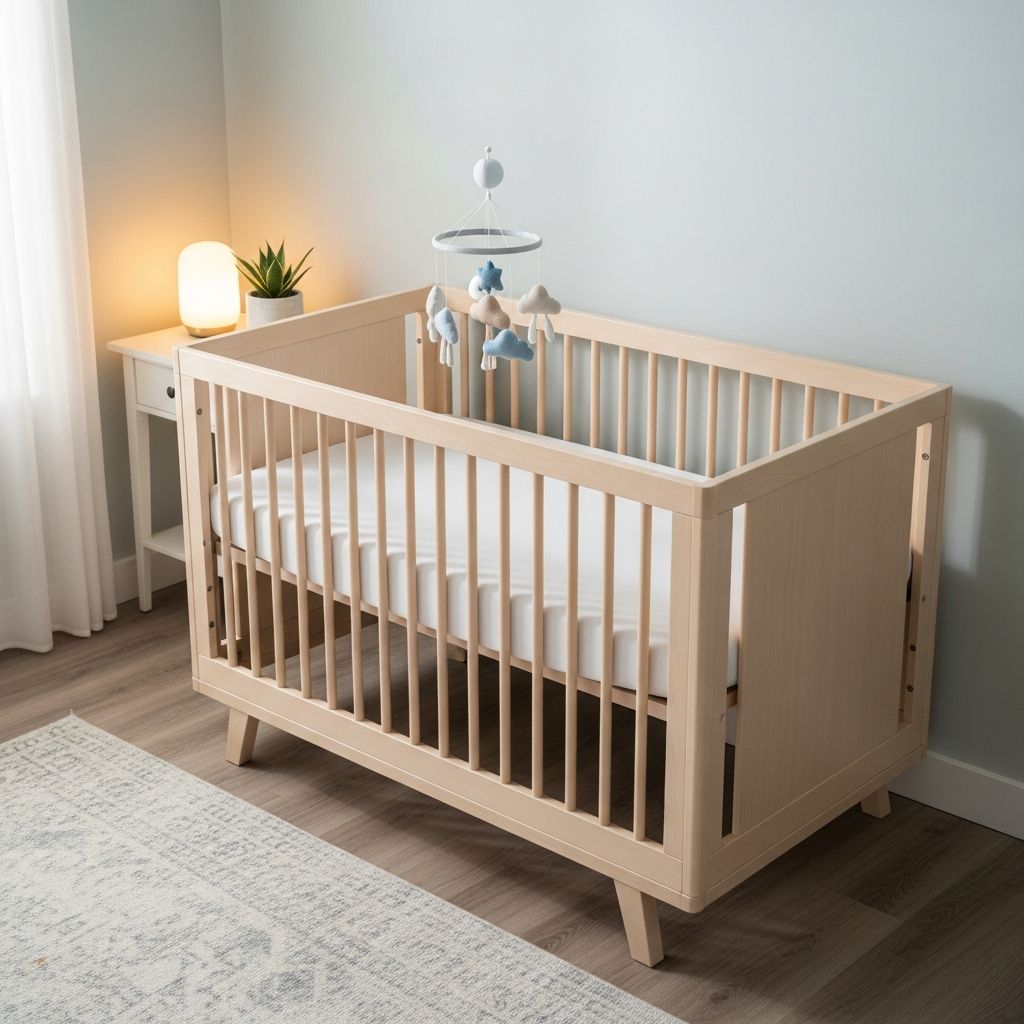
Choosing the right crib is one of the most important decisions new parents make to ensure their baby’s safety during sleep, which occupies much of an infant’s early life. A properly selected and maintained crib minimizes risks like entrapment, strangulation, and suffocation. This guide draws from established federal standards and expert recommendations to help you navigate crib selection, assembly, and daily use.
Understanding Federal Crib Safety Regulations
In the United States, the Consumer Product Safety Commission (CPSC) enforces rigorous standards for full-size cribs manufactured after June 28, 2011. These rules were strengthened following incidents linked to hazardous designs, prioritizing structural integrity and hazard prevention.
- No drop-side rails: These mechanisms have been banned due to failures that allowed babies to slip into dangerous gaps.
- Slat spacing limit: Vertical bars must be no more than 2 3/8 inches (about a soda can’s width) apart to prevent a baby’s body from slipping through while keeping their head secure.
- Corner post height: Posts should either be flush with the frame or extend over 16 inches to avoid clothing snags leading to strangulation.
- Headboard and footboard design: Solid panels without cutouts eliminate entrapment risks for limbs or heads.
Compliance with these CPSC mandates is mandatory for cribs sold nationwide, ensuring baseline protection.
Key Features of a Secure Crib Design
Beyond regulations, inspect for durable construction. Cribs must withstand significant weight and stress without warping or breaking. Mattress supports require reinforced slats and hardware to prevent collapse. Exposed screws or sharp edges must be absent or covered.
| Feature | Safe Standard | Risk if Non-Compliant |
|---|---|---|
| Slat Strength | Durable wood/metal, no cracks | Breakage causing falls |
| Hardware | Tight, no missing parts | Entrapment in gaps |
| Finish | Lead-free paint, smooth | Poisoning or injury |
| Posts | ≤1/16 inch protrusion or >16 inches | Strangulation |
Opt for cribs certified by the Juvenile Products Manufacturers Association (JPMA), which tests against CPSC criteria and additional voluntary benchmarks.
Mattress Selection and Installation
The mattress is as crucial as the crib frame. It must be firm to support proper spinal development and reduce suffocation hazards. A soft surface increases SIDS risk by allowing face-down positioning without airway clearance.
- Fit tightly: No more than two fingers’ width (1 inch) between mattress edge and frame to block wedging.
- Use only the manufacturer-provided mattress or one specifically labeled compatible.
- Cover with a single, fitted sheet made of breathable, flame-retardant fabric—avoid loose bedding.
Firmness is non-negotiable; test by pressing firmly—no sinking beyond 1 inch. Organic options may carry Global Organic Textile Standard (GOTS) certification for material purity, but safety trumps all.
Proper Crib Assembly and Placement
Incorrect assembly causes many incidents. Follow instructions meticulously, using all provided tools. Test stability by shaking and applying adult weight before use.
Position the crib strategically:
- At least 3 feet from windows, blinds, cords, and furniture to prevent climbing or entanglement.
- On a level, stable surface away from heaters, vents, or lamps.
- In the parents’ room for the first 6-12 months per AAP safe sleep guidelines, promoting breastfeeding and monitoring.
Adjust mattress height: Highest for newborns (rails 26+ inches above), lowest for toddlers who can stand.
Maintaining Crib Safety Over Time
Regular checks are vital as babies grow active. Weekly inspections include:
- Tightening all screws and brackets.
- Scanning for splinters, loose parts, or chew marks.
- Verifying slat spacing remains compliant.
Discontinue use if any damage appears. Check the CPSC recall database for your model before purchase and periodically. Transition to a toddler bed when the child climbs out or nears the height limit (usually 35 inches).
Creating a Safe Sleep Environment
A bare crib embodies safe sleep principles endorsed by CPSC and AAP. Eliminate:
- Pillows, blankets, bumpers, or toys—potential suffocation sources.
- Mobiles after 5 months or when baby pushes up.
- Necklaces, bibs, or soft clothing that could constrict.
Place baby on their back, feet toward footboard, head away from elevated ends. Room temperature: 68-72°F, with breathable sleepers instead of blankets. Noise machines at safe volumes prevent hearing risks.
Navigating Vintage or Hand-Me-Down Cribs
Older cribs pre-2011 may lack modern reinforcements. Discard if featuring drop-sides, wide slats, or weak hardware. Even non-compliant antiques pose unacceptable risks—prioritize new, certified models.
Convertible Cribs and Long-Term Value
Many modern cribs convert to toddler beds, daybeds, or headboards, extending usability. Ensure conversion kits meet CPSC standards and include instructions. Storage drawers underneath are convenient but must not interfere with mattress support.
Frequently Asked Questions
What is the maximum slat spacing allowed in a safe crib?
Slats must be no more than 2 3/8 inches apart to prevent entrapment.
Are crib bumpers safe?
No, bumpers increase suffocation and strangulation risks; keep the crib bare.
How often should I check crib hardware?
Inspect weekly and tighten as needed; replace any broken parts immediately.
Can I use a crib near a window?
No, maintain 3 feet distance from cords and drapes to avoid accidents.
What if my crib was recalled?
Stop using it immediately and contact the manufacturer for remedies via CPSC.gov.
Empowering Parents with Knowledge
Adhering to these standards transforms the crib from potential hazard to sanctuary. Stay informed via official resources, as standards evolve with research. Your vigilance ensures restful nights and peace of mind.
References
- Crib Safety 101: Comparing Standards and Certifications — dadadababy.com. 2023. https://dadadababy.com/blogs/dadada-daily/crib-safety-101-comparing-standards-and-certifications
- Baby Crib Safety Standards – Complete Guide for First Time Parents — thedomfamily.com. 2023. https://thedomfamily.com/baby-crib-safety-standards-complete-guide-for-first-time-parents/
- 7 Crib Safety Tips and Checklist: A Guide to Safe Sleep — huckleberrycare.com. 2023. https://huckleberrycare.com/blog/7-crib-safety-tips-and-checklist-a-guide-to-safe-sleep
- Crib Safety Tips — U.S. Consumer Product Safety Commission (CPSC). 2023-10-01. https://www.cpsc.gov/safety-education/safety-guides/cribs/crib-safety-tips
- A Guide to Crib Safety Standards — The Mother Baby Center. 2020-10-01. https://www.themotherbabycenter.org/blog/2020/10/dont-snore-on-crib-safety-how-to-set-up-your-babys-crib-safely/
- Cribs and Crib Safety — UF Health. 2023. https://ufhealth.org/care-sheets/cribs-and-crib-safety