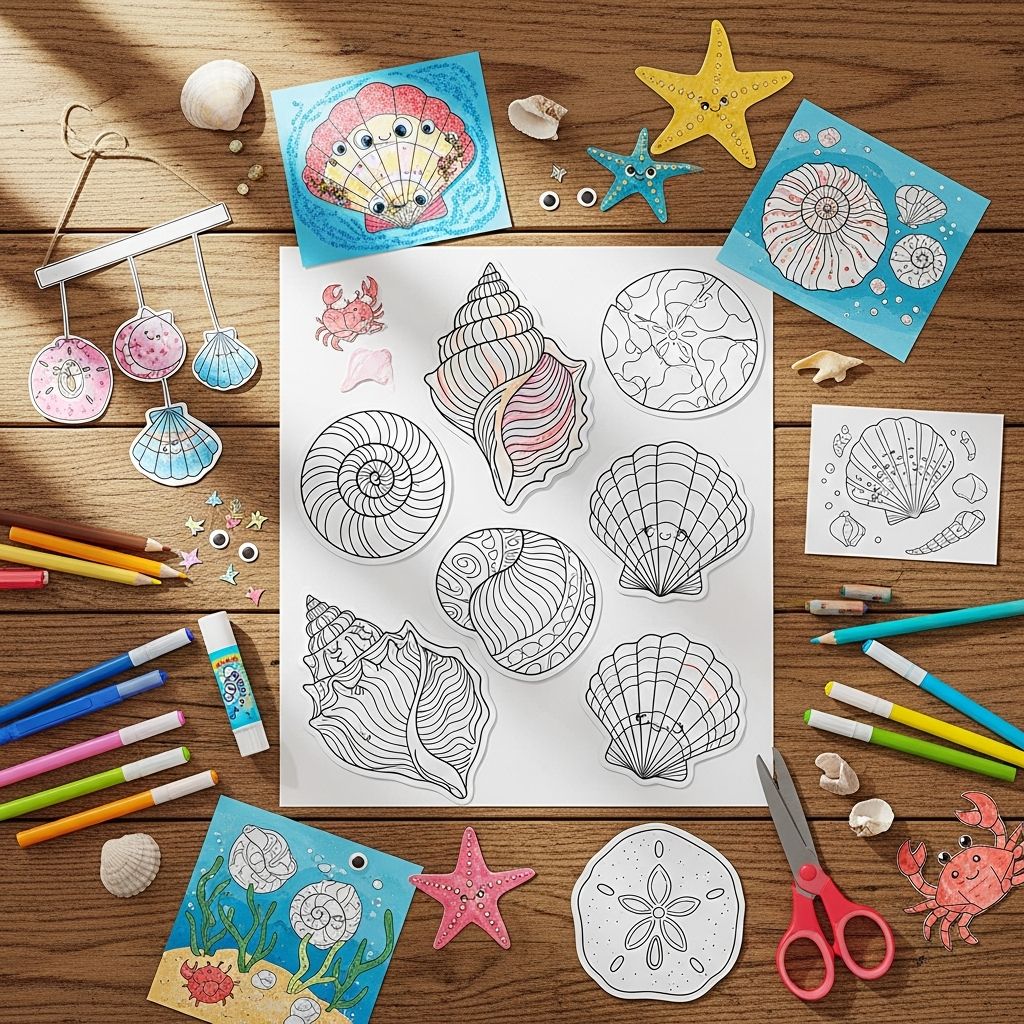
Seashells instantly bring to mind sunny days, sandy toes, and the sound of crashing waves. With seashell-themed printables, that same sense of wonder can come home from the beach and land on your kitchen table or classroom art center. This guide shows how to turn simple seashell outlines and doodle pages into rich, hands-on experiences for kids of different ages.
Why Seashell Printables Captivate Kids
Children are naturally drawn to seashells because they are full of texture, pattern, and mystery. A printable version of a shell is like a blank ticket to an underwater world kids can fill with color, stories, and imagination. Seashell pages also feel less intimidating than perfectly realistic coloring sheets, which encourages kids to experiment more freely.
Parents and teachers appreciate seashell printables because they are easy to share, inexpensive, and adaptable. The same sheet can be used as a coloring page, a template for collage, a writing prompt, or a game board just by changing how it is introduced. This flexibility makes seashell pages ideal for rainy-day fun, summer camp, beach units, or quiet time activities.
Getting Ready: Supplies and Setup
Before printing seashell pages, gather a variety of art and craft materials so kids can explore multiple techniques. Setting up a simple “beach art station” signals that this is a special, creative time rather than just another worksheet.
- Printables: Seashell outlines, doodle-style shells, blank shells for designing, and simple sea-themed borders.
- Coloring tools: Crayons, colored pencils, washable markers, gel pens, and highlighters.
- Painting options: Watercolors, tempera cakes, cotton swabs as mini paintbrushes, and small sponges for dabbing.
- Texture materials: Tissue paper, sandpaper scraps, craft sand, sequins, glitter glue, and small buttons.
- Adhesives and tools: Child-safe scissors, glue sticks, liquid glue, tape, and paper clips.
- Surfaces: Cardstock for durability, recycled cardboard backing, and clipboards for outdoor use.
A simple way to organize this is to use a tray or shallow bin for each type of material. Label each tray with a short word or picture (“paint,” “stickers,” “sand”) so children can independently choose what they need and learn to clean up when finished.
Art Ideas: From Flat Pages to Dimensional Shells
Seashell printables may start out flat, but with a bit of imagination they can become layered art pieces. Encourage kids to think about how a shell might feel, shine, and sit in the sand, then translate those ideas onto paper.
- Textured Shell Collage: Invite children to color a shell lightly, then glue on bits of tissue paper, sand, or glitter glue to simulate rough ridges and shiny edges.
- Layered Shell Art: Print the same shell multiple times, have kids decorate each slightly differently, and then cut and stack them with foam dots or folded paper tabs for a 3D effect.
- Mixed-Media Ocean Scene: Combine shell pages with simple wave shapes, fish silhouettes, and bubbles so kids can build a full underwater picture on a large sheet of construction paper.
- Shell Color Studies: Choose just one shell image and encourage kids to re-color it several times with different palettes, such as warm colors, cool colors, or pastel shades.
These art ideas help children explore line, color, and texture in a playful way. They also transform a basic printable into something worthy of framing or gifting to a grandparent.
Learning Through Seashell Activities
Seashell printables are not only fun but also rich with learning potential. They can support early math, literacy, science, and fine motor skills depending on how they are used. With a few simple tweaks, an art project becomes a learning station.
- Pattern Practice: Draw lines or shapes on shell sections and have kids repeat simple patterns, such as stripes, dots, and zigzags.
- Counting and Sorting: Print small shells, cut them out, and ask children to sort them by size, color, or decorative pattern. Older kids can graph how many of each type they created.
- Letter and Word Work: Write a letter inside each shell; kids decorate and then match shells to pictures starting with that sound. For older readers, shells can hold sight words or simple vocabulary.
- Science Links: Pair shell pages with short discussions about mollusks, tides, and beach ecosystems. Children can write or dictate one fact on the back of a decorated shell.
Using seashell designs as visual anchors helps kids remember new information. The recurring shell shape becomes a friendly symbol connected to math facts, new words, or nature concepts.
DIY Games with Seashell Printables
Games are a powerful way to make learning feel like play, and seashell themes work beautifully for simple homemade games. The same basic templates can be reused by changing rules or the symbols drawn inside the shells.
- Shell Matching Game: Print two copies of each shell design, color them, laminate if possible, then play a memory game by turning them face down and taking turns flipping them over.
- Shell Trail Board Game: Arrange shell images in a winding path. Add a start and finish, roll a small die, and move a token from shell to shell, adding prompts like “sing a sea song” or “name an ocean animal” on certain spaces.
- Beach Bingo: Create grids where each square contains a different shell or small drawing. Call out features like “striped shell” or “blue shell” and let kids mark them off.
- Alphabet Shell Hunt: Tape lettered shells around a room and invite children to find them in order. Each time they discover a shell, they say the letter and a word starting with that letter.
These games are easy to adapt for large groups, siblings of different ages, or classroom centers. Adjust difficulty by adding more shells, new rules, or extra steps, such as requiring players to answer a question when they land on certain spots.
Table: Seashell Activity Ideas by Age
The table below offers quick suggestions for using seashell printables with children at different developmental stages. Use this as a starting point and customize based on each child’s interests.
| Age Group | Focus Skills | Suggested Seashell Activities |
|---|---|---|
| Toddlers (1–3) | Color exploration, grasp strength, sensory play |
|
| Preschool (3–5) | Fine motor skills, early counting, color naming |
|
| Early Elementary (5–8) | Reading, number sense, creativity |
|
| Older Kids (8+) | Design planning, storytelling, project ownership |
|
Because the seashell images are simple and iconic, they scale easily from scribble-friendly outlines for toddlers to intricate design challenges for older children. A family can use the same general theme and still meet each child’s unique needs.
Display and Keepsake Ideas
Once kids have poured their creativity into seashell printables, it is satisfying for them to see the artwork valued and displayed. Turning projects into décor or keepsakes also prevents favorite creations from getting lost in a stack of papers.
- Mini Gallery Wall: Choose a small area of wall or a bulletin board and rotate shell art every week. Add labels with the artist’s name and the date.
- Family Beach Banner: Attach decorated shells along a ribbon or string using clothespins. Hang the banner over a window or doorway for a summery touch.
- Memory Folder: Slip shell pages along with vacation photos or postcards into clear sleeves. Kids can flip through the folder to remember both the art projects and beach trips.
- Gift Tags and Cards: Cut out small decorated shells and glue them to blank cards or use them as handmade tags on gifts.
When children see their seashell creations displayed with care, they feel a stronger sense of pride and motivation to keep exploring new ideas in their art.
Tips for Stress-Free Craft Sessions
Crafting with kids can feel overwhelming if the process is not set up thoughtfully. A few simple habits make seashell projects easier to manage and more enjoyable for everyone involved.
- Cover tables with reusable plastic cloths or old newspapers to simplify clean-up.
- Offer limited choices at first: two or three tools instead of the entire supply collection.
- Show how to use glue and paint sparingly by modeling, then let kids explore within clear boundaries.
- Keep a small trash container nearby for paper scraps and used tissues.
- Have a drying area ready for wet or 3D projects so they are not moved or smudged too soon.
Most importantly, focus on the process rather than the final product. Seashell printables are a starting point for discovery, not a test of how “realistic” a shell can look.
Frequently Asked Questions
1. What type of paper works best for seashell printables?
For basic coloring, regular printer paper is perfectly fine, but heavier cardstock is ideal if you plan to add layers, paint, or collage materials. Cardstock helps shells stay flat, prevents buckling when glue is used, and makes it easier to turn finished pages into decorations or cards.
2. How can I adapt these activities for a classroom or group?
For larger groups, prepare stations with pre-portioned supplies and clear task cards. One table might focus on simple coloring, another on collage, and another on a shell game, allowing kids to rotate in small clusters and keep materials organized and shared fairly.
3. Are seashell printables suitable for very young toddlers?
Yes, with supervision and simplified materials. For toddlers, choose oversized shell outlines and offer only a few tools like chunky crayons or washable finger paints. Avoid small, loose embellishments, and emphasize sensory exploration over precise coloring or cutting.
4. How can I connect these printables to real nature experiences?
Consider starting with a nature walk, a visit to a beach or aquarium, or even a short video about sea life. Afterward, invite kids to recreate favorite shells, colors, or creatures they noticed during the experience, reinforcing their memories through art.
5. What if a child is not interested in coloring?
Some kids prefer building, storytelling, or games over traditional coloring. In that case, use shell pages as props: cut them out to use as game pieces, write secret messages on the back, or use them to design an imaginary shell shop with prices, names, and descriptions.
6. Can older children still enjoy seashell printables?
Older kids often appreciate more challenge and independence. Give them tasks like designing a full set of shells for a board game, creating a coloring book for younger siblings, or researching real shell types and inventing fictional versions inspired by what they learn.
Bringing the Beach Home
Seashell printables bridge the gap between everyday life and the magic of the shoreline. With thoughtful prompts and flexible materials, they can support open-ended creativity, meaningful learning, and calm, focused play. Whether used for a summer theme week, a rainy afternoon, or a classroom ocean unit, these shell-inspired activities give kids countless ways to explore, imagine, and create.