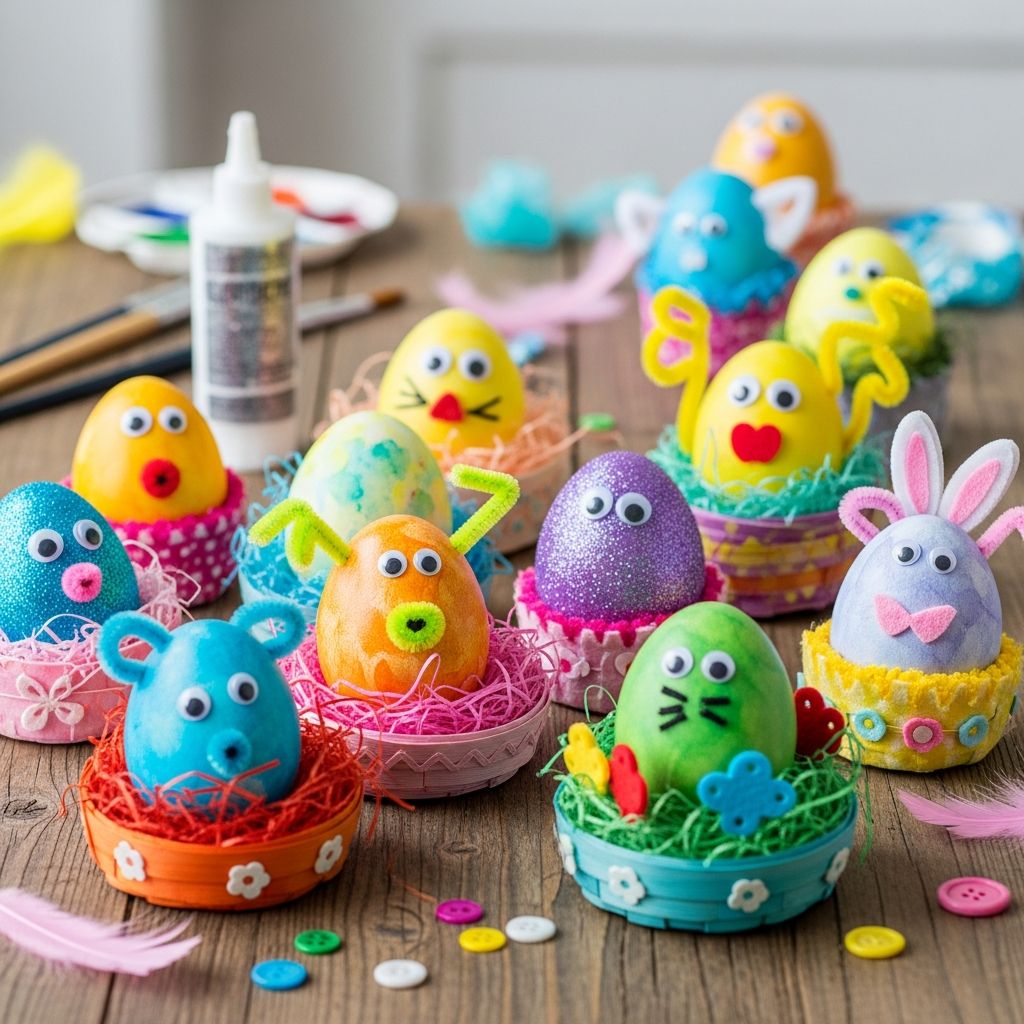
Easter egg crafts offer a delightful way for families to celebrate the season with hands-on creativity. These activities encourage fine motor skills, color recognition, and artistic expression while creating lasting holiday memories. Whether using real boiled eggs, wooden faux eggs, or plastic ones, the options are versatile and adaptable for toddlers to tweens. This guide presents fresh techniques inspired by popular family-friendly methods, ensuring minimal mess and maximum enjoyment.
Getting Started with Egg Prep
Before diving into designs, prepare your eggs properly. For real eggs, hard-boil them by placing them in a pot of cold water, bringing to a boil, then simmering for 10-12 minutes. Cool in ice water to prevent cracking. Faux eggs made of wood or plastic are ideal for younger children or repeated use, as they withstand shaking and painting without mess. Always supervise little ones around hot water or small parts. Gather supplies like markers, paints, glue, and protective surfaces such as newspaper or plastic tablecloths.
Marker Magic: Simple Doodle Designs
Markers provide an accessible entry point for egg decorating, requiring no dyes or boiling. Use washable markers for toddlers to draw patterns, swirls, or animals directly on eggs. For a contained approach, place eggs in a zip-top bag with markers—kids shake to blend colors, creating marbled effects without spills. This method suits preschoolers, fostering color mixing understanding.
- Freehand Doodles: Encourage abstract lines, dots, or shapes in bold colors.
- Pattern Play: Alternate thick and thin lines for stripes or zigzags.
- Themed Art: Draw bunnies, carrots, or flowers for seasonal flair.
These designs dry quickly, allowing immediate display in baskets or hunts.
Paint Adventures: Drippy and Textured Fun
Paint techniques add dimension and vibrancy. For drip effects, hold eggs over newspaper and squeeze liquid tempera paint, rotating for full coverage. Use a hairdryer on low to speed drying and enhance drips. Puffy paints create raised textures—apply dots or lines, then heat gently for a 3D pop. Wooden eggs excel here, as paint adheres smoothly without cracking risks.
| Technique | Materials | Age Suitability | Time |
|---|---|---|---|
| Drip Paint | Tempera paint, drop cloth | 4+ | 15 min |
| Puffy Patterns | Puffy pens, hairdryer | 5+ | 20 min |
| Pointillism Dots | Dot markers, stickers | 3+ | 10 min |
These methods yield eye-catching results, perfect for table centerpieces.
Sticker and Glue Sparkle: No-Mess Glam
Stickers offer instant gratification for the youngest artists. Apply dot stickers, then outline with markers for a masked effect—peel off to reveal crisp shapes. Combine with glitter glue or sprinkles adhered via tacky glue for shimmering eggs. Press-on designs like stars or hearts add thematic elements without drawing skills needed.
- Layer stickers for dimension.
- Mix metallic and pastel hues.
- Seal with clear glue for durability.
Tie-Dye and Shaker Methods
Replicate tie-dye by wrapping eggs in wet paper towels, adding food coloring drops, then squeezing for blends. For mess-free shaking, fill bags with rice and dye—toss eggs inside for speckled patterns. These sensory activities engage multiple senses, ideal for kinesthetic learners.
Advanced Designs: Faux Egg Florals and Abstracts
With paint markers, craft floral motifs: dot centers, add petal outlines. Abstracts swirl bold blacks with pastels for carrots or loops. Pointillism uses tiny dots fading outward around taped shapes, creating bursts. These appeal to older kids seeking detail.
Non-Candy Fillers for Epic Hunts
Elevate egg hunts beyond sweets with these fillers, fitting standard plastic eggs. They promote play, learning, and surprises while avoiding sugar highs.
| Category | Ideas | Benefits |
|---|---|---|
| Toys | Mini LEGOs, bouncy balls, finger puppets | Extended playtime |
| Accessories | Stickers, temporary tattoos, keychains | Personalization |
| Novelties | Glow sticks, mini puzzles, slinkies | Sensory fun |
| Practical | Coins, erasers, lip balm | Daily use |
| DIY | Joke slips, coupons, origami | Custom laughs |
Examples include glow stars for nighttime hunts or wooden coins redeemable for stories. These keep excitement high post-hunt.
Safety Tips for Family Crafting
Prioritize safety: Use non-toxic supplies, supervise dye handling, and avoid small fillers for under-3s per choking guidelines from the American Academy of Pediatrics. Clean up promptly to prevent slips.
Seasonal Variations and Storage
Adapt for themes: Pastels for spring, neons for bold pops. Store decorated real eggs refrigerated up to a week; faux ones year-round in bins. Reuse fillers next season.
Frequently Asked Questions
What age is best for egg decorating?
Activities scale from 2+ for stickers to 7+ for detailed paints, always with supervision.
Are faux eggs reusable?
Yes, wooden or plastic eggs endure multiple crafts, saving money long-term.
How to avoid mess with toddlers?
Opt for bag-shaking, markers, or stickers—easy cleanup and contained fun.
What’s the best non-candy filler?
Mini toys like erasers or coins balance fun and utility for all ages.
Can these ideas work for parties?
Absolutely—set up stations for group decorating, enhancing social bonds.
References
- Easy Easter Egg Ideas for Toddlers and Preschoolers — Cool Mom Picks. 2019-04-15. https://coolmompicks.com/blog/2019/04/15/easy-easter-egg-ideas-toddlers-preschoolers/
- Fun Faux Easter Egg Coloring Ideas for Kids — OOLY. 2021. https://www.ooly.com/blogs/blog/10-fun-easter-egg-coloring-ideas-for-kids
- 100 Best Non-Candy Easter Egg Fillers — Thrifty and Chic. 2025-03. http://www.thriftyandchic.com/2025/03/100-best-non-candy-easter-egg-fillers.html