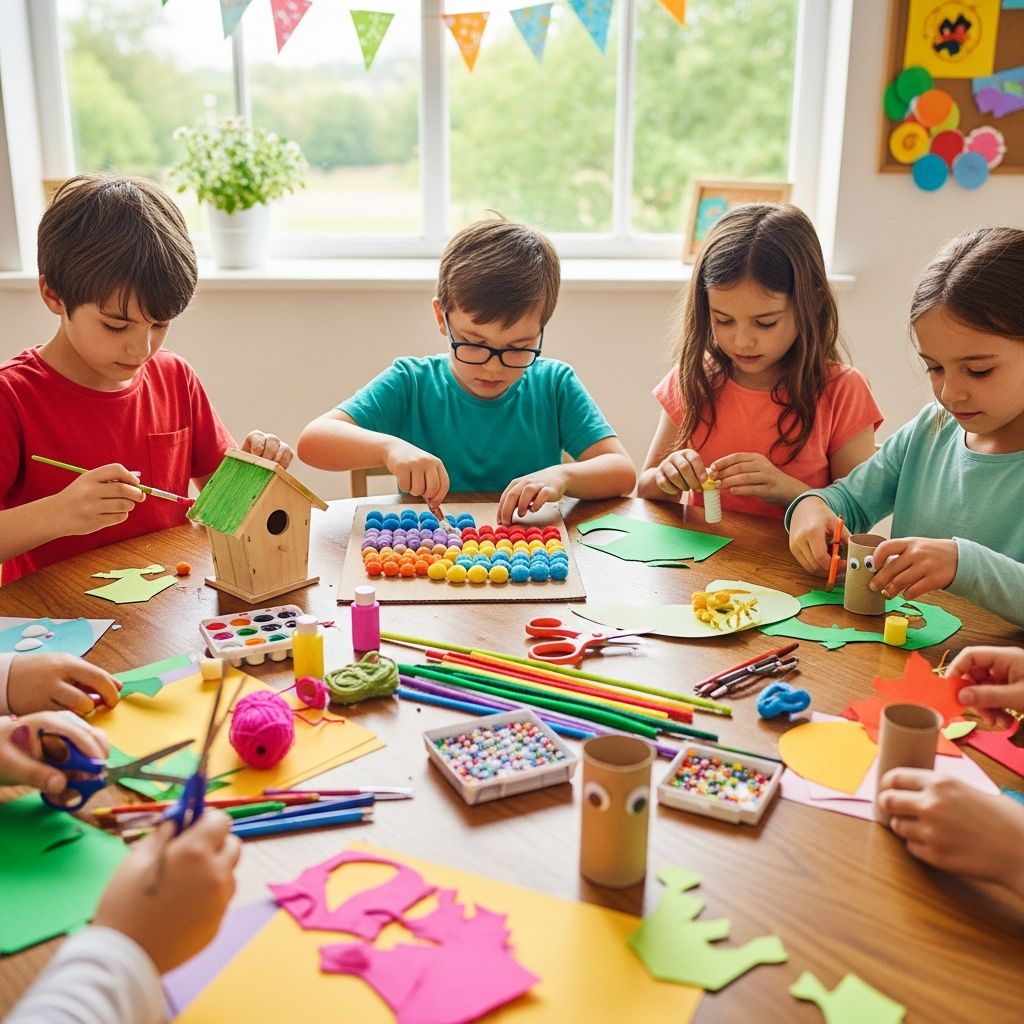
Hands-on crafts offer invaluable opportunities for children with autism to explore textures, colors, and shapes while building essential skills. These activities are thoughtfully designed to accommodate sensory preferences, promote fine motor development, and provide predictable routines that many kids on the spectrum thrive on. By incorporating elements like tactile materials and step-by-step guidance, parents and educators can create joyful, therapeutic experiences at home or in the classroom.
Why Crafts Matter for Kids on the Autism Spectrum
Crafts serve as more than mere pastimes; they are powerful tools for neurodiverse children. Sensory engagement through varied textures helps regulate emotions and sensory input, a common challenge for those with autism. Fine motor tasks strengthen hand-eye coordination, while structured projects offer comfort through familiarity. Research from the National Institute of Mental Health highlights how such activities support cognitive growth and social skills when adapted appropriately.
- Sensory Regulation: Tactile experiences calm overstimulation.
- Motor Skill Enhancement: Pinching, folding, and threading build dexterity.
- Emotional Expression: Art allows non-verbal outlets for feelings.
- Social Opportunities: Group crafts encourage turn-taking and sharing.
According to the Centers for Disease Control and Prevention (CDC), early interventions like these can significantly improve developmental outcomes for autistic children.
Sensory Exploration Crafts
Sensory crafts prioritize touch, sight, and sound to create calming or stimulating experiences. These are ideal starters for kids sensitive to sensations.
Customizable Slime Creations
Slime captivates with its stretchy, squishy texture, providing deep pressure input that soothes anxiety. Mix clear glue, baking soda, contact solution, and food coloring for a base, then add glitter or foam beads for variety.
- Combine 1/2 cup glue and 1/2 cup water in a bowl.
- Stir in 1 teaspoon baking soda and desired color.
- Add solution gradually until slime forms; knead for 5 minutes.
This activity, recommended by Autism Speaks, helps with tactile desensitization and focus. Variations like polka-dot slime with embedded beads add visual interest without overwhelming mess.
Glitter Calm Jars for Tranquility
These mesmerizing jars create a slow-settling glitter storm, mimicking a visual timer for self-regulation. Fill a mason jar with warm water, glitter glue, fine glitter, and optional dye.
- Half-fill with water.
- Add 1/4 cup glue and 2 tablespoons glitter.
- Seal tightly and shake to activate.
Shaking the jar promotes mindfulness, as the glitter’s descent encourages deep breathing—perfect for transitions or meltdowns.
Watercolor Salt Paintings
Combine glue outlines on paper with salt sprinkles, then brush watercolor paints over for a reactive, fizzing effect. The salt absorbs paint unpredictably, creating abstract art that delights without requiring precision.
This sensory craft enhances visual tracking and provides auditory feedback from the paint’s interaction, aligning with ABA therapy techniques for engagement.
Fine Motor Development Projects
Building hand strength and coordination through crafts prepares kids for daily tasks like writing or buttoning. Start simple and increase complexity based on ability.
Beaded Fidget Accessories
String large wooden beads onto elastic cord to craft bracelets or keychains. Choose textured beads for added sensory input. This low-pressure activity allows pacing at the child’s comfort, fostering independence.
| Skill Targeted | Materials | Benefits |
|---|---|---|
| Pincer Grip | Beads, cord | Improved dexterity |
| Bilateral Coordination | Pipe cleaners | Hand teamwork |
| Pattern Recognition | Colored beads | Cognitive growth |
Origami Animal Folding
Simple folds with square paper yield frogs, boats, or birds. Begin with pre-creased paper for structure. Folding hones precision and following sequences, key for executive functioning.
DIY Puzzle Assembly
Draw or print images on cardstock, cut into shapes, and reassemble. This boosts problem-solving and spatial awareness, customizable by puzzle size.
Creative Expression Activities
Encourage imagination through open-ended crafts that celebrate individuality.
Decorated Stone Garden Markers
Paint smooth rocks with acrylics for patterns or labels. Seal with mod podge for durability. Kids express uniqueness while practicing brush control.
Collage Storytelling Boards
Glue magazine clippings, fabric scraps, and drawings onto poster board to narrate stories. Ties into language development by retelling events visually.
Tie-Dye Fabric Fun
Twist and dye old t-shirts with fiber-reactive dyes. The vibrant results promote pride; group sessions build social bonds.
Structured Group Crafts for Social Growth
Collaborative projects teach sharing and communication in a safe setting.
Paper Chain Timers
Link colored strips into chains, writing activities on each. Tear one per interval for visual countdowns—great for events without sensory overload.
Mobile Hanging Sculptures
Thread beads and shapes onto strings, suspend from a hoop. Adding over time teaches patience and creates a personal sensory display.
Contact Paper Shape Windows
Sticky paper on a window frame collects tissue paper shapes, forming stained-glass effects. Ripping and sticking refines motor skills.
Adapting Crafts for Individual Needs
Tailor activities to sensory profiles: use gloves for mess-averse kids or timers for focus. Observe preferences—some love squishy textures, others crisp sounds. Consult occupational therapists for personalized tweaks, as per American Occupational Therapy Association guidelines.
Incorporate choices: “Slime or beads?” to empower. Break into visual steps with pictures for non-readers.
Safety and Preparation Tips
- Supervise small parts to prevent choking.
- Use non-toxic, washable supplies.
- Prepare workspaces with mats for easy cleanup.
- Have breaks ready; end on a high note.
Stock a craft bin with basics: glue sticks, scissors, paints, recyclables.
Frequently Asked Questions
What age are these crafts suitable for?
Most adapt for ages 3-10; simplify for toddlers, add challenges for older kids.
Can crafts help with autism meltdowns?
Yes, sensory crafts like calm jars provide immediate calming tools during distress.
Are these good for school settings?
Absolutely—short, structured crafts fit classrooms, aiding focus and inclusion.
How often should we do crafts?
3-5 times weekly, 15-30 minutes, balancing with other therapies.
What if my child resists mess?
Opt for contained options like bag painting or dry media like stickers.
References
- Autism Spectrum Disorder. — National Institute of Mental Health. 2023-05-11. https://www.nimh.nih.gov/health/topics/autism-spectrum-disorders-asd
- Data and Statistics on Autism Spectrum Disorder. — Centers for Disease Control and Prevention. 2024-09-23. https://www.cdc.gov/autism/data-research/index.html
- Sensory Activities for Autism. — Autism Speaks. 2023-08-15. https://www.autismspeaks.org/sensory-activities-autism
- Occupational Therapy’s Role with Autism. — American Occupational Therapy Association. 2024-02-14. https://www.aota.org/practice/practice-essentials/autism
- Waterford.org Activities for Children with Autism. — Waterford.org. 2023-11-20. https://www.waterford.org/blog/activities-for-children-with-autism/