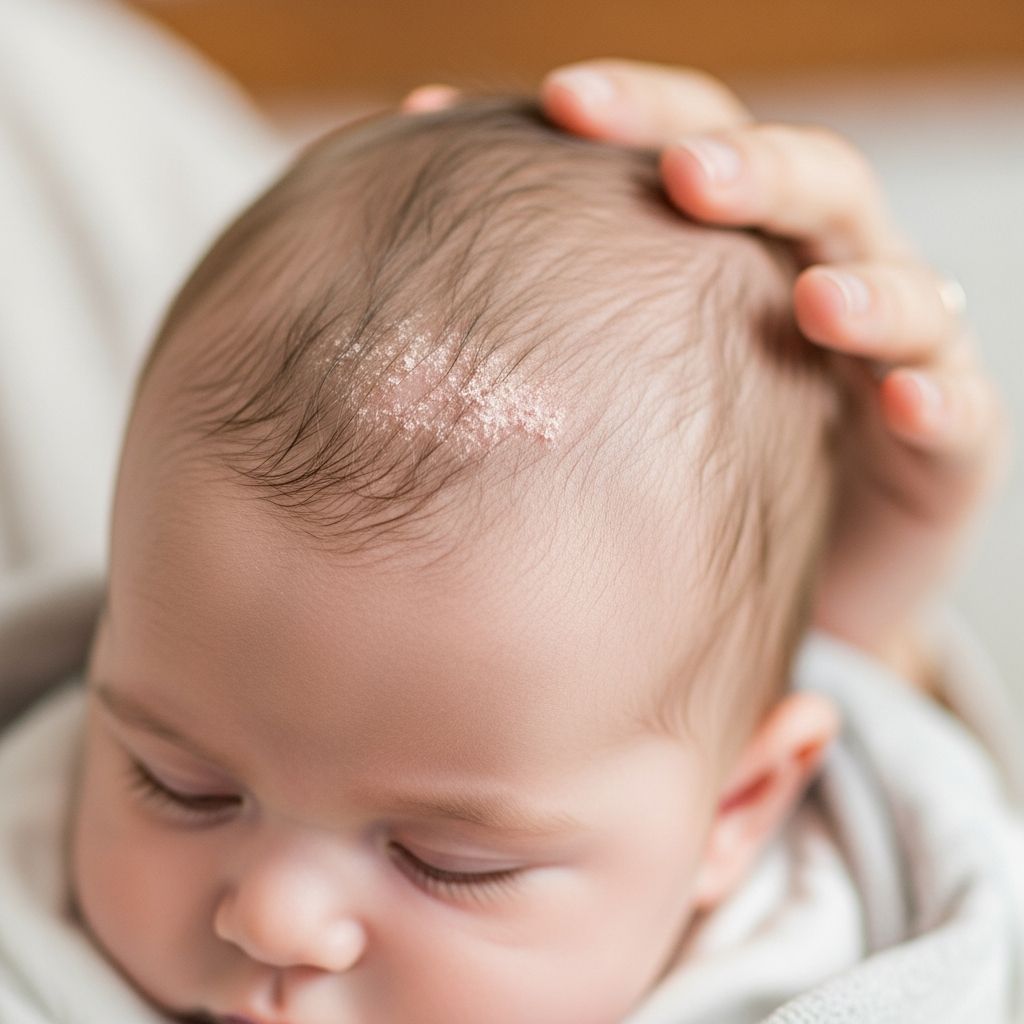
Cradle cap is a very common and usually harmless skin condition in young babies, but the greasy flakes and yellowish scales can look worrying when you first notice them. This guide explains what is happening on your baby’s scalp, how to care for it gently, and when it is time to ask a health professional for advice.
What Exactly Is Cradle Cap?
Cradle cap is the everyday name for a type of infant skin irritation that causes patches of flaky, greasy or crusty skin on a baby’s scalp. Doctors often refer to it as a form of seborrheic dermatitis that appears in early life and then fades on its own over time.
Although the patches can look dramatic, cradle cap is usually not painful or itchy, and most babies seem completely unbothered by it. Parents are often much more concerned by the appearance than the baby is, which is why clear information and gentle care strategies are so helpful.
Why Many Babies Develop Cradle Cap
The exact reason some infants get cradle cap and others do not is still not fully understood, but several factors are thought to play a role. One common idea is that glands in a baby’s skin produce extra oil in the first months of life, which can trap old skin cells on the surface instead of letting them shed easily.
Some experts also suspect that natural yeast and bacteria that normally live on the skin may contribute when they grow more actively in oily areas. This combination of increased oil production and micro-organisms likely helps explain why the condition tends to appear on the scalp, eyebrows and other areas rich in oil glands.
Typical Risk Factors
- Very young age, particularly in the first few months of life.
- Oily or thick hair where flakes can easily get trapped.
- Family tendency toward oily skin or dandruff later in life.
- Skin folds that stay warm and moist, such as behind the ears.
How Cradle Cap Looks and Where It Appears
Cradle cap has a fairly distinctive appearance that helps distinguish it from other baby rashes. The most noticeable feature is the presence of scales or crusts that may look stuck to the scalp, sometimes overlapping like layers of candle wax or thick dandruff.
The surrounding skin may look slightly red or pink, but severe redness, swelling or obvious discomfort are less typical and should prompt an evaluation by a medical professional. In many babies, the condition is limited to a few areas, while in others it can cover much of the scalp.
Common Locations on the Body
- Top of the scalp, especially the crown area.
- Eyebrows and the skin between the eyebrows.
- Behind the ears or in the folds around the ears.
- Neck folds, armpits or the diaper area in some infants.
| Feature | Cradle Cap | Common Baby Eczema |
|---|---|---|
| Main texture | Greasy or waxy scales that cling to the skin | Dry, rough, sometimes cracked patches |
| Itchiness | Usually minimal; baby often seems unbothered | Often itchy; baby may rub or scratch |
| Common locations | Scalp, eyebrows, behind ears, skin folds | Cheeks, outer arms, behind knees, trunk |
| Typical age of onset | First weeks to months of life | Can begin a little later in infancy or early childhood |
Is Cradle Cap Dangerous or Contagious?
Cradle cap is generally considered a cosmetic and self-limited condition rather than a serious medical problem. It does not indicate poor hygiene, and it is not a sign that a parent has done something wrong in caring for the baby’s skin.
The condition is not contagious, so it cannot be passed from one baby to another, and it does not spread to adults or older children through normal contact. Most infants will gradually improve over weeks or months even without treatment, although gentle care can help the scalp look and feel better more quickly.
Gentle Home Care for Your Baby’s Scalp
Day-to-day care focuses on loosening and removing flakes without irritating the delicate skin underneath. The key principles are patience, softness and avoiding the urge to pick or scratch at the crusts, which can damage the skin and increase the chance of infection.
Many caregivers find that a simple routine of softening the scales, loosening them with gentle brushing and then washing the hair with a mild cleanser works well when done regularly.
Step-by-Step Cradle Cap Routine
- Soften the scales. Before bath time, apply a small amount of baby oil, mineral oil or a simple, fragrance-free plant oil to the affected areas of the scalp and let it sit for 15–30 minutes.
- Loosen flakes gently. Use a soft baby brush, soft toothbrush or your fingertips to make small circular motions and lift the loosened scales without scraping.
- Wash with mild shampoo. Rinse out the oil using a gentle baby shampoo, massaging with your fingertips to help remove remaining flakes.
- Rinse thoroughly. Make sure no shampoo or oil residue remains, as leftover product can contribute to buildup.
- Pat dry. Use a soft towel to carefully dry the scalp, without rubbing vigorously.
Helpful Do’s for Parents
- Use lukewarm water, not hot, to avoid drying the skin.
- Keep products simple and fragrance-free whenever possible.
- Brush or massage the scalp lightly rather than scrubbing.
- Repeat the routine a few times a week, depending on how stubborn the scales are.
Common Mistakes to Avoid
- Picking at thick crusts with fingernails or sharp objects.
- Using harsh adult shampoos, medicated dandruff products or strong soaps without medical advice.
- Leaving heavy oils on the scalp for long periods without washing, which can worsen buildup.
- Bathing with very hot water or washing the scalp too aggressively or too often.
When Professional Treatment May Be Recommended
While many babies improve with gentle home care alone, some cases of cradle cap are more stubborn or extensive. In these situations, a pediatrician or other qualified health professional may suggest medicated products tailored to infant skin.
Recommendations can include mild medicated shampoos, low-strength anti-inflammatory creams or prescription products aimed at reducing yeast growth on the skin. These should always be used exactly as directed and for only as long as advised, because baby skin is thin and absorbs medications more readily than adult skin.
Signs a Doctor Should Evaluate the Rash
- Cradle cap spreading beyond the scalp to most of the body.
- Very red, swollen or warm skin around the patches.
- Oozing, bleeding, or yellow crusts that seem moist or sticky.
- Baby appears uncomfortable, unusually fussy, or scratches at the area.
- Home care for several weeks makes little or no difference.
Possible Complications to Watch For
Uncomplicated cradle cap is usually harmless, but complications can develop if the skin becomes damaged or infected. Repeated scratching, picking at scales or vigorous scrubbing can break the surface of the skin and create an entry point for germs.
Warning signs of infection include increased redness around the patches, small blisters, fluid or pus, or a bad smell from the affected area. If these appear, or if your baby seems unwell in any way, prompt medical assessment is important.
Practical Tips for Day-to-Day Baby Skin Care
A few small adjustments to your baby’s regular routine can support healthy skin and reduce the severity of cradle cap. Keeping baths gentle, avoiding overly hot water and limiting the number of skin products you use are simple places to start.
Choosing clothing and bedding that allow the skin to breathe, and changing wet diapers promptly, also help minimize irritation in body folds where cradle cap-like changes can sometimes appear.
Everyday Skin-Friendly Habits
- Use mild, fragrance-free cleansers only when needed, rather than at every bath.
- Rinse shampoo and cleansers thoroughly to prevent residue.
- Dry skin folds carefully after baths to minimize moisture buildup.
- Dress your baby in soft, breathable fabrics such as cotton.
- Check behind the ears, in the neck folds and under the diaper for early signs of redness or flaking.
Supporting Your Baby’s Comfort and Your Peace of Mind
Parents often feel anxious when a visible condition affects their baby’s appearance, even when they are reassured that it is minor. Understanding that cradle cap is common and typically temporary can make it easier to take a calm, measured approach.
Instead of focusing on how quickly the flakes disappear, it helps to focus on gentle routines, watching for concerning changes, and enjoying the many moments of bonding that occur during bath time and skin care. With time, most infants outgrow cradle cap and their scalp gradually returns to a smoother, more even appearance.
Frequently Asked Questions About Cradle Cap
Does cradle cap hurt my baby?
In typical cases, cradle cap does not cause pain, and babies usually do not seem to notice the flakes or crusts at all. If your baby appears distressed when you touch the area, or if the skin looks very inflamed, that is a sign to seek professional advice.
How long does cradle cap last?
The duration varies, but most babies show improvement over several weeks to a few months. Some may have mild flaking that comes and goes for longer periods, especially in oilier areas, but the condition generally fades as the skin and oil glands mature.
Can I prevent cradle cap completely?
Because the condition is linked to natural changes in the baby’s skin and oil production, it cannot always be prevented. However, gentle scalp care, regular but not excessive washing and avoiding harsh products can reduce buildup and may lessen the degree of flaking.
Is it okay to comb out the flakes?
Using a very soft brush or fine, baby-safe comb to loosen softened scales is usually fine, as long as you are gentle and stop if the skin looks irritated. Never force off crusts that seem stuck, and do not use fingernails or sharp tools.
Could cradle cap be a sign of allergies?
Cradle cap by itself is not typically thought of as an allergy. However, some babies with sensitive skin may also develop other conditions, such as eczema, that have more of an allergic or irritant component. If you are worried about possible allergies, speak with your child’s healthcare provider.
When should I be really worried?
Seek medical attention if your baby has fever, seems very uncomfortable, or if the rash is rapidly spreading, bleeding, oozing or has a strong odor. These features are not typical of simple cradle cap and may signal infection or a different skin problem that needs targeted treatment.
Cradle cap is one of the many normal quirks of early infancy, and it rarely means that anything serious is wrong. With gentle care, patience and attention to warning signs, you can keep your baby comfortable while nature gradually takes its course.