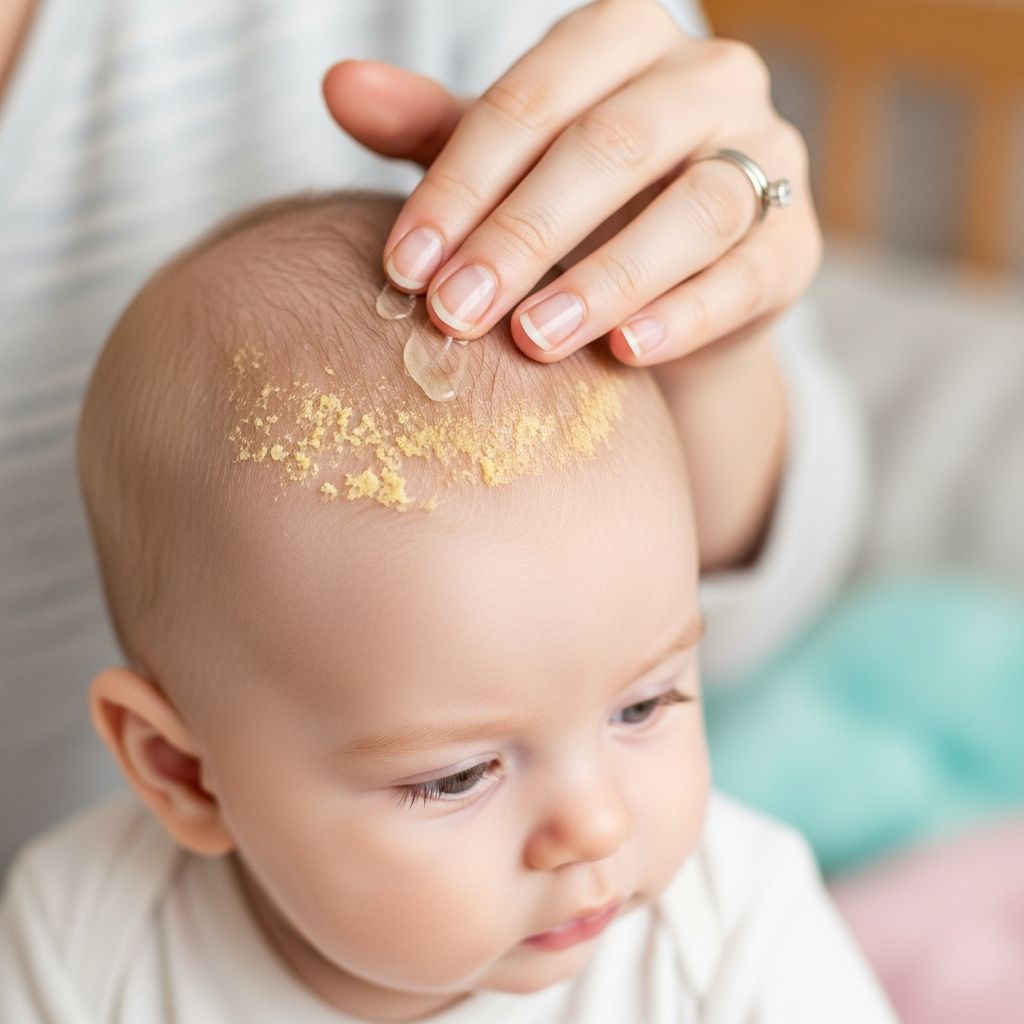
Cradle cap, medically known as infantile seborrheic dermatitis, is a widespread skin issue in newborns and infants, featuring flaky, crusty patches primarily on the scalp. This condition typically emerges in the first few months of life and resolves without long-term effects, offering parents reassurance amid common worries about baby skin health.[10]
Recognizing the Signs of Cradle Cap
Identifying cradle cap early allows for prompt, gentle management. The primary indicators include patchy scaling or thick crusts on the scalp, often appearing as oily or dry skin coated with white or yellow flakes. These scales may extend beyond the scalp to areas like the ears, eyelids, nose creases, or groin, though the scalp remains the most affected site.
Unlike other rashes, cradle cap rarely causes itching or discomfort in babies, distinguishing it from conditions like atopic dermatitis, which tends to be intensely itchy. Mild redness or inflammation might accompany the flakes, but fever, fatigue, or pain are absent, signaling it’s generally benign.
- Scalp-specific signs: Greasy yellow crusts or white dry flakes that shed easily.
- Associated areas: Similar scaling on face, neck, or diaper region in some cases.
- Age of onset: Commonly between 3 weeks and 12 months.
Root Causes Behind Scaly Scalps
The precise origins of cradle cap remain under study, but experts point to a mix of hormonal influences and microbial factors. Maternal hormones transferred during pregnancy may overstimulate the baby’s sebaceous glands, leading to excess sebum production. This oily environment fosters buildup of dead skin cells, creating the characteristic crusts.[10]
A yeast-like fungus, Malassezia, naturally present on skin, thrives in this sebum-rich setting alongside bacteria, potentially aggravating the condition.[10] Importantly, cradle cap is neither contagious nor linked to hygiene lapses, allergies, or infections—debunking myths that burden new parents.
| Potential Factor | Description | Evidence Level |
|---|---|---|
| Hormonal Influence | Excess maternal hormones boost oil gland activity. | Strong (Mayo Clinic) |
| Malassezia Yeast | Grows in sebum, responsive to antifungals. | Moderate (Cleveland Clinic) |
| Genetic Predisposition | May run in families, though not fully proven. | Emerging[10] |
Safe Home-Based Treatment Approaches
Most cases of cradle cap improve with consistent, non-invasive home care, avoiding the need for prescription interventions. Start by softening crusts with a light application of baby oil, mineral oil, or petroleum jelly, left on for several hours or overnight under a loose cap.
Gently massage the scalp with fingers or a soft-bristled brush to loosen flakes, followed by a daily wash using mild baby shampoo. Avoid forceful picking, which can irritate skin or invite secondary infections.
- Apply softening agent to damp scalp.
- Wait 1-2 hours or overnight.
- Comb gently with a wide-tooth comb.
- Shampoo and rinse thoroughly.
For persistent buildup, a brief course of over-the-counter dandruff shampoo containing ketoconazole (2%) may be used under pediatrician guidance, ensuring it avoids the eyes. These steps often yield visible improvement within days to weeks.
Prevention Strategies for Healthy Baby Skin
Proactive measures can minimize cradle cap recurrence, which may happen in the first year as oil glands mature. Regular scalp hygiene—shampooing 2-3 times weekly with a gentle, fragrance-free product—prevents scale accumulation.
- Frequent, soft brushing post-bath to exfoliate naturally.
- Moisturize scalp lightly after each wash to maintain balance.
- Avoid heavy oils if baby has sensitive skin.
Maintaining a clean environment and loose-fitting hats reduces moisture trapping, a potential exacerbator. These habits support overall skin health without over-drying the delicate infant scalp.
When to Consult a Pediatrician
While self-resolving, certain escalations warrant professional input. Seek advice if scales spread widely, persist beyond 12 months, or show signs of infection like increased redness, weeping, pus, or baby distress.[10]
Secondary issues, such as bacterial overgrowth (e.g., staphylococcus) or yeast proliferation in skin folds, may require antifungal shampoos, mild corticosteroid lotions, or antibiotics. A provider diagnoses via visual exam, rarely needing tests.
Table of red flags:
| Symptom | Action |
|---|---|
| Intense itching or scratching | Consult immediately—may indicate eczema. |
| Spreading rash or fever | Doctor visit for infection check. |
| No improvement after 4 weeks | Prescription options like ketoconazole. |
Common Myths and Reassurances
Parents often fear cradle cap signals neglect, but authoritative sources confirm it’s a normal developmental phase unrelated to parenting quality. It doesn’t scar, impair growth, or foreshadow chronic issues in most infants.
Another misconception: aggressive scrubbing cures it faster. Gentle care prevents trauma, aligning with recommendations from children’s hospitals.
Frequently Asked Questions (FAQs)
Is cradle cap painful for my baby?
No, it typically causes no itch or pain, unlike other dermatitis forms.
How long does cradle cap last?
Usually clears by 6-12 months, though mild cases resolve sooner.
Can I use adult dandruff shampoo on my newborn?
Avoid; opt for baby-specific mild formulas or doctor-approved options.
Does cradle cap affect hair growth?
No evidence suggests it hinders healthy hair development.
Is cradle cap linked to diet?
Not directly; focus on skin care over dietary changes.[10]
Long-Term Outlook and Support
By one year, most babies outgrow cradle cap as hormone levels stabilize and skin turnover normalizes. Recurrences are manageable with prior techniques. Pediatric follow-ups ensure any overlaps with eczema or allergies are addressed early.
Empowering parents with knowledge reduces anxiety, fostering confident care routines. Resources from trusted institutions like Mayo Clinic guide safe practices.
References
- Cradle cap – Symptoms and causes — Mayo Clinic. 2023-10-12. https://www.mayoclinic.org/diseases-conditions/cradle-cap/symptoms-causes/syc-20350396
- Cradle Cap: Causes, Symptoms & Prevention — Johnson’s Baby. 2024-05-15. https://www.johnsonsbaby.com/baby-tips/what-is-cradle-cap
- Seborrheic Dermatitis (Cradle Cap) — St. Louis Children’s Hospital. 2023-08-20. https://www.stlouischildrens.org/conditions-treatments/seborrheic-dermatitis
- Seborrheic Dermatitis (Cradle Cap) — Children’s Hospital of Philadelphia (CHOP). 2024-02-10. https://www.chop.edu/conditions-diseases/seborrheic-dermatitis-cradle-cap
- Seborrhoeic dermatitis & cradle cap in infants — National Eczema Society. 2023-11-05. https://eczema.org/information-and-advice/types-of-eczema/seborrhoeic-dermatitis-cradle-cap-in-infants/
- Cradle Cap Causes & Treatment — Cleveland Clinic. 2024-01-18. https://my.clevelandclinic.org/health/diseases/15786-cradle-cap-seborrheic-dermatitis-in-infants
- Cradle cap – Diagnosis and treatment — Mayo Clinic. 2023-10-12. https://www.mayoclinic.org/diseases-conditions/cradle-cap/diagnosis-treatment/drc-20350400