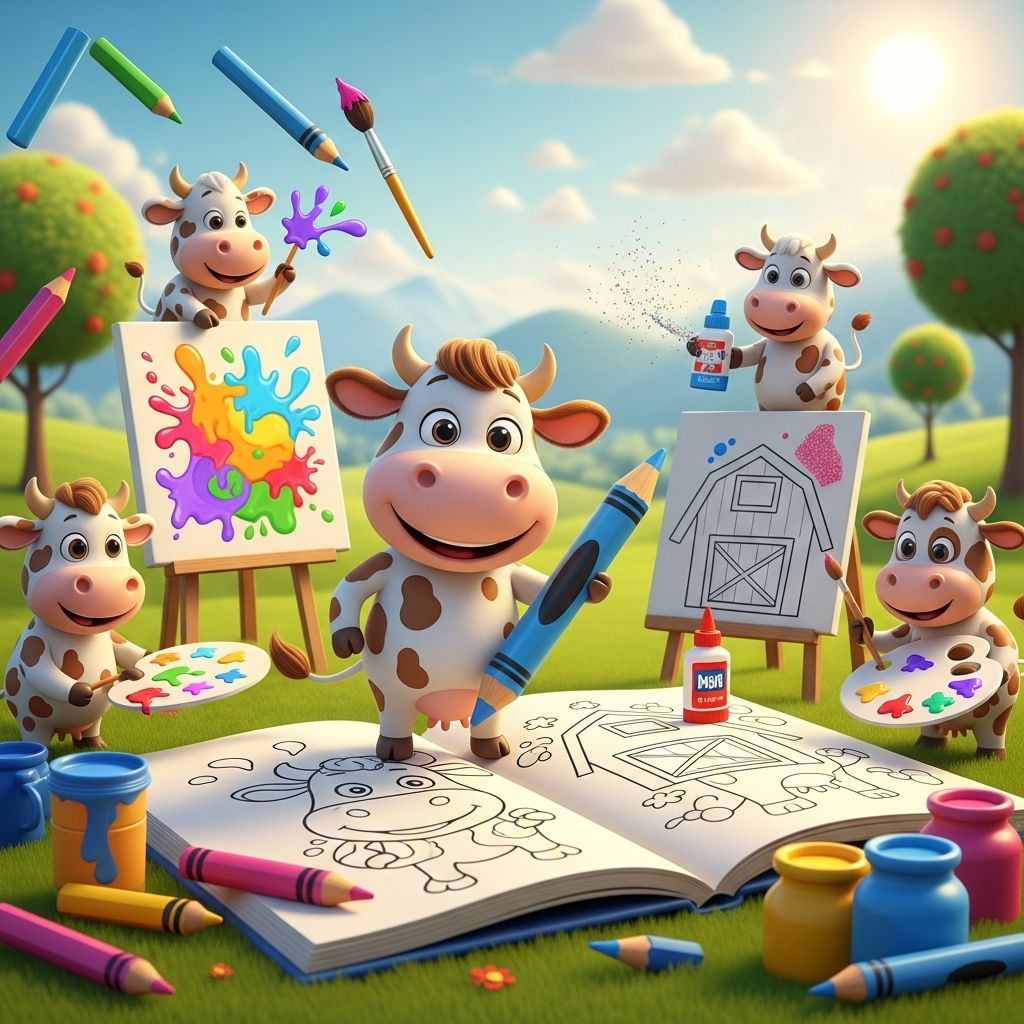
Cow coloring pages may look simple at first glance, but they can open the door to creativity, quiet focus, and hands-on learning for kids of all ages. With a few thoughtful ideas, these humble farm animal printables become tools for building skills, sparking imagination, and even starting conversations about nature and where food comes from.
Why Cow Coloring Pages Are Great for Kids
Coloring cows is more than a way to pass the time; it encourages children to experiment with shapes, patterns, and colors while practicing careful hand movements. It also invites them to notice details such as spots, hooves, and the surrounding farm setting, which supports visual observation and early science curiosity.
- Improves fine-motor control through careful coloring within lines and around curves.
- Encourages focus and patience as children complete a full page from start to finish.
- Provides a calm, screen-free activity that both younger and older kids can enjoy together.
Getting Started: Simple Setup Tips
You do not need an elaborate craft room to enjoy cow coloring pages; a flat surface, a stack of printable sheets, and a handful of crayons or markers are plenty. Preparing a small “coloring station” at home makes it easy to bring out the activity quickly whenever kids need a quiet break.
- Keep coloring tools (crayons, colored pencils, markers) in labeled containers so kids can help with setup and cleanup.
- Use clipboards or a tray table if you are coloring on the couch, in the car, or outdoors.
- Print a range of designs: large, simple cow outlines for toddlers and more detailed scenes for older children.
Fun Cow Coloring Themes to Try
Instead of offering one random picture at a time, plan themed coloring sessions that give kids a clear story or setting. Themes help children connect the cow on the page to real-world ideas they may have seen in books, songs, or visits to a farm.
- Pasture playtime: Cows grazing in a sunny field with flowers, fences, and butterflies.
- Barnyard morning: A cow near a barn, hay bales, and maybe a rooster on the roof.
- Family herd: A gentle mother cow with a small, curious calf.
- Night sky magic: A cow under stars and a moon, or a playful “jumping over the moon” scene.
- Farm friends: Cows with chickens, sheep, pigs, or a friendly farm dog.
Age-by-Age Ideas for Cow Coloring Pages
Toddlers and Preschoolers (Ages 2–4)
Very young children benefit from big, open shapes and limited detail so they can move their whole hand and arm while holding fat crayons. Color does not need to stay inside the lines; the goal is enjoyment and exploring how pencils and crayons feel on paper.
- Offer bold cow outlines with large spots and minimal background clutter.
- Use washable crayons or markers so children feel free to experiment.
- Name colors out loud and talk about body parts: “This is the cow’s tail. Can you color the tail?”
Early Elementary (Ages 5–7)
Children in this age range can start to handle more detailed cow drawings and simple scenes. They can choose color schemes, fill in backgrounds, and even add their own props such as flowers, milk pails, or a barn cat.
- Introduce pages that include grass, fences, and clouds to encourage coloring the whole scene.
- Ask kids to create patterns for cow spots (hearts, stars, or zigzags) to support creativity.
- Let them write short labels like “cow,” “calf,” or “barn” directly on the page for literacy practice.
Older Kids and Tweens (Ages 8+)
Older children often enjoy more intricate designs, shading challenges, and unique art styles. Cow coloring pages can shift from simple outlines to stylized or semi-realistic drawings that invite creative techniques.
- Offer detailed cows with realistic fur texture, facial features, and complex farm landscapes.
- Encourage shading, blending two or more colors, and adding depth with darker edges.
- Invite kids to design “fantasy cows,” such as rainbow cows, galaxy-pattern cows, or floral-pattern cows.
Educational Benefits: What Kids Learn While Coloring
Coloring cows creates natural opportunities to talk about farm life, food, and caring for animals. This kind of casual conversation builds background knowledge that children will draw on when they read stories, watch documentaries, or learn about habitats in school.
- Introduce basic animal science terms such as “mammal,” “calf,” and “herd.”
- Discuss what cows eat, where they live, and how farmers care for them.
- Connect the page to everyday items, such as milk, cheese, or yogurt, and talk about how they reach the table.
Creative Ways to Color Cows
If your child grows tired of the same black-and-white cow pattern, mix things up with fresh coloring prompts. Giving kids permission to break away from “realistic” colors strengthens creative thinking and keeps the activity exciting.
- Pattern challenge: Make each cow’s spots a different pattern: stripes, polka dots, zigzags, or checkers.
- Seasonal cows: Color a spring cow with pastel flowers, a summer cow under a bright sun, an autumn cow with falling leaves, and a winter cow wearing a scarf.
- Emotion cows: Draw different facial expressions—happy, sleepy, surprised—and color each in a matching color mood.
- Rainbow herd: Assign a color to each cow in a group so they form a rainbow when displayed together.
Turn Cow Pages into Simple Crafts
Once the coloring is complete, do not rush to the recycling bin. Finished cow pages can be transformed into easy crafts that extend playtime and give kids a sense of pride in their creations.
| Craft Idea | What You Need | How Kids Can Help |
|---|---|---|
| Cow Puppets | Colored cow pages, scissors, tape or glue, craft sticks | Cut out the cow and attach it to a stick to make characters for farm stories. |
| Bunting Banner | String, tape, hole punch (optional) | Cut cows into triangle or circle shapes and hang them as a party or bedroom banner. |
| Homemade Puzzles | Cardstock backing, scissors | Glue the colored page to cardstock, then cut it into large puzzle pieces. |
| Farm Storybook | Stapler, blank paper | Staple several pages together and add a new cow picture on each page with a sentence of story text. |
| Room Decor | Frames or washi tape | Choose favorite cows to frame or tape to the wall as a mini gallery. |
Incorporating Learning Activities
Coloring can easily blend with early math, reading, and science when you add a few playful challenges. Instead of turning coloring into a formal lesson, keep it light and game-like so kids stay relaxed and engaged.
- Count the number of spots, hooves, or flowers in the background and write the number on the page.
- Ask kids to color certain parts using simple instructions, such as “Color three spots blue” or “Make two flowers red.”
- Invite older children to add speech bubbles and write what the cow might be saying or thinking.
Ideas for Group Activities and Parties
Cow coloring pages work well for playdates, classroom centers, or farm-themed birthday parties. With a little planning, they can anchor a full activity station where kids move from coloring to games and crafts.
- Set up a “color-and-craft” station where kids first color a cow, then turn it into a puppet or mask.
- Host a mini art show by hanging finished cow pictures on a string and letting kids walk through the “gallery.”
- Create a collaborative mural by taping several pages together and inviting each child to color a different cow or background area.
Tips for Parents and Educators
Adults play an important role in shaping how children experience coloring activities. A relaxed environment, open-ended prompts, and positive feedback will help kids feel confident and willing to experiment.
- Focus comments on effort and choices rather than staying inside the lines.
- Offer variety in tools—crayons one day, colored pencils the next—to keep interest high.
- Keep completed pages in a folder or binder so children can look back at how their skills have grown.
Frequently Asked Questions About Cow Coloring Pages
Are cow coloring pages suitable for very young children?
Yes. Large, simple cow outlines are perfect for toddlers and preschoolers because they give small hands plenty of space to move. Opt for thick lines, minimal background detail, and washable coloring tools to keep things stress-free.
How can I make cow coloring more educational?
You can talk with your child about farm life, ask them to count spots or animals in the scene, and introduce new vocabulary as you color together. Adding short written labels or speech bubbles also strengthens early reading and writing skills in a natural way.
What if my child does not want to color realistic cows?
There is no need to stick with traditional black and white cows; playful color choices actually support creativity and flexible thinking. Encourage rainbow cows, patterned cows, or even imaginary “space cows” with stars and planets in the background.
How long should a coloring session last?
The ideal length depends on your child’s age and attention span. For toddlers, a few minutes may be enough, while older kids might happily color for 20–30 minutes or more if they are enjoying the design.
Can cow coloring pages work in a classroom?
Absolutely. Teachers can use cow pages in farm or animal units, pairing them with read-aloud stories and simple research projects. They also make quick, low-prep centers that allow children to practice fine-motor skills while reinforcing science and language concepts.