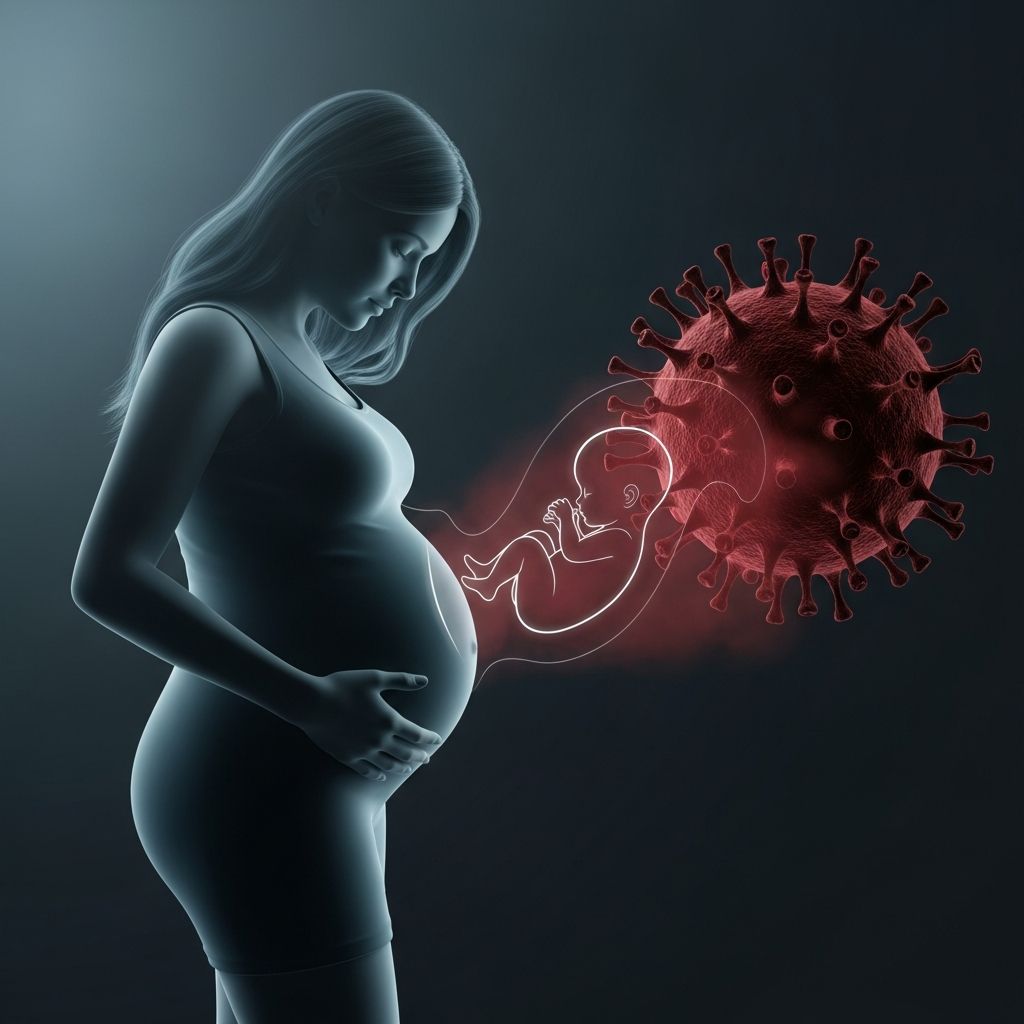
Emerging evidence from large-scale studies indicates that SARS-CoV-2 infection, particularly around conception or in the first trimester, significantly elevates the likelihood of miscarriage before 20 weeks gestation, with risks doubling or tripling compared to uninfected pregnancies. This association persists across mild and severe cases, underscoring the need for preventive measures like vaccination, which multiple analyses confirm do not heighten pregnancy loss risks and may even offer protective effects at the maternal-fetal interface.
Understanding the Link Between SARS-CoV-2 and Early Pregnancy Complications
Pregnancy involves a delicate balance of immune modulation to support fetal development while guarding against pathogens. SARS-CoV-2 disrupts this equilibrium, potentially leading to adverse outcomes such as miscarriage, defined as pregnancy loss before 20 weeks. A comprehensive review of literature from 2020 to 2023 analyzed 32 studies and found case reports linking acute COVID-19 phases—characterized by high viral loads and inflammation—to heightened early pregnancy loss, though broader meta-analyses showed mixed results with no overall statistical difference in total miscarriage rates between infected and uninfected groups.
Key factors influencing risk include infection timing, severity, and maternal health. For instance, infections within 31 to 365 days preconception or during the first trimester correlate with adjusted odds ratios (aOR) of 2.31 to 2.81 for miscarriage, based on data from nearly 27,000 pregnancies. Demographic risks like advanced maternal age, Black or Hispanic ethnicity, and comorbidities further amplify vulnerability.
Biological Pathways: How COVID-19 May Trigger Miscarriage
The angiotensin-converting enzyme 2 (ACE2) receptor, targeted by SARS-CoV-2, is abundantly expressed in reproductive tissues including the endometrium, ovaries, granulosa cells, and primordial germ cells. This facilitates viral entry, impairing key functions. Potential mechanisms include:
- Endometrial Disruption: Viral interference with epithelial cells hinders embryo implantation by altering the uterine environment essential for placentation.
- Ovarian Impairment: Damage to granulosa cells reduces oocyte quality and ovarian reserve, elevating infertility and miscarriage susceptibility.
- Immune Dysregulation: Excessive inflammation via angiotensin II (Ang II) pathways induces oxidative stress and thromboembolic events at the maternal-fetal interface.
- Placental Effects: Pro-inflammatory responses and direct viral activity compromise trophoblast function, leading to pregnancy failure.
Figure 1 from reviewed studies illustrates these pathways, highlighting how acute infection phases exacerbate risks through plasma viral load and obstetrical factors. In one cohort, 15.3% to 23.1% miscarriage rates mirrored general population figures, yet subgroup analyses revealed elevated early-trimester losses.
Evidence from Population Studies on Infection Timing
A University of Texas-led analysis of electronic health records from 2019-2023 provided robust evidence: overall miscarriage incidence was 6.3%, with preconception COVID-19 (mild: aOR 2.48; moderate-severe: aOR 2.81) and first-trimester infection (mild: aOR 2.31; moderate-severe: aOR 2.45) strongly predictive. Ectopic pregnancies, where implantation occurs outside the uterus, also rose, emphasizing periconception vulnerability.
| Infection Period | Mild COVID-19 aOR | Moderate-Severe COVID-19 aOR |
|---|---|---|
| Preconception | 2.48 | 2.81 |
| First Trimester | 2.31 | 2.45 |
| No Infection | Reference | Reference |
This table summarizes multivariable-adjusted risks, controlling for age, ethnicity, and chronic conditions. Univariate data showed consistent effect sizes across infection windows preconception, reinforcing timing’s critical role.
Vaccination Safety: Reassurance Amid Concerns
Contrary to early fears, population-based studies affirm mRNA COVID-19 vaccines do not increase miscarriage risk. A UK analysis accounting for competing abortion risks found no association. Similarly, a Danish cohort of over 527,000 live births reported no elevated major structural birth defects from first-trimester vaccination.
RNA-sequencing of maternal-fetal interface (MFI) tissues from vaccinated versus unvaccinated early pregnancies identified 879 differentially expressed genes (DEGs), with downregulation of miscarriage-linked genes like CXCL11, MMP10, FOS, FOSB, LY96, and NCF2. These genes tie into TNF and MAPK signaling pathways implicated in recurrent miscarriage. Vaccination appears to foster immune balance, potentially mitigating infection-related harms without adverse fetal effects.
Clinical Implications for Expectant Parents
Given the data, preconception and prenatal care should prioritize COVID-19 prevention. Vaccination—safe across trimesters—reduces severe disease risk, indirectly protecting pregnancy viability. Studies like those from NIH and peer-reviewed journals emphasize monitoring high-risk groups: older mothers, ethnic minorities, and those with comorbidities.
Management strategies include:
- Timely PCR/antigen testing upon symptom onset.
- Prompt antiviral therapy for high-risk cases.
- Ultrasound surveillance for intrauterine growth restriction (IUGR), noted in second/third-trimester cases post-first-trimester infection.
- Counseling on vaccination benefits, countering misinformation.
While some reviews note no broad miscarriage uptick, subgroup elevations warrant vigilance, especially in acute infections.
Addressing Common Myths and Conflicting Data
Debates persist due to heterogeneous studies. Early case reports highlighted losses, but large meta-analyses often found parity with background rates[8 from source]. Conflicts arise from varying definitions (e.g., first-trimester vs. overall), sample sizes, and variants. Authoritative consensus favors elevated early risks from infection, not vaccination.
Frequently Asked Questions
Does COVID-19 infection guarantee miscarriage?
No, while risks double or triple in early windows, most infected pregnancies proceed normally; severity and timing modulate outcomes.
Is it safe to get vaccinated while trying to conceive or pregnant?
Yes, extensive data show no miscarriage link and potential downregulation of harmful genes at the MFI.
How soon after COVID-19 can I safely plan pregnancy?
Wait at least 31 days post-infection to minimize residual risks, per univariate models.
Are certain variants riskier for pregnancy loss?
Acute phases of any variant elevate risks via inflammation; updated vaccines target circulating strains.
What symptoms require immediate medical attention in pregnancy post-exposure?
Fever, shortness of breath, abdominal pain, or bleeding—seek care promptly to avert complications.
Future Directions in Research
Ongoing trials probe long-term effects, variant-specific impacts, and therapeutic interventions. Single-cell sequencing and larger cohorts will clarify mechanisms, refining guidelines. Until then, evidence supports vaccination as a cornerstone of safe pregnancy in pandemic eras.
References
- Association between COVID-19 Infection and Miscarriages — NIH/PMC. 2023-12-01. https://pmc.ncbi.nlm.nih.gov/articles/PMC10742925/
- COVID-19 vaccination and miscarriage risk: RNA-seq and bioinformatics analyses — Journal of Global Health. 2025-01-01. https://jogh.org/2025/jogh-15-04129/
- COVID before or during pregnancy may confer 2 to 3 times the risk of miscarriage — CIDRAP/University of Minnesota. 2025-01-01. https://www.cidrap.umn.edu/covid-19/covid-or-during-pregnancy-may-confer-2-3-times-risk-miscarriage
- Miscarriage after SARS‐CoV‐2 vaccination: A population‐based evaluation — Wiley Online Library/BJOG. 2023-07-07. https://obgyn.onlinelibrary.wiley.com/doi/10.1111/1471-0528.17721
- First-Trimester mRNA COVID-19 Vaccination and Risk of Major Structural Birth Defects — JAMA Network Open. 2024-01-01. https://jamanetwork.com/journals/jamanetworkopen/fullarticle/2840133