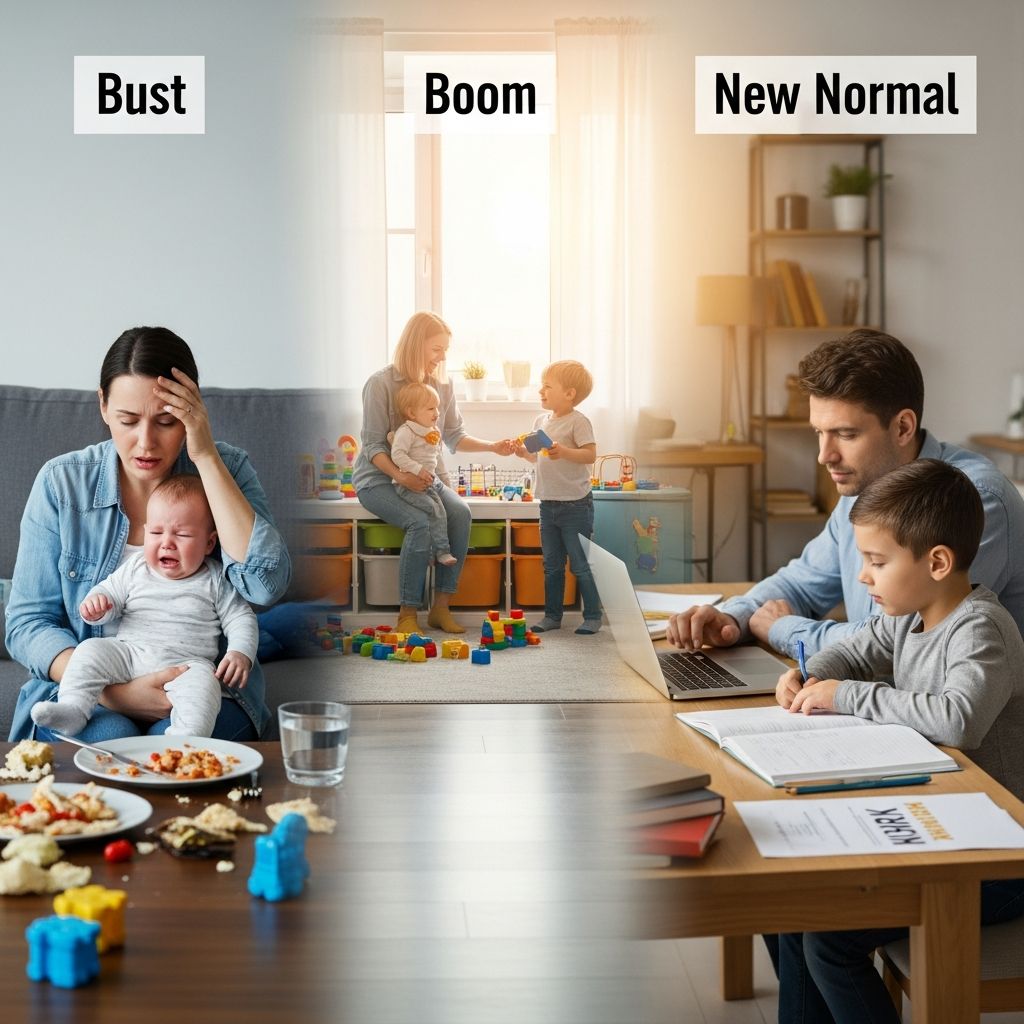
The COVID-19 pandemic disrupted nearly every aspect of life, including family planning. Initial predictions of a ‘baby boom’ due to lockdowns and forced togetherness gave way to a more nuanced reality: a significant decline in births overall, with divergent patterns among different demographic groups. While foreign-born mothers saw sharp drops, U.S.-born women experienced a temporary uptick, challenging long-term fertility decline trends.
Initial Expectations: Lockdown Baby Boom Hopes
At the onset of the pandemic in early 2020, many anticipated a surge in births reminiscent of post-World War II trends. The strong economy after WWII fueled the Baby Boomer generation, averaging 4.24 million births annually from 1946 to 1964. Similarly, pandemic lockdowns were thought to encourage family growth through increased couple time and economic stimulus.
However, reality diverged sharply. U.S. births fell by 4% from 2019 to 2020, marking the lowest rate since 1979 according to CDC data. Projections estimated 300,000 to 500,000 fewer births in 2021 compared to 2019, driven by economic uncertainty and health fears.
The Baby Bust Reality: Global and U.S. Declines
Globally, the pandemic triggered a ‘baby bust’ across multiple nations. Italy, Japan, South Korea, England, and Wales recorded all-time lows. France hit its lowest since WWII, and China’s birth rate dropped 15% in 2020.
In the U.S., the decline was pronounced among foreign-born mothers, who accounted for 22% of 2019 births but drove 60% of the 2020 drop. This began in January 2020, before widespread lockdowns, possibly due to immigration disruptions and economic instability.
| Region/Country | Birth Rate Change (2020) | Notes |
|---|---|---|
| United States | -4% | Lowest since 1979; sharpest among foreign-born |
| China | -15% | Significant demographic shift |
| Italy/Japan/S. Korea | All-time lows | Exacerbated pre-existing trends |
| France | Lowest since WWII | Health and economic fears |
Surprise Baby Bump: U.S.-Born Mothers Buck the Trend
Contrasting the bust, U.S.-born mothers saw a ‘baby bump’ in 2021, reversing fertility declines since the Great Recession. Births to this group fell by 31,000 in 2020 but rose by 71,000 in 2021—a 6.2% increase or net 46,000 more babies.
California data through February 2023 indicate sustained elevation. This was the first recession without a subsequent baby bust, defying economic models predicting steep drops.
- First births: Most pronounced increase, suggesting accelerated family starts.
- Women under 25: Higher rates, possibly due to paused careers or relationships.
- Ages 30-34 and college-educated: Benefited from remote work flexibility.
Demographic Drivers Behind the Divergence
Several factors explain these patterns. For foreign-born women, early 2020 declines linked to travel restrictions, job losses in vulnerable sectors, and uncertainty.
U.S.-born women’s bump tied to:
- Remote work enabling better work-life balance, especially for educated professionals.
- Stimulus checks easing financial burdens.
- Limited abortion access in some areas during peak pandemic.
- Pandemic prompting earlier family decisions amid life’s fragility.
First and second births drove the increase, not higher-order ones. College-educated women ages 30-34 saw notable rises, highlighting education and flexibility’s role.
Long-Term Implications: From Temporary Bump to Ongoing Bust?
Despite the 2021 bump, recent data suggest no sustained boom. 2023 marked the lowest U.S. birth rate ever, continuing a downward trajectory post-COVID fluctuations.
Researchers at Guttmacher found 34% of women postponed or reduced family plans due to the pandemic, potentially cementing lower fertility. Globally, busts persist, raising concerns for aging populations and workforce shortages.
In the U.S., the bump’s end signals a ‘new normal’ of declining rates, influenced by housing costs, career priorities, and delayed milestones.
Personal Stories: Real Families Amid the Data
Beyond statistics, the pandemic reshaped family decisions. Young couples, like those under 25, advanced plans amid lockdowns, finding joy in new life during isolation. College-educated professionals leveraged home offices for maternity transitions.
Conversely, immigrant families faced barriers: job instability and separation from support networks led to deferrals. One narrative highlights a mother who, after losing work, chose fewer children, echoing broader trends.
Policy Responses and Future Outlook
Governments eye incentives like paid leave and childcare subsidies to counter declines. The U.S. bump’s reliance on remote work underscores needs for family-friendly policies.
Looking ahead, sustained low rates could strain social systems. Yet, the pandemic proved fertility resilient in unexpected ways, offering lessons for demographic strategies.
Navigating Family Life in a Pandemic World
Even amid birth shifts, parents grappled with unique challenges: remote schooling, health risks, and mental health strains. The bump brought joy but amplified isolation without extended family help.
Support networks evolved via virtual communities, while economic relief briefly eased pressures. Long-term, these experiences may redefine parenting norms.
Frequently Asked Questions (FAQs)
Did the COVID-19 pandemic cause a baby boom in the U.S.?
No overall boom occurred; total births declined. However, U.S.-born mothers saw a 2021 ‘baby bump’ of 71,000 extra births, offsetting prior drops.
Why did foreign-born birth rates drop more sharply?
Early declines from January 2020 linked to immigration issues, job losses, and uncertainty, accounting for 60% of the U.S. fertility drop.
Will the baby bump continue?
California data showed elevation through 2023, but national 2023 rates hit historic lows, suggesting the trend reversed.
What groups saw the biggest increases?
First-time mothers, women under 25, ages 30-34, and college-educated women, aided by remote work and stimulus.
How does this compare to past recessions?
Unlike the Great Recession’s bust, COVID brought a bump for U.S.-born women—the first fertility reversal in years.
References
- Pandemic Baby Boom Turns Bust — First Business Bank. 2021. https://firstbusiness.bank/resource-center/pandemic-baby-boom-turns-bust/
- The Covid-19 Baby Bump: The Unexpected Increase in U.S. Fertility — NBER. 2022-10-01. https://www.nber.org/papers/w30569
- We’ve Had a COVID Baby Boom. Will It Last? — Boston University. 2023-01-26. https://www.bu.edu/articles/2023/covid-baby-boom/
- The COVID-19 baby bump in the United States — PNAS. 2023-02-28. https://www.pnas.org/doi/10.1073/pnas.2222075120
- COVID-19 pandemic baby bust — Wikipedia (informational; primary sources cited). 2023. https://en.wikipedia.org/wiki/COVID-19_pandemic_baby_bust
- COVID disruptions at work lead to baby boom — PBS NewsHour (YouTube). 2023-03-06. https://www.youtube.com/watch?v=HZeKo69hDvA
- There Was No COVID-19 Baby Boom, and Now the Baby Bust Continues — AEI. 2024. https://www.aei.org/op-eds/there-was-no-covid-19-baby-boom-and-now-the-baby-bust-continues/