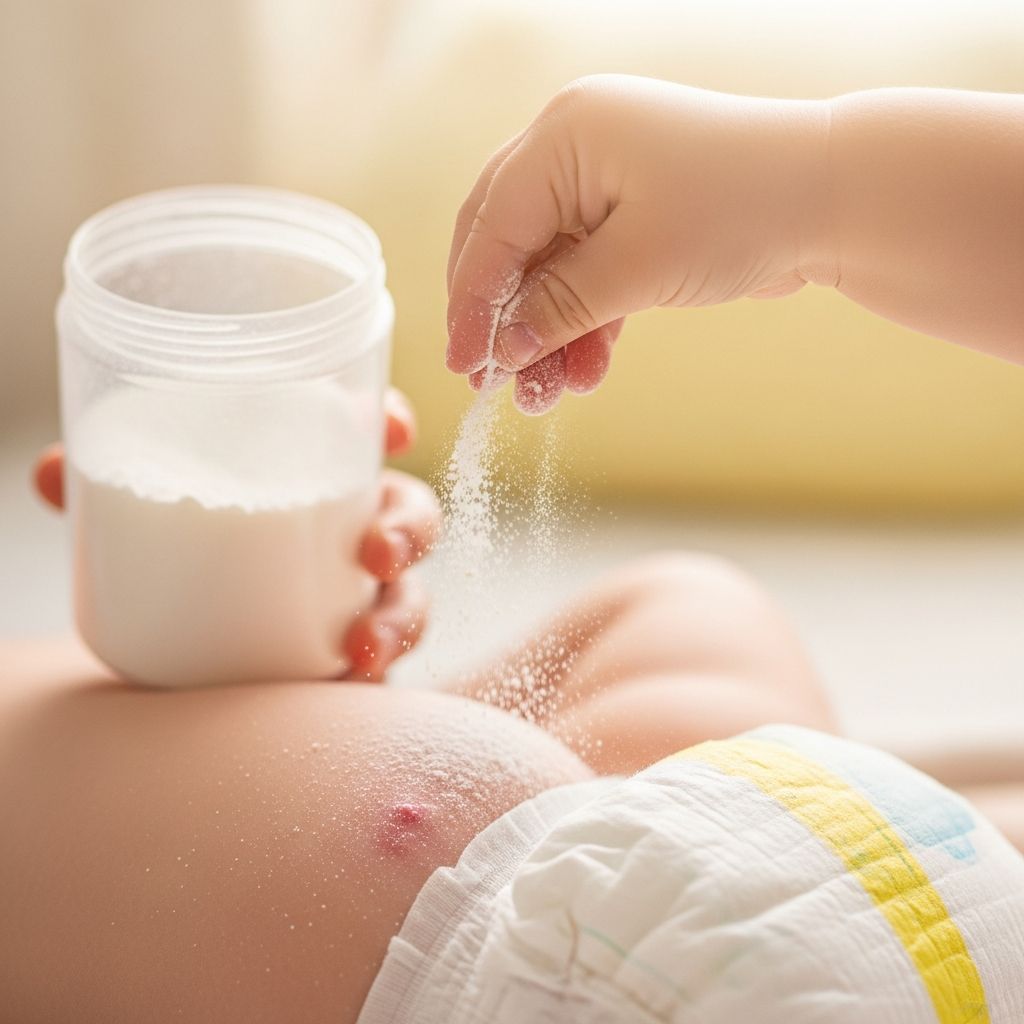
Many caregivers reach for kitchen remedies like cornstarch when a baby’s bottom turns red and sore. This guide explains what diaper rash is, how cornstarch is supposed to help, what pediatric and dermatology sources say about its safety, and which approaches are more reliable for preventing and treating rash.
Understanding Diaper Rash First
Diaper rash is an irritation of the skin in the diaper area, usually caused by prolonged contact with moisture, friction from diapers, and exposure to urine and stool. Medical references describe it as a form of irritant contact dermatitis that can be worsened by trapped heat and wetness.
Sometimes the rash is complicated by infection from yeast, especially Candida albicans, which thrives in warm, moist folds of skin. In those cases, the rash may look beefy red with small red bumps at the edges and often needs antifungal treatment instead of, or in addition to, regular barrier creams.
Why Parents Consider Cornstarch
Cornstarch is a fine, plant-derived powder commonly used in cooking as a thickener, and its silky texture makes it feel soothing on irritated skin. Many home remedies suggest sprinkling it in the diaper area because it absorbs moisture and may decrease friction between the diaper and the skin.
Historically, some people viewed cornstarch as a safer alternative to talc-based baby powders, since talc has been linked to contamination with asbestos in some older products. However, health organizations now highlight that powders of any type can pose risks when inhaled and may not be ideal for treating rashes, especially if yeast is involved.
How Cornstarch Interacts with Skin and Yeast
Laboratory and volunteer studies have shown that cornstarch on intact skin does not necessarily increase the growth of yeast by itself, and it can reduce friction-related injury in controlled settings. One early study in adult volunteers found no enhancement of Candida albicans growth on skin treated with cornstarch or talc and did note protection from friction damage.
Despite this, pediatric references point out that yeast in the diaper area has easy access to moisture, warmth, and nutrients, and cornstarch can act as an additional food source in a real-world diaper environment. Because of that, some experts warn that using it on a suspected yeast rash may allow the infection to worsen rather than improve.
Current Medical Advice on Cornstarch for Diapers
Modern pediatric and dermatology guidance generally advises against using cornstarch for diaper rash, especially when there is any chance that yeast is involved. Consumer-facing medical sites emphasize that cornstarch can trap moisture, irritate the skin, and may contribute to infection in the diaper area instead of resolving it.
Professional pharmacy literature and national health guidance also caution that cornstarch powders can be dangerous if inhaled and may act as a culture medium for Candida on damaged skin. Some references note that national health agencies recommend avoiding cornstarch in the setting of candidal diaper rash altogether.
Benefits Often Claimed for Cornstarch
Supporters of cornstarch focus on three main potential advantages: it is inexpensive, widely available, and familiar from everyday kitchen use. Parents may like that it is plant-based and free from added fragrances or colors when taken straight from the pantry.
- Moisture absorption: The powder can soak up some surface moisture, which in theory helps keep the skin drier between diaper changes.
- Friction reduction: The smooth texture may allow the diaper to glide more easily over irritated skin and reduce rubbing-related discomfort.
- Perceived natural option: Some families prefer household ingredients over commercial creams and feel more comfortable with a product they already use in cooking.
However, these perceived benefits need to be weighed against potential harms, especially when safer, evidence-supported alternatives are readily available.
Risks and Drawbacks of Cornstarch on Baby Skin
The biggest concern with cornstarch is inhalation. Fine powder can become airborne during application, and infant case reports describe serious breathing problems when large amounts of powder were inhaled, including a form of chemical pneumonia called cornstarch pneumonitis.
In the diaper area itself, pediatric sources caution that cornstarch can support yeast growth, worsen candidal rashes, and hold extra moisture against already irritated skin. That combination can turn a mild rash into a more severe and persistent problem that ultimately requires prescription treatment.
How Cornstarch Compares to Evidence-Based Treatments
Diaper rash is often managed successfully with a few simple but reliable measures: frequent diaper changes, gentle cleansing, air exposure, and barrier ointments containing ingredients like zinc oxide or petrolatum. Clinical guidelines note that these protectants shield the skin from irritants and help it heal.
By contrast, cornstarch does not create a true barrier and does not contain active agents against yeast or bacteria. For that reason, medical organizations and mainstream pediatric sources recommend established protectants and, when necessary, antifungal or antibiotic creams over cornstarch and other powders.
Overview of Common Options
| Approach | Primary role | Key advantages | Important cautions |
|---|---|---|---|
| Cornstarch powder | Moisture absorption; friction reduction | Inexpensive; familiar household product | Inhalation risk; may worsen yeast rashes; can hold moisture against skin |
| Zinc oxide ointment | Physical barrier against urine and stool | Well-established; effective for many irritant rashes | Thick texture can be harder to remove; avoid scrubbing skin. |
| Petrolatum (white petroleum jelly) | Protective coating and moisture barrier | Simple formula; gentle for frequent use | May be messy; does not treat yeast infections by itself. |
| Antifungal cream | Targets yeast-related diaper rash | Essential when Candida is present; often prescribed | Should be used under medical guidance; not for every rash. |
| Frequent diaper changes and air time | Reduces contact with moisture and irritants | No medication required; supports natural healing | Requires time and consistency from caregivers. |
Step-by-Step Care Without Cornstarch
Parents who want to avoid cornstarch can follow a simple routine built around cleansing, protection, and monitoring. These steps reflect the general approach recommended in pediatric and dermatology references for mild to moderate diaper rash.
- Change diapers promptly: Replace wet or soiled diapers as soon as they are noticed to limit contact between skin and irritants.
- Use gentle cleaning: Rinse with lukewarm water or use fragrance-free wipes designed for sensitive skin; pat dry rather than rubbing.
- Give skin air time: Allow short periods without a diaper on a waterproof pad so the area can dry thoroughly.
- Apply a barrier layer: Use a thick coating of zinc oxide paste or plain petrolatum over the entire affected area, like frosting a cake rather than rubbing it in.
- Avoid powders: Skip both talc and cornstarch to reduce inhalation risks and avoid feeding potential yeast.
- Reapply at each change: Continue the barrier routine until the skin looks calm and returns to normal color and texture.
When a Rash May Be More Than Irritation
Not every diaper rash responds quickly to standard care. If a rash is not clearly improved within a few days of frequent changes and barrier ointment, pediatric sources suggest considering yeast or bacterial infection as a possibility.
- Signs that suggest yeast: Deep red patches, raised borders, and small red spots or pustules at the edges, particularly in skin folds.
- Signs that suggest bacterial infection: Yellow crusting, oozing, or blisters, or a rash that seems painful to the touch.
- General red flags: Fever, rash spreading beyond the diaper area, or blisters and open sores all warrant timely medical evaluation.
In these situations, cornstarch is not helpful and may delay appropriate treatment. A pediatrician can recommend antifungal, antibiotic, or mild steroid creams when indicated.
Practical Tips to Prevent Diaper Rash
Consistent prevention often reduces how often parents need to reach for any treatment, home remedy or otherwise. Core strategies emphasize minimizing moisture, avoiding unnecessary irritants, and supporting the skin’s natural barrier.
- Change diapers often, and avoid letting a baby sit in a wet or soiled diaper.
- Choose diapers that fit well but are not too tight, so air can circulate and friction is reduced.
- Use fragrance-free, alcohol-free wipes or plain water with soft cloths, especially if the baby’s skin is already sensitive.
- Apply a thin layer of barrier ointment at bedtime or when long stretches between changes are expected.
- Introduce new products (lotions, wipes, detergents) one at a time and watch for signs of irritation.
Frequently Asked Questions About Cornstarch and Diaper Rash
Is cornstarch safe to use on every diaper rash?
Medical references do not consider cornstarch a universal or preferred treatment for diaper rash. Many pediatric sources explicitly recommend avoiding it because of inhalation risks and the potential to worsen yeast-related rashes.
Can cornstarch replace baby powder?
While cornstarch does not carry the same asbestos concerns as some older talc powders, health experts increasingly advise avoiding powders altogether in the diaper area. The tiny particles can be inhaled and irritate a baby’s lungs, and there are safer ways to keep the skin protected and comfortable.
Does cornstarch actually help rashes heal faster?
Cornstarch can absorb some surface moisture and may reduce friction, but those properties alone do not address underlying irritation or infection. Evidence-based management focuses on limiting moisture exposure and using barrier creams or specific medications when necessary, which have stronger support than cornstarch for improving diaper rash.
Is it okay to mix cornstarch into homemade diaper creams?
Mixing cornstarch into homemade products still carries the same concerns about feeding yeast and promoting moisture retention if the rash is already inflamed. Since commercially available barrier creams are carefully formulated for baby skin and do not rely on starch powders, most pediatric sources recommend those over untested mixtures.
When should a parent stop home remedies and call a pediatrician?
Parents are generally encouraged to seek medical advice if a rash has not improved within three days of careful home care, looks very painful, or is associated with fever or spreading redness. At that point, prescription treatments may be needed, and continuing to experiment with powders or other household ingredients is unlikely to help.
Key Takeaways for Caregivers
Cornstarch may sound appealing as a simple, natural fix, but modern pediatric and dermatology sources raise legitimate concerns about its role in diaper care. Inhalation risks, the possibility of worsening yeast infection, and limited benefits compared with proven barrier treatments all weigh against routine cornstarch use.
Focusing on frequent diaper changes, gentle cleansing, generous barrier ointment, and timely medical evaluation when rashes do not improve remains the safest and most reliable strategy. For most families, these steps resolve irritation without needing to reach into the pantry for starches or powders.