Transforming the Kitchen into a Learning Space for Young Children
The kitchen represents far more than a place to prepare meals. For young children, particularly those in the preschool years, the kitchen becomes a dynamic learning environment where fundamental skills develop naturally through engaging, practical activities. When parents and caregivers invite young children into food preparation, they unlock a wealth of developmental opportunities that extend across multiple dimensions of childhood growth.
Food preparation activities offer preschoolers authentic, purposeful engagement with their environment. Unlike isolated educational exercises, cooking involves real consequences and tangible outcomes that young children can see, taste, and enjoy. This meaningful context makes learning stick in ways that disconnected worksheets or flashcards simply cannot match.
Strengthening Physical Capabilities Through Kitchen Tasks
Physical development during the preschool years includes refining both large and small muscle groups. Kitchen activities provide ideal opportunities for this growth in naturally motivating contexts.
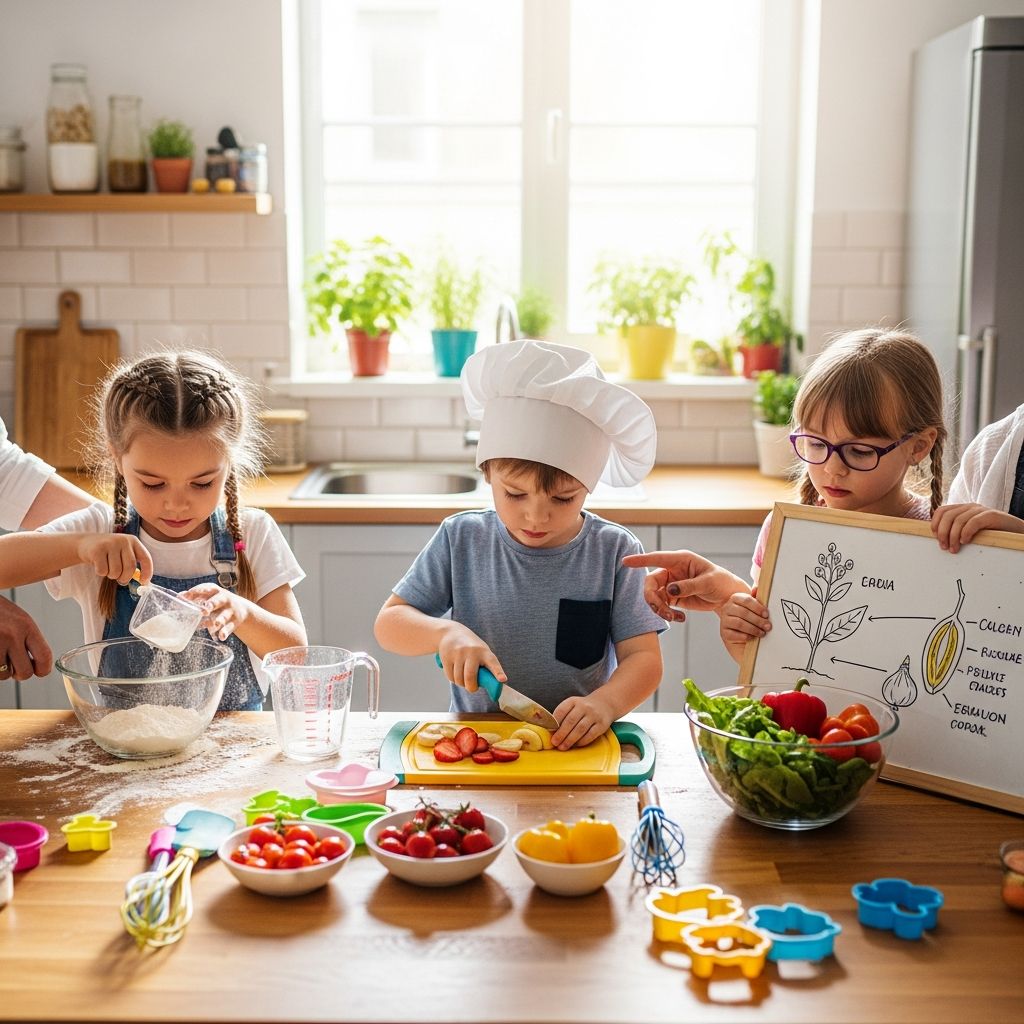
When children engage in food preparation, they perform movements that directly strengthen fine motor skills and hand-eye coordination. Spreading softened butter on bread, cutting banana slices with appropriate supervision, mixing batter in a bowl, and kneading dough all require precise hand movements and finger control. These repetitive, purposeful actions build the neural pathways necessary for later writing, drawing, and other fine motor tasks.
Beyond hand skills, kitchen participation develops larger physical capabilities. Stirring thick mixtures requires shoulder and arm strength. Reaching for ingredients on shelves or counters engages core muscles and balance. Squeezing citrus fruits for juice builds hand strength. Each movement contributes to overall physical development in ways that feel like play rather than exercise.
Nurturing Cognitive Growth Through Culinary Exploration
The cognitive benefits of cooking with young children span multiple areas of intellectual development. When children participate in food preparation, they encounter real-world applications of abstract concepts, making these ideas concrete and understandable.
Mathematical Thinking in Action
Cooking naturally incorporates mathematical concepts without requiring formal instruction. Measuring ingredients introduces children to quantity and comparison. As you pour flour into a measuring cup or count three eggs needed for a recipe, preschoolers begin internalizing concepts of more and less, equal amounts, and basic fractions. Dividing ingredients between multiple bowls or plates involves practical division. Setting timers exposes children to the concept of time passing.
Scientific Curiosity and Cause-and-Effect
Food preparation involves numerous scientific transformations that captivate young minds. When batter becomes cake in a hot oven, children observe cause-and-effect directly. Mixing baking soda with vinegar creates a bubbling reaction that demonstrates chemical change. Watching gelatin transform from liquid to solid reveals states of matter. These observations spark curiosity and lay foundations for later scientific thinking.
Language Development and Literacy Skills
Following recipes introduces children to written instructions and new vocabulary. Words like “whisk,” “knead,” “simmer,” and “ingredients” appear in the context of meaningful activity, making them easier to learn and remember. Picture-based recipes help children connect visual representations to actions. Discussing what you are doing—describing textures, colors, and smells—builds descriptive language skills.
Building Emotional Strength and Self-Confidence
Early childhood represents a critical period for developing a sense of competence and self-worth. When young children successfully complete kitchen tasks, they experience genuine accomplishment that translates into increased confidence.
Starting with simple tasks—stirring, sprinkling toppings, or arranging ingredients on a plate—gives children early success experiences. As their abilities grow, gradually introducing more complex tasks maintains this sense of mastery. A child who helps make a meal that the family then enjoys together experiences tangible recognition of their contribution. Parents might say, “You helped make this delicious lunch,” reinforcing the child’s sense of capability and value.
These positive experiences in the kitchen build what developmental psychologists call “kitchen confidence”—a developing sense that the child possesses valuable, practical skills. This confidence often extends beyond the kitchen, encouraging children to attempt new challenges in other areas of life.
Fostering Social and Emotional Development
When cooking involves multiple children, it naturally creates opportunities for practicing social skills. Sharing kitchen tools, taking turns stirring or mixing, and waiting for their moment to contribute all build cooperation and interpersonal awareness.
Food preparation also connects children to cultural traditions and diverse perspectives. When children learn recipes from different cultural backgrounds or cook dishes eaten in their family’s heritage, they develop appreciation for diversity. Experiencing foods from various cultures expands their understanding of the wider world and the people in it.
Cooking together as a family creates shared experiences that strengthen relationships. The conversations that happen naturally during meal preparation—discussing the food, sharing stories, laughing about spills or mishaps—build emotional bonds. These ordinary moments of togetherness contribute significantly to children’s sense of belonging and security.
Establishing Lifelong Healthy Eating Patterns
Research consistently demonstrates that children who participate in food preparation develop healthier eating habits. When young children help prepare a meal, they develop a sense of ownership over the food. They are more likely to taste and enjoy dishes they had a role in creating.
Exposure to a variety of foods during cooking activities normalizes different flavors and textures. Children who repeatedly handle, smell, and prepare vegetables become more familiar with them, reducing the “neophobia” or reluctance to try new foods that commonly develops in early childhood. A child who helped wash lettuce, tear it into pieces, and arrange it on a plate is far more likely to actually eat that salad than a child who finds it suddenly placed before them.
Beyond individual dishes, cooking experiences teach children that food comes from ingredients that must be prepared. Understanding the journey from raw ingredients to finished meal gives children appreciation for nutrition and the effort involved in eating well. These early experiences plant seeds for dietary choices that extend throughout childhood and into adulthood.
Creating a Safe Kitchen Environment for Young Learners
While the benefits of cooking with preschoolers are substantial, safety must always remain paramount. Creating an appropriate kitchen environment requires thoughtful preparation.
Essential Safety Considerations
- Supervise all activities continuously, remaining within arm’s reach at all times
- Use child-safe tools designed for small hands, such as butter knives for spreading rather than sharp chef’s knives
- Keep young children away from hot surfaces, boiling water, and steam
- Establish clear boundaries around the stove and oven
- Use a sturdy step stool that allows children to reach counters safely without leaning or stretching dangerously
- Wash hands thoroughly before beginning and after handling raw ingredients
- Keep cleaning products and other hazardous materials completely out of reach
- Teach children never to touch hot surfaces and to alert an adult if something feels hot
Choosing Age-Appropriate Tasks
Match kitchen activities to your child’s developmental level. Very young preschoolers (ages 2-3) benefit from simple tasks like stirring, sprinkling, or arranging already-prepared ingredients. Slightly older preschoolers (ages 4-5) can handle spreading soft ingredients, tearing lettuce, and breaking crackers. Save chopping, cracking eggs, and near-stove activities for older children with more coordination and understanding.
Practical Activities to Begin With
Starting your kitchen journey with your preschooler requires selecting activities that are genuinely enjoyable and manageable for both parent and child.
Simple Starting Points
| Activity | Skills Developed | Age Appropriateness |
|---|---|---|
| Stirring and mixing | Arm strength, coordination, understanding combinations | Ages 2+ |
| Sprinkling toppings | Fine motor control, hand-eye coordination | Ages 2.5+ |
| Spreading soft foods | Wrist control, pressure regulation, precision | Ages 3+ |
| Tearing lettuce or bread | Hand strength, understanding food preparation | Ages 3+ |
| Washing vegetables | Sensory awareness, responsibility, care | Ages 2.5+ |
| Counting and measuring | Mathematical thinking, following directions | Ages 3+ |
Overcoming Common Parental Concerns
Parents often hesitate to involve young children in cooking due to concerns about mess, time, or safety. Understanding these concerns and planning accordingly makes the experience enjoyable for everyone.
Managing the Messiness
Yes, cooking with preschoolers creates mess. Rather than viewing this as a problem, recognize it as an inevitable part of the learning process. Protect your floor and furniture with newspaper or old tablecloths. Use washable aprons and accept that flour will dusts clothes and hair. The developmental benefits far outweigh the cleanup time required afterward. Many parents find that involving their child in cleanup further extends the learning experience and teaches responsibility.
Time and Efficiency
Cooking with young children takes longer than cooking alone. Build extra time into your schedule rather than attempting kitchen projects when rushed. The value lies not in efficient meal production but in the shared experience and learning that occurs. A pancake that takes an hour to prepare together creates far more value than a perfectly cooked pancake made in five minutes solo.
Handling Disappointments
Not every kitchen project succeeds perfectly. Cookies might spread unevenly, recipes might require adjustments, and children’s enthusiasm sometimes exceeds their capabilities. Frame these moments positively: “This turned out differently than we expected, but we still enjoyed making it together.” Children learn resilience and problem-solving from these experiences, understanding that imperfect results are still valuable.
Building Long-Term Habits and Family Culture
Occasional cooking projects with your preschooler have value, but embedding cooking into regular family routines creates deeper, more lasting benefits. Establishing a regular cooking day—perhaps Saturday morning pancakes or Sunday afternoon snack preparation—gives children something to anticipate and builds cooking into family identity.
As children grow, they remember these experiences. The kitchen confidence and healthy eating habits established in preschool years provide foundations that influence choices throughout childhood and beyond. Children who grew up cooking with their families often continue these practices into adulthood, preparing food with their own children and passing along both skills and family traditions.
Frequently Asked Questions
What if my child is hesitant about trying new foods during cooking?
Reluctance is normal. Continue involving them in preparation without pressure to taste. Familiarity from repeated exposure usually increases willingness to try foods eventually. Celebrate any small steps, like touching or smelling the food.
How can I cook with my preschooler when I’m not an experienced cook myself?
Cooking skill is less important than willingness to explore together. Simple recipes—mixing ingredients, arranging toppings, or assembling snacks—require minimal culinary expertise. Your child learns from participation, not from eating restaurant-quality food.
Is cooking with preschoolers worth the extra time and mess?
The developmental benefits—motor skills, cognitive growth, confidence building, healthy eating habits, and family connection—extend far beyond the meal produced. The time investment yields returns throughout childhood and beyond.
What should I do if my child loses interest during a cooking project?
Young children have limited attention spans. It’s perfectly acceptable to pause or stop a project if your child becomes disengaged. End on a positive note, celebrate what you accomplished, and try again another time.
Can children with developmental delays participate in cooking activities?
Yes, with appropriate modifications. Adapt tasks to match individual abilities, provide additional support as needed, and focus on the process rather than perfect outcomes. Consult with your child’s therapist or educator for specific suggestions.
References
- Webinar: Cooking with Kids Builds a Strong Mind and Body — National Head Start Association. https://nhsa.org/resource/cooking-with-kids-builds-strong-mind-body/
- 10 Tasty Benefits of Cooking with Kids: Boost Skills, Bond, and Have Fun — Baketivity. https://baketivity.com/blogs/news/10-tasty-benefits-of-cooking-with-kids-boost-skills-bond-and-have-fun
- Cooking in Early Childhood: 4 Developmental Benefits — Kids Academy. https://kidsacademy.love/cooking-in-early-childhood/
- The Top 8 Benefits of Cooking with Your Child — Occupational Therapy Australia. https://occupationaltherapy.com.au/the-benefits-of-cooking-with-your-child/
- 5 Benefits to Cooking with Kids — SR Nutrition. https://www.srnutrition.co.uk/2023/04/5-benefits-to-cooking-with-kids/
- Cooking In Early Childhood: 4 Developmental Benefits — Say Yes To Childcare. https://sayyestochildcare.org/en/cooking-in-early-childhood-4-developmental-benefits/
- Cooking together with young children — Penn State Better Kid Care. https://extension.psu.edu/programs/betterkidcare/news/cooking-together-with-young-children