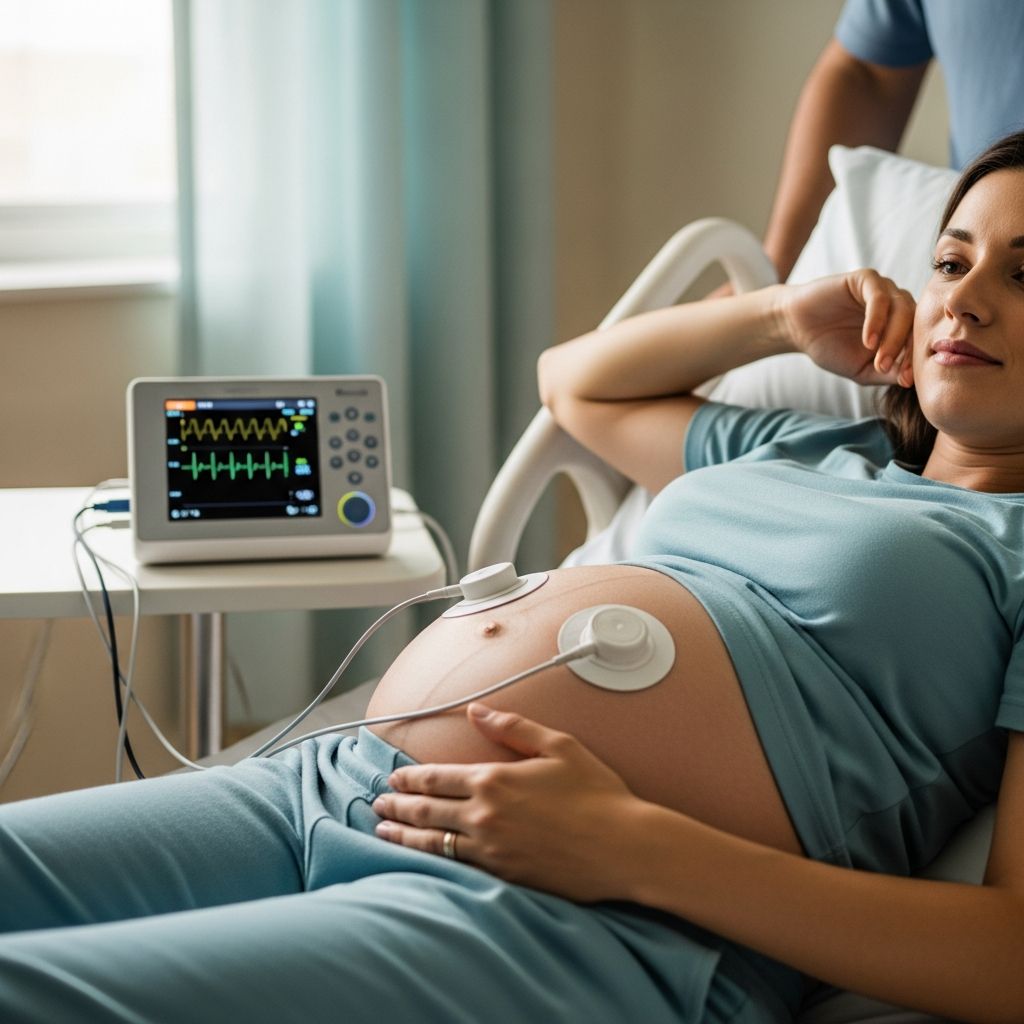
Late in pregnancy, some babies need a closer look to be sure they can safely handle the work of labor. A contraction stress test is one way health care providers check how a baby’s heart responds when the uterus tightens, giving important clues about whether labor is likely to be safe or if closer monitoring or early delivery might be better.
What Is a Contraction Stress Test?
A contraction stress test is a type of fetal monitoring used late in pregnancy to see how a baby’s heart rate responds when the uterus is stimulated to contract. During the test, gentle, temporary contractions are brought on either with medication or nipple stimulation while the baby’s heart rate and the timing of each contraction are recorded on monitors.
- The goal is to mimic the kind of stress a baby experiences during real labor, but in a controlled setting.
- If the baby’s heart rate remains stable throughout the contractions, it suggests the baby is likely to tolerate labor well.
- If the heart rate repeatedly slows in an unhealthy pattern, it may signal that labor could be risky without extra planning or intervention.
This test is usually done in the last weeks of pregnancy, most often after other tests raise a question about the baby’s well-being.
Why Contractions Matter for Your Baby
Every time the uterus contracts, the muscles tighten around the baby and briefly reduce the amount of blood and oxygen that flows through the placenta. Most healthy babies handle this short dip in oxygen without difficulty and their heart rate quickly returns to normal.
- In a normal contraction, blood flow decreases for a moment, then returns to its usual level in between contractions.
- If the placenta is not working well or the baby is already under stress, these short interruptions can be harder to tolerate.
- Repeated trouble handling contractions during labor can lead to more serious complications, so doctors try to identify at-risk babies ahead of time.
The contraction stress test offers a preview of how your baby responds, before labor begins for real.
When Might a Contraction Stress Test Be Recommended?
Not all pregnant people will need a contraction stress test. It is generally reserved for situations where the health care team wants more detailed information after other screening tests.
Common reasons your provider might consider this test include:
- Concerns after a nonstress test (NST), such as a baby whose heart rate does not show the usual healthy patterns of speeding up with movement.
- Abnormal or borderline findings on a biophysical profile (BPP), which combines ultrasound with fetal heart monitoring.
- Chronic health conditions in the pregnant person, such as high blood pressure, diabetes, or kidney disease, that can affect the placenta.
- Evidence or suspicion that the placenta may not be providing enough oxygen or nutrients.
- Significantly reduced fetal movement or other signs that raise concern about the baby’s condition.
Because the test intentionally triggers contractions, providers use it thoughtfully and only when the extra information is likely to influence the plan for delivery.
Who Usually Does Not Get This Test?
There are some situations where a contraction stress test is usually not recommended, because triggering contractions could be unsafe or too risky.
- Pregnancies with multiples (twins, triplets, or more), where inducing contractions can more easily lead to preterm labor.
- People with conditions that make labor dangerous, such as placenta previa or certain uterine surgeries.
- Anyone who already has strong, frequent contractions or signs of preterm labor.
In these cases, providers often rely more on nonstress tests, ultrasounds, and other forms of fetal surveillance instead.
Step-by-Step: What Happens During the Test
Understanding the process can make the experience feel much less intimidating. The contraction stress test is usually done in a hospital or a labor and delivery unit, where staff and equipment are immediately available if labor starts or if the baby shows signs of distress.
Before the Test Begins
- You will be asked to change into a gown and lie on an exam bed, usually slightly tilted to one side to keep blood flow to the uterus as open as possible.
- Two soft, stretchy belts are wrapped around your abdomen: one tracks the baby’s heart rate and the other records contractions.
- Your blood pressure, pulse, and sometimes your oxygen level may also be monitored throughout the test.
Your provider will explain the procedure, review the reasons for doing the test, and obtain your consent. This is a good time to ask any last-minute questions.
Bringing On Contractions
The next step is gently stimulating the uterus to contract. This can be done in one of two main ways:
- Oxytocin (also called Pitocin) through an IV: A small IV line is placed in your arm or hand. A controlled, low-dose drip of oxytocin is started and adjusted slowly until mild contractions begin.
- Nipple stimulation: In some settings, the pregnant person or a partner may be instructed to gently roll or massage the nipples with fingers or a warm cloth. This triggers the body’s own oxytocin release and can start contractions without medication.
The goal is to reach a pattern of several contractions within a 10-minute window, strong enough to give useful information but not so strong or frequent that they cause distress or full labor.
Monitoring During the Test
Once contractions are happening, the monitors continuously record the baby’s heart rate and your uterine activity. The care team watches:
- How often contractions occur.
- How long each contraction lasts.
- How the baby’s heart rate changes before, during, and after contractions.
The test usually continues until a clear pattern has been seen—typically several contractions over about 10 minutes with good-quality heart rate tracing. The entire appointment commonly lasts up to two hours, including setup and recovery time.
After the Contractions Stop
- If oxytocin was used, the IV medication is turned off once enough information is collected.
- You will stay on the monitors for a while longer to confirm the contractions are spacing out and fading.
- If contractions remain frequent or intense, medication may be given to calm the uterus and stop labor from progressing.
Most people go home the same day once contractions have settled and both parent and baby appear stable.
Benefits and Limitations
A contraction stress test can provide valuable information that other tests cannot, but it also has limits and potential downsides. Understanding both can help you decide whether you feel comfortable proceeding if it is offered.
Potential Benefits
- Offers a more realistic picture of how your baby might respond to the stress of actual labor contractions.
- Can help your provider decide whether it is safer to allow labor to begin naturally, induce labor, or plan a cesarean birth.
- May reduce the chance of unexpected emergencies during labor by revealing problems earlier.
Possible Risks and Discomforts
- Contractions may become too strong or too frequent, rarely leading to preterm or early labor.
- The test can cause cramping, backache, or pressure similar to early labor, which some people find uncomfortable or stressful.
- In a small number of cases, concerning heart rate patterns may lead to an urgent recommendation for delivery.
Your provider weighs these risks against the potential benefits before suggesting the test. You always have the right to ask about alternatives and share your preferences.
How Results Are Interpreted
Once the monitoring period is complete and the tracings are reviewed, your provider will explain what the patterns likely mean for your baby’s health and for your birth plan.
| Result Type | What the Heart Rate Shows | What It Often Suggests |
|---|---|---|
| Reassuring (often called “negative”) | Baby’s heart rate stays stable, with no repeated slowing after contractions. | Baby appears able to tolerate contractions; vaginal birth is usually considered safe. |
| Nonreassuring (often called “positive”) | Heart rate repeatedly slows in a concerning pattern after contractions. | Baby may have trouble with labor; provider may discuss early delivery or cesarean birth. |
| Equivocal or unsatisfactory | Too few contractions or unclear tracings to be confident about the result. | Test may need to be repeated or replaced with other forms of monitoring. |
Even a reassuring result is just a snapshot in time, showing how the baby is doing on that particular day. If there are ongoing concerns, the test may be repeated periodically in the final weeks of pregnancy.
Contraction Stress Test vs. Other Prenatal Tests
Parents are often offered several different tests when questions about the baby’s well-being arise. It can help to see how these tests differ from each other.
| Test | What It Measures | Does It Trigger Contractions? | Typical Use |
|---|---|---|---|
| Nonstress test (NST) | Baby’s heart rate pattern at rest and with movement. | No. | First-line test when decreased movement or risk factors are present. |
| Biophysical profile (BPP) | Ultrasound of breathing movements, body movements, muscle tone, and amniotic fluid, plus an NST. | No. | Provides a broader picture of baby’s overall condition. |
| Contraction stress test (CST) | Baby’s heart rate response to induced uterine contractions. | Yes. | Used when NST or BPP are concerning and more information is needed. |
In many settings, nonstress tests and biophysical profiles are used more often than contraction stress tests, in part because they do not cause contractions. However, CST can still be useful when a more direct look at how the baby tolerates contractions is needed.
Questions to Ask Your Provider
When a contraction stress test is suggested, you are allowed and encouraged to understand exactly why and how it will affect your care. Helpful questions include:
- What specific concern makes you think this test is necessary?
- Are there alternatives, such as repeating a nonstress test or doing another ultrasound?
- How will the results change the plan for my delivery?
- What are the chances this test could put me into labor?
- Will I need someone to drive me home afterward?
Bringing a partner, family member, or friend to the appointment can also help you remember the information you hear and feel more supported.
Preparing Emotionally and Practically
Any test involving your baby’s heart rate understandably stirs up anxiety. Taking simple steps beforehand can make the experience smoother and less stressful.
- Wear comfortable clothing and bring a light sweater or socks in case the unit is cool.
- Have a light meal or snack beforehand if your provider says it is okay, since the visit can be long.
- Pack water, a phone charger, and something to read or listen to, as you may spend a lot of time lying still.
- Use slow breathing, visualization, or other relaxation techniques if you feel anxious during contractions.
Remember that the purpose of the test is to gather information that helps keep both you and your baby safer.
Frequently Asked Questions (FAQs)
Does a contraction stress test hurt?
The test can be uncomfortable because it intentionally causes contractions, which may feel like menstrual cramps or early labor. The level of discomfort varies from person to person; the health care team can often adjust the strength or frequency of contractions if you are in significant pain.
How long does the test usually take?
The full visit often lasts up to two hours. This includes getting checked in, placing the monitors, gradually increasing stimulation until contractions occur, recording enough information, and then waiting for the contractions to slow down again.
Can the test start real labor?
There is a small chance that the contractions triggered during the test will not stop and you will go into active labor. This is why the test is done in a hospital or birth center, where staff are prepared to manage early labor or, if necessary, help delay it.
Is the test safe for my baby?
For most pregnancies, the test is considered low risk, but it is not completely risk-free. In rare cases it can reveal that the baby cannot tolerate contractions, which may lead to a recommendation for prompt delivery. Providers suggest the test only when they believe the benefit of having more information outweighs these risks.
What happens if my result is concerning?
If the test suggests your baby is having trouble with contractions, your provider may recommend additional monitoring, admission to the hospital, or planning for an earlier birth. The exact plan depends on how far along you are in pregnancy, your overall health, and how serious the heart rate changes appear.
Will I need repeat contraction stress tests?
Sometimes, especially when the first result is borderline or your pregnancy remains high risk, your provider might repeat the test or combine it with other types of fetal monitoring in the final weeks. The goal is to follow your baby’s condition over time, not just get a single snapshot.
Key Takeaways for Expecting Parents
- A contraction stress test is a late-pregnancy tool that checks how well your baby tolerates uterine contractions in a controlled setting.
- It is usually recommended only when other tests show possible concerns or when there are medical conditions that may affect the placenta.
- While the test can be uncomfortable and carries a small risk of triggering labor, it also provides detailed information that can help plan a safer birth.
Staying informed, asking questions, and partnering closely with your health care team can help you feel more confident if a contraction stress test becomes part of your prenatal care.