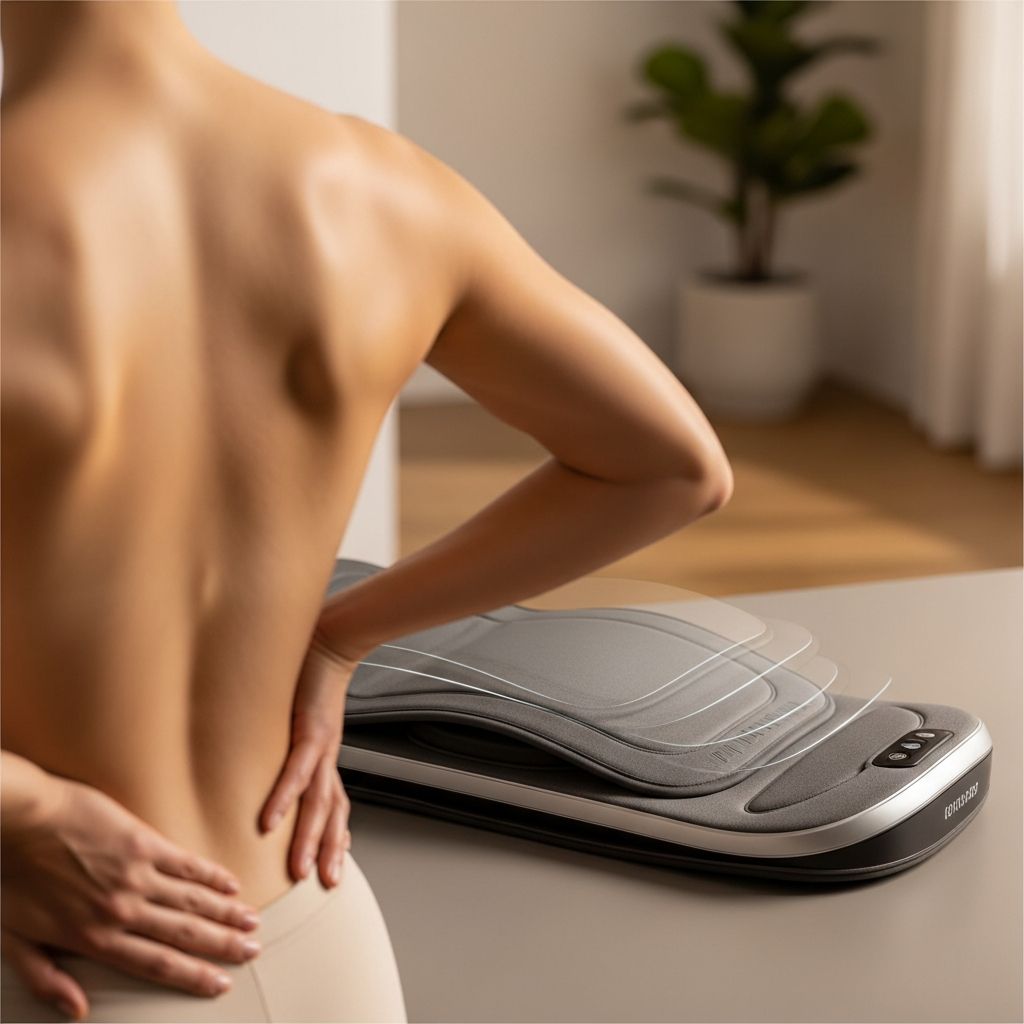
Back pain is one of the most common reasons adults miss work, lose sleep, or skip activities they enjoy. Devices known as continuous motion massagers promise to ease that pain while you simply lie still and let the machine do the work. This article explores how these devices work, who might benefit, what expectations are realistic, and how to decide if one belongs in your home.
What Is a Continuous Motion Massager?
A continuous motion massager is a motorized device designed to move a part of your body in a slow, repetitive pattern while you remain relaxed. Most back-focused models position under your legs or pelvis and gently rock or tilt your lower body to influence your spine and surrounding muscles. The idea is to create a rhythmic motion that mimics certain therapeutic techniques without requiring active effort from you.
Unlike handheld massagers that vibrate or knead specific muscles, these devices focus more on movement and joint positioning than on direct pressure. You do not need special skills to use them, which is one reason they appeal to people who struggle with chronic or recurring back pain.
How The Motion Is Supposed To Help
Therapists sometimes use gentle, repetitive movements—often called passive or assisted motion—to reduce stiffness and encourage circulation in joints and soft tissues. Continuous motion massagers attempt to automate a similar concept for the spine and hips. By moving your lower body in a controlled pattern, they aim to reduce muscle guarding, loosen tight tissues, and encourage a more neutral alignment of the spine.
Many users describe the sensation as a subtle rocking rather than a strong massage. That rocking can be soothing for some people and may help calm the nervous system, which in turn can lessen the intensity of pain signals.
Potential Benefits People Look For
Every back and body is different, so not everyone will experience the same effects. Still, there are several common reasons people consider investing in a continuous motion massager:
- Reduced stiffness after sitting or standing: Gentle movement can help ease the tightness that builds up from long periods at a desk or on your feet.
- Short sessions that fit busy schedules: Many devices are designed for use in 10–15 minute blocks, which appeals to people who struggle to commit to longer routines.
- Hands-free, low-effort relief: Once set up properly, you lie down and let the device handle the motion, which is helpful when you are too sore or tired to exercise.
- Home use between professional visits: Some people use these devices between physical therapy or chiropractic sessions to maintain mobility.
- Relaxation and stress reduction: The repetitive, predictable motion can be calming, which may help with pain that flares during times of stress.
How Continuous Motion Differs From Other Back Devices
There are many categories of back-related gadgets on the market, from foam rollers to inversion tables. To understand where continuous motion massagers fit, it helps to compare them with other popular options.
| Device Type | Main Action | User Effort | Typical Goal |
|---|---|---|---|
| Continuous motion massager | Gentle, rhythmic movement of legs/pelvis to influence the spine | Very low (you mostly lie still) | Reduce stiffness and promote comfortable spinal alignment |
| Handheld percussive massager | Rapid pulsing pressure directly into muscles | Moderate (you move the device around your body) | Break up tight spots and muscle knots |
| Foam roller | Self-massage using body weight over a firm cylinder | High (you actively roll and position yourself) | Improve tissue flexibility and relieve trigger points |
| Inversion table | Uses gravity by tilting your body upside down or at an angle | Moderate (requires mounting and controlling tilt) | Temporarily reduce pressure on spinal discs |
| Heat or cold pack | Temperature therapy at targeted areas | Very low | Soften tight muscles or dull acute pain |
Continuous motion devices occupy a middle ground between passive heat/ice and more demanding tools like foam rollers. They are most appealing to people who need gentle motion but lack the energy, flexibility, or confidence to do extensive floor exercises.
Realistic Expectations vs Marketing Claims
Marketing for back gadgets often suggests life-changing results in a matter of minutes, which can be misleading. Back pain is usually influenced by many factors, including posture, activity level, stress, sleep, and underlying medical conditions. No single device—no matter how clever—can undo all of that on its own.
For most people, a realistic goal is modest improvement: a bit less stiffness in the morning, slightly easier bending or standing after use, or fewer “bad” flare-up days when the device is used consistently along with other healthy habits. Thinking of a continuous motion massager as one tool in a broader self-care routine is far more reasonable than expecting it to be a stand-alone cure.
Who May Benefit The Most
While no back product works for everyone, certain groups of people are more likely to appreciate what continuous motion massagers offer:
- Desk workers who feel tightness across the lower back and hips from sitting many hours a day.
- Middle-aged and older adults whose backs feel stiff in the morning or after light physical tasks.
- People recovering from non-acute back issues (with professional guidance) who need very gentle motion rather than intense stretching.
- Those with low tolerance for strong pressure, for whom deep tissue massage or vigorous rolling feels too aggressive.
- Individuals who dislike or cannot tolerate inversion but still want some form of mechanical assistance for their spine.
In contrast, people with very specific structural problems, nerve compression, or severe acute pain will often need careful evaluation and a personalized treatment plan instead of relying on a generic home device.
Important Safety Considerations
Even products that look simple can create problems if used by the wrong person or in the wrong way. A continuous motion massager should never be treated as a substitute for proper medical care. Before trying one, it is especially important to speak with a healthcare professional if you:
- Have had spinal surgery, fractures, or known instability in the spine.
- Experience numbness, tingling, or weakness in your legs or feet.
- Have osteoporosis, severe arthritis, or other conditions that affect bone strength.
- Are pregnant or recently postpartum, as pelvic and spinal positioning may require special care.
- Take medications that influence blood pressure, bone density, or pain perception.
When in doubt, bring product information to your clinician and ask whether the motion pattern and positioning are appropriate for your particular diagnosis and mobility level.
How To Use A Continuous Motion Massager Effectively
Once cleared to use a device, the way you approach each session will influence your results. Think of it as a short, gentle routine rather than a magic button. A simple, sensible approach might look like this:
- Prepare your space: Choose a firm, flat surface (often the floor) with enough room to lie down comfortably.
- Adjust height or settings: Follow the manual to set the device to your height and sensitivity level.
- Position your body: Lie on your back as directed, usually with your calves or knees resting on part of the machine.
- Start with short sessions: Limit the first few uses to a shorter time than recommended to see how your body reacts.
- Pay attention afterward: Notice your back, hips, and legs over the next several hours; mild soreness may be normal, but sharp pain is a warning sign.
Keeping a brief log of how you feel before and after sessions can help you and your clinician see whether the device is actually helping over time.
Pairing The Device With Good Habits
Continuous motion can be a useful addition to your toolkit, but it works best when combined with other supportive habits. Consider pairing device use with:
- Gentle stretching of the hips, hamstrings, and upper back after sessions, when your muscles are already warm and relaxed.
- Posture breaks during your workday, such as standing, walking, or changing positions every 30–60 minutes.
- Strengthening exercises for the core and glute muscles, which help your back handle daily loads more comfortably.
- Sleep hygiene, including a mattress and pillow setup that supports your spine instead of forcing awkward angles.
- Stress management strategies such as breathing exercises or relaxation apps, since stress can amplify pain signals.
The more consistently you care for your back in everyday life, the easier it is for any tool—including a motion massager—to make a noticeable difference.
Key Features To Look For When Buying
Not all continuous motion massagers are built the same. Before making a purchase, take time to compare several models and think about how and where you will actually use them. Features worth considering include:
- Adjustable height or angle: Ensures the movement is aligned with your body proportions instead of forcing an awkward position.
- Variable speed or intensity: Lets you start gently and increase only if comfortable.
- Clear safety instructions: Transparent guidance about who should not use the device and how to stop quickly if needed.
- Compact design and storage options: Matters if you live in a small space or plan to store the unit between sessions.
- Solid warranty and return policy: Back pain relief is highly individual, so being able to return the device if it does not help is important.
Reading multiple user reviews can provide insight into long-term durability, ease of setup, and how the motion feels to people with different body types.
Signs A Continuous Motion Massager May Not Be Right For You
Despite the appeal, these devices are not a good match for everyone. You may want to look for other options—or seek a professional evaluation first—if you notice any of the following:
- Your pain is sharp, sudden, or associated with a recent accident or fall.
- You feel worse for more than a day after using similar devices or gentle stretching.
- You struggle to get down to or up from the floor safely without assistance.
- You have been advised to avoid certain movements of the spine or hips, such as twisting or extension.
- Your main concern is leg numbness or weakness rather than dull muscular aching.
In such cases, focusing first on diagnosis and targeted treatment is more important than experimenting with home gadgets.
Simple Checklist Before Your First Session
Use the checklist below as a quick reference before committing to a purchase or starting with a new device:
- Have you spoken with a healthcare professional about whether this type of motion is safe for your condition?
- Can you comfortably lie on your back for 10–15 minutes?
- Do you have space to position the device on a stable surface?
- Are you willing to start slowly and stop if symptoms worsen?
- Have you read and understood the warranty and return policy?
Frequently Asked Questions
How long does it take to feel results?
Some people report a sense of relief or relaxation after the first few sessions, while others need several weeks of consistent use before noticing changes. Factors such as the cause of your back pain, your overall activity level, and how often you use the device all influence how quickly you may feel better.
Can a continuous motion massager fix a herniated disc?
No home device can truly “fix” a herniated disc. At best, gentle motion may help surrounding muscles relax and reduce some of the tension that contributes to discomfort. Anyone with disc issues should consult a healthcare professional before using such a device, as certain motions could aggravate symptoms.
Is it safe to use every day?
Many people who tolerate the motion well choose to use their device once or twice daily for short sessions. However, if you notice new or increasing pain, numbness, or headaches, it is wise to stop and speak with a clinician. As with exercise, more is not always better; your body needs a chance to react and adapt.
Can I use it instead of exercise?
A continuous motion massager should be seen as a supplement, not a replacement, for appropriate movement and strengthening. Exercise and daily activity train your muscles and joints to handle real-life demands, while the device offers temporary comfort and gentle motion. Both approaches can complement each other, but they do not serve identical purposes.
Will it help upper back or neck pain?
Most continuous motion devices are designed primarily for the lower back and pelvic region, so their direct effect on the upper back and neck is limited. Some users notice overall relaxation that indirectly eases tension higher up the spine, but people whose main complaint is neck or shoulder pain may need more targeted tools or professional care.
Can I fall asleep while using it?
The repetitive motion can be very relaxing, so it is possible to drift toward sleep. However, it is safer to remain aware enough to stop the device if anything feels uncomfortable. Many models include timers that shut the unit off automatically after a preset session length, which helps prevent overuse if you do doze off.
Final Thoughts On Choosing Wisely
Continuous motion massagers appeal because they promise comfort with minimal effort, and for some people they deliver meaningful, if modest, relief. The key is to approach them with informed expectations and a willingness to integrate them into a broader plan that includes movement, good ergonomics, and professional guidance when needed. If you view the device as a supportive tool—rather than a miracle cure—you are far more likely to make a smart decision about whether it deserves a place in your back-care routine.