Constipation is one of the most common digestive complaints in children. It can cause pain, worry, and stressful bathroom battles, but most cases can be managed safely with information, patience, and the support of your child’s healthcare provider.
This guide explains what constipation in kids looks like, why it happens, how you can help at home, and when it is important to seek medical care.
What Constipation Means in Children
Constipation in children is more than just “not going every day.” Doctors typically consider a child constipated when one or more of the following are present:
- Fewer than two bowel movements per week
- Stools that are hard, dry, lumpy, or painful to pass
- Very large stools that can clog the toilet
- Frequent stool withholding behaviors, such as crossing legs, stiffening, or hiding to avoid using the bathroom
- Regular streaks of stool in underwear (soiling or skid marks), often from leakage around a hard stool
Most children with constipation have what doctors call functional constipation, which means there is no underlying disease; instead, it usually results from habits, diet, or emotional factors.
Typical Signs and Symptoms
Constipation can look different from child to child. Some may complain of pain, while others show more subtle changes in mood or appetite.
Common symptoms parents may notice
- Going several days without a bowel movement
- Straining, crying, or appearing fearful during bowel movements
- Hard, pebble-like stools or very large stools
- Stomach pain that comes and goes and improves after passing stool
- Decreased appetite, especially when the child has not had a bowel movement for days
- Irritability, crankiness, or restlessness
- Small amounts of stool or staining in underwear (encopresis)
Withholding behaviors
Painful bowel movements can lead some children to intentionally hold in stool to avoid discomfort. Over time, this can become an automatic habit.
- Standing on tiptoes, stiffening the body, or crossing legs tightly
- Clenching buttocks or hiding behind furniture when they feel the urge
- Refusing to sit on the toilet, especially outside the home or at school
Why Kids Become Constipated
Constipation rarely has a single cause. It usually results from a mix of diet, routine, emotional factors, and sometimes medications or medical conditions.
Everyday triggers
- Low-fiber diet: Not enough fruits, vegetables, whole grains, or beans in the diet can lead to hard stools.
- Inadequate fluid intake: Drinking very little water or other non-caffeinated fluids may make stools drier and harder to pass.
- Ignoring the urge to go: Kids often hold stool because they are busy playing, dislike school bathrooms, or feel embarrassed asking to go.
- Changes in routine: Travel, starting school, moving, or stressful events can disrupt bowel habits and lead to constipation.
- Toilet training challenges: Starting toilet training too early or using pressure and punishment can cause a child to resist using the toilet and hold in stool.
Medical and physical contributors
A small portion of children have constipation due to an underlying medical issue or a side effect of treatment.
- Medications such as some antidepressants, antacids, opioids, or iron supplements can slow bowel movements.
- Endocrine or metabolic conditions (for example, hypothyroidism, diabetes) can affect how the intestines work.
- Neurologic conditions involving the brain or spinal cord, such as spina bifida or spinal injuries, can disrupt bowel control.
- Digestive tract disorders like Hirschsprung disease, celiac disease, or structural problems of the anus and rectum, which are uncommon but important to identify.
Because serious causes are relatively rare, your child’s doctor will ask detailed questions and perform an exam to decide whether further tests are needed.
How Constipation Affects a Child’s Life
Beyond discomfort, ongoing constipation can impact a child’s physical and emotional well-being.
- Pain and fear: Painful bowel movements teach children to associate the toilet with discomfort, increasing stool withholding and making constipation worse.
- Stomach aches and bloating: Retained stool stretches the intestines and may cause recurrent belly pain.
- Appetite changes: A belly full of stool often leaves little room for food, so kids may eat less or feel full quickly.
- Soiling and embarrassment: Leaking stool can lead to teasing at school and low self-esteem.
- Urinary problems: A large stool mass in the rectum can press on the bladder, contributing to daytime wetting, nighttime accidents, or even urinary infections in some children.
Helping Your Child at Home
Mild constipation can often be improved with simple, consistent changes in diet, routines, and bathroom habits. Always talk with your child’s healthcare provider before starting medications or supplements.
Fiber and fluid: building softer stools
Fiber adds bulk and softness to stool, making it easier to pass. Fluids help the fiber work effectively.
| Food group | Examples of higher-fiber choices | Tips for kids |
|---|---|---|
| Fruits | Pears, prunes, plums, apples with skin, berries | Offer fruit with breakfast; use as snacks instead of sweets. |
| Vegetables | Carrots, peas, broccoli, green beans, sweet potato | Serve raw veggies with hummus or dip; add to sauces or soups. |
| Grains | Oatmeal, whole wheat bread, brown rice, whole grain cereals | Gradually swap white bread and rice for whole grain versions. |
| Legumes | Beans, lentils, chickpeas | Add to soups, tacos, or pasta dishes in small amounts. |
Good fluid choices include water and, when appropriate, small amounts of 100% fruit juice. Your child’s doctor can help you decide how much fluid is right based on age, size, and any medical conditions.
Making bathroom time predictable
Regular routines help train the bowel. Many children have a stronger urge to go shortly after eating, especially breakfast (the gastrocolic reflex).
- Encourage your child to sit on the toilet for 5–10 minutes after meals, particularly after breakfast and dinner.
- Use a footstool so your child’s knees are above hip level, which helps relax the pelvic muscles.
- Provide privacy but remain nearby to offer reassurance if needed.
- A sticker chart or small rewards can motivate kids without making them feel pressured.
Activity and movement
Regular physical activity helps stimulate normal bowel function. Children should have daily opportunities to run, climb, or play active games suitable for their age.
Medication options (under medical guidance)
Some children with more persistent constipation need medicines to soften stool or help clear out a buildup of stool. Treatment is safest when guided by a pediatrician or pediatric gastroenterologist.
- Osmotic laxatives (such as polyethylene glycol) draw water into the stool to soften it and are often recommended as a first-line medicine for children.
- Stool softeners or other laxatives, including lactulose or stimulant laxatives, may be used if recommended by a healthcare provider.
- Enemas or suppositories may occasionally be needed to remove a large, hard stool, especially in more severe constipation, but should only be given under professional direction.
Parents should not start or stop constipation medicines on their own. Stopping treatment too soon often causes symptoms to return because the bowel and rectum need time to return to normal size and sensitivity.
When to Call the Doctor
Contact your child’s healthcare provider any time you are worried about constipation or home measures are not working. You should seek prompt medical advice if your child has:
- Constipation that lasts more than two weeks despite basic diet and routine changes
- Severe or persistent abdominal pain, especially with bloating or vomiting
- Blood in or on the stool that is more than just a tiny streak on the surface
- A history of delayed passage of meconium (the first newborn stool) beyond 48 hours after birth, which can signal some rare conditions
- Weight loss, poor growth, or ongoing tiredness
- Recurrent fevers or vomiting along with constipation
- Changes in walking, leg weakness, or back abnormalities (like a deep dimple or tuft of hair over the spine)
These signs may indicate an underlying medical condition that needs evaluation.
How Doctors Evaluate Constipation in Children
Your child’s provider will start by taking a careful history and doing a physical exam. This is often enough to diagnose functional constipation and begin treatment.
- Questions may cover bowel habits, diet, toilet training, school routine, stress, and family history of digestive problems.
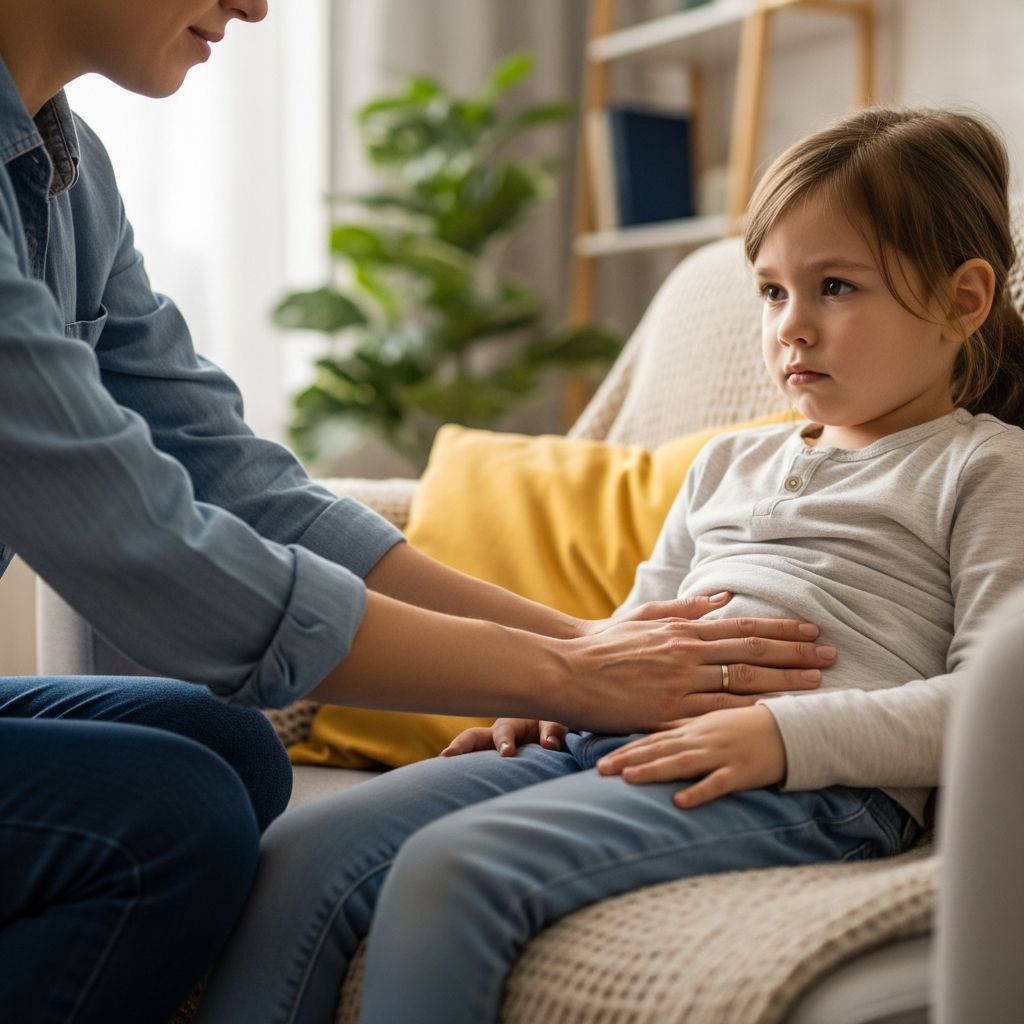
- The exam may include gently feeling the abdomen, checking growth, and sometimes a brief rectal exam.
Only some children need tests, and these are chosen based on symptoms and exam findings.
- Blood tests may check for thyroid, celiac disease, or other metabolic conditions.
- Imaging tests like abdominal X-rays can show the amount of stool in the intestines in some cases.
- Motility or pressure tests (such as anorectal manometry) may be used when constipation is long-standing or not responding to standard treatments.
Preventing Future Constipation
Once your child’s constipation improves, ongoing habits can help keep things moving comfortably.
- Offer a variety of high-fiber foods most days of the week.
- Provide regular access to fluids, especially water, throughout the day.
- Encourage daily physical activity and limit long stretches of sedentary screen time.
- Keep a predictable toilet routine, particularly after meals or before school.
- Respond calmly to accidents and avoid blame or punishment.
- Talk openly about bowel habits so your child feels comfortable mentioning problems early.
Frequently Asked Questions (FAQs)
Q: How often should a healthy child have a bowel movement?
A: Normal patterns vary. Some children go once a day, others every other day. Doctors often become concerned when a child has fewer than two bowel movements per week or when stools are consistently hard, painful, or very difficult to pass.
Q: Can constipation cause bedwetting or daytime accidents?
A: Yes. A large mass of stool in the rectum can press on the bladder, reducing its capacity and interfering with normal emptying. This can contribute to daytime or nighttime wetting and sometimes urinary infections.
Q: Are laxatives safe for children?
A: When prescribed and monitored by a healthcare provider, commonly used laxatives such as polyethylene glycol have been shown to be safe and effective for many children, including with longer-term use when needed. Parents should not give laxatives without medical guidance or stop suddenly once symptoms improve unless advised.
Q: Should I avoid all dairy products if my child is constipated?
A: Most children with constipation can still enjoy dairy in reasonable amounts as part of a balanced diet. Some children may become more constipated with large amounts of milk or cheese; your child’s doctor may suggest limiting these or trying a short trial of reduced dairy if they suspect it plays a role.
Q: How long does it take for constipation to get better?
A: Mild constipation may improve within days once fiber, fluids, and toilet routines are adjusted. More severe or long-lasting constipation can take weeks or months of consistent habits and, in some cases, medication before the bowel fully recovers. Ongoing prevention strategies are often needed even after symptoms improve.
References
- Constipation in Children: Causes, Signs & Treatment — Children’s Hospital of Orange County (CHOC). 2023-05-10. https://choc.org/conditions/gastroenterology/constipation-in-children/
- Constipation in children: Symptoms & causes — Mayo Clinic Staff. 2023-03-04. https://www.mayoclinic.org/diseases-conditions/constipation-in-children/symptoms-causes/syc-20354242
- Pediatric Chronic Constipation — Children’s National Hospital. 2022-08-15. https://www.childrensnational.org/get-care/health-library/chronic-constipation
- Constipation in Children and Adolescents: Evaluation and Treatment — American Academy of Family Physicians. 2022-05-01. https://www.aafp.org/pubs/afp/issues/2022/0500/p469.html
- Symptoms & Causes of Constipation in Children — National Institute of Diabetes and Digestive and Kidney Diseases (NIDDK). 2021-09-01. https://www.niddk.nih.gov/health-information/digestive-diseases/constipation-children/symptoms-causes
- Constipation in Children — Nationwide Children’s Hospital. 2022-11-03. https://www.nationwidechildrens.org/conditions/constipation
- Constipation in Children — HealthyChildren.org, American Academy of Pediatrics. 2023-02-14. https://www.healthychildren.org/English/health-issues/conditions/abdominal/Pages/constipation.aspx