Comfortable clothes at home should not mean “I gave up.” Moms deserve outfits that feel like pajamas but look intentional enough for surprise visitors, school drop-off, or a last-minute video call. This guide will walk through how to build an at-home wardrobe that supports the realities of mom life—feeding, cleaning, cuddling, working, and everything in between—while still helping you feel like yourself.
Why Comfort Matters So Much for Moms
Motherhood often means constantly shifting between roles: caregiver, chef, employee, partner, and house manager. Clothes that pinch, squeeze, or ride up can silently drain your energy and patience throughout the day. When your clothing moves with you instead of against you, it becomes easier to stay present and focused on what matters.
Comfort is not about laziness; it is about practicality. Soft fabrics, flexible waistbands, and easy layering allow you to bend over to zip coats, sit on the floor for puzzles, or nurse a baby without needing to adjust your outfit every few minutes.
Core Principles of a Cozy-But-Polished Home Wardrobe
Before diving into specific items, it helps to define a few guiding principles. These can act as your filter when you shop or choose what to keep in your closet.
- Soft on skin: Prioritize materials that feel gentle, especially if you are postpartum or dealing with sensory overload.
- Flexible fit: Elastic waists, stretch fabrics, and relaxed cuts adapt to daily body changes, bloating, and movement.
- Easy to wash: Anything that cannot handle frequent washing is likely to sit in your drawer.
- Mix-and-match friendly: Simple colors and shapes that pair well create the illusion of a large wardrobe from fewer pieces.
- Presentable in public: Ask yourself, “Would I feel okay answering the door or doing a quick errand in this?”
Best Fabrics for Everyday Mom Comfort
Choose fabrics that breathe, stretch, and hold up to repeated washing. The right fabric can mean the difference between feeling overheated and sticky or fresh and relaxed all day.
| Fabric | Why It Works at Home | Best Uses |
|---|---|---|
| Cotton (and cotton blends) | Soft, breathable, and easy to wash; ideal for daily wear and sensitive skin. | T-shirts, joggers, lounge dresses, pajamas. |
| Modal / Bamboo | Silky feel, drapes nicely, and often regulates temperature well. | Sleepwear, nursing tops, relaxed pants. |
| French Terry / Lightweight Fleece | Cozy without being too bulky; adds warmth during cooler months. | Sweatshirts, shorts, jogger sets. |
| Stretch Jersey | Plenty of stretch and recovery; moves easily with the body. | Leggings, maxi dresses, tank dresses. |
| Linen Blends | Breathable and airy; good for hot climates and summers at home. | Wide-leg pants, relaxed shirts, shorts. |
Essential Home Outfit Building Blocks
Think of your at-home wardrobe as a small system made from comfortable “building blocks.” Each piece should be versatile enough to work in several outfits and across multiple seasons with simple layering.
- Soft bottoms: Joggers, leggings, and wide-leg pull-on pants.
- Easy tops: Relaxed T-shirts, breathable long sleeves, and simple sweaters.
- One-and-done pieces: House dresses, rompers, and jumpsuits.
- Layering heroes: Cardigans, lightweight hoodies, and casual jackets.
- Functional underlayers: Nursing bras, camisoles, and wireless bralettes.
Comfortable Bottoms That Still Look Intentional
Bottoms often determine whether an outfit feels restrictive or easygoing. Choosing thoughtful styles can keep you from defaulting to stretched-out sweatpants every day.
- Joggers: Look for a soft fabric, elastic waistband, and cuffed ankle to avoid dragging on the floor. Neutral colors like charcoal, navy, or olive pair with many tops.
- Leggings: High-rise leggings offer gentle support and coverage. Opaque fabrics allow you to comfortably wear them with shorter tops or layered sweaters.
- Wide-leg pull-on pants: These offer airflow and can resemble “real” trousers while feeling like pajamas. They are excellent for days when you want extra comfort without sacrificing style.
- Relaxed shorts: In warm weather, look for soft knit or linen-blend shorts with a flexible waistband and mid-thigh or longer length for better coverage when crouching or sitting on the floor.
Easygoing Tops for Busy Days
Tops carry most of the visual impression of an outfit. Even basic bottoms can feel more polished with the right upper half.
- Basic tees with shape: A slightly thicker fabric and a flattering neckline (like a crew, V-neck, or scoop) instantly upgrades leggings or joggers.
- Relaxed button-fronts: Soft button-down shirts in chambray or cotton can be worn open over a tank or buttoned with leggings. They are also helpful for breastfeeding access.
- Lightweight sweaters: Boxy knits and tunic-length sweaters create a cozy, pulled-together look in cooler months.
- Simple tanks and camisoles: Perfect on their own in summer or layered under cardigans, they add comfort and modesty when bending down or nursing.
One-Piece “House Dresses” and Jumpsuits
One-piece outfits are powerful on low-energy days because they remove decision fatigue. With one garment, you look like you tried—no matching required.
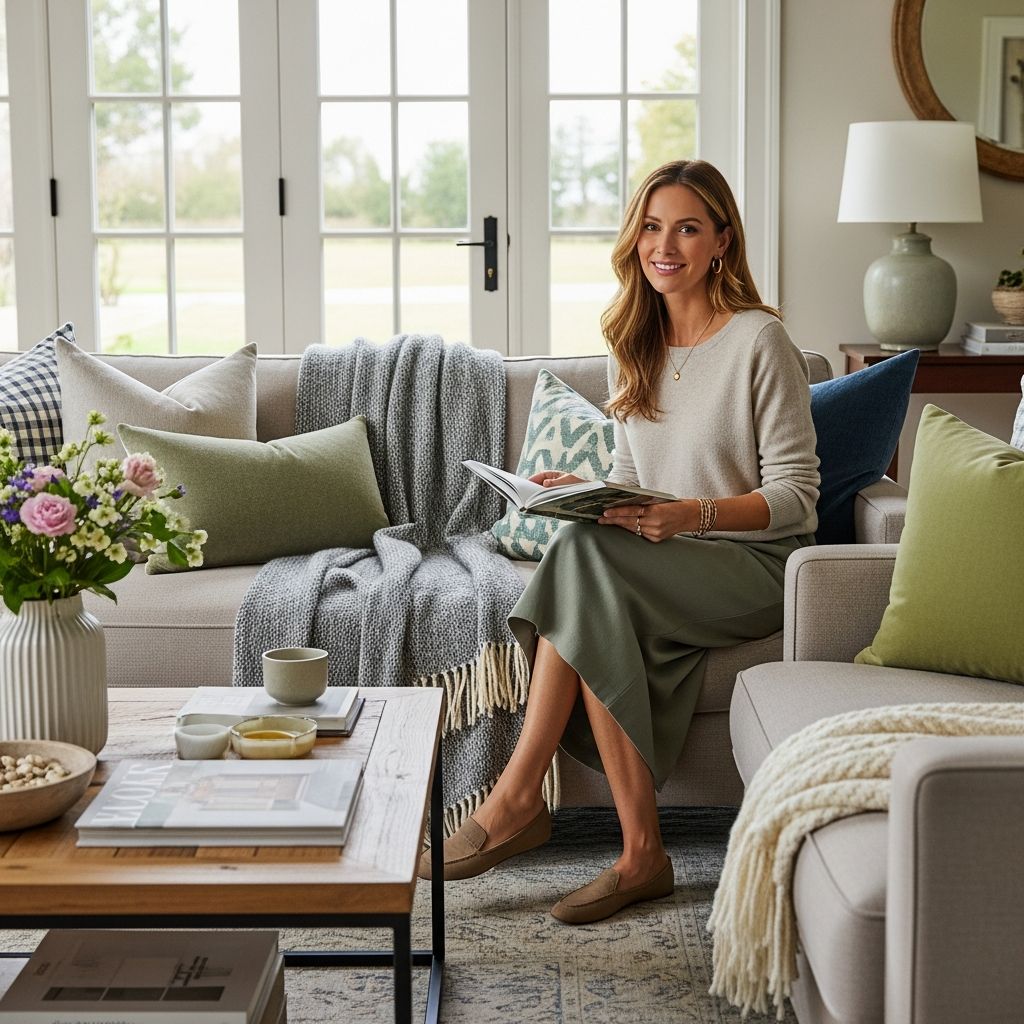
- Lounge dresses: Choose knee-length or midi-length with room through the waist and hips. Stretchy jersey or soft cotton keeps movement easy while still looking graceful.
- Nursing-friendly dresses: If you are breastfeeding, consider wrap styles, functional buttons, or overlapping layers for discreet access.
- Jumpsuits and rompers: Look for ones with front zips, wrap tops, or stretchy necklines for quick bathroom breaks and nursing. Pair with a cardigan for instant “faux” outfit layering.
Layers That Adapt to Real-Life Temperature Swings
Between hormonal changes, cooking heat, and kids leaving doors open, home temperatures shift constantly. Smart layering pieces save you from feeling sweaty or chilled.
- Open-front cardigans: Longline or hip-length designs add warmth without constricting your middle. They also create vertical lines that can feel visually lengthening.
- Lightweight hoodies and pullovers: Look for breathable fabrics so you can wear them indoors without overheating.
- Casual jackets: A soft denim jacket or knit blazer can quickly dress up leggings if you step out for errands or video calls.
Postpartum-Friendly Home Outfits
Postpartum months often involve changing body shape, soreness, and frequent feeding. Your clothes should honor this transition instead of pressuring you to “bounce back.”
- Gentle waistbands: Opt for high-rise leggings or joggers with a soft, wide band that does not dig into incision sites or tender areas.
- Easy nursing access: Button-front tops, wrap dresses, and nursing camisoles make feeds simpler, especially at night.
- Dark colors and patterns: These can offer peace of mind when dealing with leaks or spills.
- Layered tops: A nursing tank under a loose tee or cardigan allows feeding without feeling exposed.
Quick Outfit Formulas for Common Mom Scenarios
Having a few reliable outfit “recipes” makes mornings simpler. You can adapt each formula by season and personal taste, but the structure remains the same.
School Drop-Off or Pick-Up
- High-rise leggings + longline tee + denim jacket + slip-on sneakers.
- Joggers + striped T-shirt + open cardigan + casual trainers.
Work-From-Home Video Days
- Soft wide-leg pants + knit tank + lightweight blazer or structured cardigan.
- House dress + cardigan + simple studs or small hoops for polish.
Slow Weekend at Home
- Lounge shorts + oversized sweatshirt + cozy socks.
- Relaxed jumpsuit + open-front sweater + slippers.
Active Play with Kids
- Breathable leggings + moisture-wicking tee + zip hoodie.
- Bike shorts + long tank + flannel shirt tied at the waist or worn open.
Mini Capsule Wardrobe for At-Home Moms
A small, intentional set of pieces can cover most of your days without overstuffing drawers. Use this as a starting checklist and adjust by climate and lifestyle.
- 3–4 soft tees in neutral or muted colors.
- 2 tank tops or camisoles for layering or warm days.
- 2 pairs of leggings (one basic, one with texture or color).
- 2 pairs of joggers in different neutrals.
- 1 pair of wide-leg pull-on pants.
- 1–2 house dresses or casual midi dresses.
- 1 relaxed jumpsuit or romper.
- 2 cardigans (one light, one heavier).
- 1 casual jacket (denim or knit blazer-style).
- 1–2 cozy sweatshirts or hoodies.
Footwear and Accessories That Support Comfort
Shoes and small accessories can significantly influence how put-together you feel, even in basic clothes. They also impact comfort when you are standing or chasing little ones many hours a day.
- Supportive house shoes: Choose slippers or slide-ons with cushioning and arch support rather than flat, flimsy styles.
- Slip-on sneakers: Ideal for quick trips outside without needing to bend over for laces.
- Simple jewelry: Minimalist studs, small hoops, or a slim necklace add polish without catching on tiny hands.
- Soft hair accessories: Scrunchies, claw clips, and wide headbands keep hair off your face while reducing breakage.
Stain-Friendly Colors and Prints
Between cooking, crafts, and toddlers, stains are part of the landscape. Rather than stressing over every splash, plan your color palette accordingly.
- Mid-tone neutrals: Shades like charcoal, olive, heather gray, and denim blue hide minor marks better than bright white or very pale pastels.
- Patterned pieces: Small prints, subtle stripes, or marled fabrics visually disguise spills more than solid blocks of color.
- Intentional “play clothes”: Designate certain items as messy-day uniforms for baking, painting, or yard work, and keep your favorites for lower-risk activities.
Simple Care Tips to Keep Clothes Looking Fresh
Even budget-friendly clothes last longer with a bit of care. A few habit changes can preserve color, shape, and softness while saving time.
- Wash in cold water: Helps reduce fading and fabric breakdown, especially for stretchy knits.
- Air dry when possible: Hang or lay flat items with lots of elastic to prevent sagging or pilling.
- Spot clean quickly: Address stains as soon as you can, even if you cannot run a full load yet.
- Rotate favorites: Keep a small rotation so the same pair of leggings is not doing all the work every single day.
Mindset: Giving Yourself Permission to Dress for Real Life
It is easy to feel guilty about buying “just home clothes,” but comfortable, functional outfits are tools that support your daily life. When you dress in a way that feels kind to your body, you send yourself a quiet message that your comfort matters too.
There is no requirement to look like a fashion influencer while folding laundry or rocking a baby at 3 a.m. The goal is much simpler: feel free to move, feel okay being seen, and feel like the person inside the role of “mom.”
FAQs About Comfortable At-Home Clothes for Moms
How many home outfits does a busy mom really need?
There is no perfect number, but many moms do well with enough pieces to last about a week of wear without doing laundry in a rush. That might mean three or four comfortable bottoms, five or six tops, a couple of dresses, and two or three layering pieces. The key is that everything mixes and matches easily so you can create several outfits from fewer items.
Can I stay in pajamas all day if they are clean?
That is a personal choice, and there is nothing inherently wrong with all-day pajamas. However, many moms report feeling more energized and mentally “ready for the day” when they switch into clothes that are slightly more structured, even if they feel just as soft. Consider loungewear that blends the coziness of pajamas with details that look more like regular clothing.
What if my body has changed and nothing fits the same way?
After pregnancy or major life shifts, it is normal for old clothes to feel unfamiliar. Instead of forcing yourself into items that make you uncomfortable, select a few pieces in your current size that truly fit and feel good. This does not mean you are giving up; it means you are respecting the body that carries you through long, demanding days.
How can I look a little more polished without sacrificing comfort?
Focus on small upgrades rather than drastic changes. A coordinated lounge set, a cardigan in a flattering color, or slip-on sneakers instead of worn-out flip-flops can make a big difference. Adding simple jewelry or styling your hair in a quick clip or low bun also helps you feel more put-together in minutes.
Are leggings still okay, or are they “out of style”?
Leggings remain a useful staple for many moms, especially at home. Trends may shift, but function rarely goes out of style. If you want a slightly updated look, try pairing leggings with longer tops, tunic sweaters, or a relaxed jacket, or experiment with new colors and textures like ribbed or brushed fabrics.
What should I wear if people stop by unexpectedly?
Building your home wardrobe around “presentable comfort” solves this problem. Keep a few go-to outfits on a hook or at the front of your closet—like a lounge dress with a cardigan or joggers with a flattering tee and denim jacket—that you can throw on quickly. A pair of clean slip-on shoes by the door completes the look in seconds.
Comfortable at-home clothes for moms are not about perfection; they are about support. When your wardrobe matches the rhythm of your real life, each day feels a little smoother—and you might even find a bit more joy in the everyday chaos.