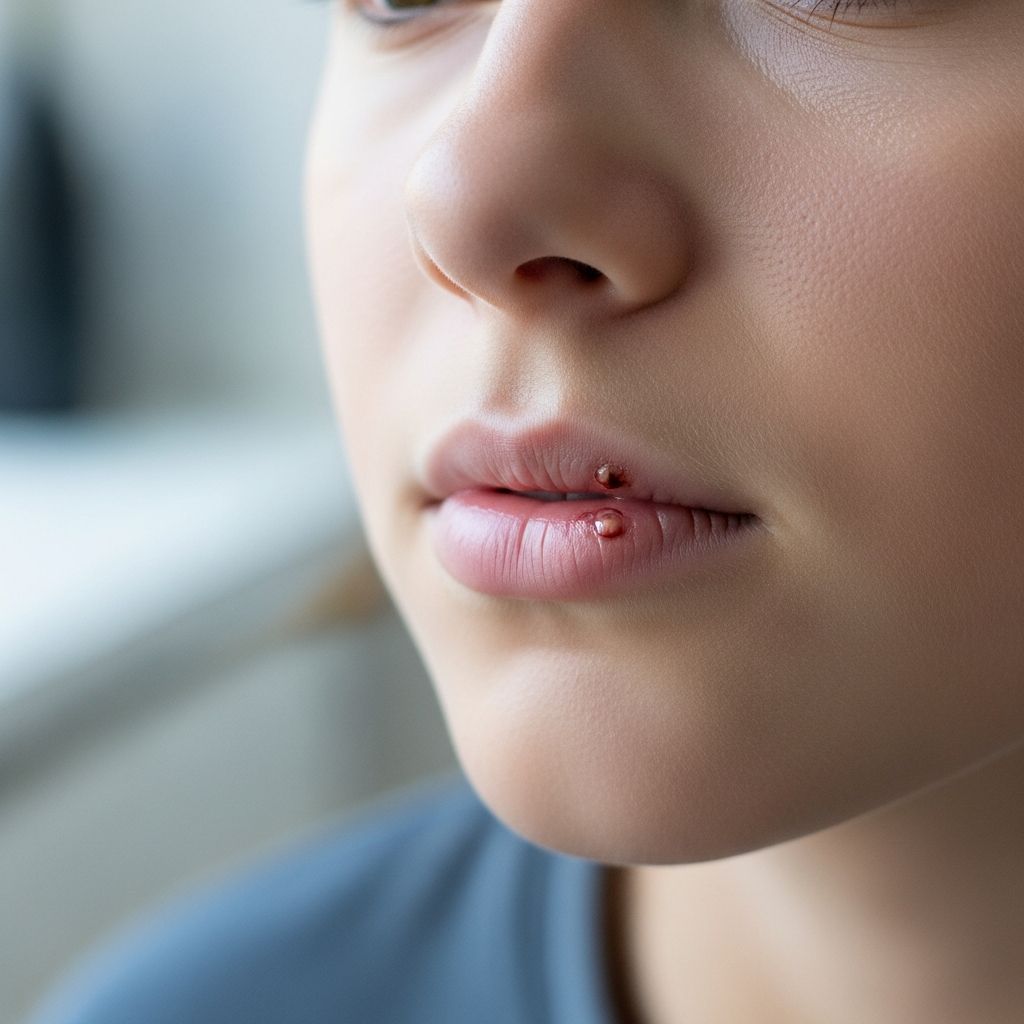
Cold sores, sometimes called fever blisters, are small, painful blisters that usually show up on or around the lips. They are extremely common in teenagers and are caused by a virus called herpes simplex virus type 1 (HSV-1). This guide explains what cold sores are, how they spread, what to do during an outbreak, and how to lower your chances of getting more.
Cold Sores vs. Other Mouth Sores
Not every sore in or around the mouth is a cold sore. Teens often confuse cold sores with other types of mouth problems. Knowing the difference helps you get the right care.
| Type of sore | Where it appears | Main cause | Key features |
|---|---|---|---|
| Cold sore | On/around lips, sometimes nose or chin | HSV-1 viral infection | Small fluid-filled blisters that crust, often start with tingling or burning |
| Canker sore | Inside mouth (cheeks, tongue, gums) | Not HSV; usually non-contagious irritation or immune reaction | Shallow white or yellow ulcer with red border, no blisters on lips |
| Chapped/cracked lips | Lip surface | Dryness, wind, sun, lip licking | Dry, flaky, sometimes bleeding; no clustered blisters |
What Exactly Is HSV-1?
Cold sores happen because of infection with the herpes simplex virus type 1 (HSV-1), a very common virus that infects most people at some point in their lives.
- HSV-1 is a lifelong infection: once you catch it, the virus stays in your body in a quiet (dormant) state inside nerve cells.
- Not the same as HSV-2: HSV-2 is usually linked with genital herpes, but either type can infect the mouth or genitals through close contact, including oral sex.
- Most people are infected when young: many are exposed during childhood or the teen years, often from a kiss or close contact with someone who already has HSV-1.
Even when no blisters are visible, the virus can sometimes still spread. This is one reason HSV-1 is so widespread in the general population.
How Cold Sores Spread Among Teens
HSV-1 is highly contagious and spreads easily when virus from the saliva or a blister touches another person’s skin or mucous membranes.
Common ways teens catch or spread cold sores include:
- Kissing someone who has a cold sore or is shedding the virus
- Sharing items that touch the mouth, such as:
- Drinking glasses, bottles, or straws
- Utensils (forks, spoons)
- Lip balm, lip gloss, or lipstick
- Razors and face towels
- Oral sex: oral contact with someone’s genitals can spread HSV-1 or HSV-2 between the mouth and the genital area.
Direct skin-to-skin contact when a blister is present carries the highest risk, but spread can also happen shortly before or after visible sores.
The Life Cycle of a Cold Sore Outbreak
Cold sores usually follow a predictable pattern. An entire episode often lasts about 7–10 days, and most clear by 2 weeks in healthy people.
- Warning stage (prodrome)
Many teens feel a sign that a blister is coming:
- Tingling
- Itching
- Burning or slight numbness around the lip
This may last several hours to a day before any visible sore appears.
- Blister stage
Small, tight, fluid-filled blisters form in a cluster on or near the lip. The skin around them can look red and swollen.
- Open sore stage
Blisters can break open and leak clear fluid, creating shallow, painful sores that make eating or talking uncomfortable.
- Crusting (scab) stage
The sores dry, form a yellowish or brown scab, and can crack or bleed slightly if stretched.
- Healing stage
New skin forms under the scab, which flakes off. In otherwise healthy teens, cold sores typically heal without leaving a scar.
Other Symptoms You Might Notice
Especially during a first infection with HSV-1, symptoms can be stronger and affect more than just the lips.
- Red, swollen, or sore gums
- Sore throat or pain inside the mouth
- Fever and feeling generally unwell or tired
- Muscle aches and headache
- Swollen lymph nodes (especially in the neck)
You might have HSV-1 and never notice any symptoms at all. In other teens, the first episode is the worst, and later outbreaks are milder.
Why Do Cold Sores Come Back?
After the first infection, the virus hides in nerve cells near the face and stays there for life. It can “wake up” (reactivate) from time to time. When that happens, another cold sore may form in the same general area.
Common triggers for cold sore flare-ups in teens include:
- Illness such as a cold or flu
- Fever (hence the term “fever blister”)
- Strong sunlight or sunburn on the lips
- Cold or windy weather that irritates the skin
- Physical or emotional stress
- Hormonal changes, such as menstruation
- Lip injuries or cosmetic procedures around the mouth
Some teens rarely get outbreaks, while others may have several per year. Tracking your personal triggers can help you prevent or reduce future episodes.
When Should a Teen See a Doctor?
Most cold sores in healthy teens are mild and go away on their own, but medical advice is important in certain situations.
Contact a doctor or nurse if:
- You have a weakened immune system because of a health condition or medicines (for example, chemotherapy, high-dose steroids, or immune-suppressing drugs).
- The sores haven’t healed after about 2 weeks.
- The cold sore is near your eye, your eye is red or painful, or your vision changes.
- You get frequent or very severe outbreaks.
- You have trouble drinking fluids because of mouth pain, or you show signs of dehydration (very dry mouth, dizziness, peeing much less).
- You feel extremely unwell with high fever, headache, or confusion.
Eye infections caused by HSV can be serious, so any eye symptoms with a cold sore need urgent medical attention.
Treatment Options: What Helps Cold Sores Heal?
There is no cure that removes HSV-1 from the body, but treatments can make cold sores less painful and help them heal faster.
Self-care and Comfort Measures
Many teens manage mild outbreaks at home with simple steps:
- Cool compresses: applying a clean, cool, damp cloth to the sore can ease burning or itching.
- Pain relief medicines: over-the-counter pain relievers like acetaminophen or ibuprofen (used as directed) can lower fever and relieve discomfort.
- Soft, mild foods: choose foods that aren’t too salty, spicy, or acidic so they don’t sting the sore.
- Good hydration: drink water or other non-acidic fluids regularly, especially if you have fever.
- Lip protection: a gentle, fragrance-free lip balm may help protect the scab from cracking. If sunlight is a trigger, pick a lip balm with SPF.
Antiviral Medicines
Doctors sometimes prescribe antiviral medications such as acyclovir, valacyclovir, or famciclovir to shorten outbreaks or reduce how often they happen.
- They work best if started at the first tingling or burning sign before blisters fully form.
- They may be used as short courses during an outbreak, or as preventive (suppressive) treatment in teens with frequent or severe episodes.
- These medicines need a prescription in most places and should be used under medical supervision.
What Not to Do
Some things can irritate cold sores or raise the risk of spreading them:
- Do not pick or peel the scab.
- Do not scrub the area or apply harsh products like strong alcohol or hydrogen peroxide repeatedly.
- Do not share lip products, utensils, or towels while you have a sore.
- Avoid kissing and oral sex until the area is completely healed.
How to Avoid Spreading Cold Sores
If you have HSV-1, you can still protect your friends, partners, and younger family members by taking some simple precautions.
- Avoid kissing infants, young children, or anyone with a weak immune system when you have a sore or feel one coming.
- Do not share items that touch your mouth (cups, water bottles, utensils, straws, toothbrushes, lip balm, razors).
- Wash your hands after touching your face, applying cream, or handling a cold sore.
- Try not to touch the sore, and if you do, wash your hands before touching your eyes or genitals.
- Use protection (condoms and dental dams) and avoid sexual contact during active outbreaks to lower the chance of genital infection.
HSV-1 can be especially risky for newborn babies and people with weakened immune systems, so extra care is needed around them.
Living With Cold Sores: Everyday Tips for Teens
Cold sores can feel embarrassing, especially in social situations. Many teens worry about how they look while a blister is visible or about what it means for dating and relationships.
Helpful strategies include:
- Learning your triggers: notice if outbreaks follow exams, intense sports, sun exposure, illness, or lack of sleep.
- Protecting your lips from the sun: use a broad-spectrum SPF lip balm and reapply during outdoor activities.
- Managing stress: exercise, relaxation apps, music, or talking with someone you trust can reduce stress that may trigger outbreaks.
- Planning for early treatment: keep prescribed antiviral tablets or cream available (if recommended by your doctor) and use them at the first sign of tingling.
- Being open with partners: honest conversations about cold sores, protection, and timing of physical contact can reduce anxiety and lower infection risk.
Remember that cold sores are extremely common; having HSV-1 does not define your identity or worth.
Frequently Asked Questions (FAQs)
Are cold sores dangerous?
In most healthy teens, cold sores are uncomfortable but not dangerous and heal on their own within about 1–2 weeks. They can be serious, however, for newborn babies, people with weakened immune systems, or if the virus infects the eye, which is why those situations need urgent medical care.
Can I ever get rid of HSV-1 completely?
Current treatments cannot remove HSV-1 from the body. The virus stays in nerve cells for life but spends most of its time inactive. Antiviral medicines and lifestyle steps can reduce how often outbreaks happen and how severe they are.
Can I go to school with a cold sore?
Yes. As long as you feel well enough, you can attend school or activities. Just avoid kissing, sharing items that touch your mouth, and close contact sports where another person’s skin might rub directly against your sore.
Do cold sores mean I have a sexually transmitted infection?
Cold sores on the lips are usually caused by HSV-1, which is often caught in childhood from nonsexual contact. However, both HSV-1 and HSV-2 can be transmitted through sexual activity, including oral sex, and can infect the mouth or genitals. If you have questions about sexual transmission, it is a good idea to speak with a health professional.
What if I keep getting cold sores again and again?
Frequent outbreaks are a reason to see a doctor. They can check for triggers, discuss preventive antiviral medication, and rule out problems with your immune system or other health issues.
References
- Cold sore – Symptoms and causes — Mayo Clinic. 2024-03-16. https://www.mayoclinic.org/diseases-conditions/cold-sore/symptoms-causes/syc-20371017
- Cold sores – causes, symptoms and treatment — Healthdirect Australia. 2023-05-01. https://www.healthdirect.gov.au/cold-sores
- Cold sores: signs, symptoms, causes and treatments — Health Service Executive (HSE), Ireland. 2022-08-19. https://www2.hse.ie/conditions/cold-sores/
- Cold Sore: Symptoms, Causes & Treatment — Cleveland Clinic. 2024-01-10. https://my.clevelandclinic.org/health/symptoms/cold-sores
- Cold sores: children & teens — Raising Children Network (Australia). 2022-11-07. https://raisingchildren.net.au/guides/a-z-health-reference/cold-sores
- Cold sores — NHS (National Health Service, UK). 2024-02-19. https://www.nhs.uk/conditions/cold-sores/
- Cold Sores in Teens: Care Instructions — MyHealth Alberta. 2021-06-01. https://myhealth.alberta.ca/Health/aftercareinformation/pages/conditions.aspx?hwid=zx4149