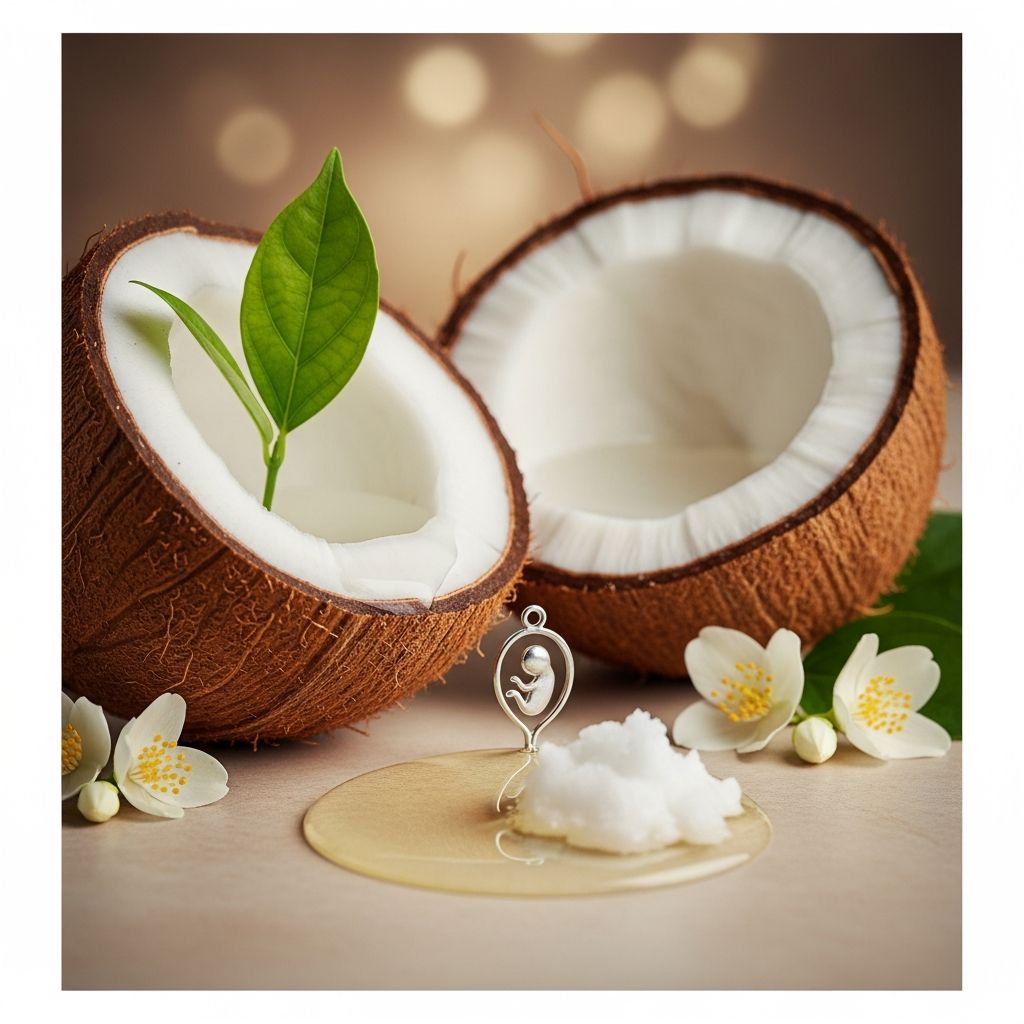
Coconut oil, derived from the kernel of mature coconuts, has gained attention for its potential role in supporting reproductive health. Rich in medium-chain fatty acids, antioxidants, and anti-inflammatory compounds, it offers benefits for both men and women seeking to optimize fertility.
Nutritional Profile Supporting Reproduction
The unique composition of coconut oil sets it apart from other fats. It contains high levels of lauric acid and caprylic acid, which provide quick energy and combat inflammation. These medium-chain triglycerides (MCTs) are easily digested and metabolized, unlike long-chain fats linked to cardiovascular issues.
For fertility, these nutrients aid hormone synthesis. Healthy fats are essential for producing steroid hormones like estrogen, progesterone, and testosterone, which regulate ovulation, spermatogenesis, and implantation.
- Lauric acid: Boosts immune function and fights yeast overgrowth, common fertility disruptors.
- Caprylic acid: Targets candida, preserving vaginal pH for optimal conception timing.
- Polyphenols: Act as antioxidants, reducing oxidative stress in reproductive tissues.
Benefits for Women’s Fertility
Women may benefit from coconut oil’s ability to enhance cervical mucus production, crucial for sperm survival during the fertile window. Its moisturizing properties alleviate vaginal dryness, a common issue that discourages intercourse.
Unlike commercial lubricants that impair sperm motility, coconut oil maintains a sperm-friendly environment. Studies show it does not disrupt pH or motility, making it ideal for couples trying to conceive.
| Lubricant Type | Effect on Sperm Motility | Suitable for TTC? |
|---|---|---|
| Coconut Oil | No significant decrease | Yes |
| Commercial Gels | Reduces progressive motility | No |
| Baby Oil | Minimal impact | Limited |
Inflammation reduction is another key advantage. Chronic issues like PCOS involve elevated cytokines; coconut oil’s compounds may lower these, supporting ovulatory function.
Enhancing Male Reproductive Health
Research on rats demonstrates coconut oil’s positive impact on sperm parameters. Doses increased sperm count, motility, viability, and normal morphology in a dose-dependent manner.
One study found high-dose coconut oil raised sperm count to 68.18 ± 0.39 x10^6/ml from control levels, with viability reaching 85%. Another showed virgin coconut oil (VCO) counteracted toxin-induced testicular damage, restoring hormone levels and kinematics.
- Sperm Count: Significant increases (p<0.05) across low, medium, high doses.
- Motility: Higher progressive velocity and reduced immotile sperm.
- Morphology: Up to 87.2% normal forms, aiding fertilization.
VCO’s antioxidants mitigate oxidative stress, a primary cause of male infertility. By preserving testicular function, it promotes healthy spermatogenesis.
Mechanisms of Action in Detail
Coconut oil influences fertility through multiple pathways. Its MCTs boost metabolism and support ideal body fat, vital for hormone balance in under or overweight individuals.
Antioxidant effects neutralize reactive oxygen species (ROS), which damage sperm DNA and disrupt hormones. VCO restored testosterone and nitric oxide in models of infertility.
Anti-inflammatory properties lower cytokines like IL-1β, protecting ovarian and testicular tissues. In PCOS models, VCO combined with clomiphene reduced elevated hormones and boosted antioxidants like Nrf2.
Practical Ways to Incorporate Coconut Oil
Integrate coconut oil into daily routines for fertility support:
- Dietary Use: Add 1-2 tablespoons to smoothies, cooking, or coffee. Start low to avoid digestive upset.
- Lubricant: Apply virgin coconut oil externally during intimacy. Ensure it’s organic and unrefined.
- Supplements: VCO capsules for internal benefits, following dosage from studies (e.g., 5% diet equivalent).
- Topical for Men: Massage on testes to potentially improve local circulation (anecdotal, research-limited).
Combine with a fertility diet rich in antioxidants, folate, and omega-3s for synergistic effects.
Scientific Evidence and Study Highlights
Animal studies provide promising data:
- A 2024 study showed 5% VCO diet reversed sodium benzoate-induced sperm immotility and hormone derangement in rats (p<0.0001).
- Coconut oil extract increased sperm parameters dose-dependently, with no toxicity observed.
- VCO restored NO and testosterone against L-NAME inhibition, enhancing sperm function.
Human trials are limited; most evidence is preclinical. Consult healthcare providers before use, especially with conditions like allergies or gallbladder issues.
Potential Risks and Considerations
Coconut oil is generally safe but high in saturated fats; moderation prevents caloric excess. Those with coconut allergies should avoid it.
Not a fertility cure-all—combine with lifestyle changes like weight management, stress reduction, and cycle tracking. Overreliance may delay medical evaluation for underlying issues.
Frequently Asked Questions (FAQs)
Can coconut oil improve sperm quality?
Yes, studies in rats show it boosts count, motility, and morphology without adverse effects.
Is coconut oil safe as a lubricant for trying to conceive?
It does not harm sperm motility like many lubricants and helps with dryness.
How much coconut oil for fertility benefits?
1-2 tablespoons daily; animal studies used 5-15% diet equivalents. Consult a doctor.
Does it help with PCOS-related infertility?
Preliminary data suggests it reduces hormones and inflammation in models.
Virgin vs. refined coconut oil—which is better?
Virgin retains more antioxidants and polyphenols for reproductive benefits.
Conclusion: A Natural Ally for Conception
Coconut oil’s multifaceted benefits make it a worthwhile addition to fertility plans. From lubricating intimacy to protecting gametes, its evidence-based perks offer hope. Track progress and seek professional guidance for best results.
References
- 3 Uses of Coconut Oil For Fertility — Natural Fertility Info. Accessed 2026. https://natural-fertility-info.com/3-uses-of-coconut-oil-for-fertility.html
- Therapeutic potential of virgin coconut oil in mitigating sodium benzoate-induced testicular toxicity — PMC (NCBI). 2024. https://pmc.ncbi.nlm.nih.gov/articles/PMC11017850/
- Consumption of Coconut Oil (Cocos Nucifera) on Sperm Parameters — Semantic Scholar. Undated PDF. https://pdfs.semanticscholar.org/ce5a/811a0415fe4f7330100f7818f955861b9629.pdf
- Role of virgin coconut oil on male reproductive functions in rats — Abu.edu.ng Journals. Undated PDF. https://journals.abu.edu.ng/index.php/njsr/article/download/349/188/240
- Synergistic Action of Virgin Coconut Oil and Clomiphene in PCOS — Mary Ann Liebert Publishers. 2023. https://www.liebertpub.com/doi/10.1089/jmf.2023.0023
- Lubricant that is helpful for sperm — Mayo Clinic Health System. Undated. https://www.mayoclinichealthsystem.org/hometown-health/speaking-of-health/trying-to-get-pregnant-select-a-lubricant-that-is-most-helpful-for-sperm
- The effects of coital lubricants on sperm motility in vitro — PubMed. 1998. https://pubmed.ncbi.nlm.nih.gov/9886513/