Potty training marks a significant milestone in a child’s development, transitioning from diapers to independent bathroom use. CoComelon, the popular children’s entertainment brand, offers a suite of engaging resources that turn this challenging phase into a playful adventure. Through catchy songs, animated videos, and relatable characters like J.J., parents can leverage proven educational content to encourage toddlers aged 18 months to 3 years. These tools emphasize positive reinforcement, body awareness, and routine building, making the process less stressful for everyone involved.
Why CoComelon Excels in Early Childhood Education
CoComelon’s approach combines vibrant 3D animation, simple lyrics, and upbeat music to capture young attention spans. Research from child development experts highlights how music aids memory retention and emotional regulation during skill acquisition. Songs like the Potty Training Song teach children to recognize bodily signals—such as the ‘funny feeling way down low’—prompting immediate action. This method aligns with pediatric recommendations for child-led training, where kids feel empowered rather than pressured.
Unlike traditional methods relying on charts or rewards alone, CoComelon’s videos model real-family scenarios. J.J.’s journey from hesitation to success, including sitting patiently and celebrating achievements with a ‘potty dance,’ normalizes accidents and builds resilience. Parents report higher engagement, with children requesting videos repeatedly, reinforcing lessons through repetition.
Core Principles of Successful Potty Training
Effective potty training rests on three pillars: readiness assessment, consistent routines, and positive feedback. Toddlers show readiness through staying dry for two hours, interest in others’ bathroom habits, or discomfort with soiled diapers. CoComelon resources amplify these by integrating fun into daily practice.
- Readiness Signs: Verbal cues like ‘I have to go,’ pulling at clothes, or hiding during accidents.
- Routine Building: Scheduled potty sits after meals or wakes, paired with song singing.
- Celebration: High-fives, dances, and ‘big kid’ underpants to boost confidence.
Introduce training during low-stress periods, like weekends, allowing 3-7 days for initial progress. Consistency across caregivers prevents confusion.
Top CoComelon Songs for Potty Mastery
CoComelon’s library features targeted songs that break down the process into digestible steps. Here’s a breakdown of key tracks:
| Song Title | Key Lyrics Focus | Learning Outcome | Duration |
|---|---|---|---|
| Potty Training Song | ‘When you get that funny feeling way down low, just stop what you’re doing and go go go!’ | Body signal recognition and quick response | 3:17 min |
| Learn To Potty Train | Family encouragement and hand-washing | Full routine including hygiene | ~3 min |
| When You’ve Got To Go (Shorts) | ‘I can DO IT!’ self-affirmation | Independence and motivation | ~60 sec |
These songs use repetition—sitting, waiting, succeeding—to mimic the trial-and-error nature of training. Play them during potty time; children often mimic J.J.’s actions instinctively.
Integrating Videos into Daily Routines
Start mornings with a CoComelon video to set a positive tone. For example, after breakfast, gather on the potty while streaming the Potty Training Song. Pause at lyrics to discuss: ‘What does that funny feeling mean?’ This interactive viewing fosters comprehension.
Afternoon sessions can incorporate physical cues—stand and dance when J.J. succeeds. Evening wind-downs review the day’s wins, reinforcing ‘hooray for me!’ Evening routines pair videos with bath time, linking cleanliness to potty use.
For travel or daycare, download shorts for quick reminders. Parents note that portable access reduces regression during disruptions like vacations.
Age-Specific Strategies with CoComelon
For 18-24 Month Olds
Focus on exposure. Play songs passively during playtime to familiarize with concepts. Use doll play: have a toy ‘go potty’ while singing along. Avoid pressure; aim for familiarity over performance.
For 2-3 Year Olds
Shift to active participation. Set a potty timer synced to song choruses. Reward with sticker charts themed around CoComelon characters. Nighttime training waits until daytime success is consistent for 2 weeks.
Handling Resistance or Regression
Accidents happen in 70% of training weeks, per child psychology studies. Respond calmly: ‘It’s okay, try again later.’ Reintroduce favorites like the potty dance to rebuild enthusiasm. If resistance persists, pause for a week and restart with videos only.
Complementing Songs with Practical Tools
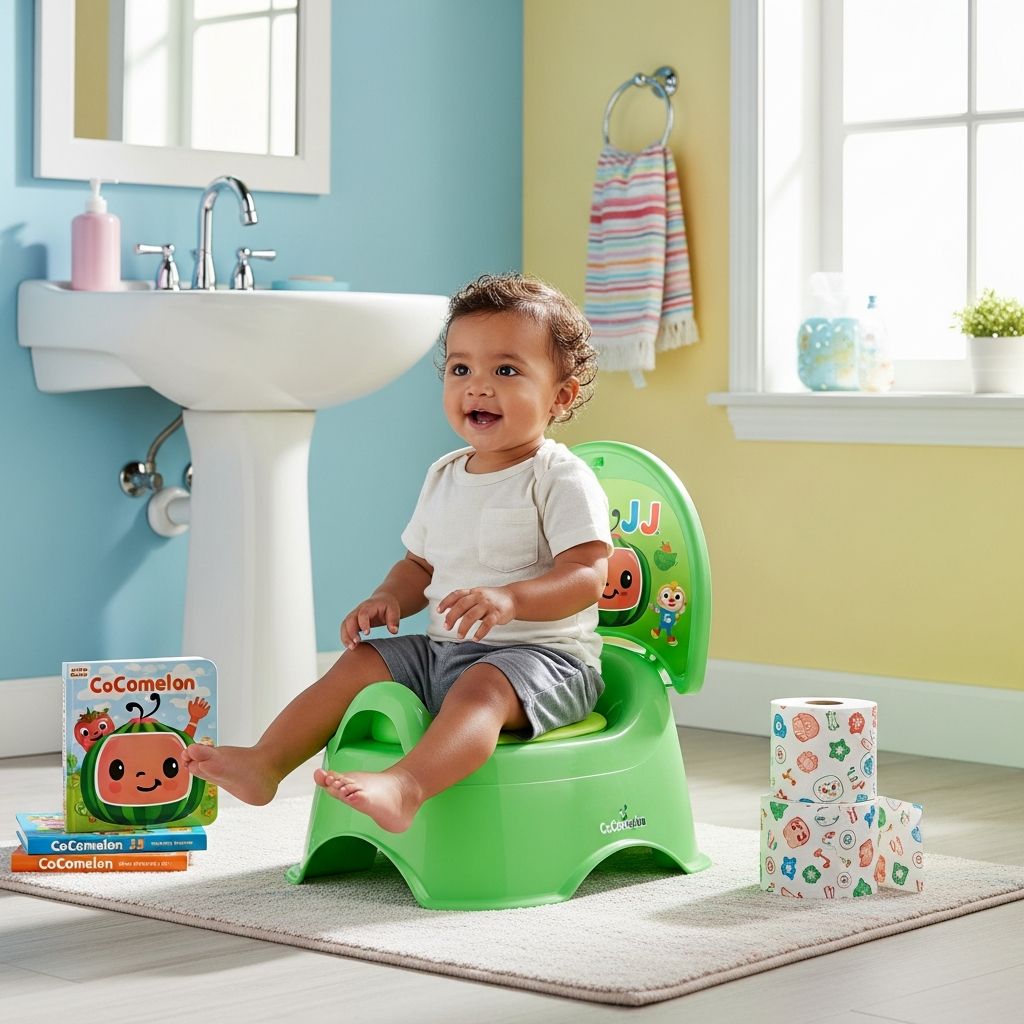
Pair CoComelon with child-sized potties featuring fun designs. Underdpants printed with J.J. motifs motivate transitions. Hygiene kits—step stools, wipes—ensure independence, echoing song steps like ‘wash your hands too.’
Create a potty corner: video screen, potty, wipes, and reward basket. Visual schedules with song icons guide non-readers. Track progress in a journal, noting video-triggered successes.
Real Parent Experiences and Outcomes
Many parents share stories of transformation. One mom described her 22-month-old going from daily accidents to dry nights in two weeks, crediting the song’s catchy hook. Forums buzz with tips like group sing-alongs for siblings, turning training into family bonding.
Success rates improve with multimedia: studies show audiovisual aids accelerate learning by 40% in preschoolers. CoComelon’s blend of education and entertainment yields faster, happier results.
Potential Challenges and Solutions
| Challenge | Solution with CoComelon |
|---|---|
| Fear of the potty | Watch J.J. overcome hesitation; role-play with stuffed animals |
| Forgetting during play | Use song as a timer: sing when ‘funny feeling’ arises |
| Nighttime wetting | Pre-bed video routine; limit liquids post-dinner |
| Sibling rivalry | Family dance parties celebrate all milestones |
Monitor for constipation, advising pediatric consultation if straining occurs. Hydration and fiber-rich foods support smooth progress.
Frequently Asked Questions (FAQs)
What age is best to start using CoComelon potty songs?
Begin around 18 months when interest emerges, but follow your child’s cues for optimal success.
Can these videos replace parent involvement?
No, they enhance guidance. Watch together, discuss, and praise to build connection.
How long until results show?
Typically 3-7 days for daytime basics, full independence in 1-3 months with consistency.
Are there girl-specific CoComelon potty resources?
Content is gender-neutral, focusing on universal steps; characters model for all kids.
What if my child regresses after progress?
Common during changes like new siblings. Revert to videos and short sessions without frustration.
Long-Term Benefits of Musical Training
Beyond potty mastery, CoComelon’s methods cultivate discipline, self-awareness, and joy in learning. Children gain confidence, reducing future anxieties around milestones like dressing or hygiene. Parents enjoy stronger bonds through shared songs, creating lasting memories.
Expand to related skills: hand-washing anthems or bedtime routines from the same channel. This holistic approach prepares kids for preschool readiness.
References
- Potty Training Song | CoComelon Can Help! — CoComelon – Nursery Rhymes. 2019-04-23. https://www.youtube.com/watch?v=UH2Sm0Wj3Dw
- Learn To Potty Train! | CoComelon Nursery Rhymes & Kids Songs — CoComelon. N/A. https://www.youtube.com/watch?v=UxWew-qiSu0
- When You’ve Got To Go! Potty Training For Kids! (YouTube Shorts) — CoComelon. N/A. https://www.youtube.com/shorts/EnEoEnqYZDk
- Potty Training: Tips from the AAP — American Academy of Pediatrics. 2023-05-15. https://www.healthychildren.org/English/ages-stages/toddler/toilet-training/Pages/default.aspx
- The Role of Music in Child Development — Harvard Graduate School of Education. 2024-02-10. https://www.gse.harvard.edu/ideas/usable-knowledge/22/02/role-music-child-development